Chef Juliette
Ordinary or White Consommé
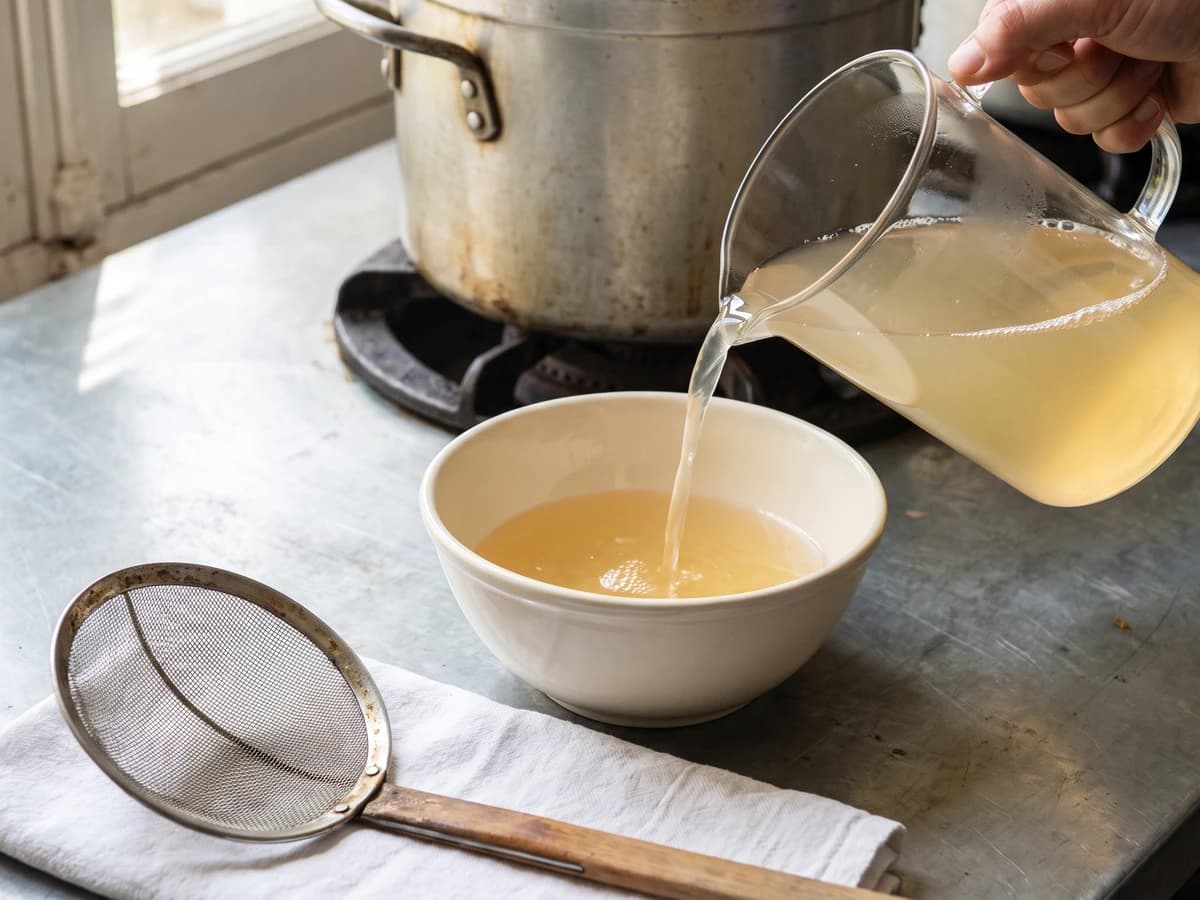
Beef shin, lean beef, and fowl begin in cold water and rise slowly toward a tremble. Skim before the boil, and you learn the quiet discipline that gives every clear French broth its backbone.
A cooking platform built around craft, culture, and the stories behind what we eat.
Created by
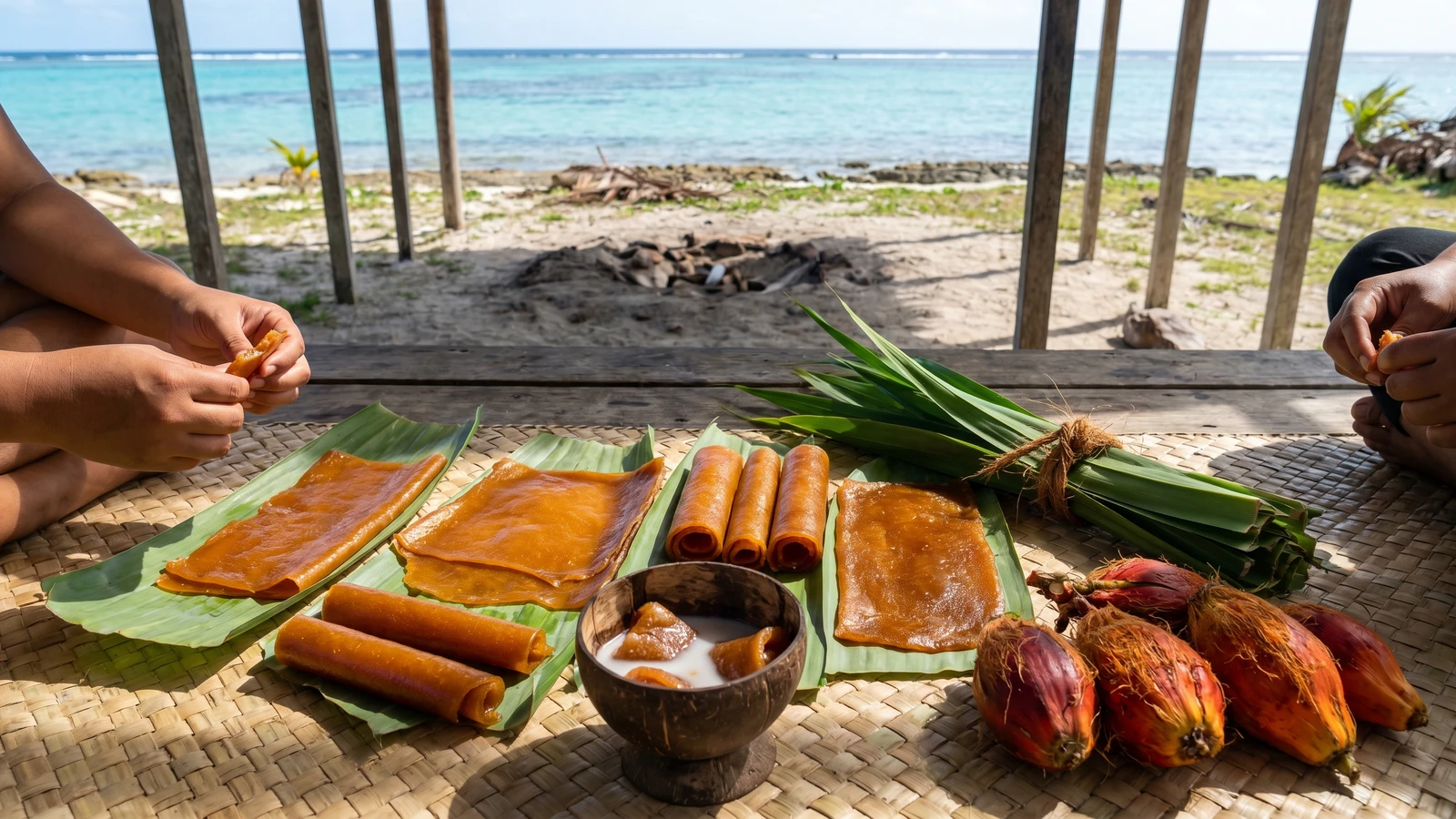
Tuvalu and Tokelau keeping food: ripe fala cooked down, spread thin, dried to amber sheets, and rolled away for the days when coral soil, salt water, and the barge all tell the truth.
Pulaka, the giant swamp-taro, sits like an elder under the coral in Tuvalu and Tokelau, down in pits dug by hand until the freshwater lens can feed it. That is where I start this preserve, even though the bowl in front of you is fala, ripe pandanus fruit, because on those low islands every food has to answer the same question: can it stay with the people when the wind shifts, the sea comes up, and the barge is late?
This is Tuvaluan and Tokelauan keeping food, and I cook it with my hands open. It is not my family's old preserve to claim. The deep harvest rules, the drying signs, the way a family stores and gifts it, those belong to Tuvaluan and Tokelauan elders, and they should tell their own story. I can bring you the kitchen method: cook the ripe keys, work out the pulp, dry it thin, roll it away.
Back home on Oʻahu, my kumu's line was Eat what you have. In Tuvalu and Tokelau that can mean pulaka hauled from pits, toddy tapped from the coconut tree, a coconut crab taken few and rare, and yes, corned beef and rice from the barge. No scolding that. But food on a barge is the wound, and feeding the island from its own ground is the repair.
The paste comes out amber-orange, sweet and resinous, chewy when dry, soft again when you wake it with coconut water or milk. Across the Triangle, every island learned how to keep what the land gave: Hawaiʻi pounds kalo into paʻiʻai and poi, Tahiti and the Marquesas know popoi, Sāmoa and Tonga wrap the taro leaf in coconut cream, and Tuvalu and Tokelau dry fala into sheets for lean days. One ocean, one canoe, one root, and each island with its own hand.
Tuvalu and Tokelau are low coral-atoll homelands where deep soil is scarce, so pulaka, giant swamp-taro, is grown in pits dug down toward fresh groundwater and guarded against salt for years of feeding. Ripe fala, pandanus fruit, is one of the old keeping foods: cooked, pulped, dried into thin sheets, and rolled in pandanus leaves so sweetness could survive cyclone seasons, drought, and lean months before barges made rice and corned beef ordinary. As the pits go saline today, the line between deep food and food on a barge is not nostalgia; it is the daily question of whether Tuvaluan and Tokelauan families can still feed the island from its own ground.
Quantity
1 large cluster, 4 to 5 pounds
broken into keys, or about 3 pounds cleaned ripe keys
Quantity
6 cups
plus more as needed
Quantity
as needed
washed and briefly wilted, for rolling the dried sheets, or use parchment
Quantity
as needed
for softening pieces to serve
| Ingredient | Quantity |
|---|---|
| ripe edible pandanus fruit cluster (fala)broken into keys, or about 3 pounds cleaned ripe keys | 1 large cluster, 4 to 5 pounds |
| clean waterplus more as needed | 6 cups |
| food-safe pandanus leaves (optional)washed and briefly wilted, for rolling the dried sheets, or use parchment | as needed |
| coconut water or fresh coconut milk (optional)for softening pieces to serve | as needed |
Start with ripe edible fala, pandanus fruit from a food tree. Ask a Tuvaluan or Tokelauan family, a Pacific grocer, or a grower who knows the tree. If nobody can tell you it is eating pandanus, don't put it in the pot. Ripe keys loosen from the cluster, glow yellow-orange, and smell sweet, like honey and sun-warmed leaf.
Pull the cluster apart into individual keys and rinse away sand, leaf bits, and any grit caught in the fibers. The fruit is work before it is sweetness. That is true on a coral island, yeah, and true in your kitchen too.
Set the keys in a large pot with 6 cups clean water. Bring to a gentle boil, then lower to a steady simmer for 35 to 45 minutes, turning the keys now and then, until the orange pulp softens and the cooking water smells sweet and grassy. Keep that water. It helps loosen the pulp later.
When the keys are cool enough to handle, press and scrape the soft orange pulp through a food mill or sturdy fine-mesh sieve, using small splashes of the cooking water to help it move. Discard the woody cores and tough fibers. Do not grind the whole keys in a blender; the fibers fight back and the paste turns stringy.
Put the strained pulp in a wide heavy pan and cook over low heat for 15 to 25 minutes, stirring often, until it thickens, turns glossy, and a spoon dragged through it leaves a clean path for a moment. No sugar here. The fruit has what it has, and the drying will concentrate it.
Line dehydrator trays or rimmed sheet pans with parchment, or with washed food-safe pandanus leaves if you have them. Spread the paste about 1/8 inch thick, smooth and even from edge to edge. Thick pockets stay wet too long, and wet pockets spoil before they become keeping food.
Dry at 135F in a dehydrator for 6 to 10 hours, or in the lowest oven you can manage, around 150F, with the door held slightly open. In the old sun method, the sheets dry outside under clean mesh and come in before night dampness, often for a day or two. They are ready when they peel up in one leathery sheet, bend without wet shine, and show no damp spots when pressed.
Cut the dry sheets into strips and roll them in clean wilted pandanus leaves, or in parchment if that is what your kitchen has. Tie loosely and store airtight in a cool, dry place. The old hard-dried preserve could keep a very long time; for a home kitchen, keep it 2 to 3 months in the pantry, 6 months in the fridge, or a year in the freezer.
Eat the strips as a chewy sweet, or tear pieces into a bowl and soften them with a little coconut water or fresh coconut milk for 10 minutes. Spoon that beside pulaka, breadfruit, or even plain rice. Deep food does not need to be precious to do its work.
1 serving (about 35g)
Culinary guides, cultural storytelling, and the editorial depth that makes cooking meaningful.
Discover Culinary ExplorerChef Juliette
Beef shin, lean beef, and fowl begin in cold water and rise slowly toward a tremble. Skim before the boil, and you learn the quiet discipline that gives every clear French broth its backbone.
Chef Juliette
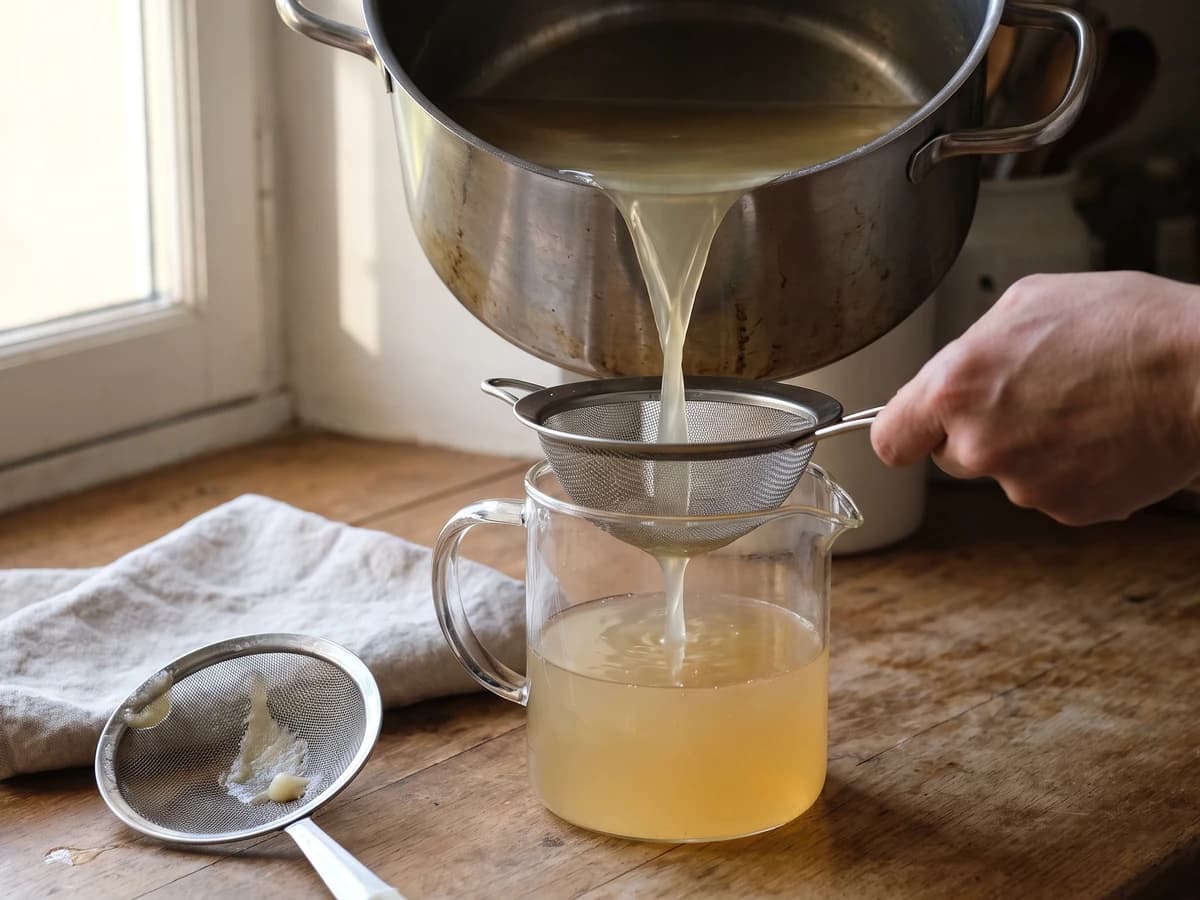
Break the veal bones small, then give them eight hours at a bare tremble. This pale, gelatinous fond becomes the quiet foundation beneath velouté, blanquette, and every sauce that must stay light.
Chef Juliette
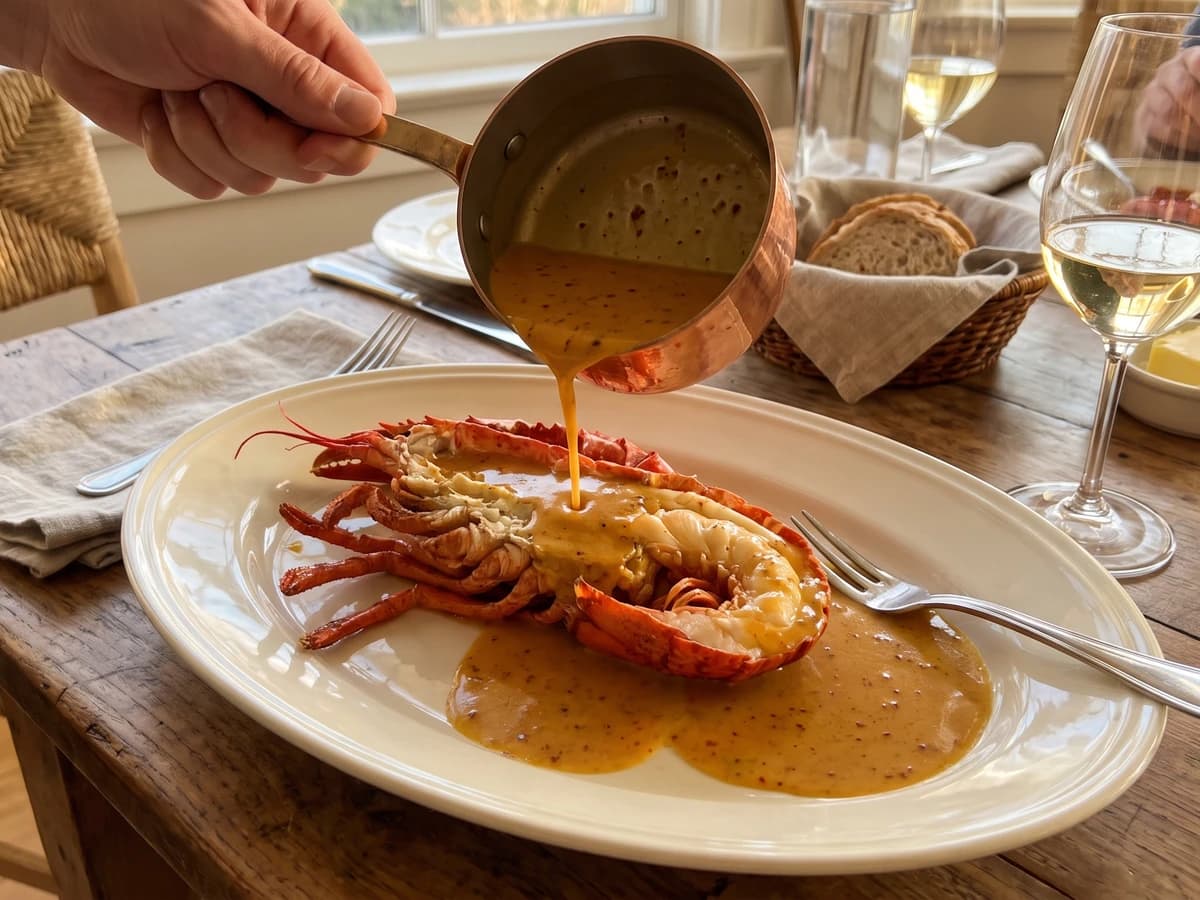
Sauce Orientale concentrates lobster-rich American Sauce with curry, then folds in cream away from the fire: a glossy, gently spiced derivative made for lobster, crayfish, and firm fish.
Chef Juliette
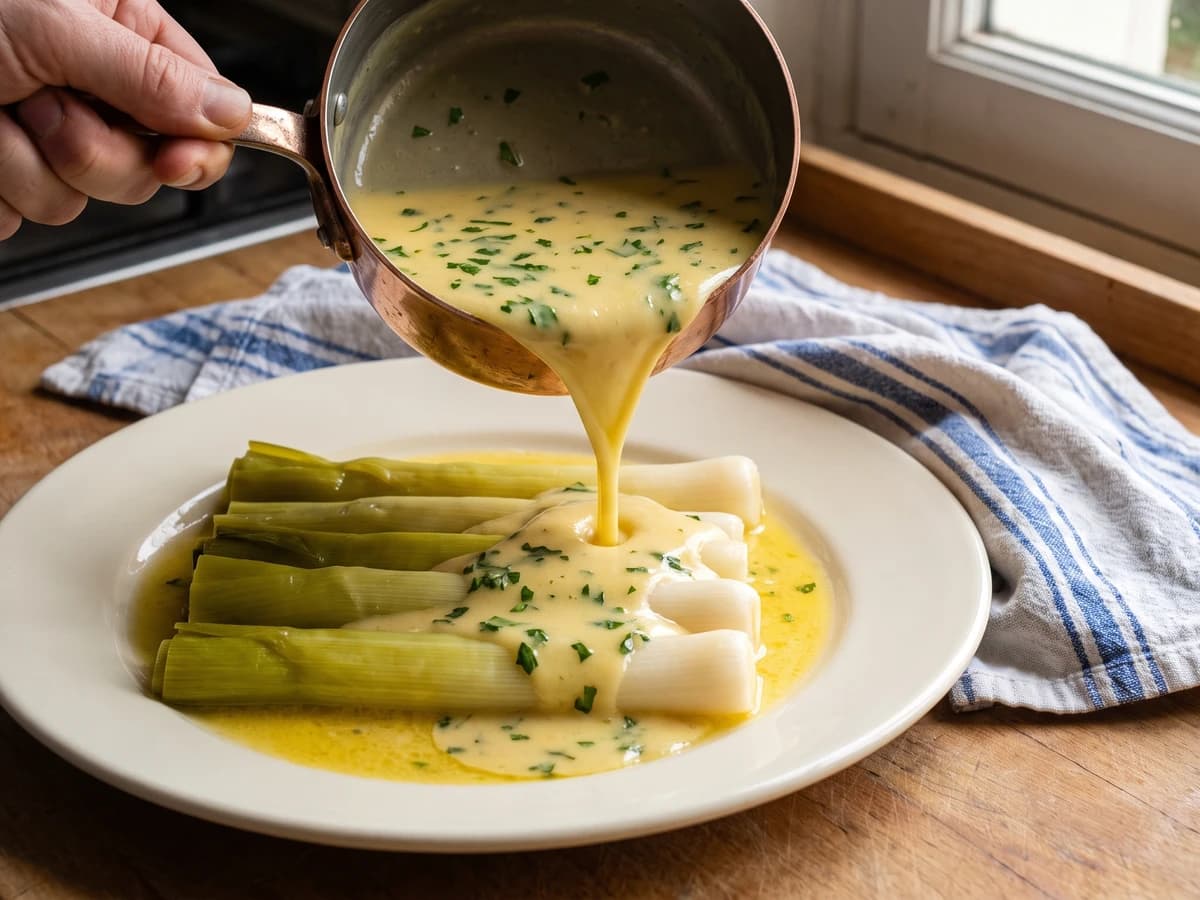
An old lesson in sauce families: Sauce Allemande takes mushroom liquor, then butter, lemon, and parsley, becoming a glossy Poulette for sheep's trotters, leeks, cauliflower, and anything needing gentle richness with a bright edge.