
Chef Makoa
Faikai Ika (Tuvaluan Baked Tuna in Coconut)
Tuvalu's faikai ika bakes fresh tuna in coconut cream until the fish flakes soft and drinks the nut in, lagoon catch and palm brought together on one low coral island plate.
A cooking platform built around craft, culture, and the stories behind what we eat.
Created by
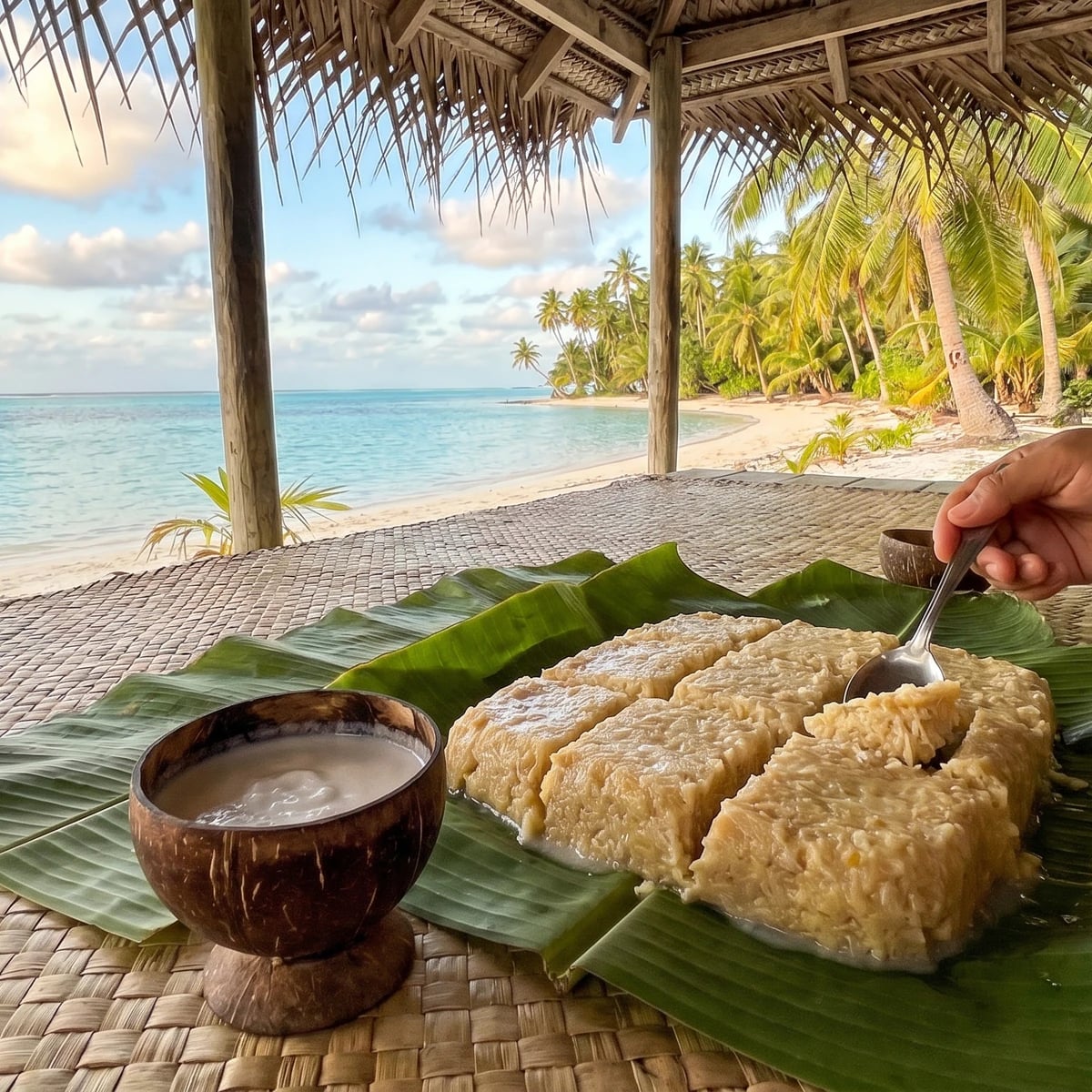
Tuvalu grates pulaka from the pit, folds it with rich coconut cream, then cooks it in leaves until it sets dense and tender, coral-island food with the old root still holding the table.
The elder brother looks different on a low coral island. In Tuvalu, the root is pulaka, giant swamp-taro hauled from deep pits dug down into the fresh water lens under the coral. No mountain stream, no volcanic loʻi like my home in Hawaiʻi. Just coral, salt wind, coconut palms, and people stubborn enough to feed themselves from that thin strip between lagoon and ocean.
Fekei is Tuvaluan, and I say that clean. The pulaka is grated raw, mixed with coconut cream, then wrapped and steamed until the starch sets heavy and tender, sweetened by the nut without needing to be made precious. Tokelau keeps its own pulaka world too, cousin close but not the same hand, and across the Triangle you can hear the same root speaking in Hawaiʻi's poi and paʻiʻai, the Cook Islands' taro, Sāmoa's talo, Tonga's lū, Tahiti's fāfā. One ocean, one canoe, one root, but every island gets named.
The thing to watch is the texture. Raw pulaka starts rough and pale in your hands. As it cooks, the coconut cream sinks in, the leaf holds the moisture, and the whole bundle firms into a dense slice you can cut, glossy at the edges and gentle in the mouth. Cook it all the way through. No rush the taro. No blame the taro. It gives when the time is right.
I learned enough at cousins' tables to cook this open-handed, but the deepest parts of Tuvaluan food, the pit, the land rights, the old family ways, that belongs to Tuvalu's own elders. Food on a barge is part of the truth now too, corned beef and rice sitting beside the pulaka, no shame in telling it straight. But feeding the island from its own ground, even ground made of coral, that's repair.
Pulaka, the giant swamp-taro of Tuvalu, is grown in hand-dug pits that reach the fresh water lens beneath coral soil, a food system built for islands barely above the lagoon. As sea levels rise and salt water pushes into those pits, pulaka becomes more than a starch; it is an identity-anchor under pressure, with Tokelau facing a closely related pulaka struggle in its own islands. Fekei belongs to that deep-food line, older than the barge foods of rice and tinned meat, yet today it sits beside those newer foods because island kitchens keep living.
Quantity
3 pounds
peeled and grated, or mature taro if pulaka is unavailable
Quantity
2 cups
squeezed from grated mature coconut, or good canned coconut cream
Quantity
1/2 teaspoon
Quantity
1 to 2 tablespoons
Quantity
enough for wrapping
softened
Quantity
1/2 cup
for steaming
| Ingredient | Quantity |
|---|---|
| pulaka (giant swamp-taro)peeled and grated, or mature taro if pulaka is unavailable | 3 pounds |
| thick fresh coconut creamsqueezed from grated mature coconut, or good canned coconut cream | 2 cups |
| sea salt | 1/2 teaspoon |
| coconut toddy syrup or raw sugar (optional) | 1 to 2 tablespoons |
| banana leaves or taro leavessoftened | enough for wrapping |
| waterfor steaming | 1/2 cup |
Soften the banana leaves over a low flame, in hot water, or in a warm oven until they bend without cracking. Wipe them clean and lay them in a wide cross, shiny side in, so the pulaka has a good bed. The leaf is not decoration. It holds the moisture and gives the bundle its shape.
Peel the pulaka carefully, then grate it on the fine side of a box grater or in a food processor until it looks like damp, coarse meal. Keep your hands steady, because raw taro family roots can itch the skin. If that happens, wash well and keep going. Eat what you have, but respect what it is.
Put the grated pulaka in a bowl and fold in the coconut cream, salt, and toddy syrup or sugar if you're using it. The mixture should be thick and heavy, not pourable, with the cream just loosening the grated root and giving it a pale gloss. Fresh coconut cream carries the soul here, but a good can does the weeknight work.
Spoon the mixture into the center of the leaves and shape it into a low, even mound, about 2 inches thick. Fold the leaves over tight, one side after the other, then tie with kitchen twine or tuck the bundle seam-side down. Don't make it too thick. The center needs to cook through, same as any taro food, or the root will bite back.
Set a rack in a heavy pot, add the water below the rack, and place the wrapped fekei on top. Cover tight and steam over medium-low heat for 75 to 90 minutes, adding a splash more water only if the pot runs dry. It is done when the bundle feels firm, the edges look glossy with coconut cream, and a skewer pushed into the center meets no raw, gritty resistance.
Let the fekei rest wrapped for 15 minutes so the starch settles. Open the leaves, cut it into thick squares or wedges, and serve warm or at room temperature with a little extra coconut cream spooned over if you like. It should eat dense and tender, sweet from the coconut, plain in the best way. Deep food is not fancy. It feeds people.
1 serving (about 225g)
Culinary guides, cultural storytelling, and the editorial depth that makes cooking meaningful.
Discover Culinary Explorer
Chef Makoa
Tuvalu's faikai ika bakes fresh tuna in coconut cream until the fish flakes soft and drinks the nut in, lagoon catch and palm brought together on one low coral island plate.

Chef Makoa
A sweet, sturdy Tokelau coconut bread, rich with grated mature coconut and fresh cream, baked golden for tea, travel, and one more cousin at the table.

Chef Makoa
Tuvalu and Tokelau keeping food: ripe fala cooked down, spread thin, dried to amber sheets, and rolled away for the days when coral soil, salt water, and the barge all tell the truth.

Chef Makoa
Tokelau's ika i te lolo, reef fish held gently in coconut cream and onion until the sauce turns rich and the fish flakes soft. Lagoon food, coral-soil food, weeknight food.