Chef Makoa
ʻIka Mata (Tuvaluan Atoll Raw Fish in Coconut Cream)
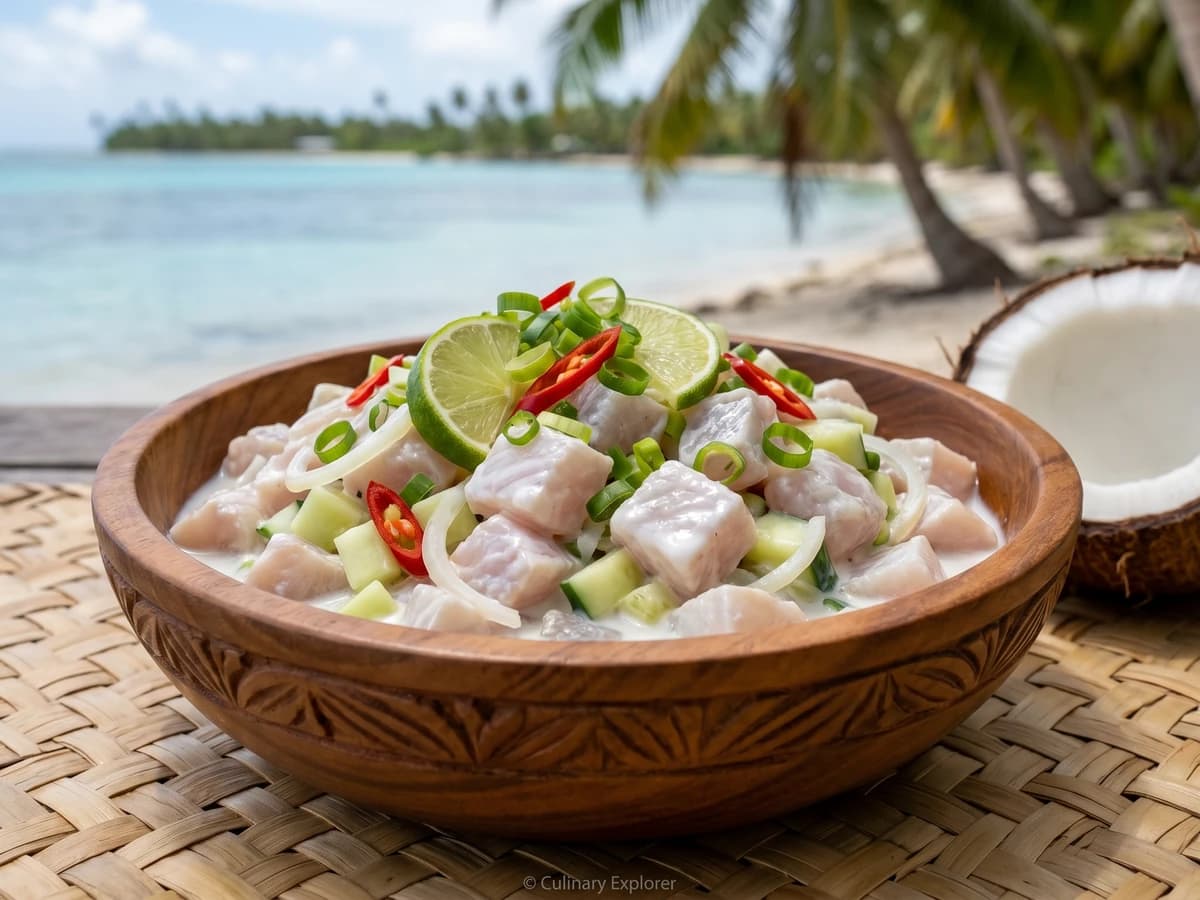
Tuvalu's ʻika mata is the atoll bowl: fresh reef fish, lime, coconut cream, onion, and cucumber, made close to the table where ocean feeds the kāiga.
A cooking platform built around craft, culture, and the stories behind what we eat.

Created by
Tuvalu's faikai ika bakes fresh tuna in coconut cream until the fish flakes soft and drinks the nut in, lagoon catch and palm brought together on one low coral island plate.
Pulaka, the giant swamp taro of Tuvalu, is the relative hauled from pits dug down into coral, the food that tells you this is not just fish and coconut on a plate. The land sits low, the sea is most of the larder, and the pit has to be tended like family because saltwater is always trying to climb in. That is Tuvalu's table: pulaka from the ground, tuna from the lagoon and open sea, coconut from the palms, each one carrying a piece of the island's life.
Faikai ika belongs to Tuvalu. I say that clear. This is not a plain "Polynesian" fish dish, no such thing. Tokelau has its own atoll food world, close cousin and distinct, with pulaka pits and coconut and fish held in its own hands. Sāmoa has oka iʻa, Tonga has ʻota ʻika, Tahiti has ʻia ota, the Cooks have ika mata, Hawaiʻi has poke. Same ocean feeding everybody, different bowl, different island, different elder at the table.
Here the tuna is baked, then settled into coconut cream until the fish drinks the nut in. Fresh coconut cream is best because that squeezing is half the work and half the memory, but I won't scold you for a can when the week is long. Tuvalu knows the truth of corned beef and rice off the barge too. Keeper, not gatekeeper. Still, when you can feed the table from fish, palm, and pulaka, that's the island feeding itself back.
Cook this open-handed. For the deep parts of Tuvaluan ceremony, go sit with Tuvaluan elders and aunties, the ones who carry the stories inside the food. I'm only setting the bowl wide enough, one ocean, one canoe, one root.
Tuvaluan food comes from a coral-soil world where the sea provides much of the larder and pulaka, giant swamp taro grown in dug pits, anchors identity on islands barely above the lagoon. Those pits are increasingly threatened by saltwater intrusion, so the older foods sit beside imported rice, flour, and corned beef with no simple romance about scarcity. Faikai ika keeps an older atoll grammar alive: fish from the water, coconut from the palm, and, when the table is full, pulaka or breadfruit beside it.
Quantity
2 pounds
skin removed
Quantity
2 cups
squeezed from grated mature coconut, or thick canned coconut cream
Quantity
1 medium
thinly sliced
Quantity
2 cloves
finely grated
Quantity
1 small knob
finely grated
Quantity
1 teaspoon, plus more to taste
Quantity
1/2 teaspoon
Quantity
2 tablespoons, plus wedges for serving
Quantity
2 tablespoons
sliced
Quantity
for lining the baking dish
| Ingredient | Quantity |
|---|---|
| fresh tuna steaksskin removed | 2 pounds |
| fresh coconut creamsqueezed from grated mature coconut, or thick canned coconut cream | 2 cups |
| onionthinly sliced | 1 medium |
| garlicfinely grated | 2 cloves |
| fresh gingerfinely grated | 1 small knob |
| sea salt | 1 teaspoon, plus more to taste |
| freshly ground black pepper | 1/2 teaspoon |
| lime juice | 2 tablespoons, plus wedges for serving |
| green onionsliced | 2 tablespoons |
| banana leaf or parchment | for lining the baking dish |
Pat the tuna dry and cut it into thick pieces, about two inches wide, so it can bake without drying out. Season with salt, pepper, garlic, ginger, and lime juice, then let it sit while the oven heats. Fresh fish should smell like the sea and almost nothing else. If it smells tired, no make this one. Cook something else and eat with peace.
Heat the oven to 350F. Line a shallow baking dish with banana leaf if you have it, or parchment if you don't. Lay the onion across the bottom, then set the tuna over it in one layer. The leaf keeps the fish from sticking and gives a little green earth smell, even in a home kitchen far from Funafuti.
Pour the coconut cream around and over the tuna until the fish is mostly nestled in it, not drowned flat. Fresh cream carries the soul here, the nut and the hand and the tree all together. A good thick can is fine on a weeknight. Eat what you have.
Cover the dish tightly with foil and bake for 30 minutes. Uncover and bake 10 to 15 minutes more, spooning the coconut cream over the tuna once, until the fish flakes in big moist pieces and the cream has thickened to a glossy white-gold sauce. Don't blast it with heat. Tuna gets proud and dry if you push it.
Let the dish rest 5 minutes, then break the tuna gently into large flakes right in the coconut cream. It should drink some of the sauce and stay soft, not turn to paste. Taste for salt and lime. The sauce should be rich first, then bright at the edge.
Scatter green onion over the top and serve with lime wedges, boiled pulaka, taro, breadfruit, or rice. On Tuvalu's table, the old ground food and the barge food both tell the truth. Food on a barge is the wound. Feeding the island from its own ground is the repair.
1 serving (about 220g)
Culinary guides, cultural storytelling, and the editorial depth that makes cooking meaningful.
Discover Culinary ExplorerChef Makoa
Tuvalu's ʻika mata is the atoll bowl: fresh reef fish, lime, coconut cream, onion, and cucumber, made close to the table where ocean feeds the kāiga.
Chef Makoa
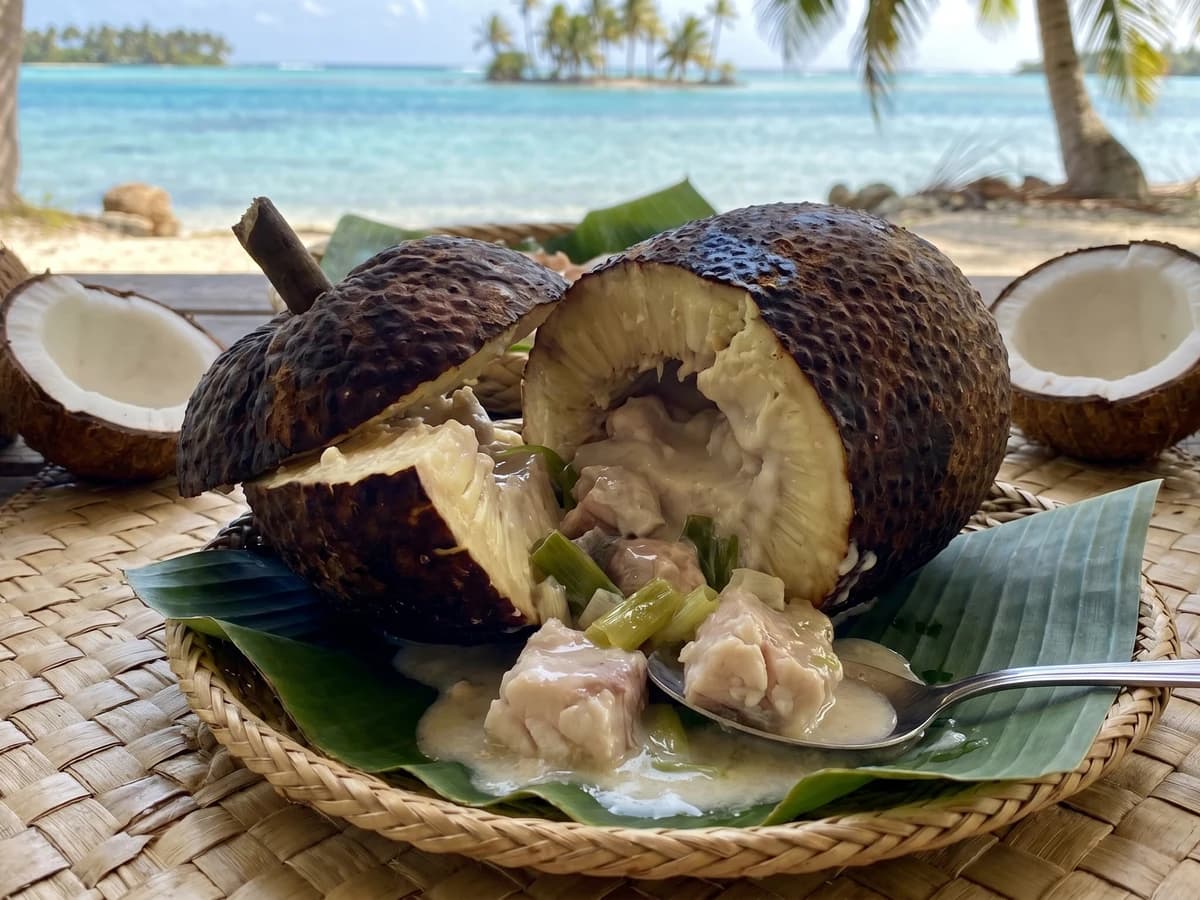
Tuvalu hollows a whole breadfruit, fills it with fresh fish, onion, and coconut cream, then bakes it until the shell darkens and the inside turns rich and soft.
Chef Makoa
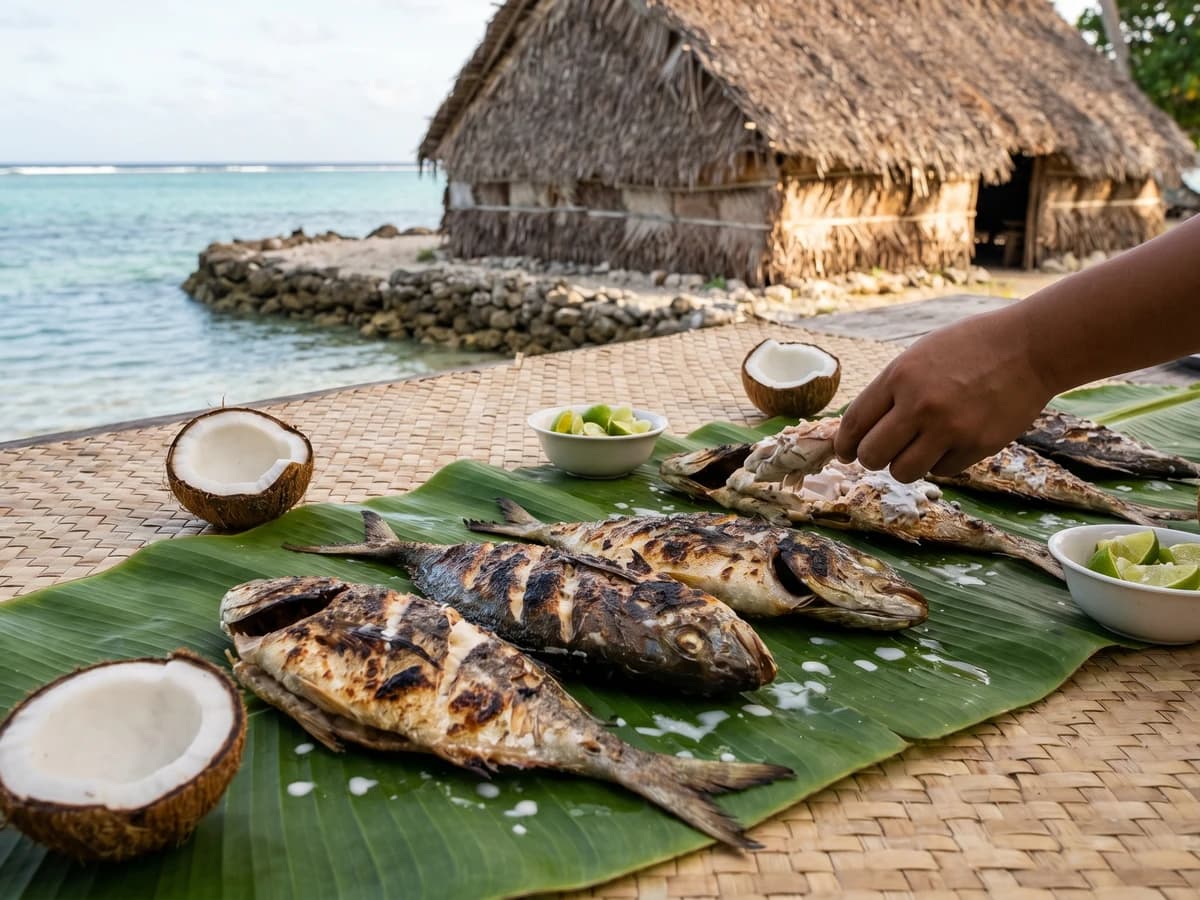
Tuvalu's tunu keeps the day's reef fish close to the fire and closer to the lagoon: salt, lime, coconut, and no fuss beyond sourcing it right.

Chef Juliette
John Dory has the delicacy of sole and the firmness of turbot. A light flouring, a quick butter sauté, and nut-brown beurre noisette show exactly why looks never mattered.