
Chef Takumi
Aspara-bacon (アスパラベーコン, bacon-wrapped asparagus)
Aspara-bacon is late-spring asparagus treated with common sense: thin bacon, hot grill, and a last brush of shōyu and mirin so the spear stays sweet while the wrap crisps.
A cooking platform built around craft, culture, and the stories behind what we eat.
Created by
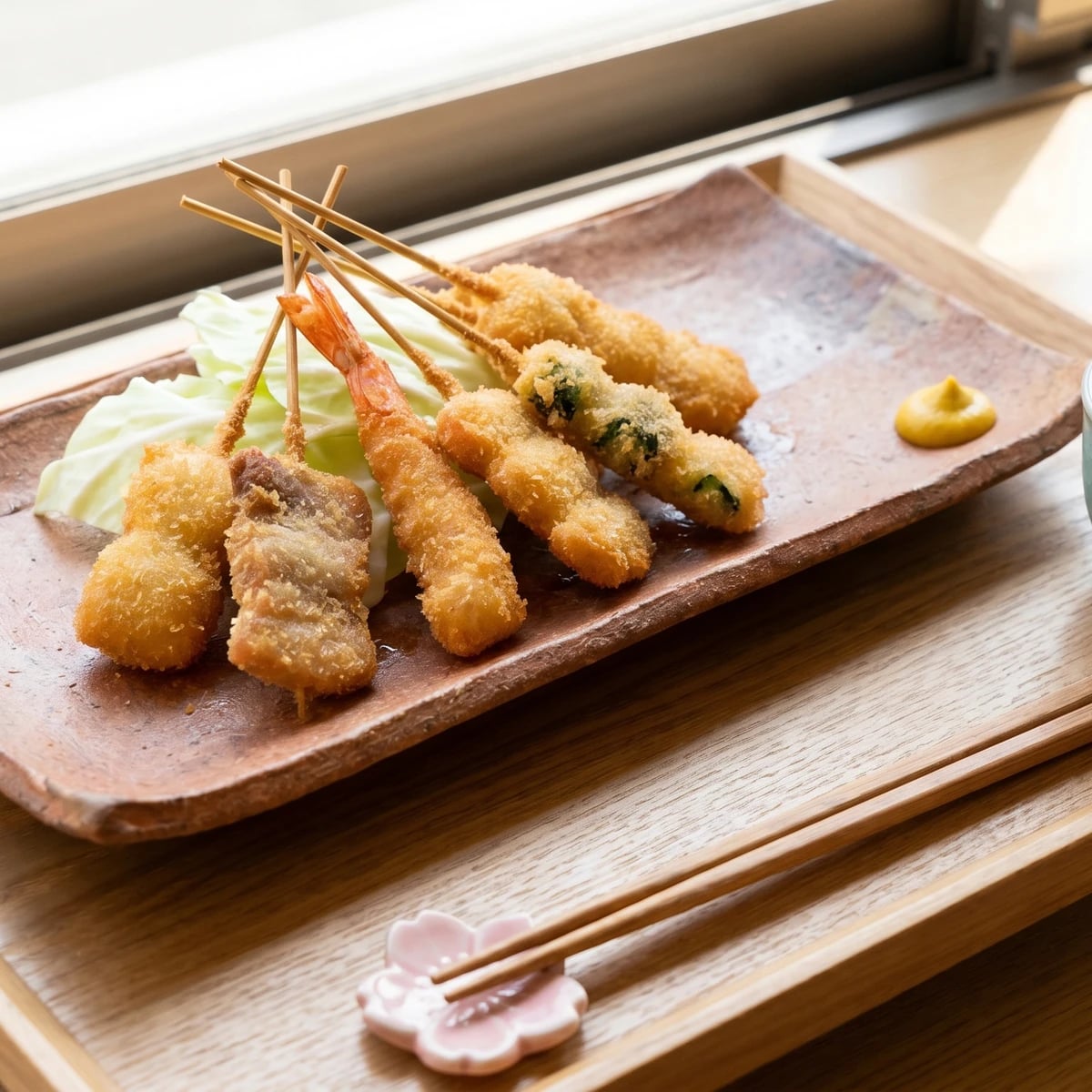
Osaka kushikatsu is one small ingredient at a time, crumbed lightly, fried clean, and dipped once in a dark, tangy sauce. The rule is simple because the table is shared.
One dip is the famous rule, and it isn't theater. Kushikatsu sauce was made for a shared cup, so the skewer goes in once, comes out glossy and dark, and then belongs to you. Very simple. Even manners become easy when they have a reason attached.
Kushikatsu is the method, not the menu. Kushi means skewer; katsu here means the crumbed fry. In Osaka the pleasure is in small single-ingredient sticks: beef, onion, lotus root, shiitake, a quail egg. Use what is at its prime, 旬 (shun), and keep the pieces modest. A skewer should cook before the panko has time to go from golden to bitter.
The one detail that decides it is dryness. Pat the onion, lotus root, mushroom, and meat until the surface is dry, because flour clings to dryness and slips from water. Then the sequence is plain: flour, thin batter, panko, clean oil. Nothing hidden. The sauce is sharp and sweet, but it isn't there to rescue tired ingredients. It is there to meet a crisp crumb and a good little piece of food.
Serve kushikatsu as otsumami, food for drinking, or as the fried dish in a casual meal. Bring the skewers out in small batches, not a mountain. Fried food has its own ma too. Leave it room, and it stays lively.
Osaka kushikatsu is closely tied to Shinsekai, the district around Tsūtenkaku in southern Osaka, where cheap skewers fed workers and theatergoers in the late Taishō and early Shōwa years. The famous Kushikatsu Daruma opened there in 1929 and helped fix the style of small crumbed skewers dipped in a communal pot of sauce. The warning nido-zuke kinshi, no second dipping, grew from that shared sauce and became as much a marker of the dish as the panko crust.
Quantity
1 small piece (about 5g)
Quantity
1 cup
Quantity
8g
Quantity
1 cup
Quantity
2 tablespoons
Quantity
2 tablespoons
Quantity
1 tablespoon
Quantity
30
about 6 inches long, soaked for 20 minutes
Quantity
180g
cut into twelve 2 cm pieces
Quantity
1
cut into 12 thick wedges
Quantity
1 small (about 180g)
peeled and cut into six 6 mm rounds
Quantity
6 small
stems removed
Quantity
6
peeled
Quantity
1/2 teaspoon
Quantity
1/2 cup
for dusting
Quantity
3/4 cup
for batter
Quantity
1
Quantity
3/4 cup
for batter
Quantity
3 cups
lightly crushed if very coarse
Quantity
6 cups
rice bran or canola, for frying
Quantity
1/4 head
cut into wedges, for serving
Quantity
for serving
| Ingredient | Quantity |
|---|---|
| konbu (dried kelp) | 1 small piece (about 5g) |
| cold water | 1 cup |
| katsuobushi (bonito flakes) | 8g |
| Japanese Worcestershire-style sauce (usutā sōsu) | 1 cup |
| soy sauce | 2 tablespoons |
| mirin | 2 tablespoons |
| sugar | 1 tablespoon |
| bamboo skewersabout 6 inches long, soaked for 20 minutes | 30 |
| beef sirloin or rumpcut into twelve 2 cm pieces | 180g |
| large onioncut into 12 thick wedges | 1 |
| lotus rootpeeled and cut into six 6 mm rounds | 1 small (about 180g) |
| shiitake capsstems removed | 6 small |
| hard-boiled quail eggspeeled | 6 |
| fine sea salt | 1/2 teaspoon |
| all-purpose flourfor dusting | 1/2 cup |
| all-purpose flourfor batter | 3/4 cup |
| large egg | 1 |
| cold waterfor batter | 3/4 cup |
| pankolightly crushed if very coarse | 3 cups |
| neutral oilrice bran or canola, for frying | 6 cups |
| green cabbagecut into wedges, for serving | 1/4 head |
| Japanese karashi mustard (optional) | for serving |
Wipe the konbu with a damp cloth, but don't wash it. Put it in 1 cup cold water and warm it slowly over low heat. Pull the konbu just before the water boils, when small bubbles climb the sides. Add the katsuobushi, take the pot off the heat, and leave it alone for 2 minutes. Strain without pressing.
Measure 1/2 cup of the dashi into a small pan. Add the usutā sōsu, soy sauce, mirin, and sugar. Warm just until the sugar dissolves and the mirin loses its raw edge, then cool to room temperature. The sauce should be thin enough to coat a skewer in one dip, not so thick that it buries the crumb.
Set the beef, onion, lotus root, shiitake, and quail eggs on a tray. Sprinkle the beef lightly with salt. Pat every piece dry, especially the lotus root and onion. This is the detail that decides it: flour grips a dry surface, while water pushes the coating away and makes the oil complain.
Thread one kind of ingredient on each skewer: two beef pieces, two onion wedges, one lotus root round, one shiitake cap, or one quail egg. Leave the lower half of each skewer bare as a handle. Kushikatsu is the method, not the menu, and single-ingredient sticks cook more honestly than crowded mixtures.
Put the dusting flour in one shallow tray. In a bowl, whisk the egg with 3/4 cup cold water, then stir in 3/4 cup flour just until no dry pockets remain. Put the panko in a second tray. A few small lumps in the batter are fine. Overworking it makes a heavy coat, and these little skewers want a light jacket, not armor.
Dust each skewer in flour, tap off the excess, dip it into the batter, let the extra drip away, then roll it in panko. Press gently so the crumbs cling without compacting. Rest the breaded skewers for 5 minutes while the oil heats, which lets the coating settle before it meets the pot.
Pour the oil into an age-nabe or heavy narrow pot, filling it no more than halfway. Heat to 170°C, or 340°F. If you don't have a thermometer, drop in a pinch of panko: it should sink slightly, rise at once, and fizz steadily. Too cool and the crumb drinks oil. Too hot and the outside browns before the onion softens.
Fry 4 to 6 skewers at a time, giving each one room. Cook quail eggs about 1 minute, shiitake and beef about 2 minutes, onion and lotus root about 3 minutes. Turn once with long chopsticks. The crust should be pale gold and crisp, and the bubbling should quiet around the skewer.
Lift the skewers to an abura-kiri or a wire rack set over a tray. Don't pile them on paper towels. A flat towel traps oil against the crumb, while a rack lets the crust stay dry and crisp. Taste one vegetable skewer before serving and adjust the sauce, not the fried food.
Pour the sauce into a narrow dipping cup and set out cabbage wedges and karashi if using. Dip each skewer once, all the way in, then eat. Never dip twice into a shared cup. If you want more sauce, use a piece of cabbage to carry it. That little rule is not scolding. It's just how a shared table stays clean.
1 serving (about 285g)
Culinary guides, cultural storytelling, and the editorial depth that makes cooking meaningful.
Discover Culinary Explorer
Chef Takumi
Aspara-bacon is late-spring asparagus treated with common sense: thin bacon, hot grill, and a last brush of shōyu and mirin so the spear stays sweet while the wrap crisps.

Chef Takumi
This is Osaka street food at its plainest and best: good beef cut small, a thin batter, fine panko, hot beef tallow, and one clean dip in sauce.

Chef Takumi
Buta-bara is not a trick of the grill. Good pork belly, even cutting, steady heat, and the patience to let the fat turn glossy do most of the work.

Chef Takumi
Thick slices of lotus root make the finest vegetable kushikatsu: crisp panko outside, tender inside, and those clean holes showing you did nothing more complicated than cut it well.