
Chef Zohra
Bakoula (بقولة)
Mallow greens cooked soft and dark with garlic, cumin, preserved lemon, and olives, the Moroccan cooked salad that tastes of spring rain and a loaf of khobz shared warm.
A cooking platform built around craft, culture, and the stories behind what we eat.
Created by
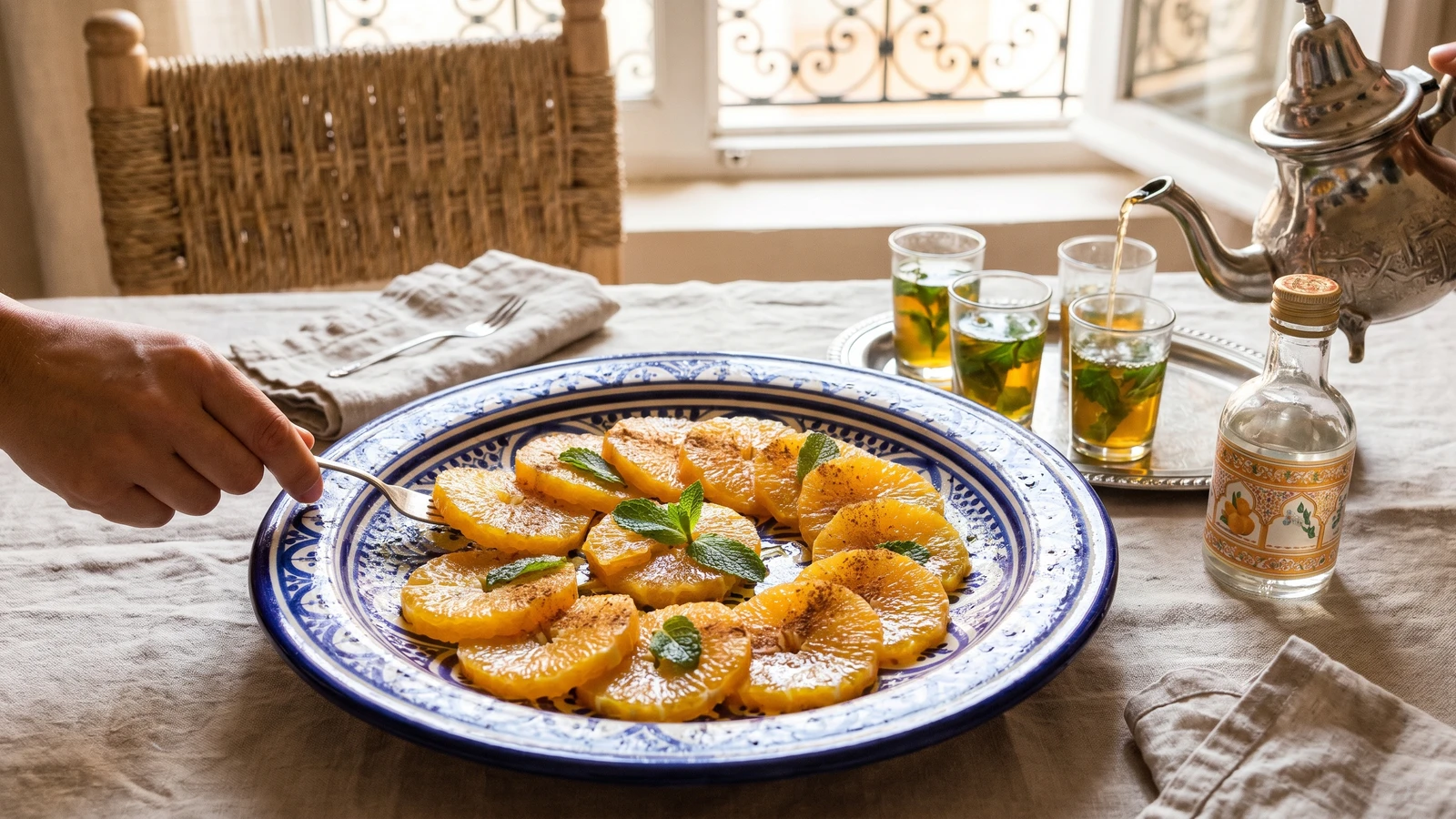
Cold orange slices, cinnamon, and orange-flower water: the winter dessert-salad that refreshes the table after a long tagine and still feels generous enough for guests.
Winter oranges are made for this plate, heavy in the hand, bright under the knife, full of juice when the rest of the market is quieter. You don't cook them. You pay attention. Peel away the bitter white pith, slice them clean, and let the cinnamon fall lightly so it perfumes without burying the fruit.
The orange-flower water is the little key. Too much and the dish tastes like perfume. Just enough and the orange tastes more like itself, fresh, cold, and alive. La balance est dans les yeux, the scale is in the eyes, but here it is also in the nose.
This is what comes after a generous meal, when everyone says they are full and still reaches for one more slice. It is quick, yes, but not careless. A table is a door you leave open, and a plate of oranges at the end keeps people sitting together a little longer.
Citrus entered Morocco in layers: bitter orange spread through medieval Islamic agriculture from about the 10th to 12th centuries, while sweet orange became more common around the western Mediterranean after Portuguese trade in the 15th and 16th centuries. Cinnamon arrived through Indian Ocean and Mediterranean trade routes, and orange-flower water became important in Andalusi and Fassi pastry and dessert traditions. The exact date of this salad is not documented; it belongs to the domestic Moroccan table, especially in winter when oranges are abundant and at their best.
Quantity
5 large
chilled
Quantity
1 tbsp, or to taste
Quantity
1 tsp
preferably freshly ground
Quantity
1 tbsp
only if the oranges need help
Quantity
8
| Ingredient | Quantity |
|---|---|
| sweet orangeschilled | 5 large |
| orange-flower water | 1 tbsp, or to taste |
| ground cinnamonpreferably freshly ground | 1 tsp |
| sugar or honey (optional)only if the oranges need help | 1 tbsp |
| fresh mint leaves (optional) | 8 |
Use oranges that feel heavy for their size and smell bright at the stem. This dish has nowhere to hide a tired fruit, so sourcing comes first. In Morocco I make this in winter, when oranges are cold, sweet, and full of juice.
Cut away the peel and the white pith with a sharp knife, following the curve of the fruit. The pith is bitter, and bitterness would fight the orange-flower water. Slice the oranges into thin rounds and catch any juice on the board.
Arrange the slices on a wide plate, overlapping them a little, then spoon over the saved juice and the orange-flower water. Taste before adding sugar or honey. If the oranges are good, they may need nothing.
Dust with cinnamon in a fine, even veil, not a blanket. Let the plate rest in the refrigerator for 10 minutes so the juice, cinnamon, and flower water meet. Serve cold, with mint only if you want a little green freshness.
1 serving (about 225g)
Culinary guides, cultural storytelling, and the editorial depth that makes cooking meaningful.
Discover Culinary ExplorerChef Zohra
Mallow greens cooked soft and dark with garlic, cumin, preserved lemon, and olives, the Moroccan cooked salad that tastes of spring rain and a loaf of khobz shared warm.

Chef Zohra
Potatoes simmered until tender, then turned while warm through chermoula, garlic, cumin, paprika, coriander, olive oil, and preserved lemon. This is a weeknight Moroccan salad that still opens the table.

Chef Zohra
Fresh fava beans cooked until tender, then folded warm into chermoula of garlic, cumin, paprika, coriander, and preserved lemon. Spring food for a shared bowl, carried to the table with bread.
Chef Zohra
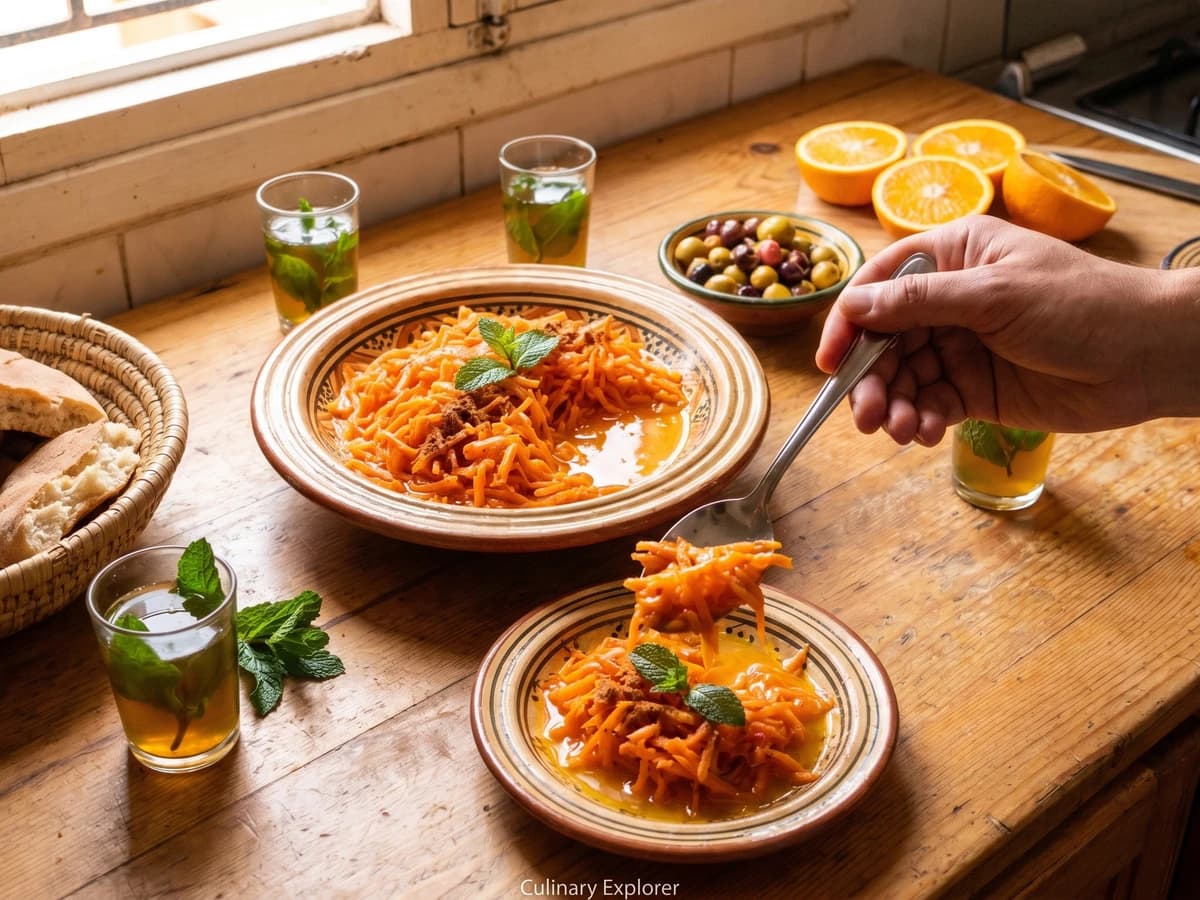
Fine-grated carrot dressed with orange juice, a little sugar, orange-flower water, and cinnamon. Khizou bel limoun is the fresh raw counterpoint that wakes up a Moroccan table.