
Chef Takumi
Aji Fry (アジフライ, panko-fried horse mackerel)
Aji fry is weeknight fish with no mystery: fresh horse mackerel opened cleanly, breaded lightly, and fried until the panko crackles while the flesh stays sweet.
A cooking platform built around craft, culture, and the stories behind what we eat.

Created by
Ketchup rice and soft egg are not a trick. Keep the eggs pale, keep the rice dry, and fold with calm hands. That is the whole craft.
People get nervous at the fold of omurice. They imagine a restaurant trick, a perfect yellow blanket tucked around rice with no wrinkle in sight. The dish is kinder than that. Make the rice dry and savory, cook the eggs just until set, then fold with calm hands. If the edge is not perfect, the spoon will forgive you. It is a generous utensil.
Omurice is yōshoku, Western-style Japanese food that became entirely our own at the home table. Here ketchup is not a joke and not a shortcut. Fry it briefly with onion and chicken before the rice goes in, and its sharp sweetness turns round and glossy. That is why the rice tastes cooked, not merely stained red.
The detail that decides the dish is the egg. Keep the pan moderate, the butter pale, and the top of the omelette still moist when the rice goes in. Brown the egg and it tightens; overfill it and it tears. A small oval of rice wrapped in soft egg, a ribbon of ketchup, a spoon at the rim. Honmono, made on a weeknight, with nothing hidden.
Omurice belongs to yōshoku, the Japanese category of cooking that took in Western ingredients during the Meiji and Taishō eras and turned them into everyday dishes. Two restaurants are often named in its origin story: Renga-tei in Ginza, which served an omelette with rice in the early 1900s, and Hokkyokusei in Osaka, which claims the ketchup-rice-wrapped version in 1925. The name is wasei-eigo, Japanese-made English, joining omelette and rice.
Quantity
2 cups (about 320g)
preferably cooled
Quantity
120g
cut into 1cm pieces
Quantity
1/2 small
finely diced
Quantity
3
thinly sliced
Quantity
1/4 cup
thawed
Quantity
1 tablespoon, plus 2 teaspoons
divided
Quantity
1 tablespoon, plus 2 teaspoons
divided
Quantity
4 tablespoons
for the chicken rice
Quantity
2 tablespoons
for finishing
Quantity
1 teaspoon
Quantity
1 teaspoon
Quantity
1/2 teaspoon
divided
Quantity
1/8 teaspoon
Quantity
4
Quantity
2 tablespoons
| Ingredient | Quantity |
|---|---|
| cooked Japanese short-grain ricepreferably cooled | 2 cups (about 320g) |
| boneless chicken thighcut into 1cm pieces | 120g |
| yellow onionfinely diced | 1/2 small |
| button mushrooms (optional)thinly sliced | 3 |
| frozen peasthawed | 1/4 cup |
| neutral oildivided | 1 tablespoon, plus 2 teaspoons |
| unsalted butterdivided | 1 tablespoon, plus 2 teaspoons |
| ketchupfor the chicken rice | 4 tablespoons |
| ketchupfor finishing | 2 tablespoons |
| Japanese Worcestershire sauce or chūnō sauce | 1 teaspoon |
| soy sauce | 1 teaspoon |
| sea saltdivided | 1/2 teaspoon |
| white pepper | 1/8 teaspoon |
| large eggs | 4 |
| whole milk | 2 tablespoons |
Use cooled short-grain rice if you have it. If the rice is freshly cooked, spread it on a tray for 10 minutes and turn it once with wet fingers or a rice paddle. The grains need to lose their surface wetness so they fry and take the ketchup cleanly; hot, wet rice turns heavy and pasty.
Beat the eggs in two separate bowls: 2 eggs, 1 tablespoon milk, and a pinch of salt in each. Mix until the whites disappear, then stop. Foamy eggs cook unevenly and make a pocked omelette; quiet eggs set smooth.
Heat 1 tablespoon neutral oil and 1 tablespoon butter in a wide skillet over medium heat. Add the chicken with 1/4 teaspoon salt and cook until the cut faces no longer show pink, about 3 minutes. Add the onion and mushrooms, if using, and cook until the onion turns translucent. Keep the heat moderate: yōshoku wants the onion sweet, not scorched.
Push the chicken and onion to one side of the pan. Add 4 tablespoons ketchup and the Worcestershire or chūnō sauce to the bare pan and fry for 45 to 60 seconds, stirring until the ketchup darkens slightly and looks glossy. Raw ketchup tastes sharp and watery; cooking it first rounds the sweetness and keeps the rice from tasting merely sauced.
Add the rice and peas. Fold and press with a spatula until the grains are orange-red and glossy but not wet. Drizzle the soy sauce around the hot edge of the pan so it scents the rice as it hits the metal, then season with the white pepper and taste. Divide the rice into two compact oval portions and keep them warm.
Wipe out the pan, or use a clean 20cm frying pan. Set it over medium-low heat and add 1 teaspoon oil and 1 teaspoon butter. When the butter foams but stays pale, pour in one bowl of egg. Stir quickly with chopsticks or a soft spatula for 10 to 15 seconds, pulling set curds from the edge toward the center, then tilt the pan to fill the gaps. Stop while the top still looks glossy and barely loose.
Take the pan off the heat. Set one portion of chicken rice across the center in a low oval, leaving bare egg on both long sides. Fold the near side of the egg over the rice, then nudge the far side up and over. Slide the wrapped rice to the lip of the pan, hold a plate over it, and turn the pan and plate together. The egg keeps setting from its own warmth, so moving now gives you a soft shell instead of a dry one.
Cover the omurice with a clean paper towel and cup your hands around it to neaten the oval while the egg is still flexible. If an edge opens, tuck it under. Repeat with the remaining egg and rice. Draw one glossy ribbon of ketchup over each omelette, not a blanket. Serve at once with a spoon.
1 serving (about 445g)
Culinary guides, cultural storytelling, and the editorial depth that makes cooking meaningful.
Discover Culinary ExplorerChef Takumi
Aji fry is weeknight fish with no mystery: fresh horse mackerel opened cleanly, breaded lightly, and fried until the panko crackles while the flesh stays sweet.
Chef Takumi
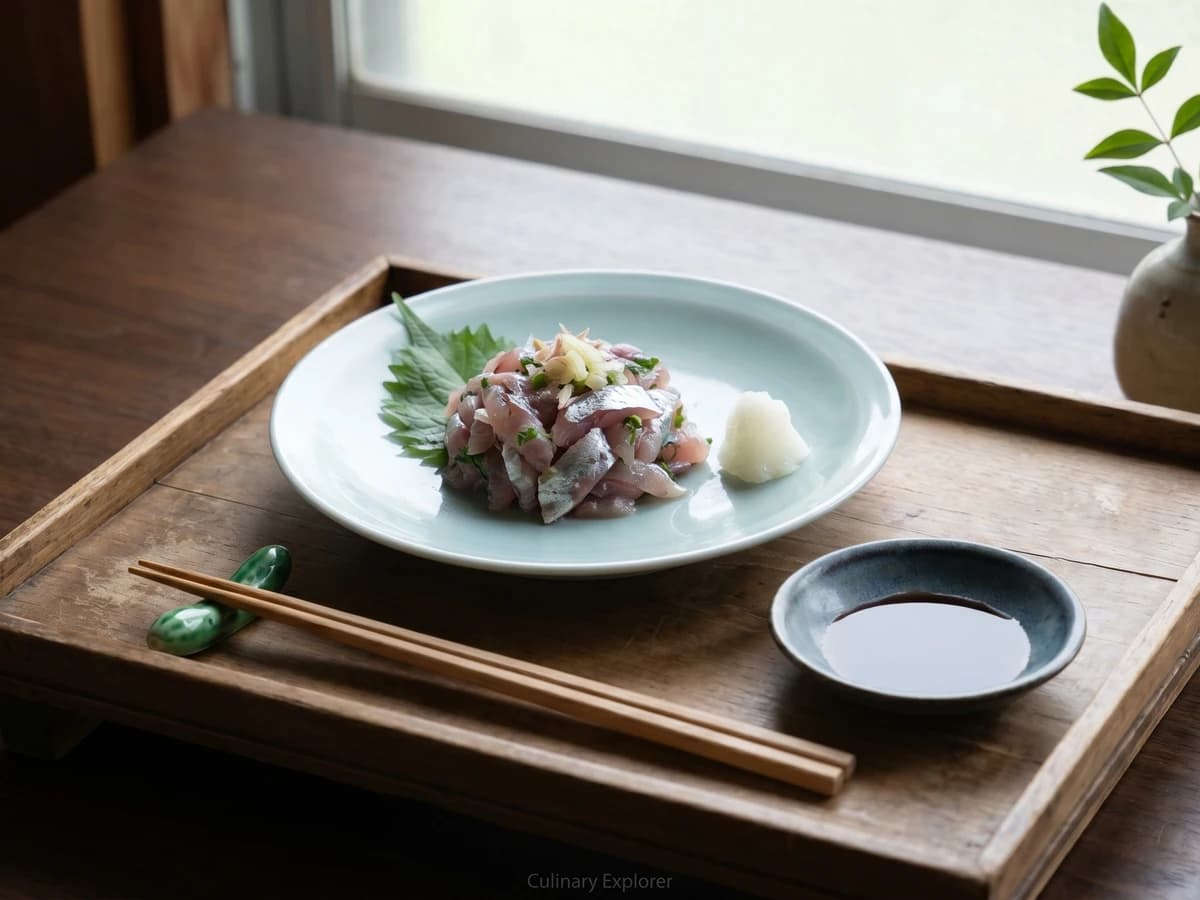
Summer horse mackerel, chopped just enough to catch ginger and scallion, becomes a cool, clean main dish with rice. The secret is fresh fish and a knife that does not bruise it.
Chef Takumi
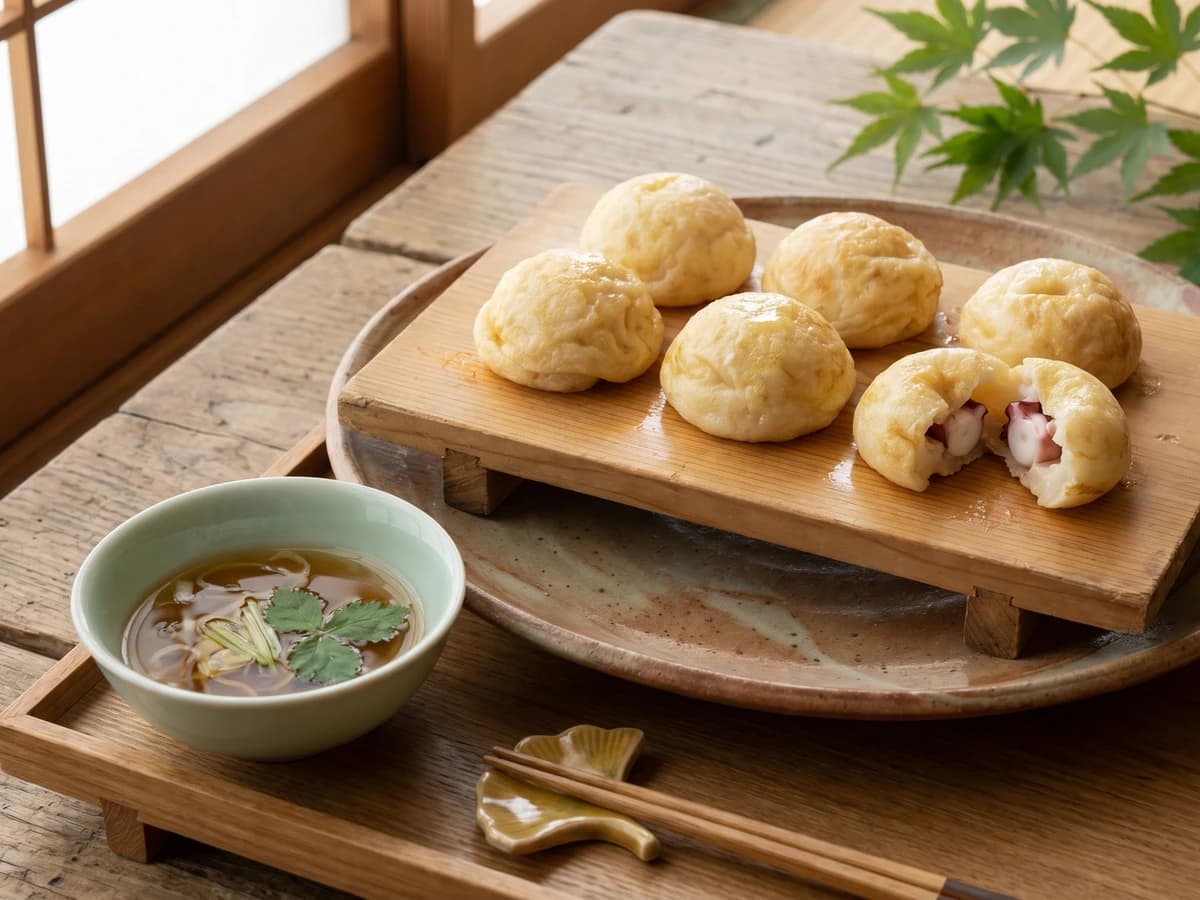
Akashi-yaki is not sauced takoyaki. It is egg-rich batter, tender octopus, and clear dashi, cooked pale and soft so each ball can be dipped like a small custard dumpling.

Chef Takumi
A whole anago looks like a test of nerve. It is mostly good sourcing, a dry skin, cold batter, and oil hot enough to leave the eel sweet under its lace.