
Chef Isabel
Cocido Aragonés con Cardo
Cocido Aragonés is Aragón's chickpea stew, marked by cardo from the Ebro garden and a bread-and-meat pelota. Keep the pot gentle and the garbanzos stay whole.
A cooking platform built around craft, culture, and the stories behind what we eat.
Created by
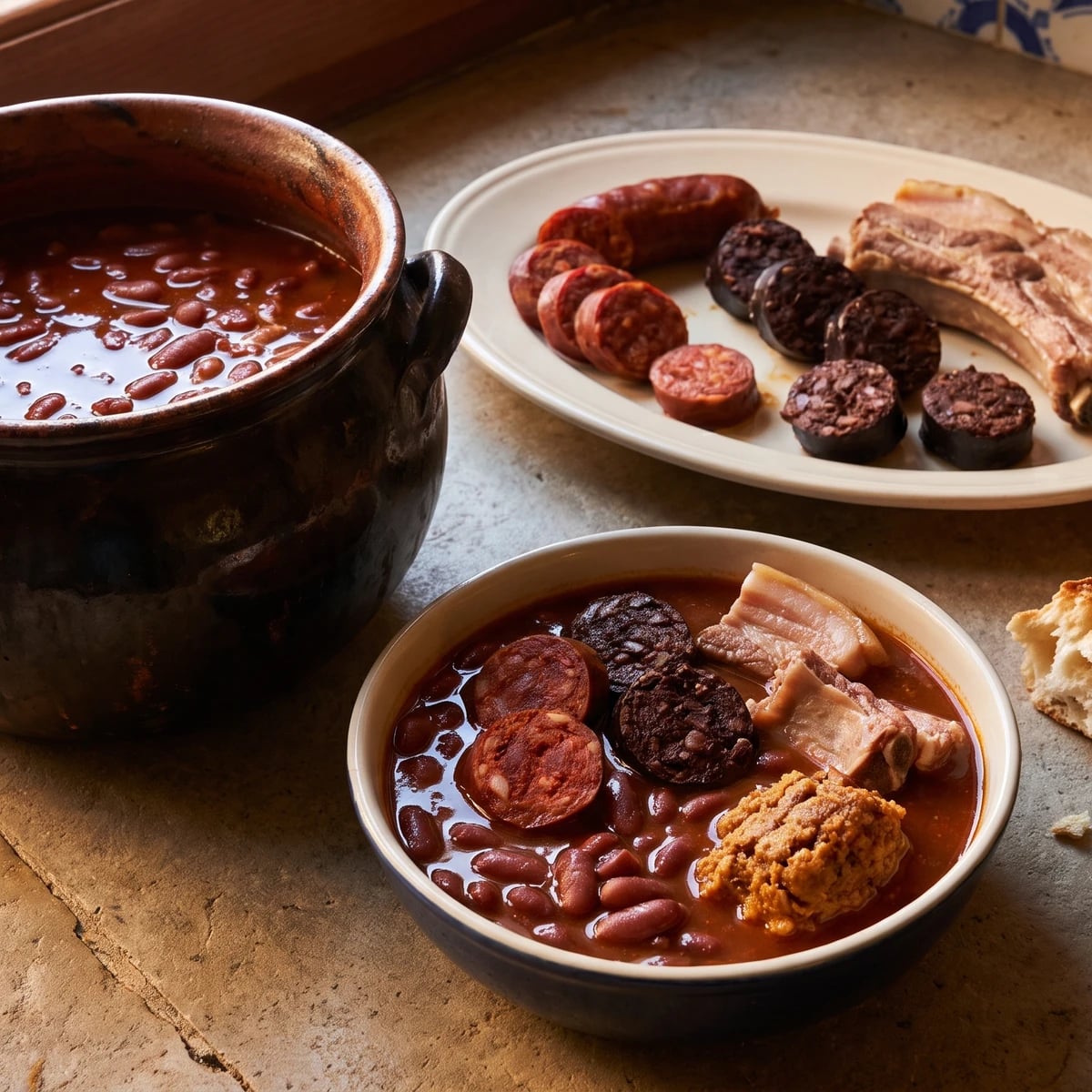
Olla podrida is Burgos at its most serious: red Ibeas beans, pork from the matanza, and a slow pot served in two vuelcos, beans first and meats after.
Olla podrida Burgalesa belongs to Burgos and to the red beans of Ibeas de Juarros, not to any plain stew with pork thrown in. It is cocina de cuchara, spoon food, but a grand one: alubias rojas, chorizo, morcilla de Burgos, ribs, ear, panceta, and sometimes a relleno of bread and egg. Heavy food, yes. Burgos did not build this for a polite little lunch.
The method that decides it is the simmer. Soak the beans properly, start them cold, and once they begin to move, keep the pot at the barest tremble. A hard boil splits the skins and clouds the broth, and then you have red bean paste with meat in it. Good beans, patience, and no spoon digging through the pot. Shake the olla by the handles if you must move anything.
If you are far from Burgos, no hace falta haber pisado España. Use a good dried red kidney bean or a small red bean with a creamy center, and know it will cook a little firmer than alubia roja de Ibeas. For morcilla, the closest real substitute is a Spanish rice morcilla; if you cannot find it, leave it out before you use a sweet breakfast blood sausage and call it the same dish. Pésalo, no lo adivines. Siempre sale, si lo sigues.
My Margin beside this one is short: rest it overnight. The beans drink in the pork, the broth settles, and the whole pot stops shouting and starts speaking clearly. Serve it in two vuelcos, beans first and the sacramentos, the pork pieces, after. Tal como se hace allí.
Olla podrida is one of Castile's old powerful pots, praised in Golden Age writing as a dish of plenty rather than a poor everyday stew. Burgos keeps a particular version built around alubias rojas de Ibeas and the pork larder from the matanza, the household slaughter that supplied chorizo, morcilla, ribs, ear, and panceta for the cold months. The name is often understood from poderida, powerful, which suits the dish better than the modern sound of podrida, rotten.
Quantity
500g
soaked overnight
Quantity
250g
rinsed
Quantity
200g
Quantity
200g
in one piece
Quantity
1
cleaned
Quantity
1
split
Quantity
2 links, about 220g total
Quantity
1 link, about 250g
Quantity
1
peeled and halved
Quantity
1
peeled
Quantity
1
Quantity
3
peeled
Quantity
1 teaspoon
Quantity
2 tablespoons
Quantity
to taste
Quantity
120g
torn
Quantity
2
Quantity
1
minced
Quantity
2 tablespoons
Quantity
40g
Quantity
as needed
| Ingredient | Quantity |
|---|---|
| dried alubias rojas de Ibeas or good dried red kidney beanssoaked overnight | 500g |
| salted pork ribsrinsed | 250g |
| fresh or lightly cured pork ribs | 200g |
| panceta or streaky salt porkin one piece | 200g |
| pig's earcleaned | 1 |
| pig's trotter (optional)split | 1 |
| Spanish cooking chorizo | 2 links, about 220g total |
| morcilla de Burgos or Spanish rice morcilla | 1 link, about 250g |
| onionpeeled and halved | 1 |
| carrotpeeled | 1 |
| bay leaf | 1 |
| garlic clovespeeled | 3 |
| sweet pimentón de la Vera | 1 teaspoon |
| olive oil | 2 tablespoons |
| salt | to taste |
| day-old bread, for the rellenotorn | 120g |
| large eggs, for the relleno | 2 |
| garlic clove, for the rellenominced | 1 |
| chopped parsley, for the relleno | 2 tablespoons |
| chopped chorizo or panceta, for the relleno | 40g |
| olive oil, for frying the relleno | as needed |
The night before, put the beans in a large bowl and cover them with plenty of cold water. If your ribs or panceta are very salty, soak them separately in cold water too, changing the water once. This is not fussing. The beans cook evenly, and the pork gives seasoning instead of taking over the pot.
Drain the beans and put them in a tall heavy pot with the ribs, panceta, pig's ear, trotter if using, onion, carrot, bay leaf, and garlic. Cover with cold water by 4cm. Bring it up slowly over medium heat, skimming the grey foam as it rises. Start cold, not boiling, so the skins warm through gently and stay whole.
When the pot begins to bubble, lower the heat until the surface barely trembles. Cook for about 2 hours, uncovered or partly covered, adding small splashes of cold water if the beans show above the liquid. Do not stir with a spoon. Shake the pot by the handles now and then. That low tremble is the whole secret: creamy beans, clear red-brown broth, no broken skins.
After about 2 hours, add the chorizos. Warm the olive oil in a small pan, take it off the heat, stir in the pimentón, and immediately spoon it into the pot. Pimentón burns bitter in seconds, so let the oil carry it gently. Keep simmering until the beans are tender, usually 45 to 75 minutes more, depending on the bean.
While the beans finish, beat the eggs with the torn bread, minced garlic, parsley, and chopped chorizo or panceta. Let it sit 10 minutes so the bread softens. Shape into 6 small oval patties and fry in a little olive oil until browned on both sides. Slip them into the pot for the last 15 minutes so they drink some broth without falling apart.
Put the morcilla in during the last 20 minutes, when the beans are already tender. Keep the pot very gentle. Morcilla de Burgos is full of rice and onion, and if you boil it hard it bursts and muddies everything. Taste only near the end before salting; the pork has been seasoning the pot all along.
Lift out the meats, chorizo, morcilla, ear, trotter, and rellenos. Discard the onion, carrot, and bay leaf. Let the beans rest off the heat for at least 20 minutes, or cool and refrigerate overnight. Serve in two vuelcos: first the beans and broth in deep bowls, then the sliced sacramentos on a platter. Better the next day, and that is not a small thing.
1 serving (about 600g)
Culinary guides, cultural storytelling, and the editorial depth that makes cooking meaningful.
Discover Culinary Explorer
Chef Isabel
Cocido Aragonés is Aragón's chickpea stew, marked by cardo from the Ebro garden and a bread-and-meat pelota. Keep the pot gentle and the garbanzos stay whole.

Chef Isabel
Cocido Castellano is the chickpea stew of the Castilian meseta: clear broth first, garbanzos and cabbage next, meats and fried relleno last.

Chef Isabel
Cocido Gallego is Galicia's winter and Carnival pot: desalted matanza pork, garbanzos, grelos, and cachelos cooked in one broth until every platter tastes of the same deep, clean pot.

Chef Isabel
Cocido Lebaniego is Liébana's mountain pot from Cantabria: small chickpeas, pork from the larder, cabbage, potato, and a fried bread-and-egg relleno. Hold it at a tremble.