
Chef Jeong-sun
Bori-ppang (보리빵, Barley Steamed Bread)
A plain Korean market bread of barley flour and makgeolli, steamed into small dense rounds with a measured lift from yeast, gentle sweetness, and the earthiness older cooks knew too well.
A cooking platform built around craft, culture, and the stories behind what we eat.
Created by
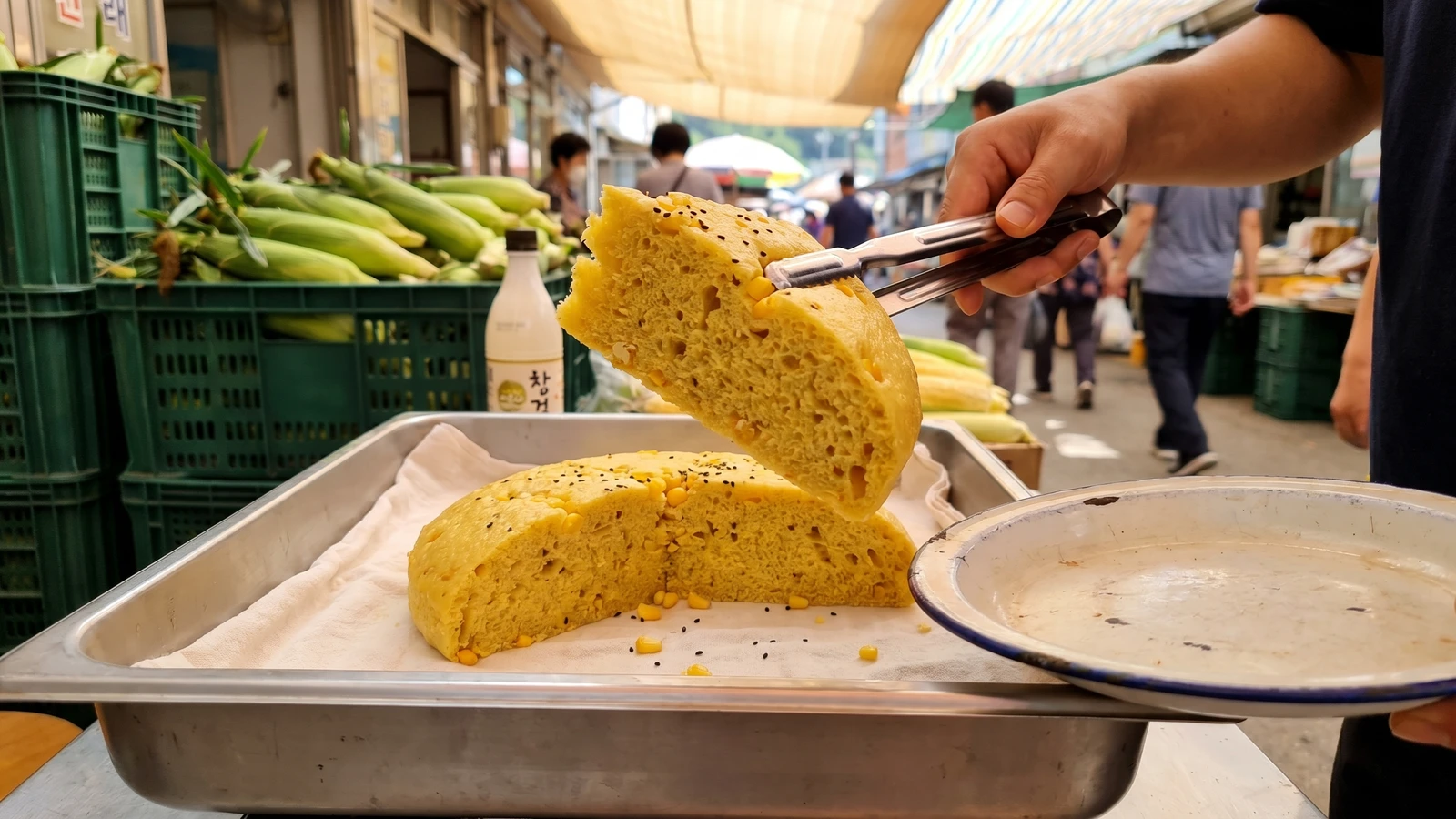
A market-style Korean steamed bread where makgeolli and a measured pinch of yeast lift cornmeal batter into a tender yellow loaf, coarse enough to taste the grain and sweet enough for a cheap afternoon.
Late summer in Gangwon-do puts corn in front of you before you ask for it: boiled ears near the bus stop, sacks at the five-day market, kernels cut from cobs into anything that will take them. Oksusu-sulppang belongs there, a cheap sweet bread carried home after errands, eaten by children with milk and by tired adults with coffee. It is not cake. It is a steamed market bread, risen with makgeolli (unfiltered rice wine) and made fuller by cornmeal.
The mistake is treating it like quick bread. Cornmeal needs time to drink, and makgeolli is alive only if the bottle is alive, so give both their measure: soak the grain, let the batter rise until the top is pocked with bubbles, then keep the lid closed while it cooks. Lift the lid too early and the center sinks. Use pasteurized makgeolli if that is what your shop has, but add measured yeast. 시대가 바뀌면 음식도 바뀌어야 해요. When times change, food must change too.
Notebook 42 says 115 grams cornmeal to 210 grams flour gives the coarse yellow crumb without making it gritty. That number matters. 손맛 is real; I measure it anyway, because a loaf that cost little and fed many people deserves to come out right twice.
Sulppang (술빵, alcohol bread) is a twentieth-century Korean home and market steamed bread that used makgeolli for flavor and leavening before packaged yeast was common in home kitchens. After the Korean War, wheat flour distributed through aid programs and inexpensive market makgeolli helped flour-based steamed breads spread as budget snacks. The corn version sits naturally in Gangwon-do, where cool upland fields are known for oksusu (corn) and gamja (potato), crops better suited to mountain land than rice.
Quantity
1 cup (240ml)
gently shaken, room temperature
Quantity
1/2 cup (120ml)
about 38 C/100 F
Quantity
1/3 cup (65g)
Quantity
1 teaspoon (3g)
or 1 1/4 teaspoons active dry yeast
Quantity
3/4 cup (115g)
fine or medium, not cornstarch
Quantity
1 1/2 cups (210g)
Quantity
1/2 teaspoon
Quantity
1
beaten, room temperature
Quantity
2 tablespoons, plus more for the pan
Quantity
1/2 cup (80g)
fresh, thawed frozen, or drained canned, patted dry
Quantity
2 teaspoons
Quantity
2 to 4 tablespoons
| Ingredient | Quantity |
|---|---|
| makgeolli, preferably saeng-makgeolli (live unpasteurized rice wine)gently shaken, room temperature | 1 cup (240ml) |
| warm waterabout 38 C/100 F | 1/2 cup (120ml) |
| sugar | 1/3 cup (65g) |
| instant yeastor 1 1/4 teaspoons active dry yeast | 1 teaspoon (3g) |
| yellow cornmealfine or medium, not cornstarch | 3/4 cup (115g) |
| all-purpose flour | 1 1/2 cups (210g) |
| fine sea salt | 1/2 teaspoon |
| large eggbeaten, room temperature | 1 |
| neutral oil | 2 tablespoons, plus more for the pan |
| corn kernelsfresh, thawed frozen, or drained canned, patted dry | 1/2 cup (80g) |
| black sesame seeds (optional) | 2 teaspoons |
| extra warm water (optional) | 2 to 4 tablespoons |
Open the makgeolli slowly if it is live, then cap it and turn the bottle gently until the rice sediment returns to the drink. Stir the makgeolli, warm water, sugar, and yeast in a large bowl. After mixing, the liquid should be warm to the touch, about 30 to 35 C, never hot. Wait 10 minutes. Fine bubbles tell you the leaven is awake.
Whisk the cornmeal into the makgeolli mixture and let it stand 15 minutes. Cornmeal is thirsty. Give it this time or the crumb turns sandy, and then people blame the corn instead of the cook.
Whisk the flour and salt together in a separate bowl. Stir the beaten egg and oil into the soaked cornmeal mixture, then fold in the flour until no dry patches remain. The batter should be thicker than pancake batter and fall from the spatula in a heavy ribbon. If it sits like dough, add warm water 1 tablespoon at a time, up to 4 tablespoons. Fold in 60g of the corn kernels and save the rest for the top.
Cover the bowl and let the batter rise in a warm place, 26 to 28 C if you can manage it, until nearly doubled and pocked with small bubbles, about 1 1/2 to 2 hours. A cool kitchen may take longer. Do not wait for it to triple. Over-risen sulppang tastes harsh and sinks in the middle.
Oil an 8-inch round cake pan or heatproof stainless bowl and line the bottom with parchment. Fill a steamer pot or wok with 2 inches of water and bring it to a lively boil. Wrap the lid in a clean cotton cloth and tie it firmly at the handle, so condensed water does not drip and pit the bread.
Fold the risen batter gently 4 times from the edge toward the center, only to even out the largest air pockets. Scrape it into the prepared pan and smooth the top lightly. Scatter over the reserved corn kernels and black sesame seeds, if using. Let it stand 15 to 20 minutes, until the batter rises about 1 cm and small bubbles return.
Set the pan on the steamer rack, cover, and cook over medium-high heat for 35 to 40 minutes. Do not lift the lid for the first 30 minutes. The center needs steady heat to set, and a curious cook can collapse a good loaf in one second. It is done when a skewer comes out clean, the center springs back, or an instant-read thermometer reads 93 to 95 C.
Turn off the heat, crack the lid open slightly, and let the bread sit 5 minutes before lifting it out. Cool in the pan 10 minutes, then run a thin knife around the edge and unmold. Cut into wedges and eat warm or at room temperature. Write down your rise time. Memory is a borrowed bowl.
1 serving (about 110g)
Culinary guides, cultural storytelling, and the editorial depth that makes cooking meaningful.
Discover Culinary ExplorerChef Jeong-sun
A plain Korean market bread of barley flour and makgeolli, steamed into small dense rounds with a measured lift from yeast, gentle sweetness, and the earthiness older cooks knew too well.

Chef Jeong-sun
A winter convenience-store bun made at home: soft white dough wrapped tight around smooth sweet red bean paste, steamed until pillowy, then eaten too hot because waiting is not its nature.

Chef Jeong-sun
A porous, gently sour rice cake fermented with makgeolli and steamed until tender, the summer tteok made ahead for special tables because it keeps better than most rice cakes.

Chef Jeong-sun
Soft wheat buns from Gangwon's Anheung road stalls, risen with makgeolli for a faint tang and filled with chunky red bean, the comfort food you eat hot before the crumb firms.