
Chef Jeong-sun
Bori-ppang (보리빵, Barley Steamed Bread)
A plain Korean market bread of barley flour and makgeolli, steamed into small dense rounds with a measured lift from yeast, gentle sweetness, and the earthiness older cooks knew too well.
A cooking platform built around craft, culture, and the stories behind what we eat.
Created by
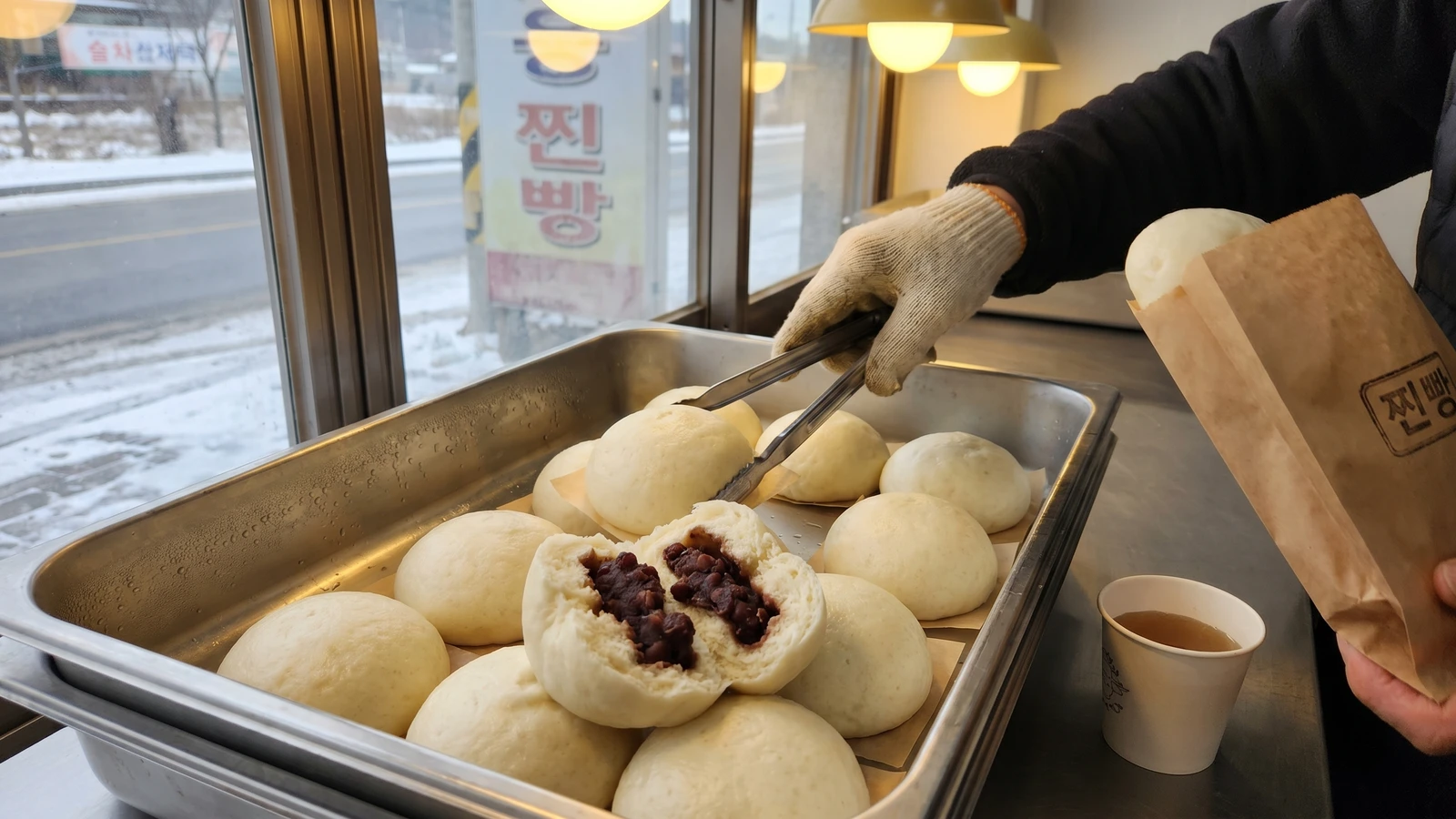
Soft wheat buns from Gangwon's Anheung road stalls, risen with makgeolli for a faint tang and filled with chunky red bean, the comfort food you eat hot before the crumb firms.
Jjinppang belongs to cold roads and small shops with metal trays, the kind of food you buy because your hands are stiff and dinner is still far away. Anheung, in Gangwon, made its name on that comfort: wheat dough around red bean, cooked hot and handed over quickly. It isn't grand food. That is why it matters.
The bun lives or dies by patience. The red bean filling must be cooked until it holds together, not so wet that it sinks into the dough. The dough must rise long enough to taste faintly of makgeolli (Korean rice wine), but it must not overproof and collapse in the steamer. I won't tell you this is difficult. I will tell you it asks you to watch.
Old shops could trust their makgeolli and their room temperature because they made the same dough every day. At home, we measure the yeast, the salt, and the bean filling so the bun can be made twice the same way. 손맛 is real; I measure it anyway. Eat these hot, before the crumb tightens, and freeze the rest while they are still fresh.
Jjinppang simply means steamed bread, and Korea's red bean version spread widely in the twentieth century through markets, bakeries, and roadside snack shops using wheat flour and sweetened pat (red beans). Anheung-myeon in Hoengseong County, Gangwon Province became nationally known for its jjinppang in the late twentieth century, when shops along mountain travel routes sold hot buns to people passing through. The local style is tied to a lightly tangy makgeolli-leavened dough and a modestly sweet red bean filling, a road snack with a village name attached to it.
Quantity
200g
rinsed
Quantity
6 cups, plus more as needed
Quantity
100g
Quantity
1/4 teaspoon
Quantity
1 tablespoon
Quantity
360g, plus more for dusting
Quantity
1 teaspoon
Quantity
1 teaspoon
Quantity
2 tablespoons
Quantity
3/4 teaspoon
Quantity
120ml
room temperature, preferably unpasteurized
Quantity
120ml
about 38 C
Quantity
1 tablespoon
Quantity
12 squares, each about 8cm
| Ingredient | Quantity |
|---|---|
| dried red beans (pat)rinsed | 200g |
| water | 6 cups, plus more as needed |
| sugar, for filling | 100g |
| fine sea salt, for filling | 1/4 teaspoon |
| honey or rice syrup (optional) | 1 tablespoon |
| all-purpose flour | 360g, plus more for dusting |
| instant yeast | 1 teaspoon |
| baking powder | 1 teaspoon |
| sugar, for dough | 2 tablespoons |
| fine sea salt, for dough | 3/4 teaspoon |
| makgeolli (Korean rice wine)room temperature, preferably unpasteurized | 120ml |
| warm waterabout 38 C | 120ml |
| neutral oil | 1 tablespoon |
| parchment squares | 12 squares, each about 8cm |
Put the red beans in a pot with 3 cups water and bring to a boil. Boil 5 minutes, then drain and discard that first water. Red beans carry a dry bitterness in their first boil, and this small step makes the filling taste clean instead of muddy.
Return the drained beans to the pot with 3 cups fresh water. Simmer gently 45 to 60 minutes, adding a little water if the pot dries, until a bean crushes easily between two fingers. Drain off any loose liquid, then mash about half the beans, leaving the rest whole. Stir in 100g sugar, 1/4 teaspoon salt, and the honey or rice syrup if using. Cook over low heat 5 to 8 minutes, stirring, until the filling holds a soft mound on a spoon. Cool completely, then divide into 12 balls, about 35g each.
In a large bowl, whisk the flour, instant yeast, baking powder, 2 tablespoons sugar, and 3/4 teaspoon salt. Stir together the makgeolli, warm water, and oil, then pour into the flour. Mix until no dry flour remains. Makgeolli brings a faint rice-wine tang and tenderness; the measured yeast is there because many bottles today are pasteurized and will not raise dough reliably.
Knead the dough 8 to 10 minutes by hand, or 5 minutes in a mixer on low, until it is smooth, soft, and only lightly tacky. Add flour only 1 teaspoon at a time if it truly sticks to your fingers. A dry dough makes a tight bun, and jjinppang should give gently under the hand.
Cover the dough and let it rise in a warm place 60 to 90 minutes, until doubled. Notebook 42 says not to hurry this rise. The dough needs time for the makgeolli and yeast to make a crumb that tastes alive instead of plain white bread.
Turn the dough onto a lightly floured board and divide it into 12 pieces, about 52 to 55g each. Keep them covered while you work. Flatten one piece into a 9cm round, leaving the center a little thicker than the edge. Set one red bean ball in the center, pull the edges up around it, and pinch firmly closed. Place seam side down on a parchment square. Thin edges seal cleanly; a thin center tears.
Arrange the filled buns in a steamer with at least 3cm between them, or proof them on a tray if your steamer is small. Cover and let rise 30 to 40 minutes, until puffy and light but not doubled. Press one gently with a fingertip. The dent should fill back slowly.
Bring water to a strong boil in the steamer base. Wrap the lid in a clean cotton cloth so water does not drip onto the buns. Set the buns over the boiling water, cover, and steam 13 to 15 minutes over medium-high heat. Turn off the heat, crack the lid open 2 minutes, then uncover. That short rest keeps the tops from wrinkling too sharply.
Serve the jjinppang while hot, when the dough is soft and the red bean is still loose enough to press under your teeth. This is not a pastry to admire for an hour. It firms as it cools, so eat first and talk after.
1 serving (about 105g)
Culinary guides, cultural storytelling, and the editorial depth that makes cooking meaningful.
Discover Culinary ExplorerChef Jeong-sun
A plain Korean market bread of barley flour and makgeolli, steamed into small dense rounds with a measured lift from yeast, gentle sweetness, and the earthiness older cooks knew too well.

Chef Jeong-sun
A winter convenience-store bun made at home: soft white dough wrapped tight around smooth sweet red bean paste, steamed until pillowy, then eaten too hot because waiting is not its nature.

Chef Jeong-sun
A porous, gently sour rice cake fermented with makgeolli and steamed until tender, the summer tteok made ahead for special tables because it keeps better than most rice cakes.

Chef Jeong-sun
Soft wheat buns twisted into little flowers, plain enough to let a peppery stir-fry speak, but measured carefully so each one opens cleanly in the steamer.