
Chef Makoa
Tumunu (Atiu Cook Islands Bush Beer)
Atiu's bush-beer circle in a clean kitchen batch: citrus, banana, sugar, water, and yeast fermented light, served in small cups with respect for the people who keep the stump.
A cooking platform built around craft, culture, and the stories behind what we eat.
Created by
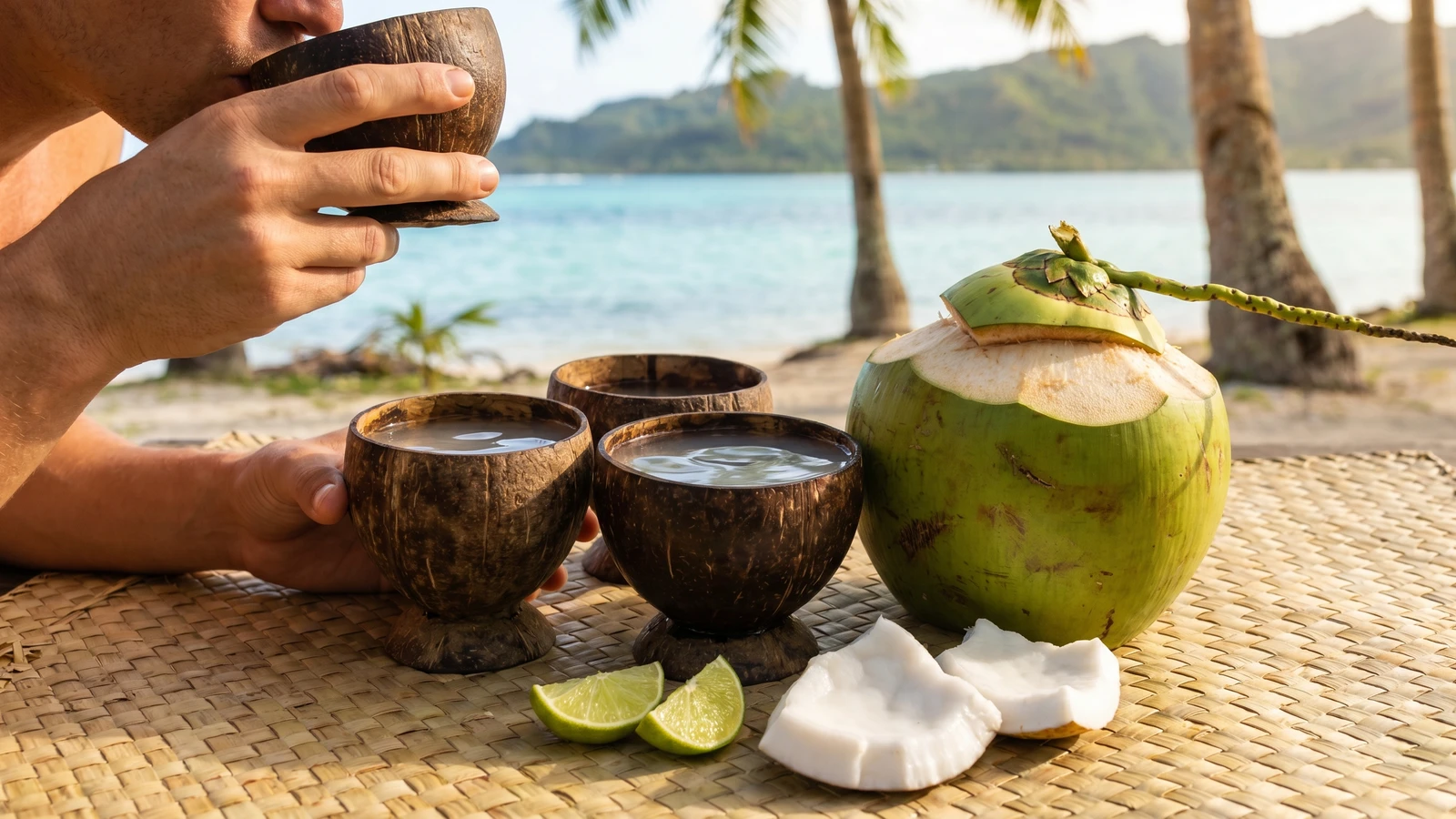
Cold Cook Islands nu, a green young coconut opened close to drinking, sweet water from the shell with soft flesh waiting after. Hawaiʻi calls the same cup niu.
The canoe carried the coconut because the people knew the ocean was wide, and a green nut could hold sweet water where the land held little. In the Cook Islands, nu means the young drinking coconut, opened cold and passed hand to hand, the kind of cup that doesn't need a bartender or a speech. Just the shell, the water, the shade, and somebody saying, here, drink.
This belongs to the Cook Islands table, Rarotonga, Aitutaki, Mangaia, all the cousins spread across that sea road. Back home in Hawaiʻi we say niu for coconut, and the Sāmoan, Tongan, and Tahitian cousins keep their own niu too. One ocean, one canoe, one root, and still each island has its own hand. No need blur it into a plain "Polynesian" drink. This one is Cook Islands nu.
The method is mostly respect. Choose it heavy, chill it well, open it close to drinking, and don't dress it up so much you forget what fed you. If you add a pinch of salt or a squeeze of lime because the day is hot, that's everyday wisdom, no shame. The old foods stay alive because people keep using them in real kitchens, real yards, real beach coolers, not behind glass.
Coconut was one of the great canoe plants carried through Polynesia, valued for water, flesh, oil, fiber, and shell long before imported drinks reached island stores. In the Cook Islands, a green drinking coconut, nu, remains an everyday cooler, especially in the heat of Rarotonga and the outer islands where the coconut tree is both food source and tool chest. Its cousins are named across the Triangle, including Hawaiian niu, Sāmoan niu, Tongan niu, and Tahitian niu, the same plant carried island to island and spoken in each tongue.
Quantity
2
well chilled and heavy for their size
Quantity
small pinch
Quantity
1
cut into wedges
| Ingredient | Quantity |
|---|---|
| green young coconuts (nu)well chilled and heavy for their size | 2 |
| sea salt (optional) | small pinch |
| lime (optional)cut into wedges | 1 |
Pick green young coconuts that feel heavy, with no sour smell, cracks, or wet soft spots. Shake one by your ear if you can. You want plenty water inside, clean and sweet, the kind that tastes like shade after walking in the sun.
Keep the nu cold until you open it. This is an everyday Cook Islands refresher, not a fussy drink, so the work is simple: good coconut, cold coconut, opened close to drinking.
Set the coconut steady on a folded towel. With a heavy chef's knife or cleaver, shave thin slices from the pointed top until you find the softer pale crown under the green husk. Keep your off hand clear and work slow. No drink is worth showing off with a blade.
Tap a firm square or circle around the softened crown with the heel of the knife, then lift the cap away. The water should smell clean, grassy-sweet, and almost like nothing at all. If it smells fermented or sour, pour it out and no blame the coconut. It had its time.
Drink straight from the shell, or pour the cold nu into coconut-shell cups. Add a tiny pinch of sea salt if the day is hot and your body wants it. Lime is optional, nice on a backyard table, but the coconut doesn't need dressing to be itself.
After the water is gone, split the coconut and spoon out the soft young flesh. It should be tender and pale, almost jelly-like at the youngest stage. Serve it with the drink or fold it into a simple fruit cooler. Eat what you have.
1 serving (about 300g)
Culinary guides, cultural storytelling, and the editorial depth that makes cooking meaningful.
Discover Culinary ExplorerChef Makoa
Atiu's bush-beer circle in a clean kitchen batch: citrus, banana, sugar, water, and yeast fermented light, served in small cups with respect for the people who keep the stump.

Chef Juliette
Bavaroise turns the ribbon stage into a drink: yolks and sugar, boiling tea and milk, and Kirsch whisked into a light crown of foam. Keep the whisk moving, and the café comes home.

Chef Juliette
Bischoff turns Champagne, tilleul, citrus, and brandy into pale-gold granité, coarse enough to sparkle under the spoon. The scraping makes the texture, and the timer becomes your smallest member of the brigade.

Chef Juliette
Café glacé is coffee taught by texture: dark, sweet, vanilla-softened, and churned only until it moves like loose snow. Stop before ice cream, pour into cold cups, and take it outside.