Chef Dimitra
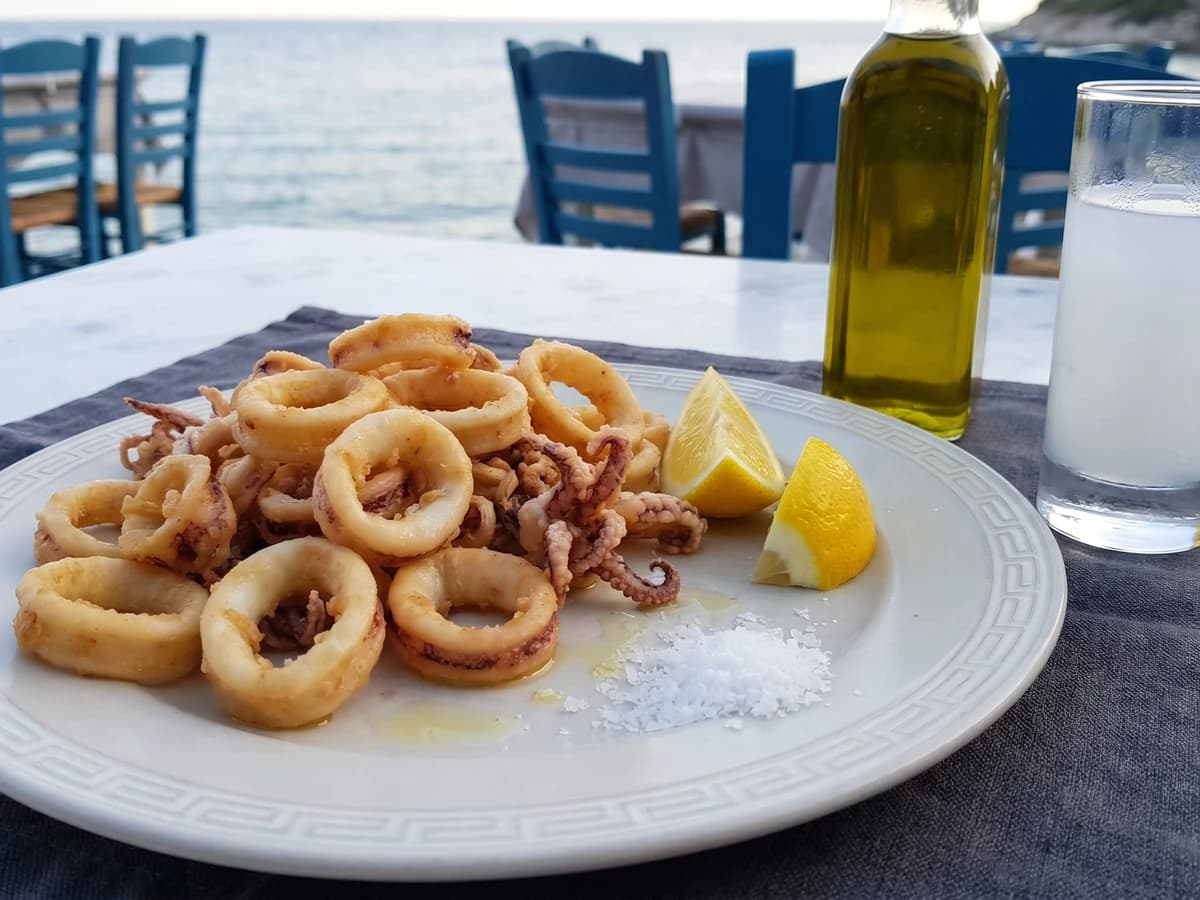
Aegean Island Kalamarakia Tiganita (Καλαμαράκια Τηγανητά)
Aegean island fried squid is flour, hot oil, lemon, and nerve. Fry it for a minute or two, no longer, and it stays tender under its crisp coat.
A cooking platform built around craft, culture, and the stories behind what we eat.
Created by
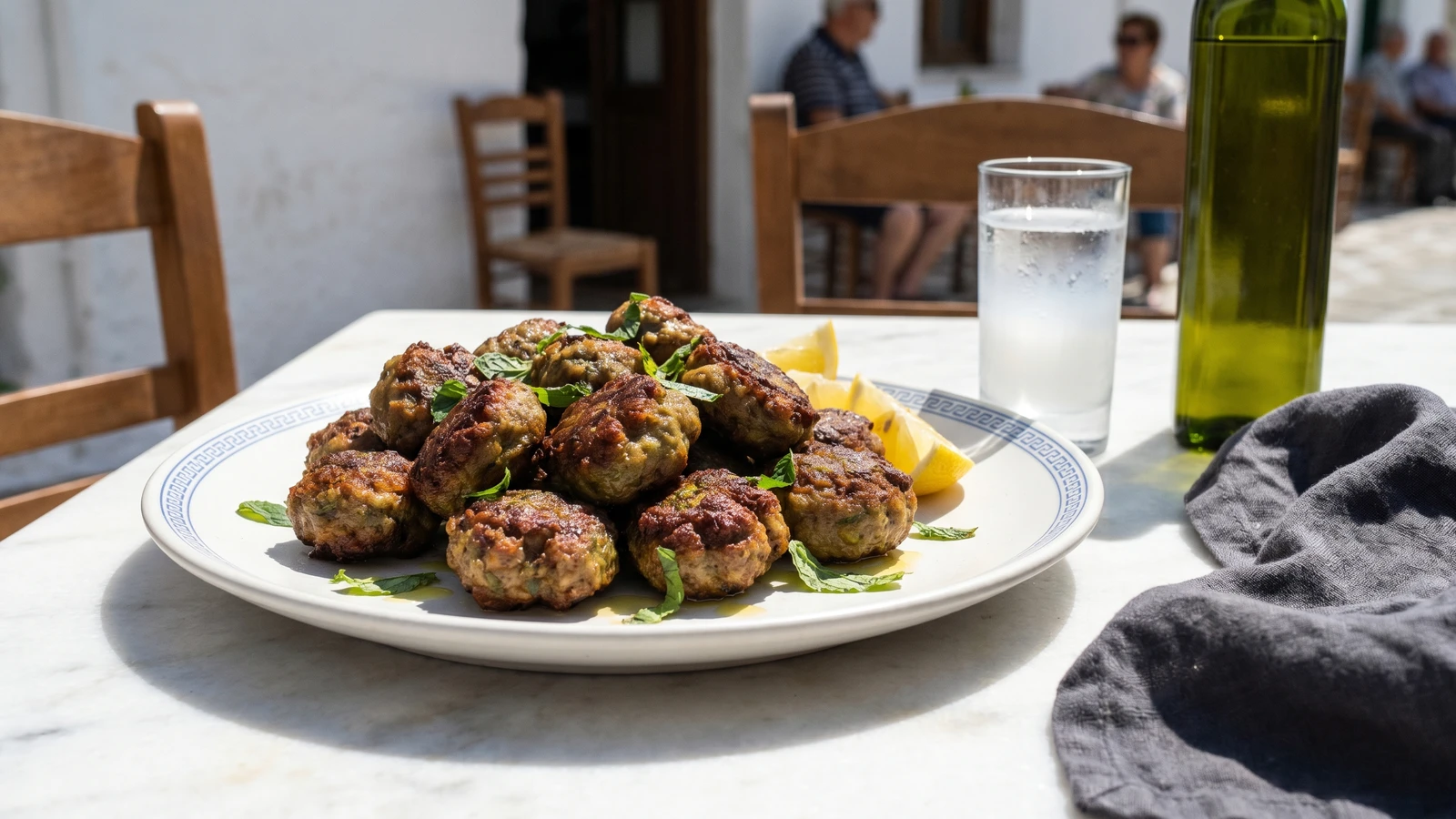
Greek Macedonia's small fried meatballs are onion-sweet, minty, and faintly cumin-warm in refugee kitchens, with one quiet rule: rest the mince before the flour and oil.
Greek Macedonia's keftedakia are the small fried meatballs of the ouzo table from Thessaloniki through the market towns of the north: grated onion, mint, parsley, soaked bread, and, in refugee houses, cumin hiding in the warmth. They are not soutzoukakia. No long tomato sauce, no oval simmer. These are small, browned, and eaten hot or just warm, with lemon and whoever is standing closest to the plate.
The method that decides them is the rest. Once the onion, bread, herbs, and egg are mixed into the mince, give it thirty minutes in the refrigerator. The bread drinks the onion juice, the salt seasons through, and you don't have to squeeze the mixture into tough little stones. Precision is a kindness here, nothing more.
I keep this northern version because the cumin tells its story without shouting. The region is the dish's surname. Fry them in shallow olive oil until the edges catch dark brown, let them settle for five minutes, then bring them to the table before everyone starts pretending they only wanted one.
The word keftes entered Greek through Ottoman Turkish köfte, from Persian kufta, meaning pounded meat, and Greek regions made the form their own through local herbs, fat, and frying habits. In Thessaloniki and Macedonia after the 1922 arrival of Asia Minor refugees, cumin became a clearer marker in minced meat dishes, separating many northern keftedakia from island versions that lean more on mint, oregano, or fennel. The small keftedaki belongs to the meze table: sturdy enough to travel to a name-day or potluck, small enough to eat with fingers beside ouzo.
Quantity
500g
15 to 20 percent fat
Quantity
80g
crusts removed
Quantity
120ml
for soaking the bread
Quantity
1 medium, about 120g
grated
Quantity
1
beaten
Quantity
15ml
Quantity
15ml
Quantity
2
finely grated
Quantity
15g
finely chopped
Quantity
10g
finely chopped
Quantity
1 tsp
rubbed between your fingers
Quantity
1/2 tsp
Quantity
8g
Quantity
2g
Quantity
60g
for dusting
Quantity
250ml
for shallow frying, not all absorbed
Quantity
as needed
for serving
| Ingredient | Quantity |
|---|---|
| minced beef15 to 20 percent fat | 500g |
| stale country breadcrusts removed | 80g |
| cold waterfor soaking the bread | 120ml |
| yellow oniongrated | 1 medium, about 120g |
| large eggbeaten | 1 |
| red wine vinegar | 15ml |
| ouzo | 15ml |
| garlic clovesfinely grated | 2 |
| fresh mint leavesfinely chopped | 15g |
| flat-leaf parsleyfinely chopped | 10g |
| dried Greek oreganorubbed between your fingers | 1 tsp |
| ground cumin | 1/2 tsp |
| fine sea salt | 8g |
| freshly ground black pepper | 2g |
| all-purpose flourfor dusting | 60g |
| extra virgin olive oilfor shallow frying, not all absorbed | 250ml |
| lemon wedges (optional)for serving | as needed |
Tear the stale bread into a small bowl, pour over the cold water, and leave it for 5 minutes. Squeeze it hard in your fist until it is damp but not dripping. The bread should crumble into the meat, not bring a puddle with it.
Put the minced beef in a wide bowl. Add the squeezed bread, grated onion with its juice, egg, vinegar, ouzo, garlic, mint, parsley, oregano, cumin, salt, and pepper. Mix with your hands just until everything is even and soft. Stop there. Keftedakia want tenderness, not a long kneading.
Cover the bowl and refrigerate for 30 minutes. This is the method that decides the dish. The bread drinks the onion juice, the salt seasons through, and the mince firms enough that you can shape it gently instead of squeezing it into hard little balls.
Spread the flour on a plate. With damp hands, shape the mixture into 24 small meatballs, about walnut-size and slightly flattened so they fry evenly. Roll each one lightly in flour and shake off the excess. They need a veil, not a coat.
Heat 1cm olive oil in a wide 28cm frying pan over medium-high heat, about 170C if you use a thermometer. Fry the keftedakia in batches, without crowding, turning once or twice, until deep brown at the edges and cooked through, 5 to 6 minutes total. If you check the center, it should reach 71C.
Lift the keftedakia to a wire rack or paper-lined tray and let them settle for 5 minutes. Serve warm or at room temperature with lemon wedges, tzatziki if there is a bowl on the table, and a small glass of ouzo. No one takes only one. They say they will, but they don't.
1 serving (about 145g)
Culinary guides, cultural storytelling, and the editorial depth that makes cooking meaningful.
Discover Culinary ExplorerChef Dimitra
Aegean island fried squid is flour, hot oil, lemon, and nerve. Fry it for a minute or two, no longer, and it stays tender under its crisp coat.

Chef Dimitra
Pale Aegean taramosalata is cured roe, soaked bread, lemon, and olive oil worked slowly until it turns thick and clean, made for lagana on Clean Monday.

Chef Dimitra
Athenian March 25 salt cod, crisp in a puffed beer batter and served with garlic skordalia, the Lenten fish dish Greece keeps for Annunciation day.

Chef Dimitra
Crete names this dish by the pan motion: snails set mouth-down in salted flour, fried in good olive oil, then hit with rosemary and vinegar.