
Chef Klaus
Bismarckhering-Brötchen
A northern fish-stall roll built on sharp Bismarck herring, raw onion, and pickle, with one rule deciding the whole thing: the vinegar cure goes on cold and gets its time.
A cooking platform built around craft, culture, and the stories behind what we eat.
Created by
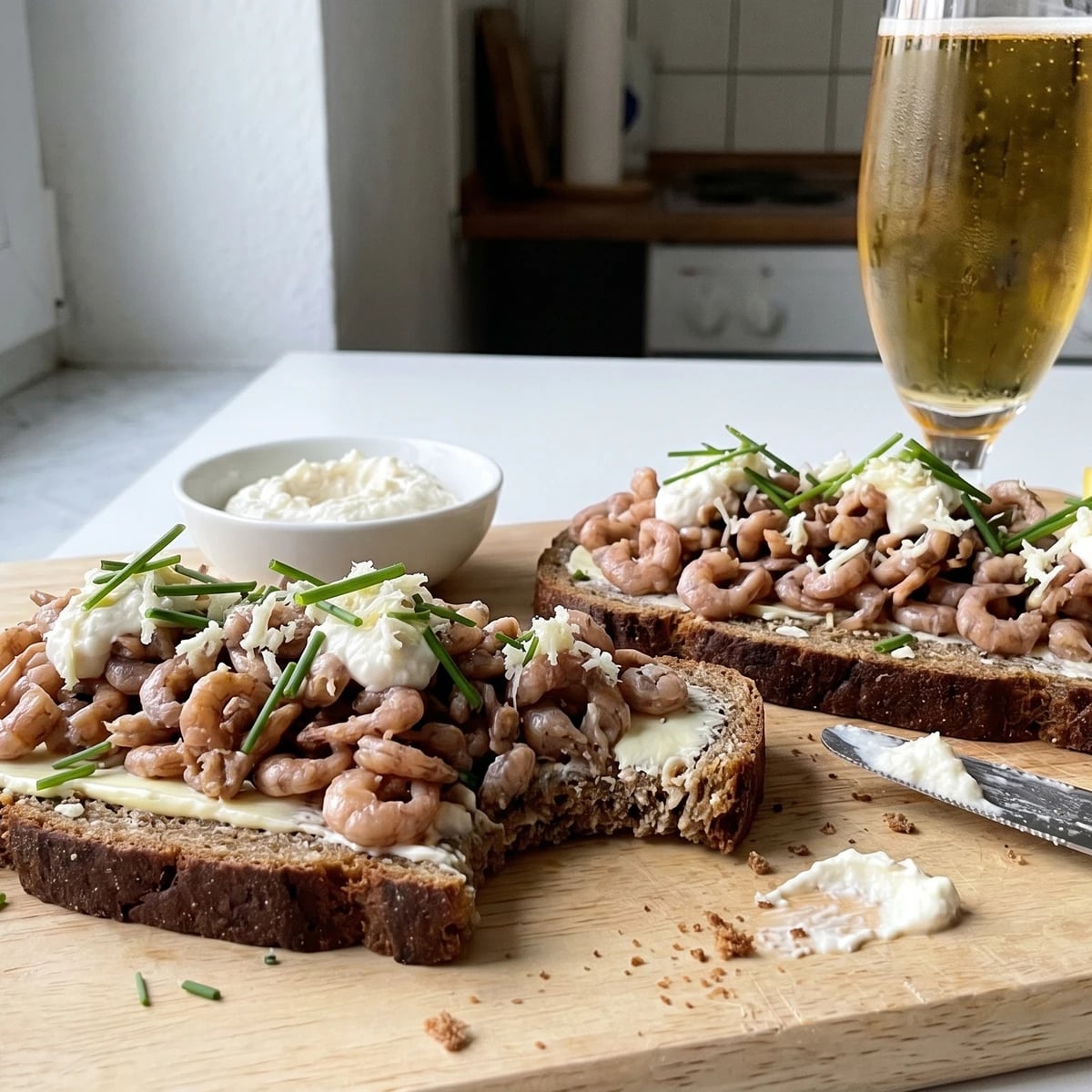
A North Sea open sandwich that asks for restraint: dense rye, cold butter, sweet brown shrimp, and horseradish cream added at the end so the bread stays firm.
Nordseekrabben-Stulle belongs to the North Sea coast: East Frisia, Dithmarschen, Büsum, Husum, Hamburg when the market is good. It is a quick meal, a picnic meal, and a Sunday-evening plate when nobody wants a roast but everyone still wants proper bread. The best season is late summer into autumn, when the brown shrimp are sweet and the catches are strong, but the coast eats them whenever the cutter and the cold chain have done their work.
The argument is not complicated. In Schleswig-Holstein and Lower Saxony many cooks keep it to butter, rye, Krabben, and pepper; Hamburg will hand you the same shrimp in a white roll as a Krabbenbrötchen; inland counters start burying them under mayonnaise and salad leaves. I won't. Im Norden anders, im Süden anders. This is the northern table: fish, rye, butter, and one sharp thing to wake it up.
The larder logic is right there on the board. The shrimp are cooked soon after the catch because tiny shrimp spoil fast, and the Schwarzbrot, dark rye bread, is sour, dense, and built to keep. Butter is not decoration. It is the seal between wet shrimp and bread, and without it the Stulle goes soft before you sit down.
The technique is dryness. These shrimp are small and already cooked, so the only way to ruin them is to warm them, drown them, or let them sit wet on bread. Pat them dry, butter the rye to the edges, and season at the end. The butter seals, the rye gives sour backbone, and the horseradish cuts through without burying the shrimp. Erst verstehen, dann kochen.
Nordseekrabben are the brown shrimp Crangon crangon, landed along the German North Sea coast from East Frisia through Büsum and Husum; they are boiled aboard the cutters soon after catching because the tiny shrimp spoil fast. Büsum became one of the best-known shrimp ports after its rail connection opened in 1883, letting cooked coastal seafood move quickly toward inland markets. The name still catches people out: on the coast Krabben means these small shrimp, not true crabs, and in East Frisia they are also called Granat.
Quantity
4 thick slices
about 1cm thick
Quantity
40g
softened
Quantity
300g
peeled, cooked, chilled, and well drained
Quantity
100g
Quantity
1 tablespoon
finely grated just before mixing
Quantity
1/2
zested, plus 1 teaspoon juice
Quantity
1 tablespoon
snipped
Quantity
to taste
Quantity
to taste
Quantity
4 thin wedges
to serve
| Ingredient | Quantity |
|---|---|
| Schwarzbrot or dense sour rye breadabout 1cm thick | 4 thick slices |
| salted buttersoftened | 40g |
| Nordseekrabben (North Sea brown shrimp)peeled, cooked, chilled, and well drained | 300g |
| Schmand or crème fraîche | 100g |
| fresh horseradish rootfinely grated just before mixing | 1 tablespoon |
| lemonzested, plus 1 teaspoon juice | 1/2 |
| chivessnipped | 1 tablespoon |
| fine sea salt | to taste |
| white pepper | to taste |
| lemon wedgesto serve | 4 thin wedges |
Stir the Schmand with the grated horseradish, lemon zest, one teaspoon lemon juice, a pinch of salt, and white pepper until it is thick enough to sit on a spoon. Keep it sharp, not loose. The cream is there to cut the sweet shrimp and carry the fat; too much lemon turns it runny and pulls water from the shrimp.
Tip the Nordseekrabben into a sieve, pick out any shell bits, then spread them on paper towels and pat them dry. They are already cooked, so don't cook them again. Taste first: if they are sharply salty, give them a brief rinse in cold water and dry them hard. Water steals their sweetness, and wet shrimp make wet bread.
Spread the softened butter right to every edge of the rye. The butter is the barrier between the sour bread and the cold shrimp; leave gaps and the brine sinks into the crumb before you get to the table. This is a Stulle, an open slice, not a soft sandwich loaf.
Spread a thin layer of horseradish cream over the butter, pile the shrimp high and loose, then finish with chives, white pepper, and a last squeeze of lemon. Taste before salting; the shrimp may already have enough from the sea. Würzen, Fett, Salz zum Schluss: the bright things go on last, because acid and salt wake the shrimp up but also make them weep. Serve at once, or pack the parts separately for a picnic and build it there.
1 serving (about 180g)
Culinary guides, cultural storytelling, and the editorial depth that makes cooking meaningful.
Discover Culinary Explorer
Chef Klaus
A northern fish-stall roll built on sharp Bismarck herring, raw onion, and pickle, with one rule deciding the whole thing: the vinegar cure goes on cold and gets its time.

Chef Klaus
A north coast bread roll built on thrift: herring floured, fried, then steeped in hot vinegar brine until the fish firms, sweetens, and keeps.

Chef Klaus
Brown North Sea shrimp on buttered dark rye, a soft fried egg over the top, and the whole plate decided by one thing: keep the shrimp cool and the yolk running.

Chef Klaus
The hot fish roll of the northern coast: pale cod or saithe in a crisp batter, tucked into a split Brötchen with sharp onion, pickle, and made remoulade.