
Chef Klaus
Berlin Currywurst
The Berlin Imbiss counter on a plate: fried sausage cut thick, a tomato curry sauce cooked until glossy, and enough fries or bread to chase every bit.
A cooking platform built around craft, culture, and the stories behind what we eat.
Created by
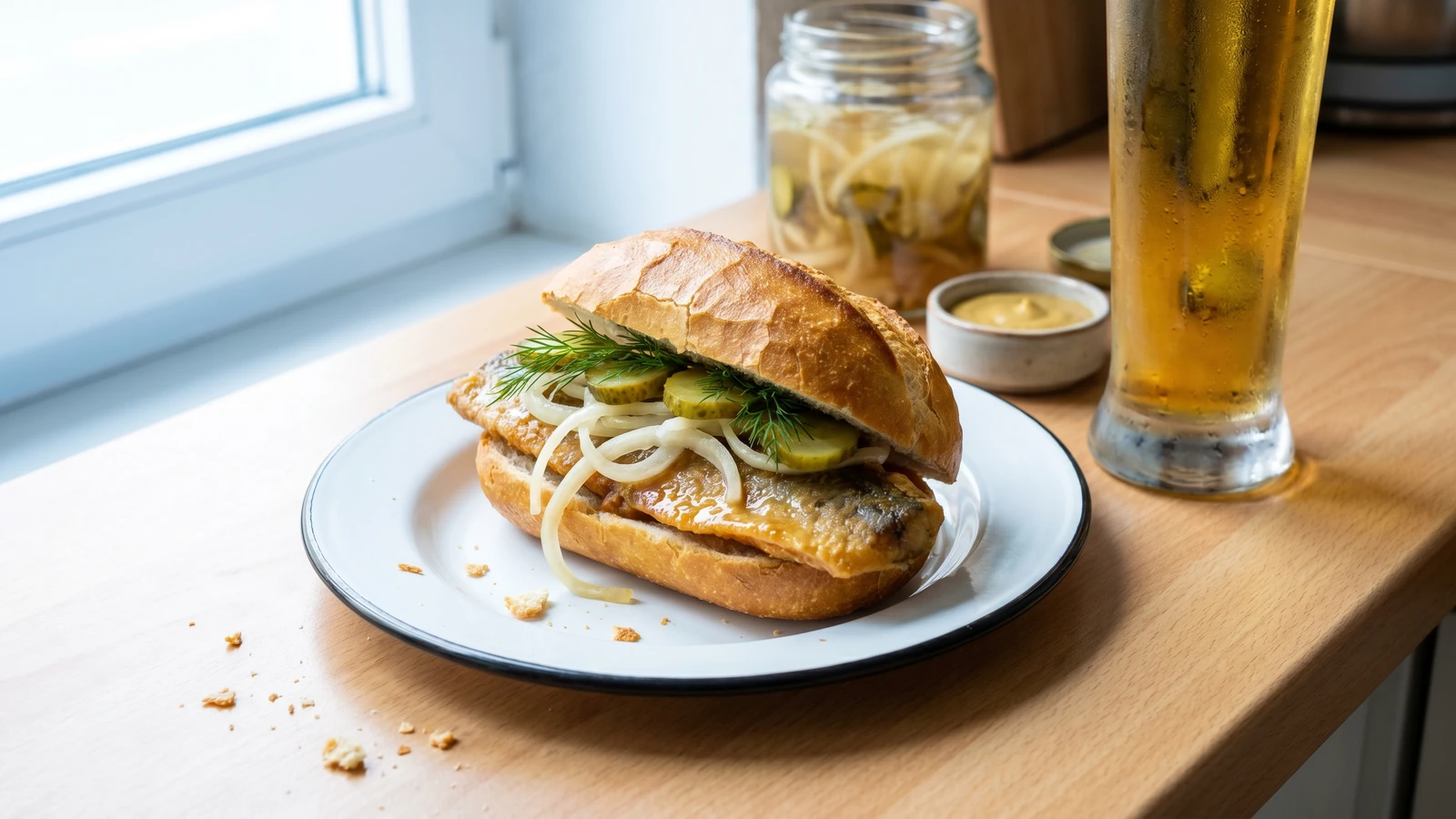
A north coast bread roll built on thrift: herring floured, fried, then steeped in hot vinegar brine until the fish firms, sweetens, and keeps.
Bratheringbrötchen belongs to the northern table, the fish counter, the market stall, the weeknight plate when the work was done yesterday. Fresh herring is floured and fried, then laid under a hot vinegar-onion brine so it keeps and tastes of more. That is the old coastal logic: cook it, sour it, eat it cold. Weggeworfen wird nichts, even the onions from the brine go into the roll.
Along the North Sea and Baltic coast the argument is mostly the brine. Schleswig-Holstein likes it sharp and clean with bay and mustard seed; Hamburg often wants more onion and a little sweetness; further inland the fish may land beside fried potatoes instead of in a Brötchen, a bread roll. Im Norden anders, im Süden anders. The south has its sausages and dumplings. The coast has herring.
The technique that decides it is this: pour the brine over the fish while the brine is hot, but let the fried herring cool first. Hot brine pulls the onion and spice into the fish and firms the flesh; hot fish trapped under vinegar goes soft and greasy. Then leave it overnight. Das braucht seine Zeit. The roll is quick because the herring wasn't rushed.
Build it cold, with butter or a thin spoon of mustard if you want it, not a puddle of sauce. Nicht aus dem Glas, no jarred fish with tired vinegar if you can fry your own. The bread should crack when you bite it, the herring should taste sweet-sour and clean, and the onion should still have a little bite.
Brathering belongs to the North Sea and Baltic herring belt, where salting, frying, and sour pickling turned a cheap, abundant fish into food that could travel and keep before refrigeration. The Hanseatic trade made herring one of northern Germany's central foods from the medieval period onward, moving barrels through ports such as Lübeck, Hamburg, and Bremen. The bread-roll version is the street and market form of the same preservation dish, while inland cooks more often served Brathering cold with fried potatoes or warm potato salad.
Quantity
4
cleaned and scaled, heads removed
Quantity
1 teaspoon, plus more to taste
Quantity
to taste
freshly ground
Quantity
80g
Quantity
3 tablespoons
for frying
Quantity
250ml
Quantity
250ml
Quantity
2 medium
thinly sliced
Quantity
1 tablespoon
Quantity
2
Quantity
1 teaspoon
Quantity
6
Quantity
3
lightly crushed
Quantity
4
Quantity
to spread
softened
Quantity
4
sliced lengthwise
Quantity
1 small handful
| Ingredient | Quantity |
|---|---|
| fresh herringcleaned and scaled, heads removed | 4 |
| fine salt | 1 teaspoon, plus more to taste |
| black pepperfreshly ground | to taste |
| plain flour | 80g |
| rapeseed oil or lardfor frying | 3 tablespoons |
| white wine vinegar | 250ml |
| water | 250ml |
| onionsthinly sliced | 2 medium |
| sugar | 1 tablespoon |
| bay leaves | 2 |
| yellow mustard seeds | 1 teaspoon |
| black peppercorns | 6 |
| juniper berrieslightly crushed | 3 |
| crusty Brötchen or Kaiser rolls | 4 |
| buttersoftened | to spread |
| small gherkinssliced lengthwise | 4 |
| dill (optional) | 1 small handful |
Pat the herring dry inside and out, then season lightly with salt and pepper. Dry fish browns; wet fish spits in the pan and sheds its flour. Leave it ten minutes while you slice the onions, so the salt starts firming the surface before the fish hits the fat.
Dredge the herring in flour and shake off every loose patch, because spare flour burns and muddies the brine later. Heat the oil or lard in a wide pan over medium heat and fry the fish until golden on both sides, about 3 to 4 minutes per side, depending on size. Don't scorch it. Bitter brown skin under vinegar is still bitter.
Lift the fried herring into a shallow glass or ceramic dish and let it cool to room temperature. This pause matters. If hot fish is sealed under vinegar, the crust goes slack and greasy before the brine can do its work.
Put the vinegar, water, onions, sugar, bay, mustard seeds, peppercorns, and juniper into a small pot and boil for 3 minutes. The boil takes the raw edge off the vinegar, softens the onion just enough, and wakes the spice so it reaches the fish instead of sitting politely in the pot.
Pour the hot brine over the cooled herring, making sure the fish is covered, then cover the dish and refrigerate it overnight. Hot brine on cool fish firms the flesh and carries the sweet-sour seasoning inward. Eat it too soon and you have fried fish with vinegar on it. Wait, and you have Brathering.
Split the Brötchen and butter the cut sides thinly, because the fat keeps the bread from drinking up the brine at once. Lift the herring from the marinade, pull away any large backbone if you like, and lay one fish in each roll with brined onions and sliced gherkin. Add dill only if it tastes fresh and green. Würzen, Fett, Salz zum Schluss: taste before adding another pinch of salt.
1 serving (about 280g)
Culinary guides, cultural storytelling, and the editorial depth that makes cooking meaningful.
Discover Culinary ExplorerChef Klaus
The Berlin Imbiss counter on a plate: fried sausage cut thick, a tomato curry sauce cooked until glossy, and enough fries or bread to chase every bit.

Chef Klaus
A northern fish-stall roll built on sharp Bismarck herring, raw onion, and pickle, with one rule deciding the whole thing: the vinegar cure goes on cold and gets its time.

Chef Klaus
Franconia's sour-poached bratwurst skips the grill: raw sausages, onion, vinegar, wine, and one quiet rule, keep the sud below the boil.

Chef Klaus
A Berlin Brühwurst belongs in hot water, not boiling water: warm it gently, keep the skin tight, then eat it in a roll with sharp mustard.