
Chef Klaus
Bauernfrühstück
Yesterday's boiled potatoes, a little ham, onion, and egg. The whole dish works only if the potatoes brown before the egg goes in.
A cooking platform built around craft, culture, and the stories behind what we eat.
Created by
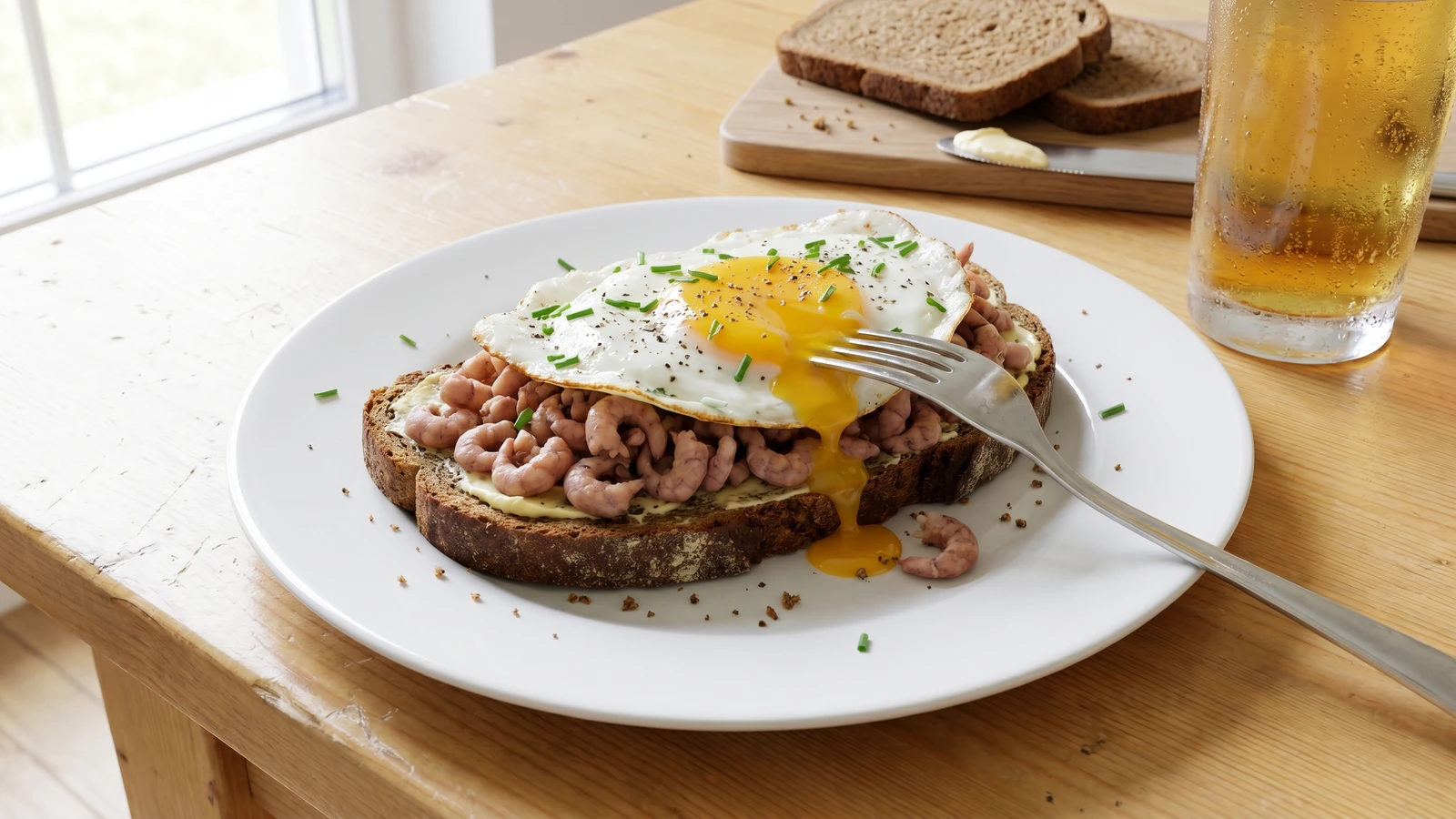
Brown North Sea shrimp on buttered dark rye, a soft fried egg over the top, and the whole plate decided by one thing: keep the shrimp cool and the yolk running.
Büsumer Krabben mit Spiegelei belongs to the Schleswig-Holstein coast, to the fish stall, the harbour café, and the quick kitchen when the good thing is already cooked. The Krabben here are Nordseekrabben, brown shrimp from the North Sea, sweet, small, and already boiled before they reach you. Put them on buttered Schwarzbrot, lay a fried egg over them, break the yolk, and you've made the sauce.
The regions split quickly. In the north, the shrimp sit on rye or with Bratkartoffeln, and nobody needs to turn it into a southern breakfast. Im Norden anders, im Süden anders. Büsum keeps it plain: shrimp, bread, butter, egg, maybe chives. Das ist kein Bierzelt.
The rule that decides the dish is simple. Don't cook the shrimp again. They are delicate and already done; heat them hard and they turn rubbery and lose the clean sweetness that made you buy them. Fry the egg gently instead, so the white sets and the yolk stays loose enough to run down through the shrimp. Salt the egg, not the shrimp. The sea has already done that work.
This is larder cooking from the coast, quick without being careless. Good rye carries the butter, butter carries the shrimp, the yolk ties it together. Erst verstehen, dann kochen.
Büsum, on the Dithmarschen coast of Schleswig-Holstein, grew into one of Germany's best-known brown shrimp ports in the 19th and 20th centuries, and Büsumer Krabben became a protected regional name in everyday German food language long before most diners thought about labels. The small brown shrimp, Crangon crangon, are cooked soon after landing because they spoil fast, which is why northern recipes treat them as a ready-cooked ingredient to fold into bread, egg, soup, or salad at the last moment. The old coastal split still shows on the plate: the north serves shrimp with rye, potatoes, and eggs, while inland versions often soften the briny edge with cream or sauce.
Quantity
4 thick slices
Quantity
40g
softened
Quantity
300g
peeled, cooked, and well drained
Quantity
4
Quantity
2 tablespoons
for frying
Quantity
1 tablespoon
Quantity
1 small bunch
snipped
Quantity
to taste
freshly ground
Quantity
to taste
for the eggs only
Quantity
4
| Ingredient | Quantity |
|---|---|
| Schwarzbrot or dense dark rye bread | 4 thick slices |
| good salted buttersoftened | 40g |
| Büsumer Krabben or Nordseekrabbenpeeled, cooked, and well drained | 300g |
| large eggs | 4 |
| unsalted butterfor frying | 2 tablespoons |
| neutral oil | 1 tablespoon |
| chivessnipped | 1 small bunch |
| black pepperfreshly ground | to taste |
| fine sea saltfor the eggs only | to taste |
| lemon wedges (optional) | 4 |
Tip the Krabben onto kitchen paper and pat them dry. They are already cooked and often a little wet from packing; if you pile them on the bread wet, the rye turns soft and the shrimp taste flat instead of sweet and briny.
Lay out the Schwarzbrot and butter it right to the edges. The butter is not decoration; it seals the dense rye against the shrimp and gives the yolk something rich to run into. Weggeworfen wird nichts, so save any rye crumbs for meatballs or a pan of fried crumbs later.
Divide the Krabben over the buttered bread in loose mounds, not pressed flat. Loose shrimp catch the yolk and keep their texture; a packed layer eats like paste. Do not salt them. The cure and the sea have already done enough.
Warm the oil and frying butter in a wide pan over medium-low heat, then crack in the eggs. Runter mit der Temperatur if the edges spit hard; the whites need time to set before the yolks tighten. Salt only the whites and yolks, then cook until the whites are just firm and the yolks still move under the spoon.
Slide one fried egg onto each mound of shrimp and let the edge of the white cover the Krabben. Finish with black pepper and chives, and add a lemon wedge only if the shrimp taste dull. Break the yolk at the table so it coats the shrimp like a warm sauce. Schön ist, was schmeckt.
1 serving (about 190g)
Culinary guides, cultural storytelling, and the editorial depth that makes cooking meaningful.
Discover Culinary ExplorerChef Klaus
Yesterday's boiled potatoes, a little ham, onion, and egg. The whole dish works only if the potatoes brown before the egg goes in.
Chef Klaus
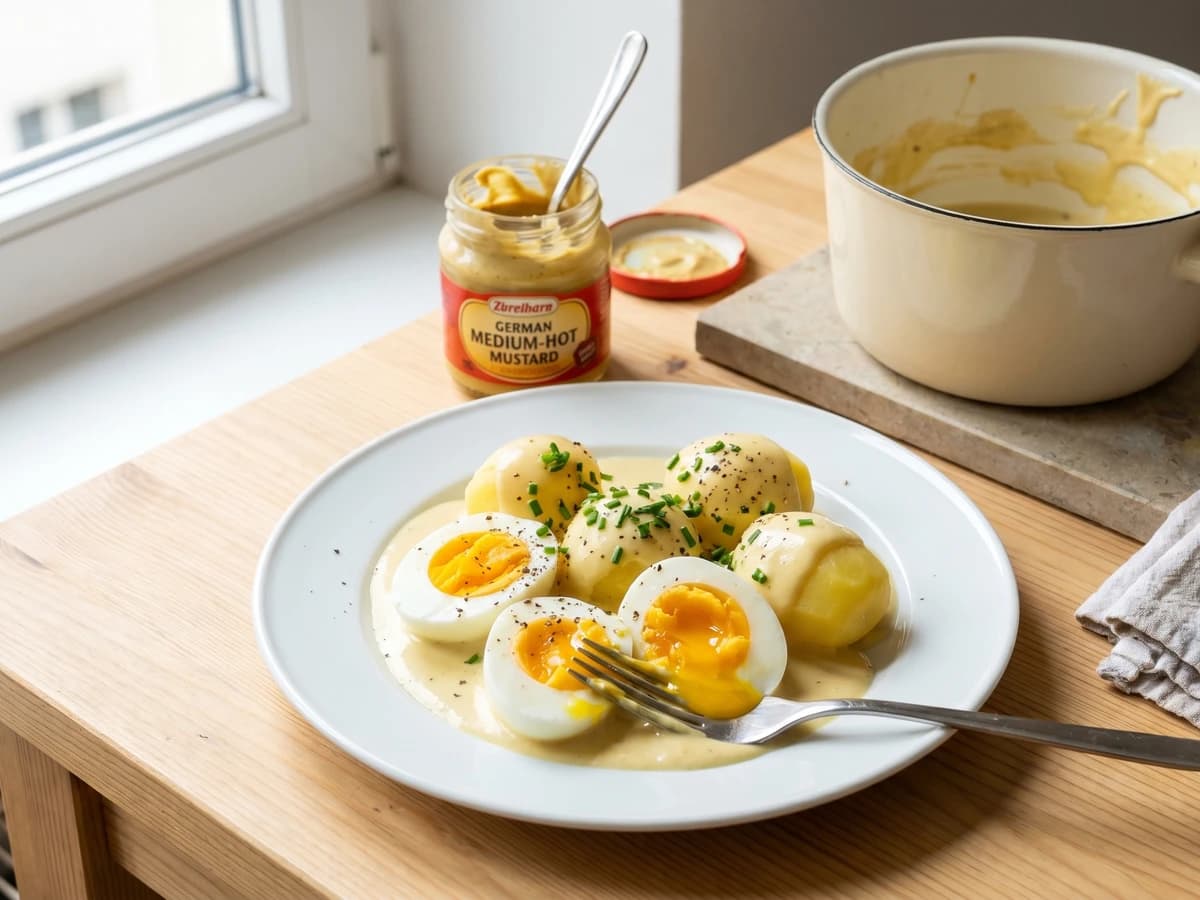
Hard eggs, boiled potatoes, and a mustard sauce made from a proper roux: the quick eastern supper that works because the mustard goes in last.
Chef Klaus
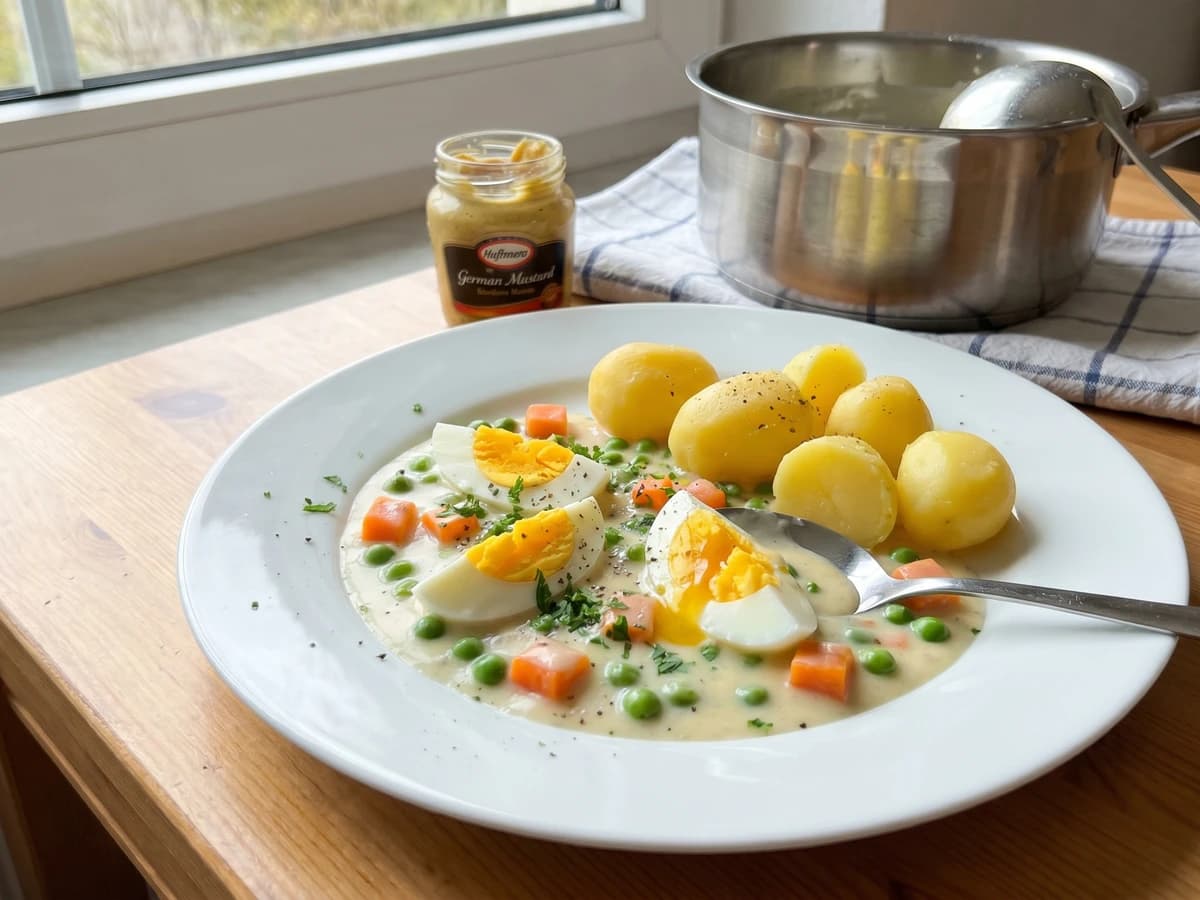
An East German weekday egg dish: hard-boiled eggs warmed gently in a pale sauce with peas, carrots, and lemon, cheap enough for Tuesday and proper enough for the table.

Chef Klaus
The Berlin and Saxon larder pan: yesterday's potatoes fried hard with sausage and ham, then bound with egg so the edges stay crisp and the middle stays tender.