
Chef Lupita
Arroz a la Oaxaqueña
Oaxaca's red rice, stained with tomato and fried in lard, steamed with carrots, ejotes, black beans, and epazote. The side that anchors a Oaxacan family meal and earns its place beside the main.
A cooking platform built around craft, culture, and the stories behind what we eat.

Created by
Michoacán's Meseta P'urhépecha gives these nopales their character: clean cactus bite, dry-toasted guajillo and pasilla chilke rojo, epazote, and manteca de cerdo in a barro cazuela.
Michoacán, Meseta P'urhépecha, Cherán K'eri. This is where these nopales live, in the highland towns where the forest, the milpa, the comal, and the clay cazuela still decide what goes on the table. This isn't food from a single Mexico. Cada estado, su propia cocina, and here the kitchen speaks P'urhépecha before it speaks restaurant Spanish.
The sauce is chilke rojo: guajillo and pasilla secos, toasted dry on the comal until their skins wake up, softened, ground, and fried in manteca de cerdo. La manteca es el sabor. Vegetable oil makes the sauce lie flat. The nopales must be cooked first until their baba releases and dries away, because a watery nopal will thin the chilke and insult the work.
I learned this register from women who cook in the Meseta, not from a printed menu in Morelia. They know when the comal is hot by the smell of the chile, when the nopal is ready by the shine on its surface, and when the cazuela needs a little more manteca because the sauce is grabbing too hard. My mother used to say a good cook listens before she stirs. She was right.
If you are thinking about adding champiñones because you saw a mushroom note, stop. The rainy-season terekuecha plates, with foraged trompa de puerco, pashakua, or pata de pájaro, belong to July and August and to cooks who know the monte. Outside the rains, the cocinera tradicional waits. No me vengas con atajos.
Cherán K'eri is a P'urhépecha community in Michoacán's Meseta, a highland region where corn, beans, squash, quelites, cactus paddles, dried chiles, and forest foods form a kitchen distinct from the better-known lake cuisine around Pátzcuaro. Chilke is a local chile preparation, and in Cherán its red form is commonly built from dry-toasted guajillo and pasilla, a technique tied to comal cooking over leña rather than gas-stove frying alone. P'urhépecha food terms such as charámakua, iarini terekua, terékua kuín jatsíri, shakuá, and chilke carry community knowledge, so the dish should be credited to the pueblos and cocineras tradicionales who keep those names alive.
Quantity
8 medium
cleaned, trimmed, and cut into 1/2-inch strips
Quantity
1/2 medium, plus 1/4 small
half for cooking the nopales, quarter for the sauce
Quantity
1 teaspoon, plus more to taste
Quantity
6
stemmed and seeded
Quantity
2
stemmed and seeded
Quantity
1 small
split open
Quantity
2
unpeeled
Quantity
1/2 teaspoon
Quantity
1/4 teaspoon
Quantity
3/4 cup, plus more as needed
Quantity
3 tablespoons
Quantity
1 small sprig
Quantity
for serving
warmed
| Ingredient | Quantity |
|---|---|
| fresh nopalescleaned, trimmed, and cut into 1/2-inch strips | 8 medium |
| white onionhalf for cooking the nopales, quarter for the sauce | 1/2 medium, plus 1/4 small |
| kosher salt | 1 teaspoon, plus more to taste |
| dried chile guajillostemmed and seeded | 6 |
| dried chile pasillastemmed and seeded | 2 |
| chile poncho perón or chile perón (optional)split open | 1 small |
| garlic clovesunpeeled | 2 |
| cumin seeds | 1/2 teaspoon |
| dried Mexican oregano | 1/4 teaspoon |
| hot water | 3/4 cup, plus more as needed |
| manteca de cerdo | 3 tablespoons |
| fresh epazote | 1 small sprig |
| hand-pressed corn tortillas (optional)warmed | for serving |
Put the sliced nopales in a clay cazuela or heavy pan with the 1/2 medium onion, 1 teaspoon salt, and 1/4 cup water. Cook over medium heat, stirring often, until the nopales release their baba, darken from bright green to olive, and the sticky liquid dries away, 12 to 15 minutes. Do not drown them. You are cooking out the slime, not making soup.
Heat a dry comal, preferably barro over leña, until a drop of water jumps and disappears. Toast the guajillo and pasilla separately, a few seconds per side, pressing them flat with a wooden spoon. They should smell deep and fruity, never burned. Toast the chile poncho perón only if you have it and only until its cut side freckles.
On the same comal, toast the unpeeled garlic and the 1/4 small onion until the onion has dark spots and the garlic softens inside its skin. Toast the cumin seeds for a few seconds, just until fragrant. Peel the garlic. This is small work, but small work is where the flavor hides.
Place the toasted guajillo and pasilla in a bowl and cover with hot water for 15 minutes. Hot, not boiling. Drain, saving the soaking liquid only if it tastes clean, not bitter. Grind the chiles with the roasted garlic, roasted onion, cumin, oregano, and 3/4 cup hot water in a molcajete or blender until very smooth. A blender is allowed here. Laziness is not.
Melt the manteca de cerdo in a barro cazuela over medium heat. Add the chile puree carefully. It will sputter. Fry, stirring with a wooden spoon, until the sauce darkens to brick red, thickens, and the fat shines at the edges, 6 to 8 minutes. This frying is what makes it chilke rojo and not raw chile water. Así se hace y punto.
Add the cooked nopales to the cazuela and fold them through the chilke until every strip is coated. Add the epazote sprig. Cook 8 to 10 minutes more, lowering the heat if the sauce sticks too hard. The finished dish should be glossy, thick, and clinging to the nopales, with no puddle at the bottom.
Turn off the heat and let the nopales rest 5 minutes in the cazuela. Pull out the epazote sprig if it has gone woody. Taste for salt. Serve family-style with warm hand-pressed corn tortillas wrapped in a servilleta bordada P'urhépecha. This is a side dish, yes, but it carries a whole region if you make it correctly.
1 serving (about 245g)
Culinary guides, cultural storytelling, and the editorial depth that makes cooking meaningful.
Discover Culinary ExplorerChef Lupita
Oaxaca's red rice, stained with tomato and fried in lard, steamed with carrots, ejotes, black beans, and epazote. The side that anchors a Oaxacan family meal and earns its place beside the main.
Chef Lupita
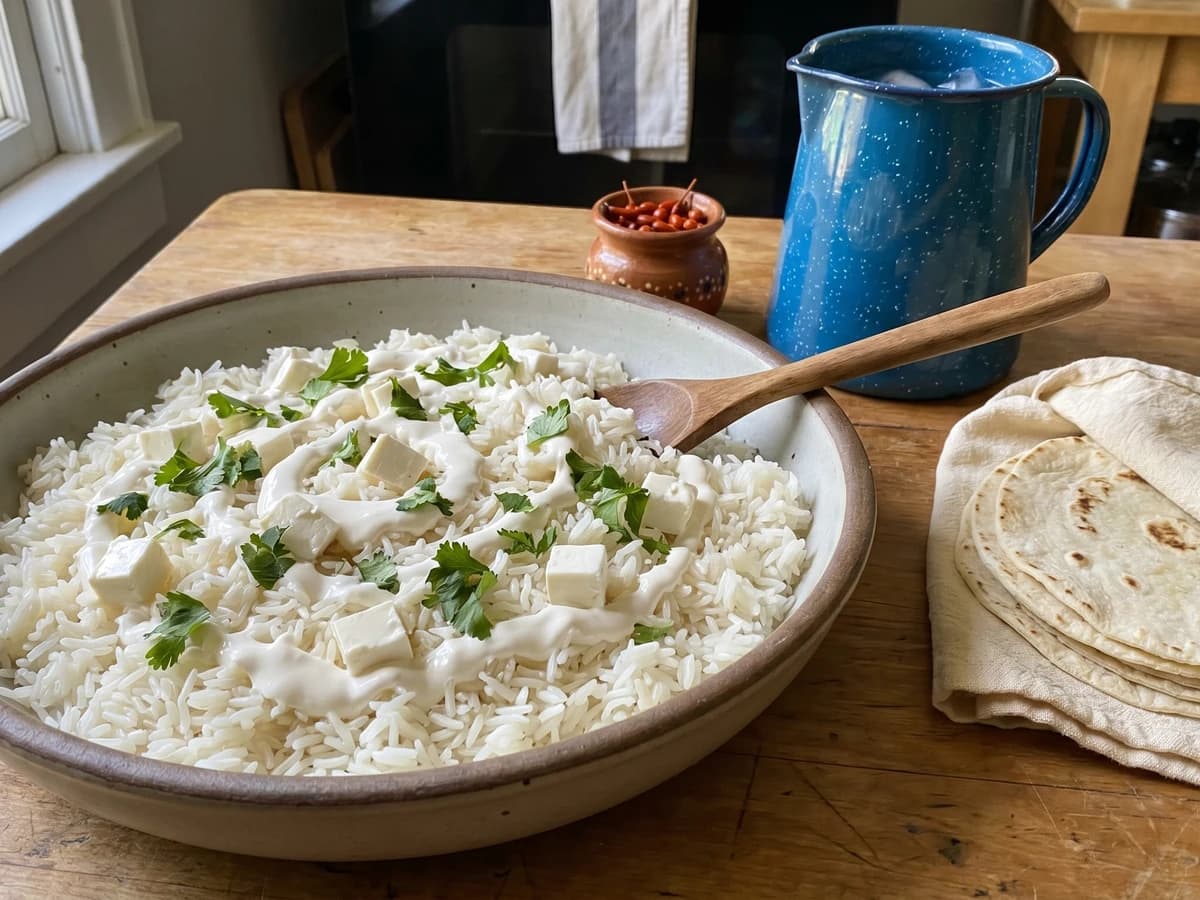
Sinaloa's home-cook white rice topped with cold cubes of cream cheese that soften into the warm grain, finished with crema and a sprinkle of chiltepin at the table. The trick that makes a side dish feel like a small luxury.
Chef Lupita
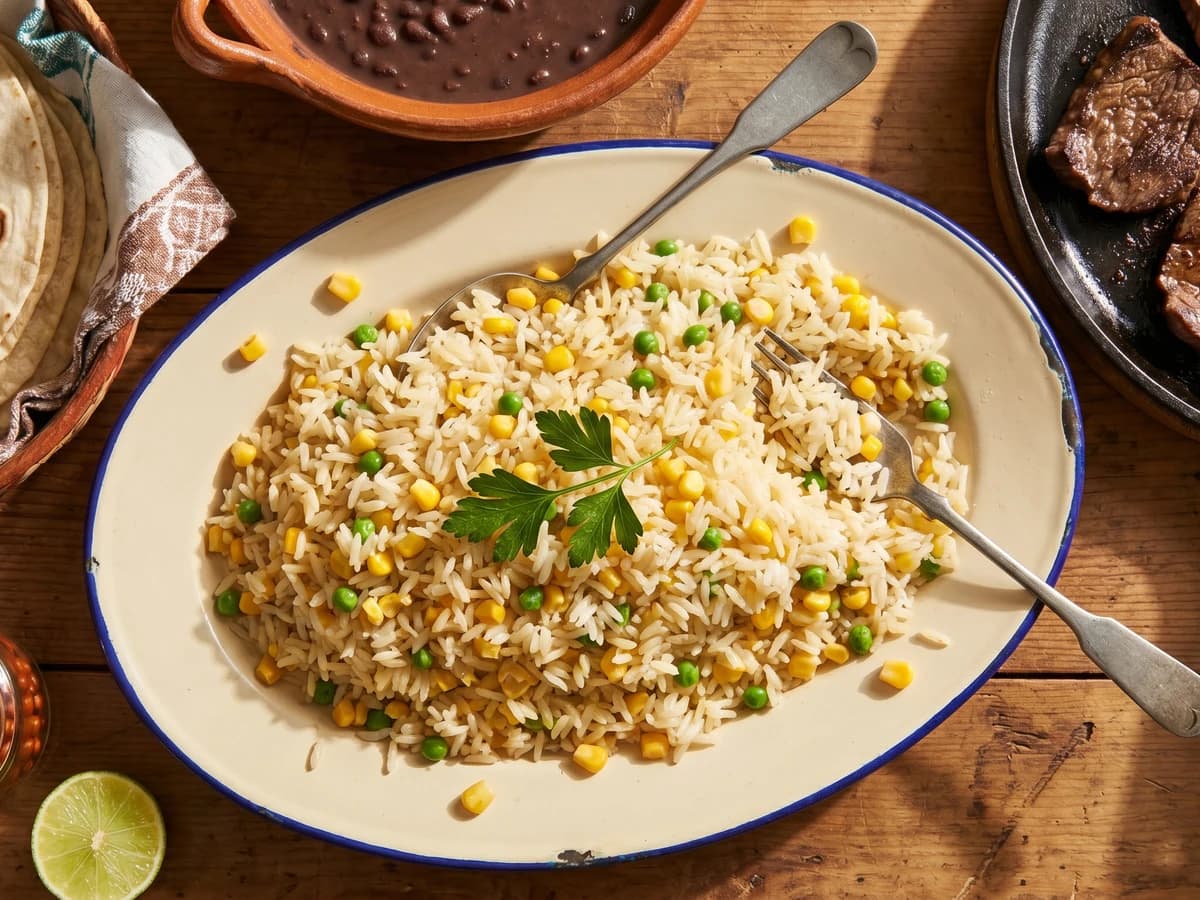
Sonora's white rice, toasted in butter and steamed with sweet corn and tender peas. The clean, quiet partner to a plate of carne asada, not the red rice of central Mexico.

Chef Lupita
Yucatán's white rice with sweet corn kernels, toasted in lard with garlic and onion. The quiet base that holds up against the peninsula's bold achiote-stained stews.