
Chef Lupita
Arroz a la Oaxaqueña
Oaxaca's red rice, stained with tomato and fried in lard, steamed with carrots, ejotes, black beans, and epazote. The side that anchors a Oaxacan family meal and earns its place beside the main.
A cooking platform built around craft, culture, and the stories behind what we eat.

Created by
Ciudad de México's southern nopal country gives you this comal side: whole cactus paddles blistered until tender, onions charred black at the edges, lime and salt doing honest work.
Ciudad de México, the southern alcaldía of Milpa Alta. That is where this dish lives. Not in the glass towers, in the nopal fields climbing the old volcanic soil toward the edge of the city, where the mercado sells paddles still crisp enough to snap when you bend them.
Nopales asados are not complicated, but don't confuse that with careless. You clean the paddles, score them lightly, salt them, and put them on a hot comal until the green turns olive and the surface blisters. The onion goes beside them, cut thick, allowed to char. That black edge is flavor. The slime cooks off. The flesh softens. The cactus tastes like itself.
I learned this version from a woman in Milpa Alta who sold nopales by the kilo and corrected every customer who asked for the smallest paddles. For salad, yes. For the comal, no. You want medium paddles, firm and meaty, so they don't collapse before they blister. Pregúntale a las señoras del mercado. They know before the cookbook knows.
Serve them with lime, sal de grano, and salsa de chile serrano from the molcajete if you want heat. If you don't, leave the chile alone. Not all Mexican food is a dare. This is a 32-state cuisine, and this plate belongs to the central highlands, where cactus is daily food, not decoration.
Nopal has been eaten in central Mexico since pre-Columbian times and appears in Mexica iconography tied to the founding of Tenochtitlan, the eagle on the cactus that remains on Mexico's flag. Milpa Alta became one of the capital's major nopal-producing zones in the 20th century, supplying markets across Ciudad de México with tender paddles grown in volcanic soil. The comal method is older than restaurant grilling: dry heat removes the cactus mucilage while concentrating the vegetable's clean, green flavor.
Quantity
8 medium
thorns removed, edges trimmed
Quantity
1 large
cut into 1/2-inch thick rounds
Quantity
2 tablespoons
for seasoning the comal
Quantity
1 teaspoon, plus more for serving
Quantity
2
halved
Quantity
3
stemmed
Quantity
1 small
unpeeled
Quantity
1/4 cup
chopped
Quantity
for serving
warmed
| Ingredient | Quantity |
|---|---|
| fresh nopalesthorns removed, edges trimmed | 8 medium |
| white onioncut into 1/2-inch thick rounds | 1 large |
| pork lard (manteca de cerdo) or neutral oilfor seasoning the comal | 2 tablespoons |
| sal de grano | 1 teaspoon, plus more for serving |
| limeshalved | 2 |
| fresh chile serranostemmed | 3 |
| garlic cloveunpeeled | 1 small |
| fresh cilantrochopped | 1/4 cup |
| hand-pressed corn tortillas (optional)warmed | for serving |
Lay each nopal flat on a board. Hold the stem end with a towel and scrape away any remaining thorns with a small knife, working away from your hand. Trim the tough edge all the way around. Rinse quickly and dry well. Wet nopales on a comal steam first, and that is not what you want.
Score each nopal with three or four shallow diagonal cuts on both sides. Do not cut through. The cuts help the heat enter and let the mucilage cook off faster. Sprinkle with sal de grano and let them sit while the comal heats.
Set a cast iron comal or heavy skillet over medium-high heat until a drop of water jumps on contact. Rub the surface with a thin film of manteca de cerdo. Not a puddle. Just enough to season the iron and help the first blistering. La manteca es el sabor, but the cactus should not fry.
Place the onion rounds on the hot comal. Cook 4 to 5 minutes per side, until the edges are blackened in spots and the center softens but still holds together. Move them to the cooler edge of the comal while the nopales cook. Char is not neglect. Burned to ash is neglect. Learn the difference.
Lay the nopales on the hot comal in a single layer. Cook 5 to 7 minutes on the first side, pressing lightly with a spatula so the surface touches the iron. Turn and cook 5 to 7 minutes more. They are ready when the color shifts from bright green to olive, the surface blisters, and the flesh bends without breaking.
While the nopales finish, char the chile serrano and unpeeled garlic on an open spot of the comal. The chiles should blister all over, and the garlic skin should darken. Peel the garlic. Crush the garlic and serranos in a molcajete with a pinch of sal de grano, then stir in the chopped cilantro and a squeeze of lime. This is a sharp table salsa, not a sauce bath.
Pile the nopales and charred onion on a warm clay platter. Squeeze lime over the top and finish with a little more sal de grano. Serve with the serrano salsa and warm corn tortillas. Eat them beside carne asada, eggs, beans, or nothing at all. Saber cocinar es saber vivir.
1 serving (about 270g)
Culinary guides, cultural storytelling, and the editorial depth that makes cooking meaningful.
Discover Culinary ExplorerChef Lupita
Oaxaca's red rice, stained with tomato and fried in lard, steamed with carrots, ejotes, black beans, and epazote. The side that anchors a Oaxacan family meal and earns its place beside the main.
Chef Lupita
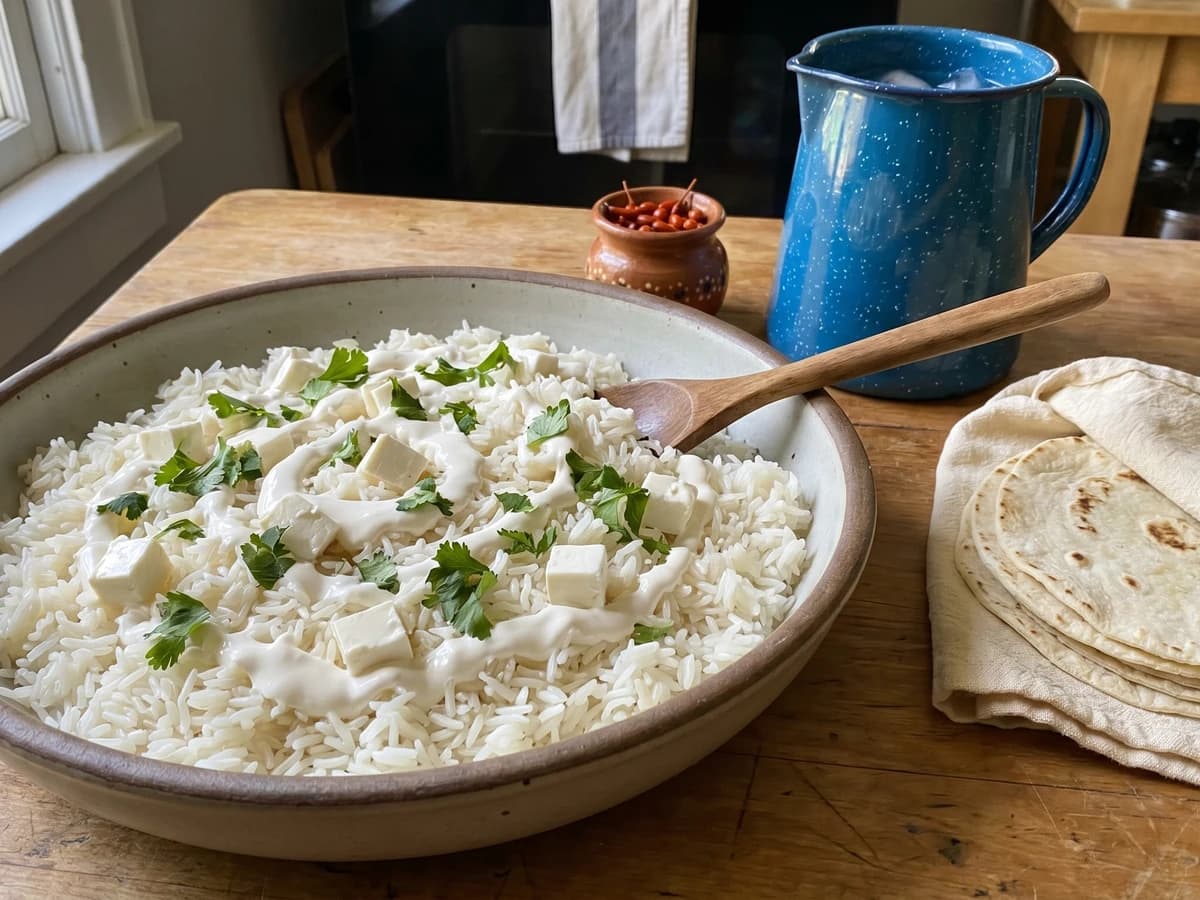
Sinaloa's home-cook white rice topped with cold cubes of cream cheese that soften into the warm grain, finished with crema and a sprinkle of chiltepin at the table. The trick that makes a side dish feel like a small luxury.
Chef Lupita
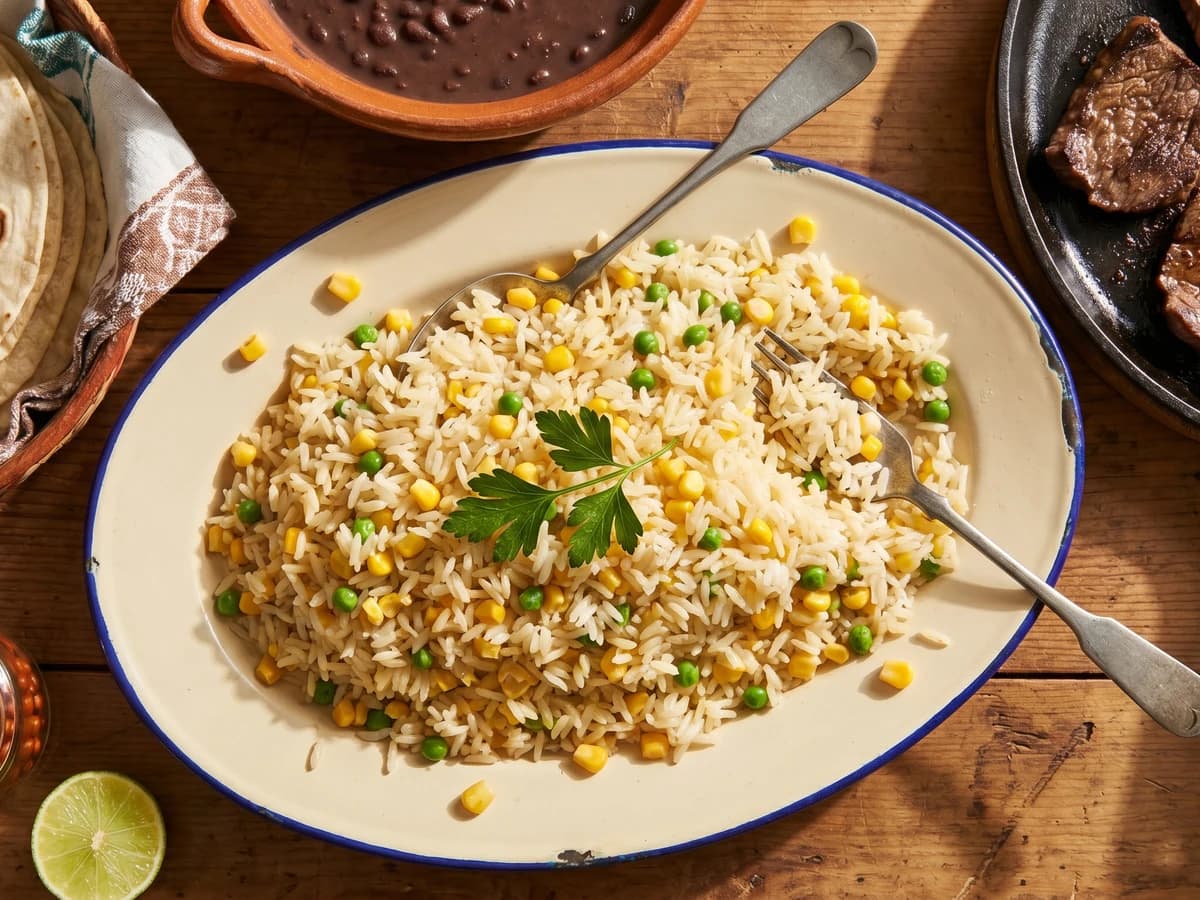
Sonora's white rice, toasted in butter and steamed with sweet corn and tender peas. The clean, quiet partner to a plate of carne asada, not the red rice of central Mexico.

Chef Lupita
Yucatán's white rice with sweet corn kernels, toasted in lard with garlic and onion. The quiet base that holds up against the peninsula's bold achiote-stained stews.