Chef Joost
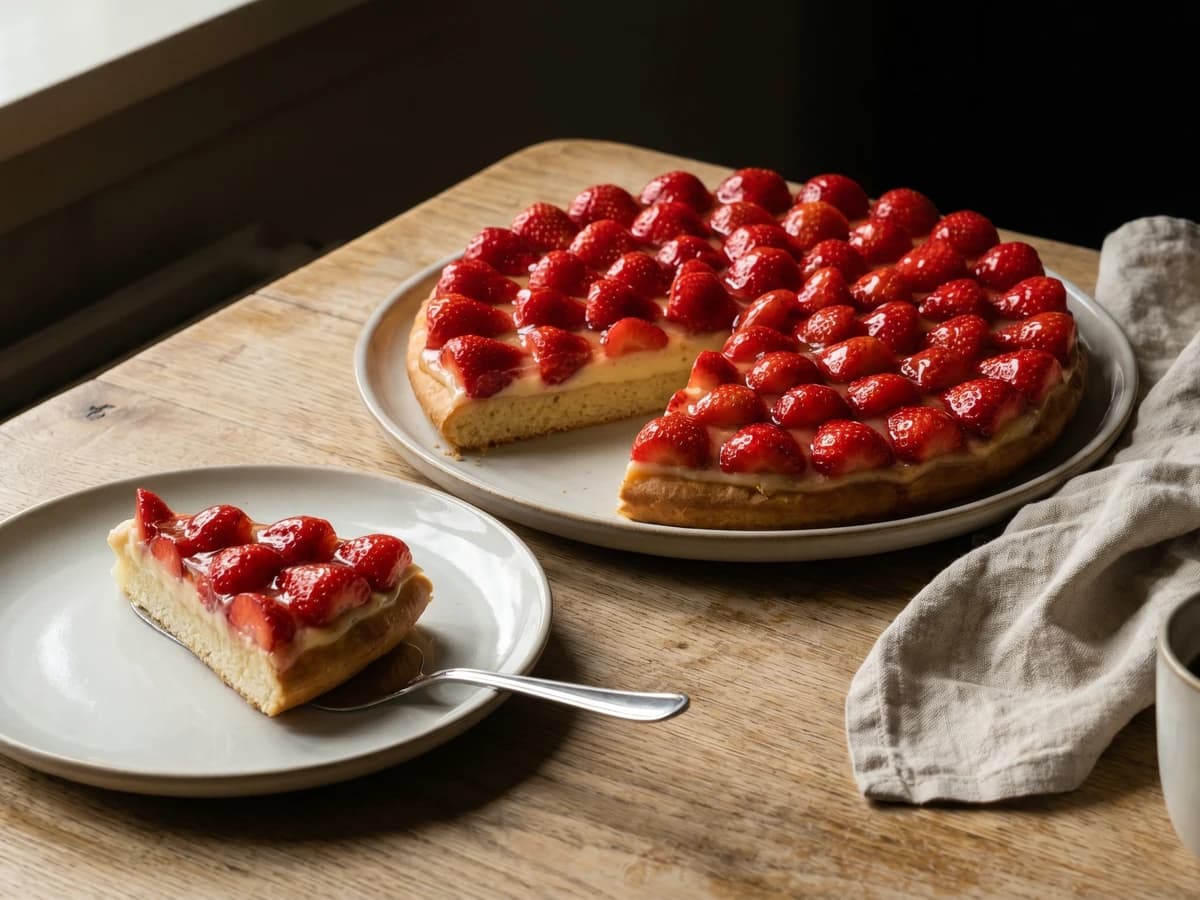
Aardbeienvlaai (Limburg Strawberry Vlaai)
The summer vlaai that politely breaks Limburg's baked-fruit rule: soft gistdeeg, cool pastry cream, and strawberries left fresh because June knows better than the oven.
A cooking platform built around craft, culture, and the stories behind what we eat.

Created by
The old year gets a flat wafer; the new year gets a roll, still closed around its sweetness, a small eastern Dutch prophecy you eat before it has unfolded.
On the last afternoon of the year, the house changes sound. Not church bells yet, not fireworks, but the dry little click of the wafer iron closing at the kitchen table. In my grandmother's second notebook the recipe appears in a borrowed hand, because even a coastal woman knew when a tradition belonged farther east: Groningen, Drenthe, Twente, the parts of the Netherlands where New Year is not properly allowed in until the iron has worked.
Nieuwjaarsrolletje means exactly what it says, a little roll for the New Year. But the older cousin's name, kniepertje, does the philologist's work. It is usually linked with knijpen, to pinch, because batter is squeezed between two hot patterned plates. The old-year wafer is often served flat, the year already opened and known; on January 1 it is rolled, because the year ahead is still closed around its sweetness. Dutch symbolism likes to arrive as a biscuit. For obvious reasons.
But let me tell you a secret: the cream is not the point. It is lovely, yes, and children approve of it with troubling speed, but the point is timing. Roll the wafer the second it leaves the iron, before sugar and butter stiffen into memory. Wait half a minute and it cracks, and the new year, like most new years, refuses to be corrected.
So we keep it simple. Hou het altijd simpel, always keep it simple. A thin batter, a hot iron, a wooden handle or dowel waiting beside you, and no wandering away. Fill them just before serving, or leave some empty for the people who know that crispness is its own celebration.
Nieuwjaarsrolletjes belong to the northern and eastern Dutch kniepertjes tradition, especially Groningen, Drenthe, Twente, and the Achterhoek, where patterned wafer irons are brought out around oudejaarsavond, New Year's Eve, and nieuwjaarsdag, New Year's Day. The word kniepertje is commonly explained from Dutch knijpen, to pinch, because the batter is pressed between iron plates; many families keep the symbolic division of flat wafers for the old year already laid open and rolled wafers for the closed, unknown year ahead. Cream-filled versions are the newer festive layer, while the older wafer itself remains a plain bargain of butter, sugar, flour, egg, and speed.
Quantity
225g
melted and cooled
Quantity
225g
Quantity
2
Quantity
1 teaspoon
Quantity
300g
Quantity
1/4 teaspoon
Quantity
1 teaspoon
Quantity
250ml
plus more if needed
Quantity
300ml
Quantity
20g
Quantity
1 teaspoon
| Ingredient | Quantity |
|---|---|
| unsalted buttermelted and cooled | 225g |
| fine caster sugar or witte basterdsuiker | 225g |
| large eggs | 2 |
| vanilla sugar or vanilla extract | 1 teaspoon |
| plain flour | 300g |
| fine salt | 1/4 teaspoon |
| ground cinnamon (optional) | 1 teaspoon |
| lukewarm waterplus more if needed | 250ml |
| cold whipping cream | 300ml |
| icing sugar | 20g |
| vanilla sugar or vanilla extract for the cream | 1 teaspoon |
Whisk the melted butter and sugar together, then beat in the eggs and vanilla. Add the flour, salt, and cinnamon if using, then whisk in the lukewarm water until you have a smooth, thickly pourable batter, something between pancake batter and cream. Let it rest for 30 minutes. The flour needs that time to drink, and a rested batter spreads more evenly in the iron.
Heat a kniepertjesijzer, pizzelle iron, or waffle-cone iron until a small spoonful of batter sizzles gently and sets in about a minute. Brush the plates lightly with butter for the first wafer only, unless your iron asks for more. Set a wooden dowel, wooden spoon handle, clean tea towel, and cooling rack beside you before you begin; this is not the moment to discover the drawer is stuck.
Spoon about 1 tablespoon of batter just off the centre of the iron, close it, and bake for 45 to 75 seconds, depending on your iron. The wafer should be golden with slightly darker edges and a dry, lacy surface. If it is pale, it will soften; if it is dark brown, the sugar has gone bitter. Adjust the batter with a spoonful of water if it sits too thickly instead of spreading.
Lift the wafer out with a palette knife and roll it at once around the dowel or spoon handle, using the tea towel to protect your fingers from the hot sugar. Hold the seam down for a few seconds until the roll sets, then slide it onto the rack. Work one wafer at a time. If one hardens before you can roll it, eat it flat as a kniepertje; not every mistake requires rescue.
When all the rolls are cool, whip the cold cream with the icing sugar and vanilla until it holds soft, clean peaks. Do not beat it into butter; this is New Year, not a dairy punishment. Spoon the cream into a piping bag or a small plastic bag with the corner cut off.
Fill the rolls from both ends just before serving, so the cream meets in the middle without splitting the wafer. Serve at once, with some left unfilled if your table has purists. The filled rolls soften as they stand, which is no tragedy, but it is no longer the same biscuit.
1 serving (about 45g)
Culinary guides, cultural storytelling, and the editorial depth that makes cooking meaningful.
Discover Culinary ExplorerChef Joost
The summer vlaai that politely breaks Limburg's baked-fruit rule: soft gistdeeg, cool pastry cream, and strawberries left fresh because June knows better than the oven.

Chef Joost
A Limburg vlaai is not a pie trying to be grand. It is a thin yeast-dough round, fruit-bright and generous, made for birthdays, coffee, and second slices.

Chef Joost
The December bakery counter made small: cold leafed pastry wrapped around lemon-scented amandelspijs, brushed gold, and scattered with almonds so one person gets the whole holiday in both hands.
Chef Joost
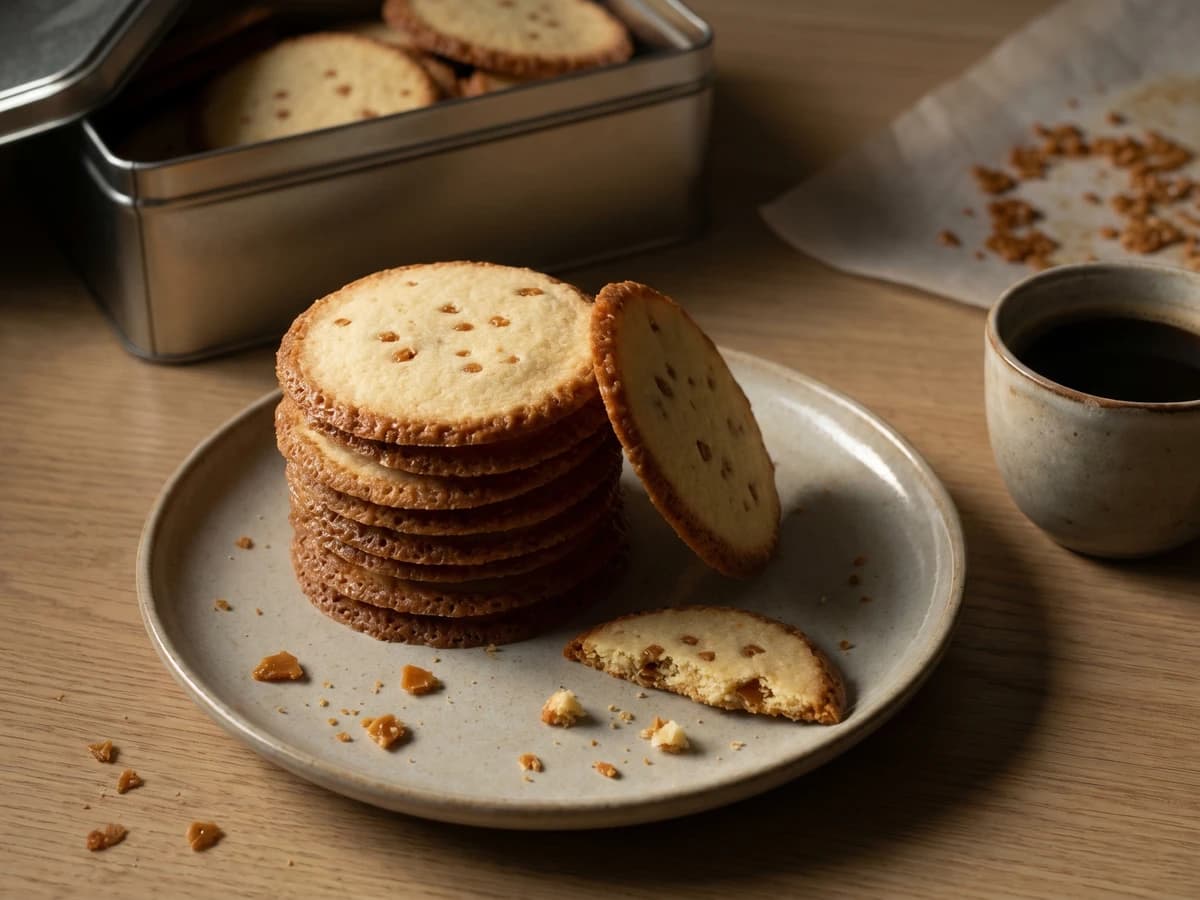
A thin Amsterdam cookie carrying a cog ship in its name: caramelized butter dough, almond nougatine, and a 1934 contest that turned municipal pride into something for coffee.