Culinary Explorer

A cooking platform built around craft, culture, and the stories behind what we eat.
Discover Culinary Explorer
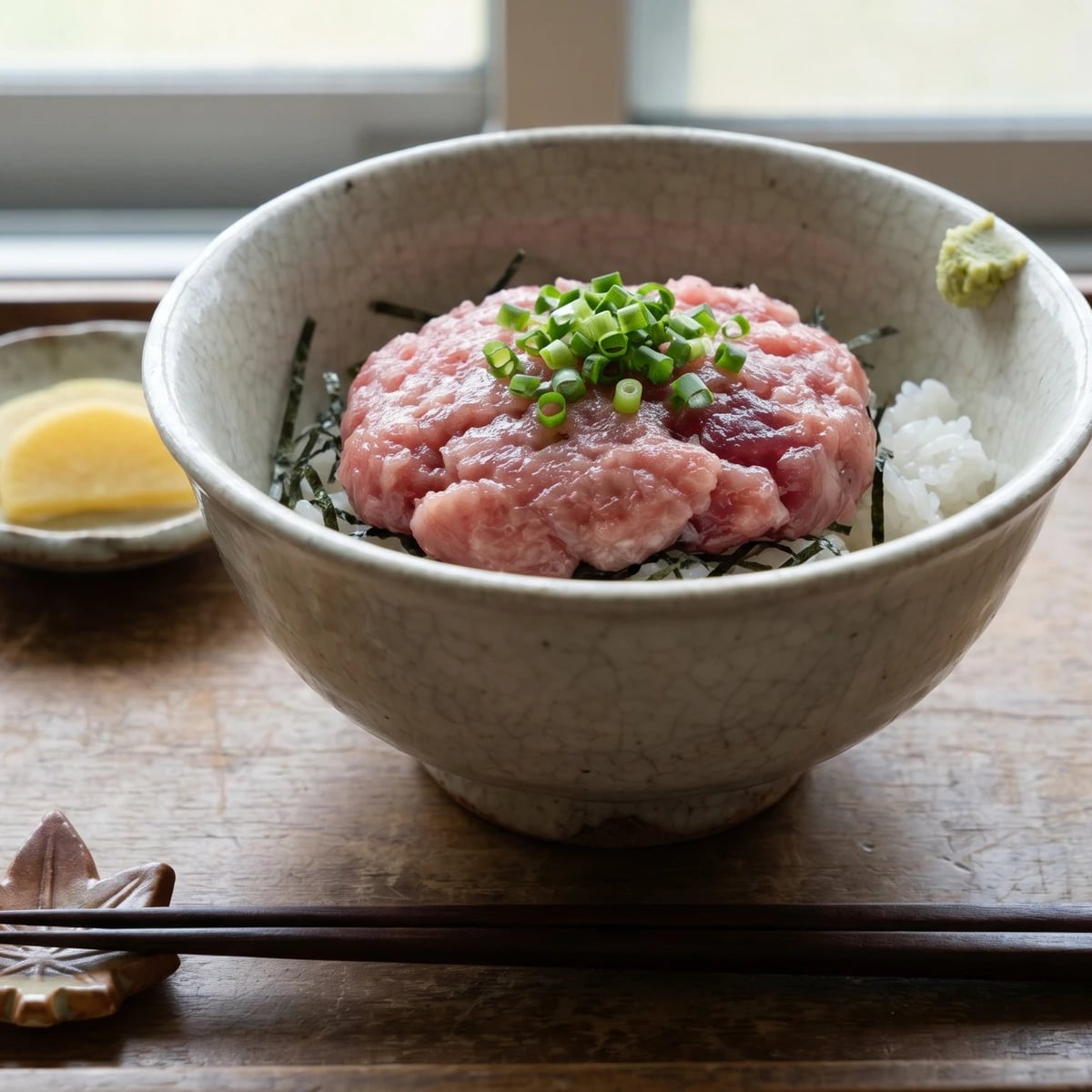
Negitorodon (ネギトロ丼, minced tuna and scallion rice bowl)

Negitorodon (ネギトロ丼, minced tuna and scallion rice bowl)

Created by

Negitorodon is the thrift of the sushi counter turned into supper: glistening fresh tuna trim, chopped just enough to hold together, over room-temperature vinegared rice.

Main Dishes
Japanese
Weeknight
Quick Meal
Date Night
20 min
Active Time
15 min cook50 min total
Yield2 servings

Negitoro begins with the part no careful sushi shop throws away: the tuna left between the bones and along the skin, scraped clean and chopped with scallion. That is not stinginess. It is respect. The trim is soft, rich, and ready to cling to rice, which is why a bowl of it can feel more direct than a neat slice of tuna.

Your hesitation is reasonable, because this is raw fish. Sourcing comes first, always. Buy tuna sold specifically for raw eating from a fishmonger you trust, keep it cold, and use it the day you buy or thaw it. If the fish smells strong or looks dull, don't rescue it with soy sauce. Cook something else. Nothing hidden.

The method is almost plain enough to embarrass people who enjoy making dinner sound difficult. Season short-grain rice with vinegar while it's hot, then cool it until it is only gently warm. Mince the tuna by hand, not into paste, and fold in the scallion at the end. The rice must not heat the fish, and the fish must not lose its soft pieces. That texture is the dish.

Negitorodon is a one-bowl meal, but it still follows the table's order: rice as the foundation, good fish handled at its shun, a little sharpness from wasabi, and pickles beside it to clear the mouth. Serve the soy on the side. Salt draws moisture from raw tuna quickly, and a wet mound is a sad education.

Negitoro belongs to the economy of the sushi counter, where nakaochi, the tuna flesh clinging to the backbone and ribs, was scraped away rather than wasted. The name is often read as negi plus toro, scallion and fatty tuna, but many sushi cooks connect it to negitoru, a shop word for scraping meat off the fish. Loose toppings became easier to serve after gunkan-maki, the nori-walled battleship roll credited to Ginza Kyūbey in 1941, and the rice-bowl version carried the same idea into a quick meal.

The technique, the tradition, and the story behind every dish.

Discover Culinary Explorer

Ingredients

Japanese short-grain rice

Quantity

1 rice-cooker cup (180ml/about 150g)

rinsed

water

Quantity

200ml, or to the sushi-rice line

rice vinegar

Quantity

2 tablespoons

sugar

Quantity

1 tablespoon

sea salt

Quantity

1/2 teaspoon

tuna sold for raw eating

Quantity

220g

nakaochi, fatty tuna trim, or a clean block kept very cold

scallions (negi)

Quantity

2

white and pale green parts finely chopped

nori (optional)

Quantity

1 small sheet

cut into thin strips

soy sauce

Quantity

2 tablespoons

for serving

wasabi (optional)

Quantity

1 teaspoon

freshly grated, or prepared as a sensible stand-in

Japanese pickles, such as takuan (optional)

Quantity

for serving

Equipment Needed

  • Hangiri (wooden sushi-rice tub), or a wide shallow nonreactive bowl
  • Rice paddle (shamoji), or a flat wooden spoon
  • Sharp yanagiba, or your sharpest long kitchen knife
  • Deep donburi bowls
  • Small bowl set over ice for keeping tuna cold

Instructions

  1. 1

    Cook the rice

    Rinse the rice in several changes of cool water, swirling lightly with your hand, until the water runs almost clear. Drain for 10 minutes, then cook with the water in a rice cooker, or bring to a boil in a small covered pot, lower the heat, cook 12 minutes, and rest covered 10 minutes. Rinsing removes loose starch so the grains finish glossy instead of pasty, and the short drain lets them take water evenly.

    Use Japanese short-grain rice. The cling of the grain is part of the bowl, and long-grain rice scatters when you want it to gather.
  2. 2

    Season the rice

    Stir the rice vinegar, sugar, and salt until dissolved. Turn the hot rice into a hangiri, the wooden sushi-rice tub, or a wide nonreactive bowl. Drizzle over the vinegar mixture and fold with a rice paddle in cutting strokes while spreading the rice to cool. You are coating the grains, not mashing them. Stop when the rice is glossy and only gently warm, because hot rice wilts raw tuna and cold rice turns hard.

    No hangiri? A wide glass, ceramic, or stainless bowl works. The width matters because the rice cools quickly and evenly.
  3. 3

    Prepare the tuna

    Keep the tuna in the refrigerator or set its bowl over ice while the rice cools. Pat it dry. If you have nakaochi, scrape the flesh from the bone with a spoon, following the grain. If you have a block, slice it thinly first, then gather the slices for chopping. This keeps the fish cold and gives the knife a head start.

  4. 4

    Mince by hand

    Chop the tuna with a sharp knife until it is coarse, soft, and just sticky enough to hold together, with small pieces still visible. Stop before it becomes a paste. A paste warms under the knife and smears the fat, while a hand-chopped mince keeps the clean taste and the little richness that makes negitoro itself.

    Let the knife do the work. Pressing hard with the blade bruises the fish, so chop lightly and gather it back together as needed.
  5. 5

    Fold in scallion

    Fold in most of the chopped scallion, holding back a pinch for the top. Use a light hand. The scallion sharpens the fat and keeps the bowl from feeling heavy, but too much makes the tuna disappear, and that is not the lesson we came for.

  6. 6

    Build the bowls

    Spoon the vinegared rice into two donburi bowls, filling below the rim and leaving the surface loose, not packed. Scatter nori over the rice if using. Mound the negitoro in the center with a little height, set wasabi to one side, and finish with the reserved scallion. Serve soy sauce in a small dish and pickles beside the bowl. Add soy at the table, sparingly, because salt draws water from raw tuna quickly and turns a clean mound slack.

    Eat this promptly. Negitorodon is at its best when the rice is softly warm, the tuna is cold, and nothing has had time to weep.

Chef Tips

  • Ask the fishmonger one plain question: what came in today that you'd eat raw? If they hesitate, thank them and buy fish to cook. A label that says sushi grade is not a substitute for trust and handling.
  • Nakaochi is the old pleasure here. If you can buy tuna still clinging to the bone, scrape it with a spoon. If not, use a clean block of toro, chūtoro, or good akami with a little fat. Commercial minced tuna with added oil is a product, not this dish.
  • Keep the fish cold and the rice only gently warm. That contrast is quiet, but it decides the bowl. Hot rice cooks the edge of the tuna, and refrigerator-cold rice loses its softness.
  • Don't marinate the mince in soy sauce. Serve soy on the side and touch each bite as you eat. The tuna stays bright, and the bowl remains clean.
  • Raw tuna is not for every table. If you're pregnant, immunocompromised, or serving someone very young or frail, choose a cooked tuna dish instead. Honesty is also part of the cooking.

Advance Preparation

  • The vinegar, sugar, and salt mixture can be made up to a week ahead and refrigerated. Bring it back to room temperature before folding it into hot rice.
  • The rice can be cooked and seasoned up to 2 hours ahead. Cover it with a damp cloth at room temperature. Don't refrigerate it, or the grains harden.
  • Frozen tuna sold for raw eating can thaw overnight in the refrigerator, still wrapped. Mince it only just before serving and keep it below 40 F / 4 C until you start.

Frequently Asked Questions

Nutrition Information

1 serving (about 350g)

Calories
505 calories
Total Fat
10 g
Saturated Fat
2 g
Trans Fat
0 g
Unsaturated Fat
8 g
Cholesterol
50 mg
Sodium
1750 mg
Total Carbohydrates
71 g
Dietary Fiber
2 g
Sugars
8 g
Protein
31 g

Note: Chef personas and recipes are created with AI assistance. Cook with care: follow safe food-handling practices, check doneness with a thermometer when needed, and adapt for allergies and your kitchen.

Where cooking meets culture.

Culinary guides, cultural storytelling, and the editorial depth that makes cooking meaningful.

Discover Culinary Explorer

More from Donburi: Rice Bowl Mains

Browse the full collection