
Chef Lupita
Agua de Jamaica Guerrerense
Guerrero's hibiscus water, made with flor de jamaica from Tecoanapa, steeped dark with Mexican canela and clavo de olor, then served cold over ice for the coastal heat.
A cooking platform built around craft, culture, and the stories behind what we eat.
Created by
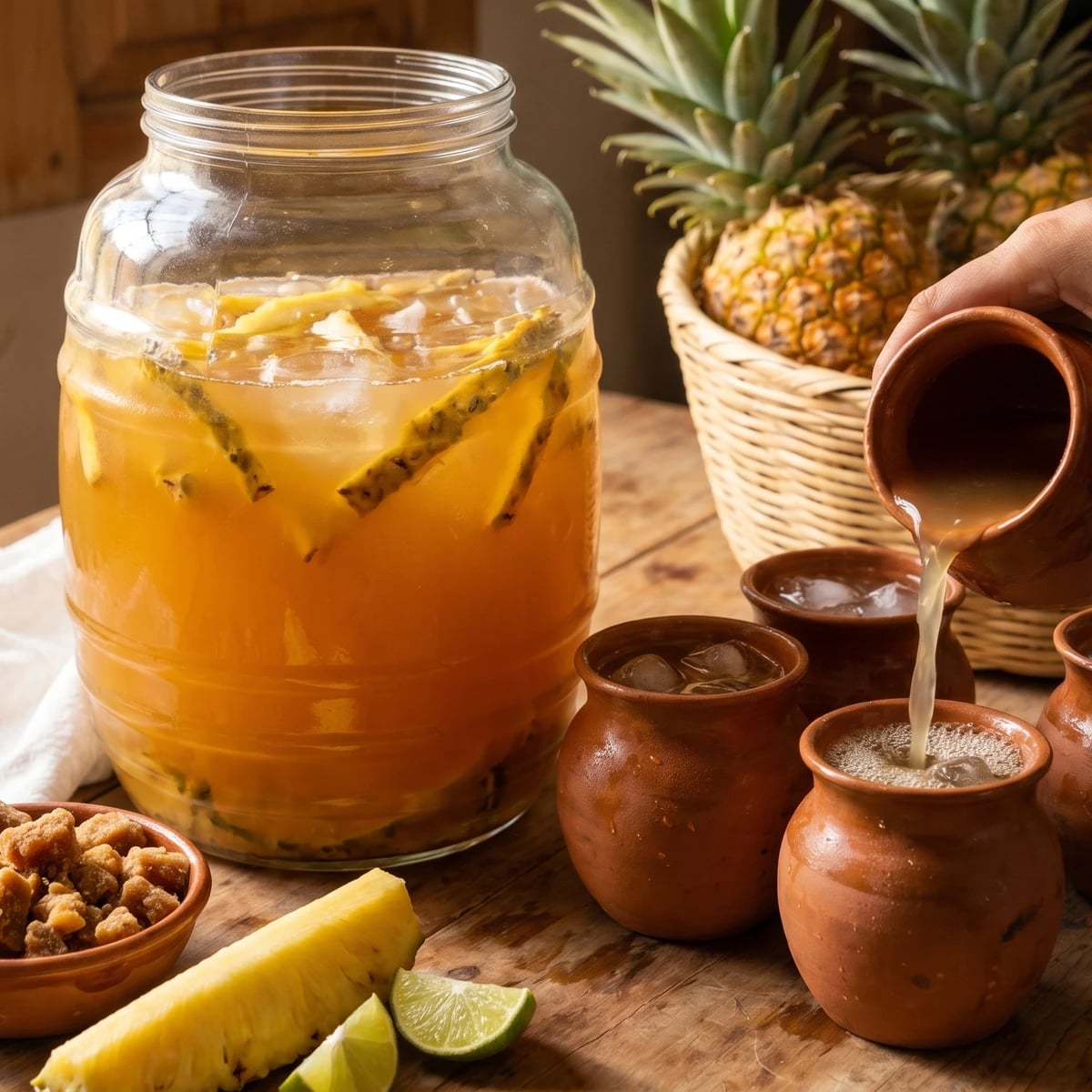
Nayarit's pineapple tepache is a market drink made from piña rinds, piloncillo, canela, and clove, fermented for two days until tart, lightly fizzy, and ready for a table full of ice.
Nayarit lives on the Pacific, between the humid coast of San Blas, the market streets of Tepic, and the fruit stalls where ripe pineapple perfumes the air before you even see it. Tepache de piña belongs to that climate. Hot afternoons, outdoor tables, seafood tostadas, a clay jarro sweating cold in your hand. This is not a cocktail dressed up for a menu. It is kitchen economy with bubbles.
The pineapple rind is the ingredient that matters. Not the golden flesh, the rind. That is where the wild yeast clings, and that is why you scrub it well but do not sterilize it into nothing. Piloncillo gives the fermentation something to eat and leaves behind that dark cane flavor. Canela and clove do their quiet work. No chile. No nonsense. Not all Mexican food is spicy, and anyone who tells you otherwise has not traveled enough.
I learned this version from a woman in the Tepic market who sold aguas frescas and kept her tepache jar under the counter, covered with a white cloth. She used the pineapple peels left from the morning's fruit cups because waste is for people who don't know how to cook. My mother used to say, 'Una mujer que sabe cocinar no pasa hambre.' A cook who understands tepache understands that flavor can come from what other people throw away.
Fermentation is not difficult, but it is alive. You watch it. You taste it. You stop it when it is ready. No me vengas con atajos. The two days are part of the drink.
The word tepache is commonly traced to the Nahuatl 'tepiatl,' a fermented drink originally associated with corn before the pineapple version became dominant in central and western Mexico. The modern tepache de piña depends on colonial-era piloncillo, made from sugar cane introduced by the Spanish in the 16th century, combined with the older Mexican practice of fermenting fruit and grain drinks in clay or wooden vessels. In Pacific states such as Nayarit, pineapple tepache became a practical market beverage because fruit rinds, cane sugar, and warm coastal temperatures made fermentation inexpensive and reliable.
Quantity
1
scrubbed well, peel and core reserved, flesh saved or cut into spears
Quantity
8 cups
divided
Quantity
8 ounces
chopped or grated
Quantity
1
Quantity
3
Quantity
2
Quantity
1 small strip
optional, for stronger fruit flavor
Quantity
for serving
Quantity
for serving
| Ingredient | Quantity |
|---|---|
| large ripe pineapplescrubbed well, peel and core reserved, flesh saved or cut into spears | 1 |
| filtered waterdivided | 8 cups |
| piloncillochopped or grated | 8 ounces |
| Mexican cinnamon stick (canela) | 1 |
| whole cloves | 3 |
| allspice berries (optional) | 2 |
| fresh pineapple flesh (optional)optional, for stronger fruit flavor | 1 small strip |
| ice (optional) | for serving |
| lime wedges (optional) | for serving |
Wash the pineapple under running water and scrub the skin well with a clean brush. Do not peel a dirty pineapple and then pretend fermentation will forgive you. The natural yeasts live on the rind, but dirt does too. Cut off the crown and base, then peel the pineapple in long strips and cut out the core. Save the sweet flesh for eating or for serving alongside the drink.
In a clean glass jar or clay olla, combine 2 cups of the filtered water with the chopped piloncillo. Stir until mostly dissolved. If your piloncillo is very hard, dissolve it first in warm water, then let it cool completely before adding the pineapple. Hot syrup kills the wild yeast. That is not a shortcut, that is sabotage.
Add the pineapple peels, core, canela, cloves, and allspice if using. Add the remaining 6 cups filtered water and stir with a clean wooden spoon. The pineapple should be submerged. If a few pieces float, press them down gently. The liquid will smell sweet, dark from the piloncillo, and sharp with fresh pineapple.
Cover the jar with a clean cotton cloth or several layers of cheesecloth and secure it with a rubber band or string. Do not seal it tight. Fermentation makes gas and needs to breathe. Leave it at room temperature, away from direct sun, for 24 to 48 hours. In a warm Nayarit kitchen near the coast, 24 hours can be enough. In a cooler room, it may need the full two days.
After 24 hours, taste a spoonful. It should be sweet, gently tart, and barely fizzy. If it tastes only like sugar water, let it ferment another 12 to 24 hours. If it tastes sharply sour, you waited too long for a table drink, but you can still use it as a base for vinegar. Tepache teaches patience, but it also punishes forgetting.
Strain the tepache through a fine-mesh strainer into clean bottles or a pitcher. Discard the spent peel, core, and spices. Refrigerate immediately. Cold slows the fermentation and keeps the drink where you want it: tart, sweet, and alive, not boozy and sour.
Serve in clay jarritos or thick glasses packed with ice. Add a lime wedge if the pineapple was very sweet. In Nayarit, this belongs at an outdoor table with seafood, tostadas, or whatever the market gave you that morning. Not everything Mexican needs chile. This drink is about fruit, piloncillo, and time. Así se hace y punto.
1 serving (about 240g)
Culinary guides, cultural storytelling, and the editorial depth that makes cooking meaningful.
Discover Culinary Explorer
Chef Lupita
Guerrero's hibiscus water, made with flor de jamaica from Tecoanapa, steeped dark with Mexican canela and clavo de olor, then served cold over ice for the coastal heat.

Chef Lupita
Colima's cold bate is toasted chan seed beaten with water until thick and frothy, then sweetened with piloncillo syrup, the kind of market drink that proves not all Mexican beverages need fruit.

Chef Lupita
Colima's café de Comala is dark coffee from the volcanic highlands, brewed in an olla de barro with piloncillo and canela, the kind served in the plaza when the afternoon turns cool.

Chef Lupita
Michoacan's old Purépecha celebration drink, fresh pulque cured with piloncillo, canela, clove, and pineapple until lightly fizzy, tangy, and cold enough for a feast table.