
Chef Fai
Southern Cucumber Relish (Ajad)
The one Thai condiment where vinegar replaces lime as the sour pillar, and the system still holds. Palm sugar for sweet, nam pla for salt, prik for heat. Ajad is the four pillars in a jar.
A cooking platform built around craft, culture, and the stories behind what we eat.
Created by
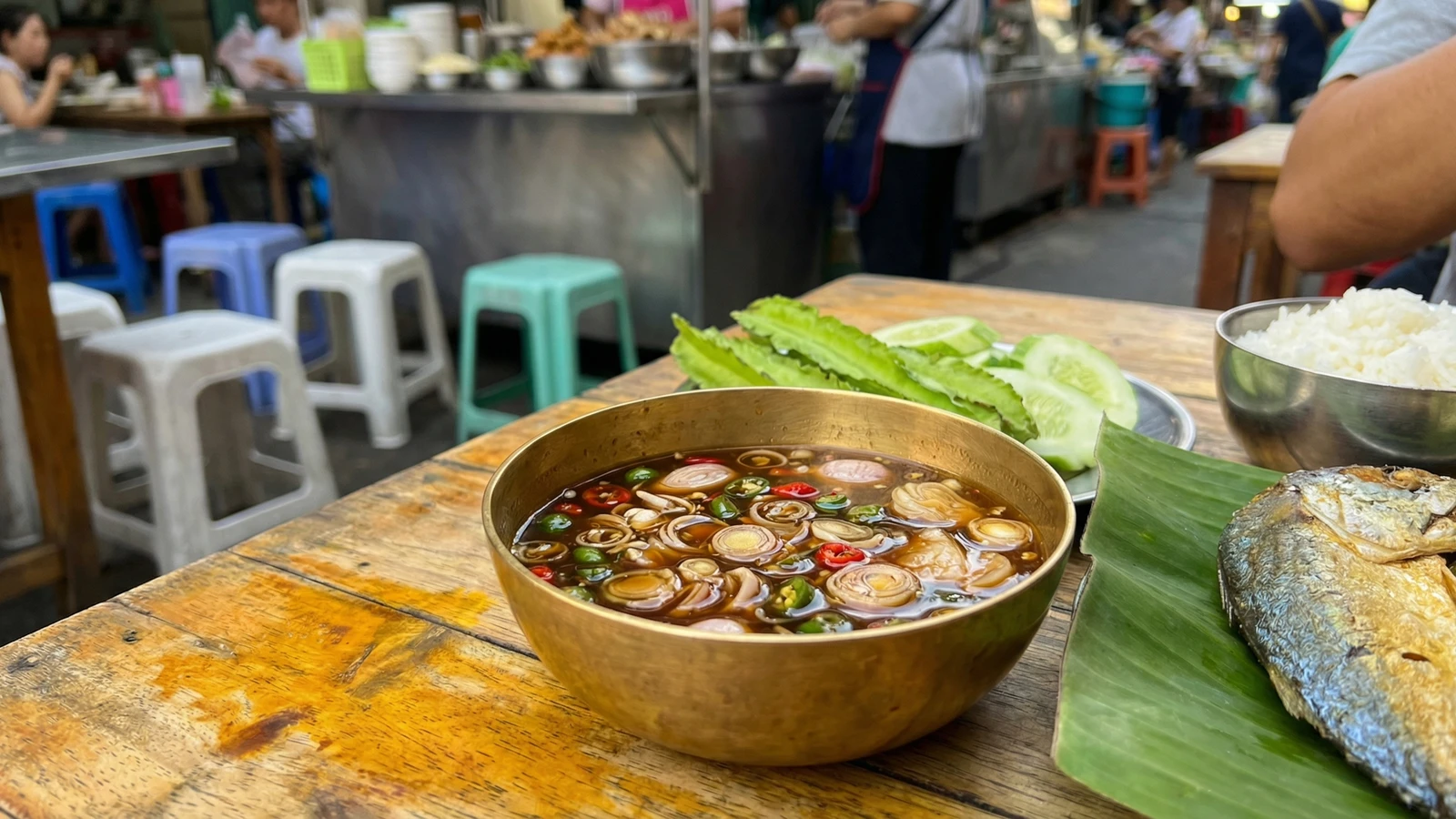
The deep south runs on budu, not nam pla. Fermented anchovy sauce cooked down with palm sugar, lime, shallots, and chili into a thick, funky dip that is the salt pillar of Southern Thai cooking.
Budu is where the South begins. Cross south of Chumphon and the nam pla (fish sauce) bottles start disappearing from tables. In their place: thick, dark, fermented anchovy sauce with a funk that hits you from across the room. That's budu. And nam budu, the cooked dipping sauce made from it, is the condiment that ties the entire Southern Thai table together.
Ajarn always said the four pillars govern all Thai cooking: fish sauce for salt, palm sugar for sweet, tropical fruit for sour, chili for heat. Nam budu follows every one of those rules, but it swaps the salt pillar. Down south, budu replaces standard nam pla in dozens of preparations. It's thicker, darker, more intensely fermented. The umami is deeper. The aroma is, let's say, assertive. If nam pla is a handshake, budu is a bear hug that won't let go.
Making nam budu is simple. You cook the raw budu with palm sugar, shallots, and chili until it thickens and the sugar dissolves. Then lime juice goes in off the heat, because Ajarn's rule holds: add sour last, add sour slowly. The result is a thick, sweet-salty-sour-spicy sauce you spoon over rice, dip vegetables into, or drizzle across fried fish. It's the ketchup of the deep south, except it actually tastes like something.
I learned to appreciate budu late. Growing up in Bangkok, I knew nam pla. Budu was something I smelled at a Songkhla market during a trip with Ajarn and nearly walked away from. He grabbed my arm. "Smell that again. That's protein breaking down into amino acids. That's fermentation doing the work of a thousand hours. Respect it." I stood there and smelled it again. He was right. Once you understand what budu is, the funk becomes the point.
Budu (บูดู) is a fermented fish sauce originating from the Malay-Muslim fishing communities of Thailand's deep south, particularly the provinces of Pattani, Narathiwat, and Songkhla, sharing roots with Malaysian budu and Indonesian pekasam. Unlike Central Thai nam pla, which is a clear amber liquid pressed from salted anchovies, budu retains the fish solids during fermentation, producing a thick, opaque sauce with a more complex and pungent flavor profile. Nam budu, the cooked condiment, evolved as the standard table sauce in Southern Thai households, serving the same role nam pla jim (fish sauce dip) plays in Central and Isan cooking.
Quantity
120ml
Quantity
60g
chopped or grated
Quantity
3 tablespoons (about 2-3 limes)
Quantity
5
thinly sliced
Quantity
5
thinly sliced
Quantity
2 stalks
tender part only, thinly sliced
Quantity
60ml
Quantity
1 tablespoon
| Ingredient | Quantity |
|---|---|
| budu (Southern Thai fermented fish sauce) | 120ml |
| palm sugar (nam tan pip)chopped or grated | 60g |
| lime juice (nam manao) | 3 tablespoons (about 2-3 limes) |
| shallots (hom daeng)thinly sliced | 5 |
| bird's eye chilies (prik khi nu)thinly sliced | 5 |
| lemongrass (takhrai)tender part only, thinly sliced | 2 stalks |
| water | 60ml |
| tamarind paste (makham piak) (optional) | 1 tablespoon |
Pour the budu and water into a small saucepan. Add the palm sugar. Set it over medium-low heat. Stir gently until the palm sugar dissolves completely. This takes two to three minutes. The mixture will darken slightly and start to smell intensely of fermented fish. Good. That's the amino acids waking up. If the smell scares you, you're not ready for Southern Thai food. Stay with it.
Add the sliced shallots and lemongrass to the saucepan. If you're using tamarind paste, add it now. Bring the mixture to a gentle simmer and cook for 8 to 10 minutes, stirring occasionally. The sauce should reduce slightly and thicken to the consistency of a thin syrup. The shallots will soften and become translucent. The lemongrass will release its citral oils into the sauce, adding a bright, grassy layer under all that fermented depth. Don't boil it hard. A gentle simmer lets the flavors marry without burning the sugar.
Remove the saucepan from heat. Let it cool for one minute. Add the sliced chilies and lime juice. Stir once. Taste it. The balance should be: salty and funky first (that's the budu doing its job), then sweet from the palm sugar, then sour from the lime cutting through everything, then heat building at the end. If the funk is too aggressive, add a squeeze more lime. If it's too sweet, more budu or lime. The South leans sour and spicy, not sweet. Keep that in mind.
Let the nam budu cool to room temperature. The flavors will settle and deepen as it sits. Transfer to a small bowl for serving. This goes on the table alongside rice, raw vegetables, fried fish, grilled seafood, or khao yam (Southern rice salad). In a Southern Thai home, nam budu is on the table at every meal the way Central Thais put out nam pla prik. It's not a special occasion sauce. It's daily infrastructure.
1 serving (about 54g)
Culinary guides, cultural storytelling, and the editorial depth that makes cooking meaningful.
Discover Culinary ExplorerChef Fai
The one Thai condiment where vinegar replaces lime as the sour pillar, and the system still holds. Palm sugar for sweet, nam pla for salt, prik for heat. Ajad is the four pillars in a jar.

Chef Fai
Every grilled dish in Isan answers to this dip. Roasted dried chilies, nam pla, manao, khao khua, and shallots: the four pillars in a condiment that's structural, not optional.
Chef Fai
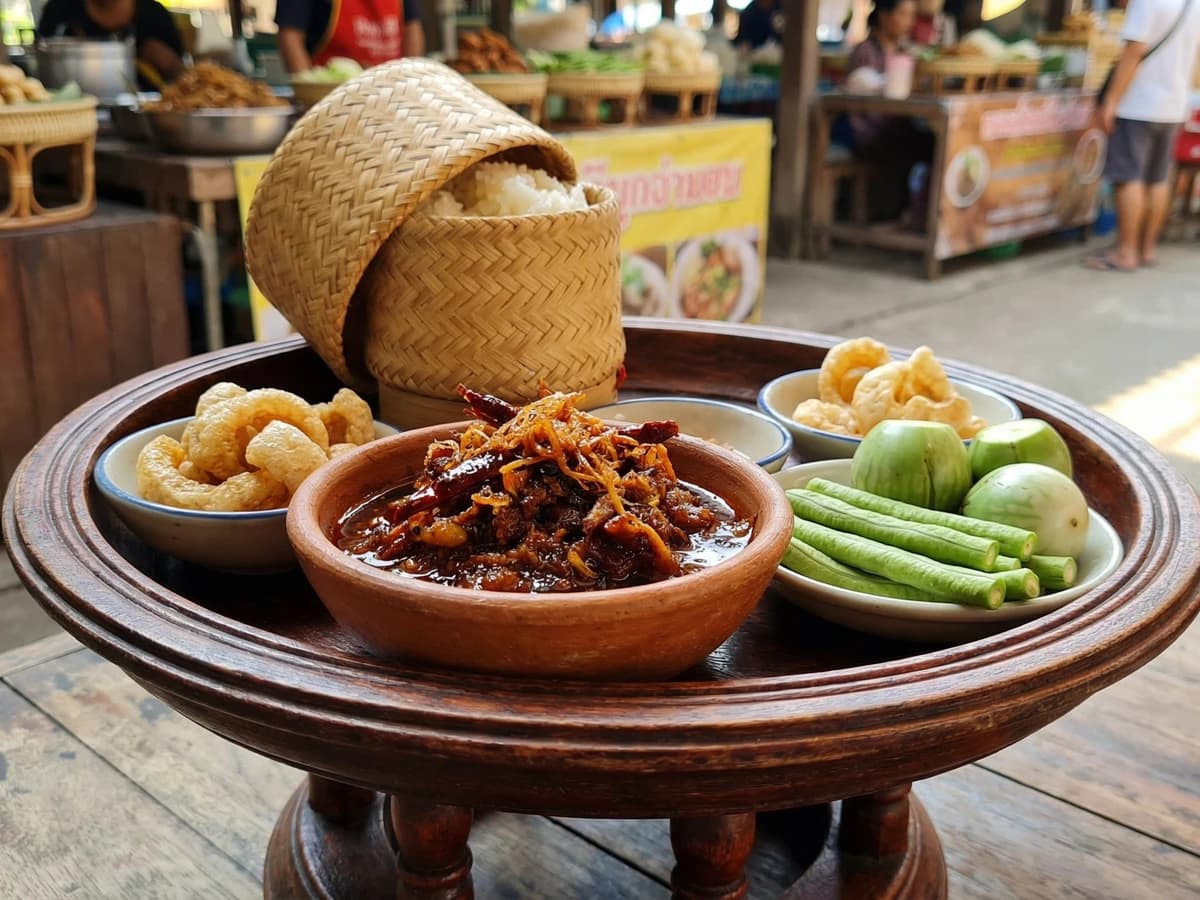
Roasted dried chilies and galangal pounded to a rough paste, folded with shredded pork skin and palm sugar until it becomes something sweet, smoky, and chewy that belongs on every khantoke tray in Chiang Mai.
Chef Fai
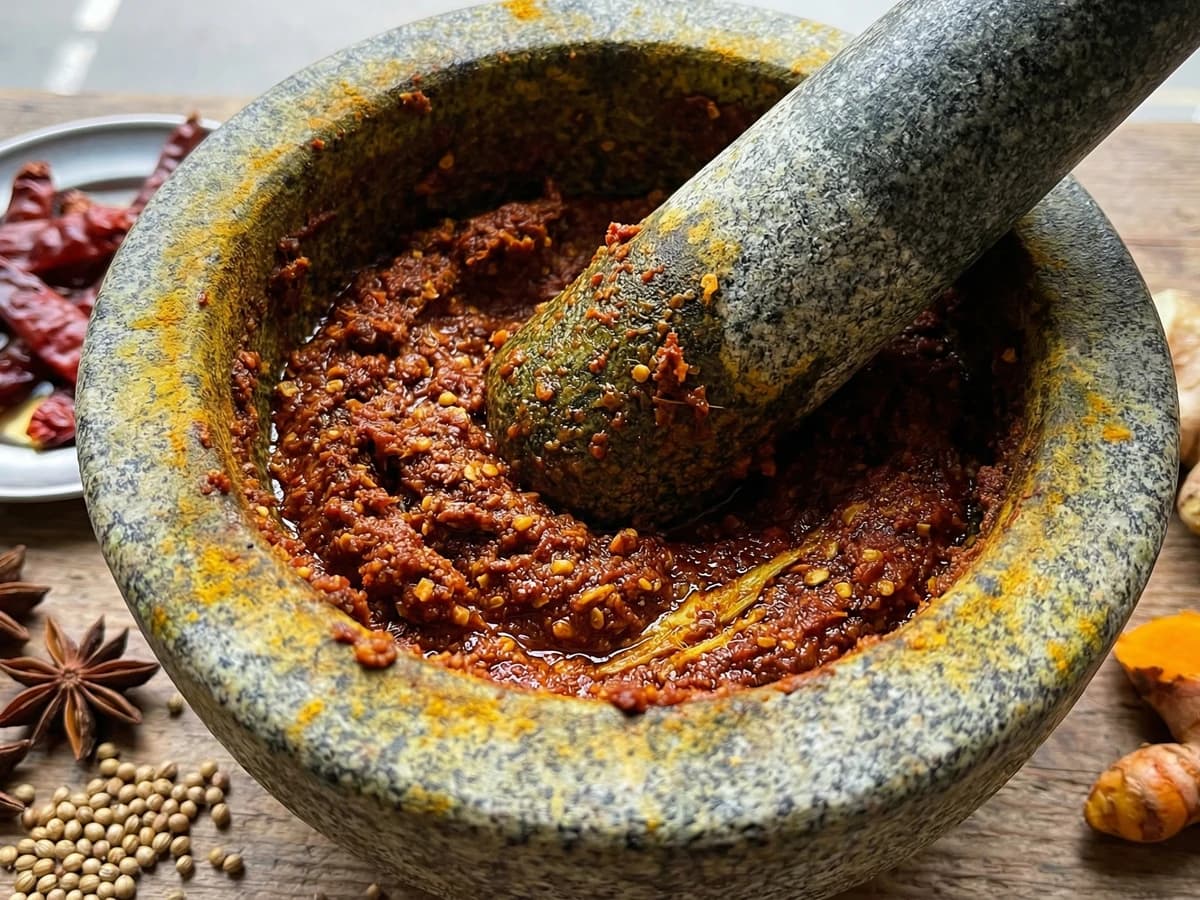
The kreung tam that proves the system adapts. Ginger instead of galangal, cumin and star anise alongside lemongrass. Lanna's mortar holds the whole Burma-to-Chiang Mai trade route in a single paste.