
Chef Takumi
Aspara-bacon (アスパラベーコン, bacon-wrapped asparagus)
Aspara-bacon is late-spring asparagus treated with common sense: thin bacon, hot grill, and a last brush of shōyu and mirin so the spear stays sweet while the wrap crisps.
A cooking platform built around craft, culture, and the stories behind what we eat.
Created by
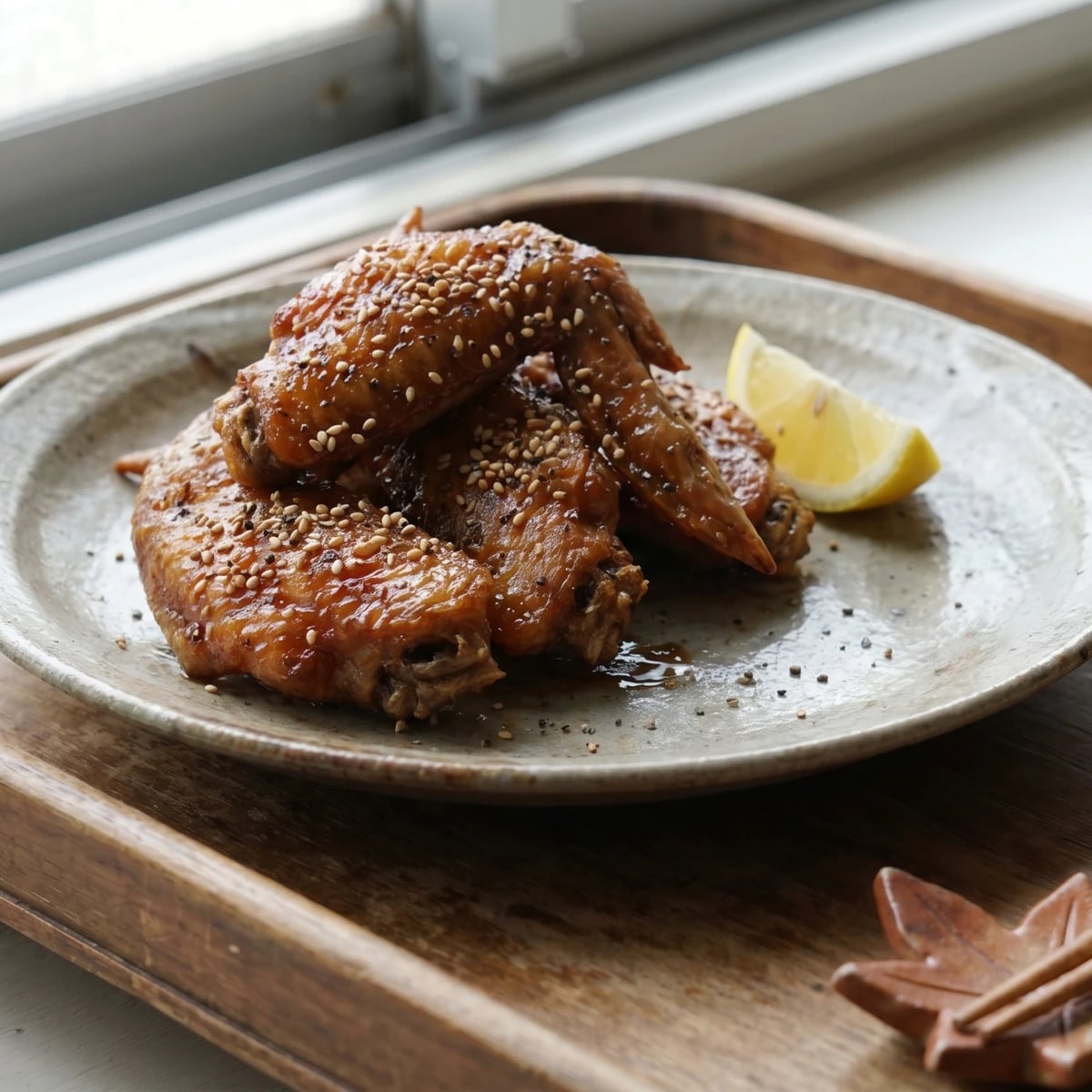
These wings are not complicated. Fry them bare, glaze them lightly, and let black pepper do its sharp work against soy, mirin, and crisp chicken skin.
Tebasaki looks like tavern food, and it is, which is not an insult. A good drinking snack has to be direct. Pick it up, bite cleanly, reach for the next one before pretending you meant to stop.
The fear is the frying. Leave the batter in the cupboard. Nagoya tebasaki is fried naked, twice, so the skin dries and tightens before it meets the tare, the sweet soy glaze. If the glaze goes on too early, it softens the skin and turns the whole thing polite. We are not making polite wings.
The one detail that decides it is restraint with the sauce. Brush or toss the wings just enough to lacquer them, then shower them with black pepper and sesame while they still cling. The pepper is not decoration. It is the counterweight to the sweetness, and Nagoya is not shy about it.
Set these beside rice, pickles, and something green, or pass them as sakana, the little dish that keeps a drink company. They are honmono because nothing is hidden: good chicken, hot oil, a tare made from the two-seasoning foundation of soy and sweetness, and your nerve to stop saucing before the crispness disappears.
Nagoya-style tebasaki became a local specialty in the 1960s, most famously through Furaibō, the Nagoya restaurant credited with popularizing peppery fried chicken wings in 1963. The dish belongs to the city's broader meibutsu culture, local foods strongly tied to place, alongside miso katsu and hitsumabushi. Unlike saucy American-style wings, Nagoya tebasaki are usually fried without batter, glazed thinly, and eaten by hand as a drinking snack.
Quantity
1 kg
flats and drumettes attached or separated
Quantity
1 teaspoon
Quantity
2 tablespoons
for a very light dusting
Quantity
as needed
for deep-frying
Quantity
3 tablespoons
Quantity
3 tablespoons
Quantity
2 tablespoons
Quantity
1 1/2 tablespoons
Quantity
1 small clove
grated
Quantity
1 teaspoon
freshly grated
Quantity
1 tablespoon
Quantity
1 to 2 teaspoons
to taste
| Ingredient | Quantity |
|---|---|
| chicken wingsflats and drumettes attached or separated | 1 kg |
| fine sea salt | 1 teaspoon |
| potato starchfor a very light dusting | 2 tablespoons |
| neutral oilfor deep-frying | as needed |
| soy sauce | 3 tablespoons |
| mirin | 3 tablespoons |
| sake | 2 tablespoons |
| sugar | 1 1/2 tablespoons |
| garlicgrated | 1 small clove |
| gingerfreshly grated | 1 teaspoon |
| toasted white sesame seeds | 1 tablespoon |
| freshly ground black pepperto taste | 1 to 2 teaspoons |
Pat the wings very dry, then sprinkle them with the salt and leave them on a rack for 15 minutes. The salt seasons the meat and draws a little moisture to the surface. Pat them dry again, because water is the enemy of crisp skin and makes the oil spit like an angry teacher.
Put the soy sauce, mirin, sake, sugar, garlic, and ginger in a small pan. Bring it to a lively simmer for 2 to 3 minutes, just until the sugar dissolves and the sauce looks glossy. Do not reduce it to a thick syrup. A thin tare clings lightly; a heavy one smothers the skin.
Dust the wings with the potato starch, then shake off almost all of it. You should barely see it. The starch gives the skin a dry surface and a little crackle, but too much turns the dish into karaage, which is a good thing and not this thing.
Heat the oil to 160 C. Fry the wings in batches for 6 to 7 minutes, moving them gently once or twice, until the skin is pale golden and the meat is cooked through. This first fry is for cooking the chicken without darkening the outside too fast.
Lift the wings to a rack and rest them for 5 minutes while the oil rises to 180 C. Resting is not laziness. It lets the surface moisture move outward, so the second fry can drive it off and tighten the skin.
Fry the wings again at 180 C for 2 to 3 minutes, until deep golden and audibly crisp when nudged with tongs. Drain them on a rack, not paper towels. A rack keeps air moving around the skin; paper traps moisture underneath.
While the wings are still hot, brush them lightly with the tare or toss them quickly in a bowl with just enough glaze to shine. Sprinkle at once with the sesame seeds and plenty of black pepper. The hot skin grabs the seasoning, and the pepper cuts the sweetness before it becomes heavy.
Pile the wings in a small, uneven stack, not a mountain, and serve immediately. If you have lemon, offer a wedge on the side rather than squeezing it over everything. Let each cook at the table decide; the tare has already done its work.
1 serving (about 230g)
Culinary guides, cultural storytelling, and the editorial depth that makes cooking meaningful.
Discover Culinary Explorer
Chef Takumi
Aspara-bacon is late-spring asparagus treated with common sense: thin bacon, hot grill, and a last brush of shōyu and mirin so the spear stays sweet while the wrap crisps.

Chef Takumi
This is Osaka street food at its plainest and best: good beef cut small, a thin batter, fine panko, hot beef tallow, and one clean dip in sauce.

Chef Takumi
Buta-bara is not a trick of the grill. Good pork belly, even cutting, steady heat, and the patience to let the fat turn glossy do most of the work.

Chef Takumi
Thick slices of lotus root make the finest vegetable kushikatsu: crisp panko outside, tender inside, and those clean holes showing you did nothing more complicated than cut it well.