
Chef Klaus
Himmel und Erde
Rhenish heaven and earth is cheap winter sense: floury potatoes folded with tart apple, then covered with crisp-edged blood sausage and fried onions. Sweet meets sharp. Fat makes it a meal.
A cooking platform built around craft, culture, and the stories behind what we eat.
Created by
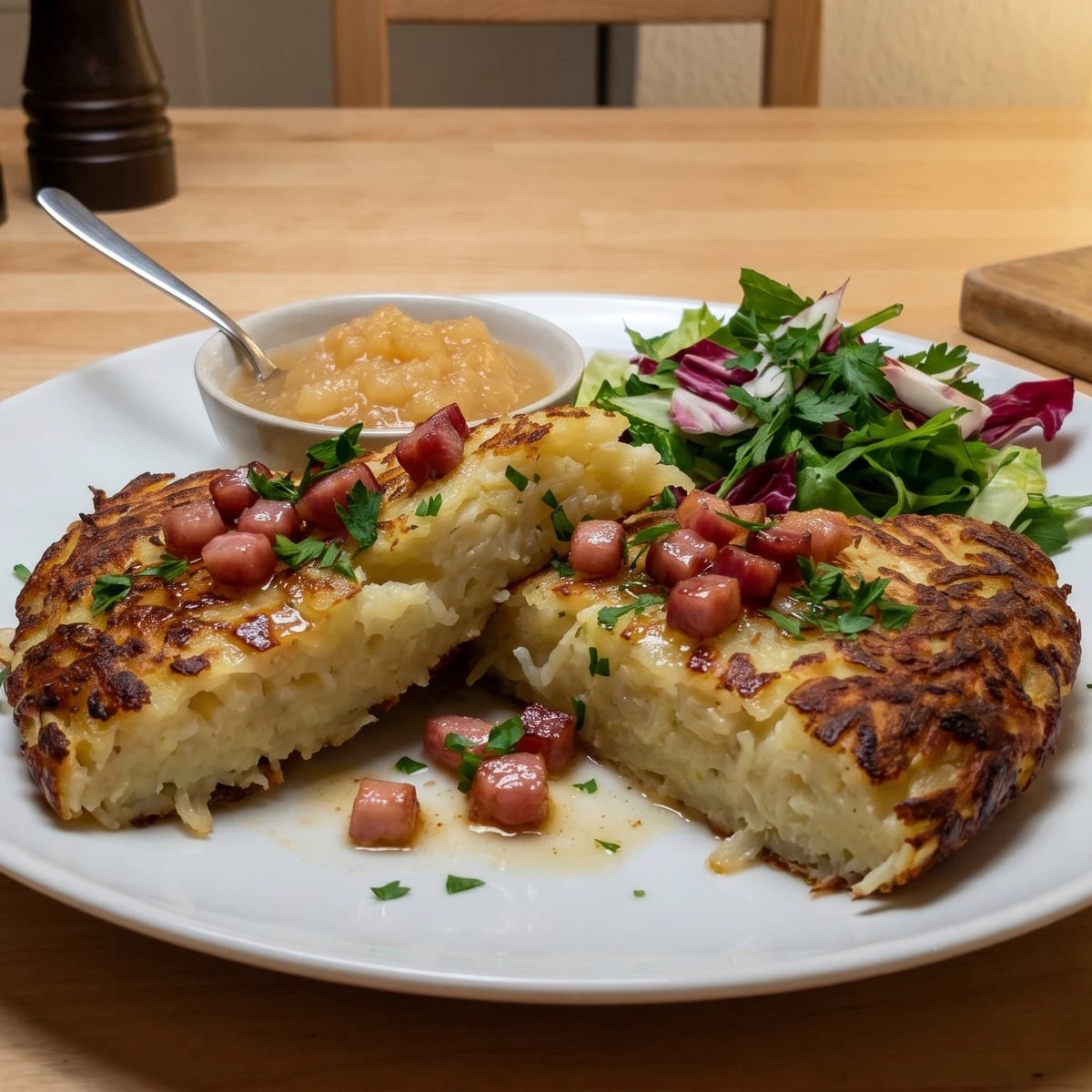
Münsterland puts the potato into one thick pan cake, not a stack of little fritters: crisp edges, soft centre, bacon fat doing honest work.
Pillekauken belongs to Münsterland, the flat green country around Münster, where stored potatoes, onions, bacon, and a pan can still make a proper supper. This is weeknight food if you've got the potatoes, and Sunday food if you set it beside a roast or a sharp salad. It isn't delicate. It shouldn't be.
The regions split as soon as the grater comes out. In the Rhineland, Reibekuchen are small and thin, often eaten with apple sauce. In Bavaria, Reiberdatschi go the same way, crisp and individual. Münsterland makes a thicker cake in the pan, often with bacon or a little Mettwurst, and lets the middle stay tender. Im Norden anders, im Süden anders.
The technique is simple and it decides the dish: squeeze the grated raw potato hard, then let the starch settle in the bowl and put that starch back into the batter. The water makes the cake wet and heavy; the settled starch binds it without turning it floury. Weggeworfen wird nichts, even the starch at the bottom has work to do.
Cook it slower than your impatience wants. Too hot and the edge burns before the raw potato in the middle cooks through. Runter mit der Temperatur. A good Pillekauken comes out crisp at the rim, golden underneath, and soft enough inside to remind you it began as plain potato.
The potato became ordinary food in Prussia only in the eighteenth century, pushed by Frederick II through his well-known potato orders of the 1750s and 1760s after resistance from farmers who did not yet trust the crop. Münsterland cooking took to stored potatoes because they fed households through winter with little money, and dishes like Pillekauken show that shift from grain and buckwheat toward the potato pan. The regional line still matters: Westphalia keeps thick pan cakes and larder meats close, while the Rhineland and the south more often fry thinner individual potato pancakes.
Quantity
1kg
peeled
Quantity
1 medium
Quantity
2
Quantity
2 tablespoons
Quantity
120g
diced
Quantity
1 teaspoon, plus more to taste
Quantity
to taste
freshly ground
Quantity
1 pinch
freshly grated
Quantity
2 tablespoons, as needed
Quantity
2 tablespoons
chopped
| Ingredient | Quantity |
|---|---|
| floury potatoespeeled | 1kg |
| onion | 1 medium |
| eggs | 2 |
| potato starch or plain flour (optional) | 2 tablespoons |
| smoked bacondiced | 120g |
| salt | 1 teaspoon, plus more to taste |
| black pepperfreshly ground | to taste |
| nutmegfreshly grated | 1 pinch |
| lard or neutral oil | 2 tablespoons, as needed |
| parsley (optional)chopped | 2 tablespoons |
Grate the potatoes and onion on the coarse side of a box grater into a bowl. Coarse shreds give the Pillekauken a clean potato bite; too fine and you make paste before the pan has a chance.
Tip the grated mixture into a clean towel and squeeze hard over a bowl until no more liquid runs freely. Let that liquid stand for five minutes, then pour off the water and keep the white starch settled at the bottom. Put the starch back with the potatoes. The water would make the cake heavy, but the starch is the binder you already paid for.
Set a heavy frying pan over medium heat and cook the diced bacon until the fat runs and the edges turn crisp. Lift out a spoonful of bacon for the top if you like, but leave the fat in the pan. That fat carries the smoke through the potato. Weggeworfen wird nichts.
Beat the eggs with the salt, pepper, and nutmeg, then mix them into the squeezed potato with the bacon. Add potato starch or flour only if the mixture looks loose and wet; the batter should hold in a spoon without pouring. Too much flour makes it dull, and this is a potato dish, not a bad pancake.
Add a little lard or oil to the bacon fat, then spread the potato mixture into one thick cake, about 2cm deep. Press it level, not hard. Cook over medium-low heat for 10 to 12 minutes, until the underside is deep golden and the edge looks set. Too hot burns the outside while the raw potato in the centre stays stubborn.
Slide the cake onto a plate, invert it back into the pan, and cook the second side another 8 to 10 minutes. If the pan sounds angry, runter mit der Temperatur, down with the temperature. The middle is done when a knife slides in without dragging raw shreds. Taste a corner before serving. Würzen, Fett, Salz zum Schluss.
Cut the Pillekauken into wedges and serve it with the saved crisp bacon, parsley if you're using it, and a sharp green salad or apple sauce. The salad cuts the fat; the apple sauce belongs at many Westphalian tables. Schön ist, was schmeckt.
1 serving (about 280g)
Culinary guides, cultural storytelling, and the editorial depth that makes cooking meaningful.
Discover Culinary Explorer
Chef Klaus
Rhenish heaven and earth is cheap winter sense: floury potatoes folded with tart apple, then covered with crisp-edged blood sausage and fried onions. Sweet meets sharp. Fat makes it a meal.

Chef Klaus
Münsterland's sharp market ragout, once calf's head and now mostly veal and beef, works only when the meat is made tender before mustard, capers, and vinegar touch the pot.

Chef Klaus
Westphalia's pepper pot lives on onions, patient beef, and dark rye crumbs, not jarred sauce. The pepper is real, the simmer is low, and the spoon should stand in it.

Chef Klaus
A Sauerland potato loaf built from the cheap winter basket: raw potato for body, cooked potato for hold, and a browned crust that makes tomorrow's slices worth saving.