Chef Klaus
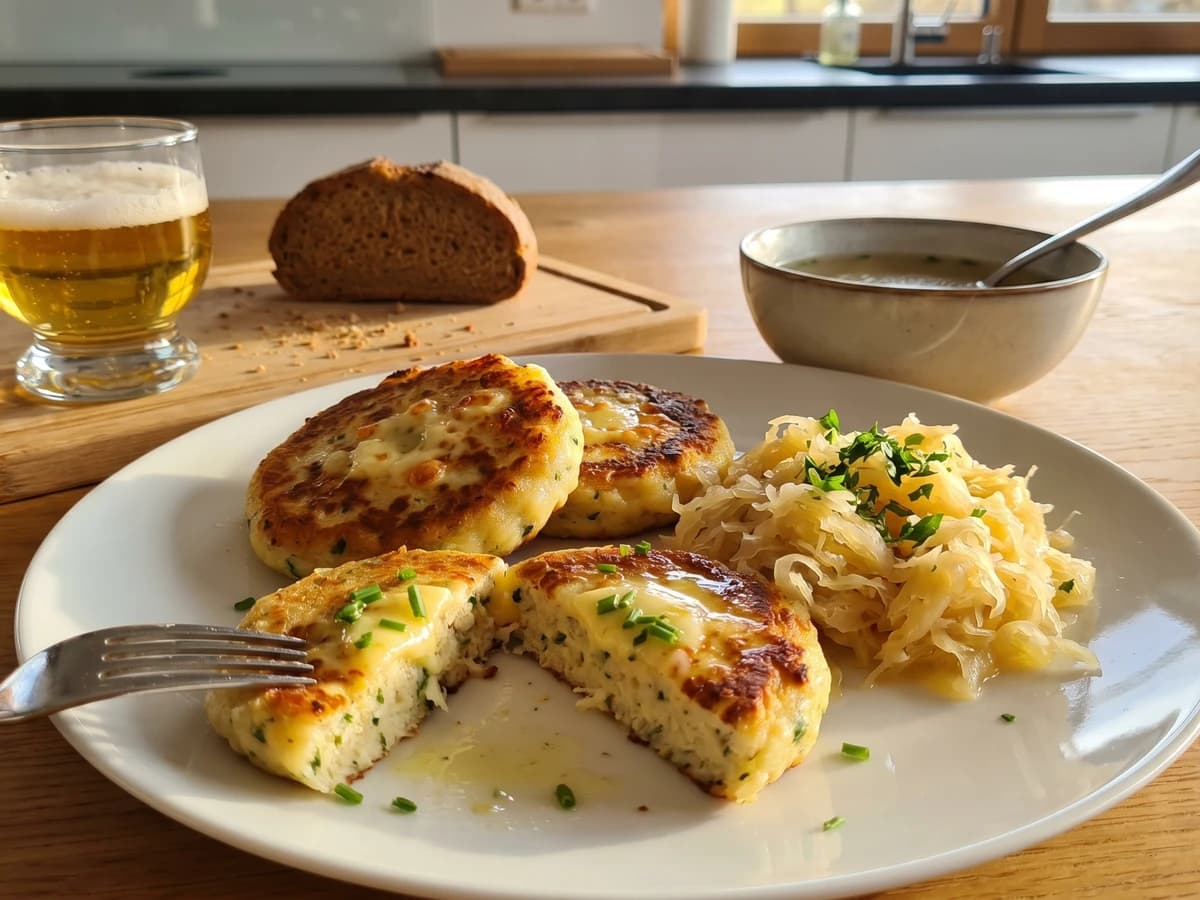
Allgäuer Kaspressknödel
Pressed bread dumplings from the Alpine south, fried until the cheese catches at the edges and the middle stays soft enough for broth, kraut, or a weekday plate.
A cooking platform built around craft, culture, and the stories behind what we eat.
Created by
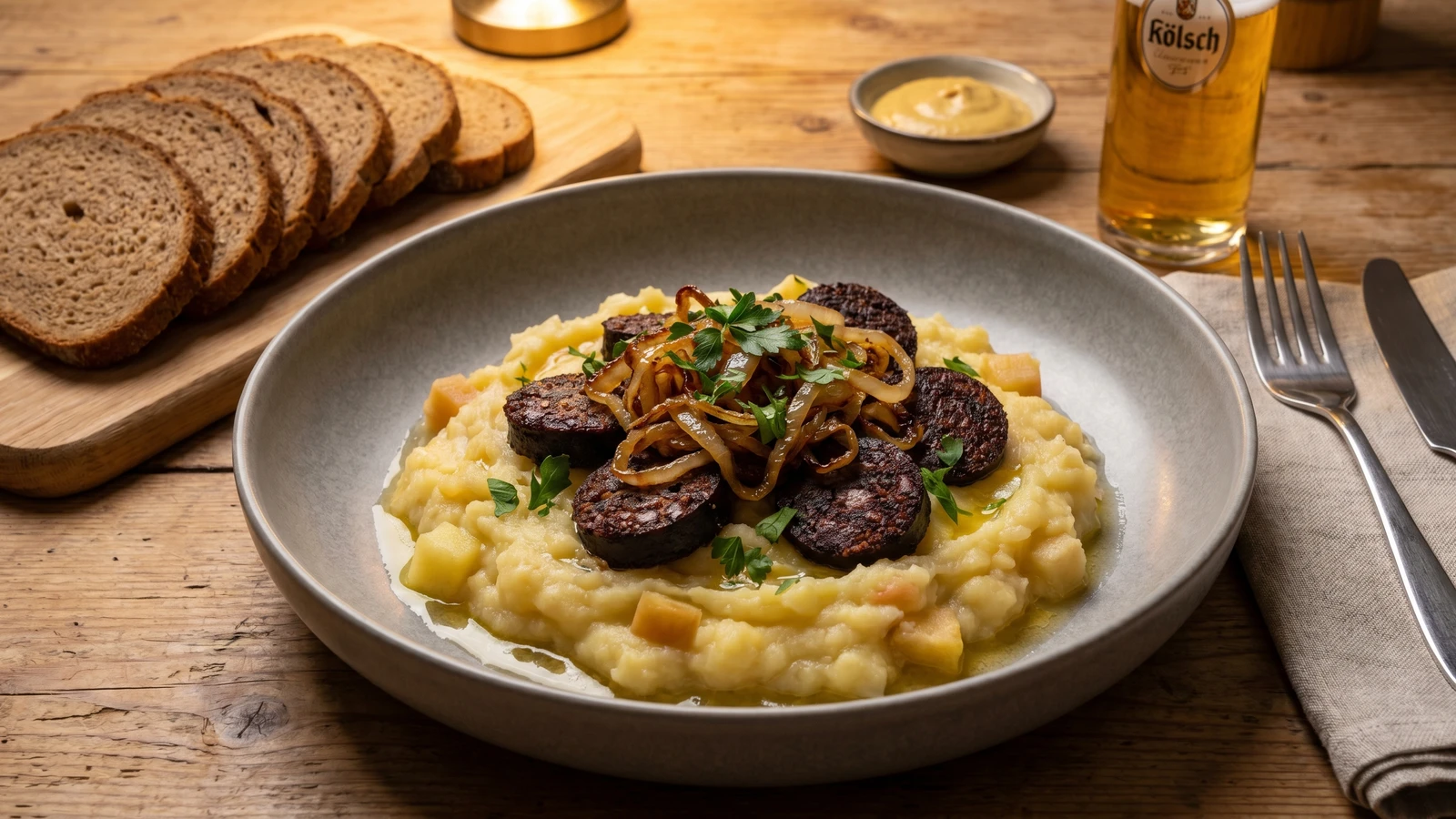
Rhenish heaven and earth is cheap winter sense: floury potatoes folded with tart apple, then covered with crisp-edged blood sausage and fried onions. Sweet meets sharp. Fat makes it a meal.
Himmel und Erde sits strongest in the Rhineland and Westphalia, where winter keeps its bargain with the cellar: potatoes from the ground, apples from the tree, onions from the sack, and blood sausage from the butcher, where rind, fat, and blood are not waste. In Cologne they call it Himmel un Ääd, heaven and earth, and they put Flönz, the local blood sausage, on top with fried onions. In Westphalia the apple may stay sharper and chunkier, and bacon sometimes joins the pan. Further north, some cooks keep the apple compote separate so the mash stays pale. Im Norden anders, im Süden anders.
The dish is not difficult. It is unforgiving about water. I cook the apples separately and dry the floury potatoes in the hot empty pot before I mash them, because apple brings enough moisture of its own and wet potatoes turn the whole thing slack. Fold the apple through the mash, don't beat it into paste. You want pale potato, soft apple, a little sweet, a little sharp.
The blood sausage decides the plate at the end. Dust the slices lightly with flour and fry them in a steady pan, not a furious one, because blood sausage is already cooked and soft; too much heat bursts it before the edge can brown. The onions take their time too, dark gold, not black. Weggeworfen wird nichts, even the onion fat goes over the mash.
This is Hausmannskost, honest home cooking, and it belongs on a Wednesday as much as a Sunday. Check the salt last, with the sausage on the plate, because the butcher has already salted for you. Schön ist, was schmeckt.
Himmel und Erde is recorded in the Rhineland and Westphalia from the 18th century, after potatoes had moved from field crop to daily food in the German lands; Frederick II's Prussian potato orders of 1756 helped push that change in the east and north, while western market gardens and household plots carried it into the pot. The name is literal kitchen poetry: Himmel is the apple from the tree, Erde is the potato from the ground. Cologne's version is tied to Flönz, the local blood sausage, and Kölsche Flönz has been protected in the European Union as a geographical indication since 2016.
Quantity
1kg
peeled and cut into large chunks
Quantity
600g
peeled, cored, and cut into chunks
Quantity
2 tablespoons
Quantity
1 teaspoon
Quantity
150ml
Quantity
60g
Quantity
to taste
Quantity
to taste
Quantity
to taste
Quantity
2 large
thinly sliced
Quantity
3 tablespoons
Quantity
300g
sliced 1.5cm thick
Quantity
2 tablespoons
for dusting
Quantity
2 tablespoons
chopped
| Ingredient | Quantity |
|---|---|
| floury potatoes (mehligkochend)peeled and cut into large chunks | 1kg |
| tart apples, such as Boskoop or Elstarpeeled, cored, and cut into chunks | 600g |
| apple vinegar or lemon juice | 2 tablespoons |
| sugar (optional) | 1 teaspoon |
| whole milk | 150ml |
| butter | 60g |
| fine salt | to taste |
| freshly grated nutmeg | to taste |
| freshly ground black pepper | to taste |
| onionsthinly sliced | 2 large |
| lard, clarified butter, or neutral oil | 3 tablespoons |
| blood sausage (Blutwurst or Kölsche Flönz)sliced 1.5cm thick | 300g |
| rye flour or plain flourfor dusting | 2 tablespoons |
| flat-leaf parsley (optional)chopped | 2 tablespoons |
Put the apple chunks in a small saucepan with the apple vinegar or lemon juice, 2 tablespoons water, a pinch of salt, and the sugar only if the apples are fierce. Cover and cook over medium-low heat for 10 to 12 minutes, until some pieces collapse and some still hold their shape. The acid keeps the apple bright and sharp; too much water makes a thin compote that will loosen the mash before it ever reaches the plate.
Put the potatoes in a large pot of cold salted water, bring them to a steady simmer, and cook until a knife goes through without resistance, about 18 to 22 minutes. Start them cold so the pieces cook evenly from edge to centre; drop big chunks into boiling water and the outside breaks before the middle is done.
Drain the potatoes well, then return them to the empty pot over low heat for 1 to 2 minutes, shaking the pot until the surfaces look dry and chalky. This is the step that decides the dish. Dry potato can take butter, milk, and apple; wet potato turns slack and gluey. Warm the milk with the butter, mash the potatoes, then work in the warm milk mixture with salt, pepper, and nutmeg.
Fold the apple compote through the mash with a spoon, leaving small apple pieces visible. Don't whip it. Beaten potato releases starch and turns pasty, while folded potato stays soft enough to carry the apple. Taste now, but hold back on heavy salting until the sausage is fried.
Heat 2 tablespoons of the lard or clarified butter in a heavy frying pan and cook the onions over medium heat for 15 to 20 minutes, stirring often, until they are deep gold and sweet at the edges. Salt them near the end so they brown instead of sweating into a pale heap. Lift them out and keep the fat in the pan.
Pat the blood sausage slices dry, dust them lightly with flour, and fry them in the onion fat with the remaining tablespoon of fat, 2 to 3 minutes per side. Keep the pan moderate. Blutwurst is already cooked and tender, so the flour gives it a crust before the middle softens; a hard pan bursts it and leaves you with crumbs.
Spoon the potato-apple mash onto warm plates, lay the fried blood sausage on top, and finish with the onions and a little of their fat. Scatter parsley only if you use it at home, not because the plate needs dressing up. Taste the whole forkful before adding more salt. Würzen, Fett, Salz zum Schluss.
1 serving (about 560g)
Culinary guides, cultural storytelling, and the editorial depth that makes cooking meaningful.
Discover Culinary ExplorerChef Klaus
Pressed bread dumplings from the Alpine south, fried until the cheese catches at the edges and the middle stays soft enough for broth, kraut, or a weekday plate.

Chef Klaus
The Bavarian potato salad that works because warm waxy slices drink hot broth first, then oil last, until the bowl turns glossy without mayonnaise.

Chef Klaus
White cabbage shaved thin, wilted with hot caraway vinegar, and finished with crisp Speck fat: the Bavarian salad that belongs beside bread, sausages, and roast pork.

Chef Klaus
The south's sweet-sour white cabbage, cooked from fresh Kraut rather than sauerkraut, soft enough for roast pork and sharp enough to wake the plate.