Chef Klaus
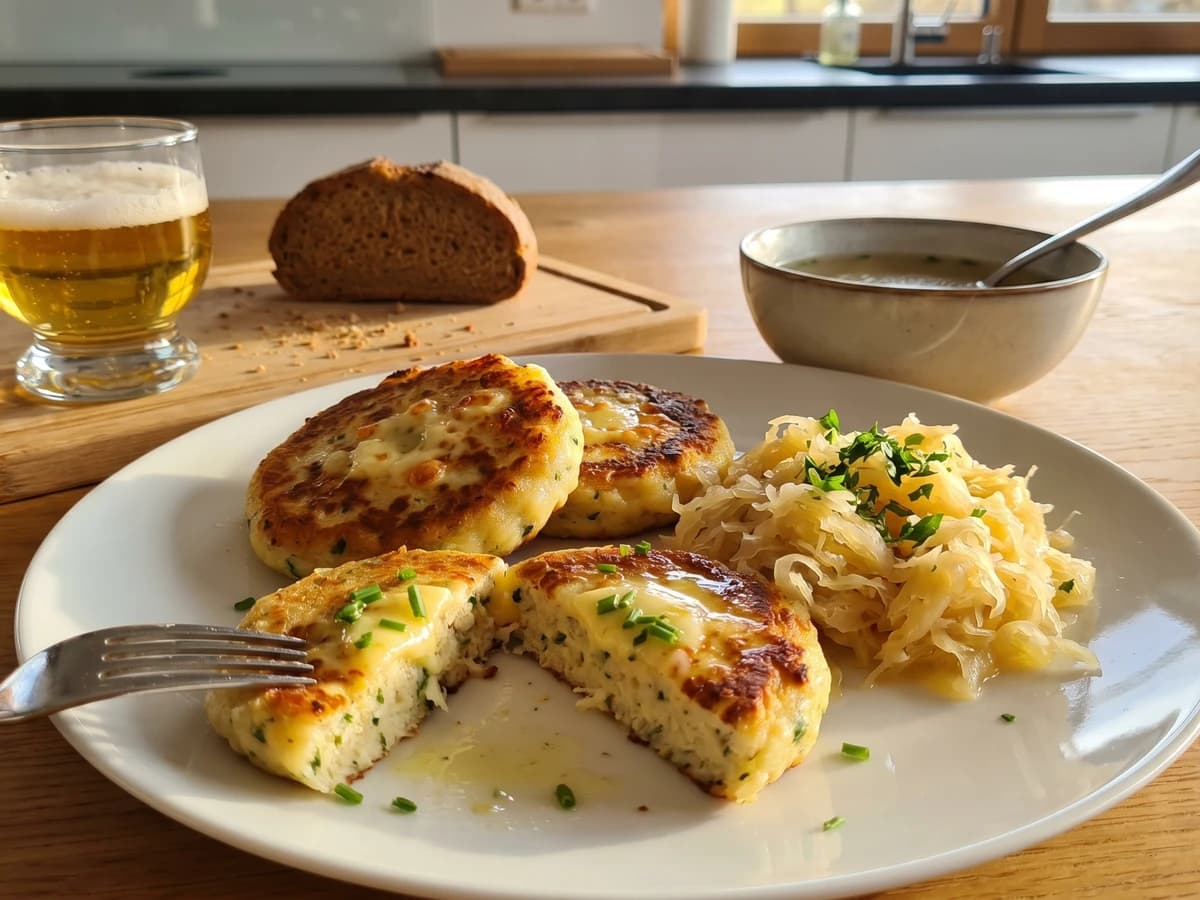
Allgäuer Kaspressknödel
Pressed bread dumplings from the Alpine south, fried until the cheese catches at the edges and the middle stays soft enough for broth, kraut, or a weekday plate.
A cooking platform built around craft, culture, and the stories behind what we eat.
Created by
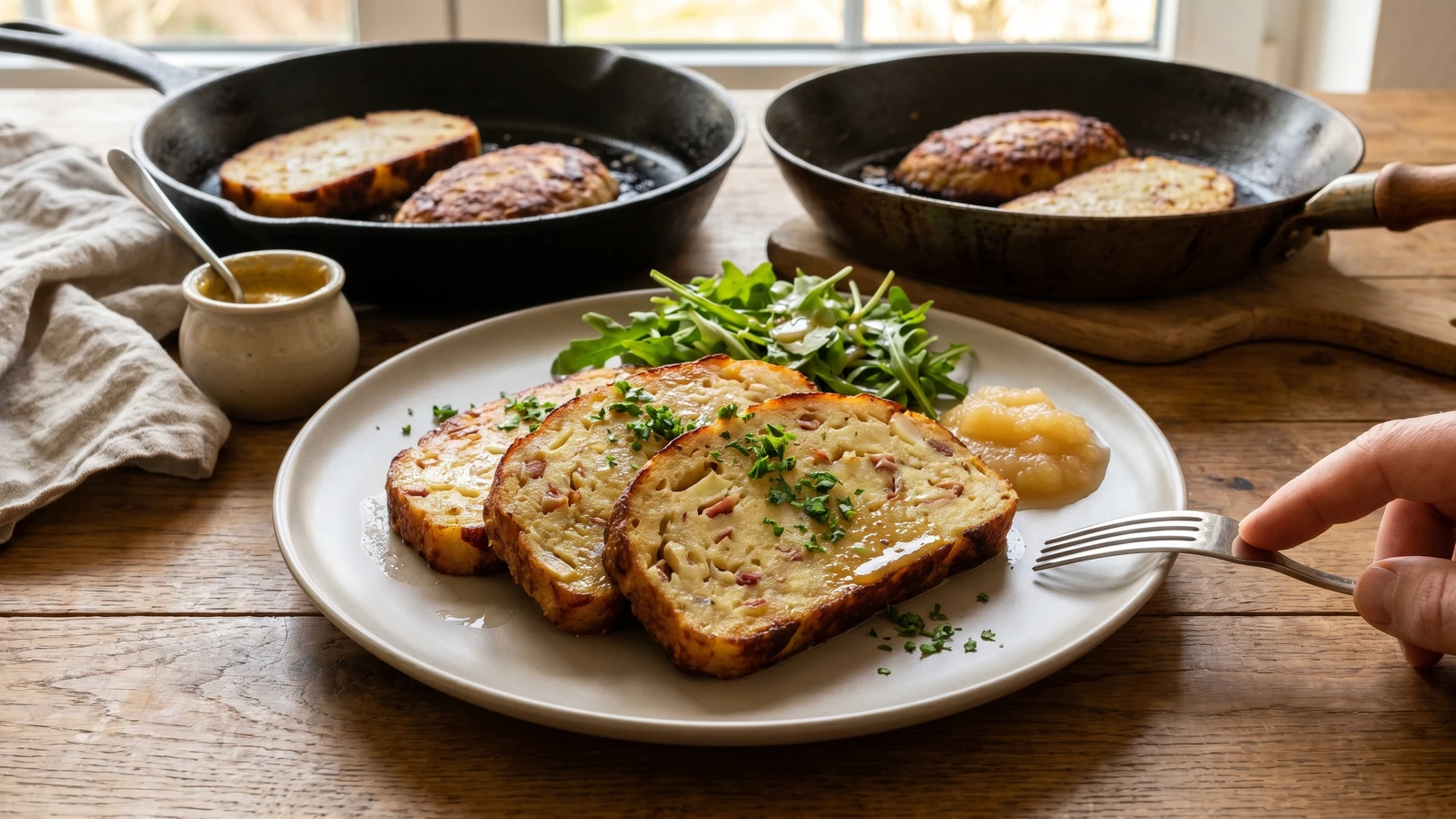
A Sauerland potato loaf built from the cheap winter basket: raw potato for body, cooked potato for hold, and a browned crust that makes tomorrow's slices worth saving.
Potthucke belongs to the Sauerland, to the potato basket, and to the part of the German table that knows a cheap dish can still demand proper technique. It is autumn and winter food, though nobody sensible waits for a feast day to make it. A pot of potatoes, a little onion, bacon if the larder has it, eggs to bind it, then into the oven until the crust sets dark at the edges.
The argument starts as soon as you leave the Sauerland. Here I want raw grated potato mixed with cooked, cooled potato; the cooked potato gives the loaf its hold, and the raw potato gives it that close, damp crumb that fries well the next day. In the Rhineland and the Eifel, the cousin is Döppekooche, often heavier on raw potato and sausage, baked dark in a pot. Im Norden anders, im Süden anders. German food has no single version, and this one is not trying to be a beer-tent plate.
The technique that decides it is moisture. Grate the raw potato, salt it lightly, then squeeze it hard and save the starch that settles in the bowl. Leave the water in and the loaf stews instead of baking; throw the starch away and it loses its backbone. Erst verstehen, dann kochen. The old kitchen knew this before it had a word for food science.
Bake it gently until the middle is set, then let it rest before slicing. Hot from the oven it eats soft beside applesauce or a sharp salad. Cold the next day, it slices clean and fries in a little bacon fat until the faces go crisp. Weggeworfen wird nichts.
Potthucke is a Sauerland and Westphalian potato dish whose name is usually read as something like pot-sitter, a loaf that sits in the pot while the oven does the work. It belongs to the potato economy that spread through German farm kitchens after Frederick the Great's 1756 potato orders in Prussia, when the tuber moved from suspicion to daily food. Its regional cousins, especially Döppekooche in the Rhineland and Eifel, show the same winter logic with different proportions of raw potato, sausage, and bacon.
Quantity
1kg
Quantity
1kg
Quantity
2 teaspoons, plus more to taste
Quantity
2
finely diced
Quantity
150g
diced
Quantity
3
Quantity
80g
Quantity
1 teaspoon
Quantity
1/2 teaspoon
Quantity
to taste
Quantity
2 tablespoons
for the tin and frying
Quantity
to serve
| Ingredient | Quantity |
|---|---|
| floury potatoes for boiling | 1kg |
| floury potatoes for grating raw | 1kg |
| salt | 2 teaspoons, plus more to taste |
| onionsfinely diced | 2 |
| smoked bacondiced | 150g |
| large eggs | 3 |
| plain flour or potato starch | 80g |
| dried marjoram | 1 teaspoon |
| freshly grated nutmeg | 1/2 teaspoon |
| black pepper | to taste |
| lard, butter, or bacon fatfor the tin and frying | 2 tablespoons |
| applesauce or sharp green salad (optional) | to serve |
Peel the first kilo of potatoes, cut them evenly, and boil them in salted water until they fall apart when pressed. Use floury potatoes, not waxy ones; floury potatoes dry out and mash clean, while waxy potatoes stay slick and make the loaf heavy. Drain them well, mash them, then spread them on a plate to cool so the eggs don't cook when they go in.
Cook the diced bacon in a pan until the fat runs and the edges colour, then add the onion and cook until soft but not scorched. The fat carries the onion through the potato, and raw onion would weep in the loaf and leave harsh patches. Scrape the pan well. The browned bits belong in the bowl, not in the sink.
Grate the second kilo of potatoes finely into a clean cloth set over a bowl, sprinkle with a little salt, and squeeze hard until the potato feels almost dry. Let the liquid sit two minutes, pour off the brown water, and keep the white starch settled at the bottom. That starch goes back into the batter because it binds; the water stays out because it would make the loaf slump.
Heat the oven to 180C. Mix the cooled mashed potato, squeezed raw potato, saved starch, bacon and onion, eggs, flour or potato starch, marjoram, nutmeg, pepper, and salt. Mix until it holds together, but don't beat it smooth; a little texture gives Potthucke its proper crumb. Taste a pinch by frying it in the bacon pan, because raw potato batter lies about salt.
Grease a heavy loaf tin or small Dutch oven with lard, butter, or bacon fat, then press in the potato mixture and smooth the top. Bake for 70 to 80 minutes, until the top is browned, the edges pull slightly from the tin, and a knife pushed into the centre comes out without wet batter. Runter mit der Temperatur if the top darkens too fast; the middle must set before the crust gets bossy.
Let the Potthucke rest at least 15 minutes before slicing, because the starch needs time to settle or the first slice tears. Serve it warm with applesauce, mustard, or a sharp salad. For the best part, chill the rest overnight, slice it thick, and fry the slices in bacon fat until both faces are crisp and brown. Weggeworfen wird nichts.
1 serving (about 300g)
Culinary guides, cultural storytelling, and the editorial depth that makes cooking meaningful.
Discover Culinary ExplorerChef Klaus
Pressed bread dumplings from the Alpine south, fried until the cheese catches at the edges and the middle stays soft enough for broth, kraut, or a weekday plate.

Chef Klaus
The Bavarian potato salad that works because warm waxy slices drink hot broth first, then oil last, until the bowl turns glossy without mayonnaise.

Chef Klaus
White cabbage shaved thin, wilted with hot caraway vinegar, and finished with crisp Speck fat: the Bavarian salad that belongs beside bread, sausages, and roast pork.

Chef Klaus
The south's sweet-sour white cabbage, cooked from fresh Kraut rather than sauerkraut, soft enough for roast pork and sharp enough to wake the plate.