Chef Lupita
Acúmara Tatemada al Comal
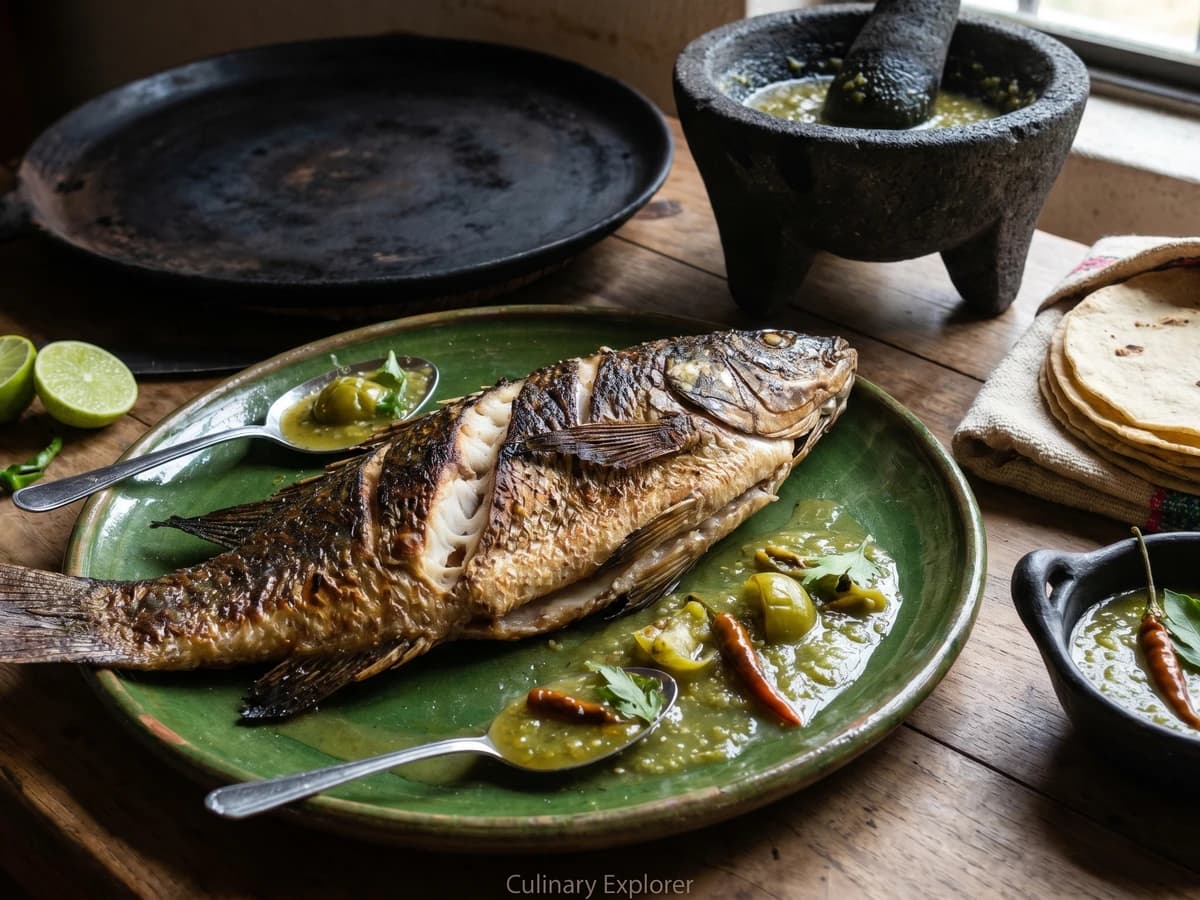
Michoacán's Lake Pátzcuaro acúmara, a whole kurucha from the lago tatemada on a comal de leña and served with chile perón atápakua, corn tortillas, and P'urhépecha discipline.
A cooking platform built around craft, culture, and the stories behind what we eat.
Created by
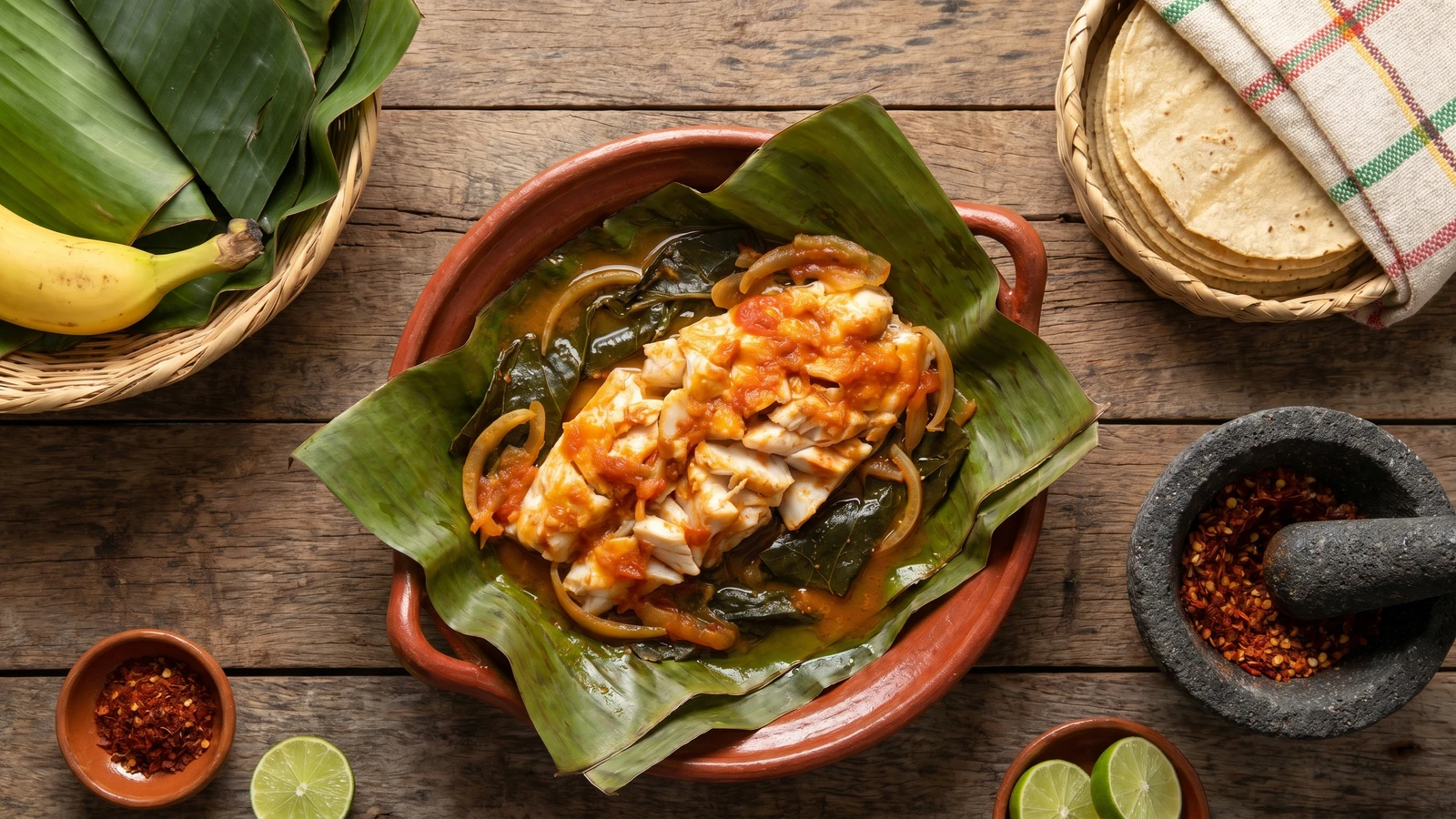
Tabasco's Sierra fish parcel, robalo wrapped in hoja de momo and banana leaf with manteca, chile amashito, tomato, and black pepper, then steamed until the leaf perfumes every bite.
Tabasco, especially the Sierra around Tacotalpa, Teapa, and Tapijulapa, is where this mone lives. The robalo comes from Gulf water, river mouths, and lagoons. The hoja de momo grows fat and glossy in humid patios. The banana leaf is not decoration. It is the cooking vessel.
I learned this technique from women who could wrap a fish parcel tighter than most people can tie a shoe. First the hoja de momo touches the fish, because that leaf gives the perfume. Then the tomato, onion, chile dulce, chile amashito, black pepper, and manteca de cerdo settle over it. Last comes the banana leaf, folded like a package that knows its job. The fish cooks in its own juices, not in a dry pan pretending to be elegant.
Do not replace the hoja de momo with parsley. Do not use butter because you are nervous about lard. La manteca es el sabor. This is Tabasco's green, wet, river-fed cooking, and it should arrive at the table opened in its leaf, with the juices still pooled inside and warm corn tortillas waiting. Cada estado, su propia cocina.
Mone belongs to the Yokot'an Maya, also called Chontal, and mestizo cooking of Tabasco, where fish from rivers, lagoons, and the Gulf is wrapped in aromatic leaves and cooked by trapped moisture rather than direct fire. Hoja de momo, Piper auritum, is native to Mesoamerica, while banana leaf became a common outer wrapper after plantain entered New Spain in the 16th century and spread through the humid southeast. In the Sierra and Chontalpa, the filling may be robalo, pejelagarto, bobo, or pigua, which is why the wrapping technique matters more than one single fish.
Quantity
2 1/2 pounds
skinless, pin bones removed, cut into 6 portions
Quantity
12 large
rinsed, thick center ribs trimmed
Quantity
6 large pieces, about 14 by 16 inches each
plus extra for lining the steamer
Quantity
3 tablespoons
softened, plus more for greasing the leaves
Quantity
4 ripe
finely diced
Quantity
1 medium
thinly sliced
Quantity
4
pounded in a molcajete or finely grated
Quantity
2
thinly sliced
Quantity
6
stemmed and crushed, plus more for the table
Quantity
1/2 cup
chopped, tender stems included
Quantity
1 teaspoon
Quantity
1 1/2 teaspoons, plus more to taste
Quantity
1 tablespoon
Quantity
as needed
for the steamer
Quantity
for serving
Quantity
for serving
| Ingredient | Quantity |
|---|---|
| robalo filletsskinless, pin bones removed, cut into 6 portions | 2 1/2 pounds |
| hoja de momo leavesrinsed, thick center ribs trimmed | 12 large |
| banana leaf rectanglesplus extra for lining the steamer | 6 large pieces, about 14 by 16 inches each |
| manteca de cerdosoftened, plus more for greasing the leaves | 3 tablespoons |
| Roma tomatoesfinely diced | 4 ripe |
| white onionthinly sliced | 1 medium |
| garlic clovespounded in a molcajete or finely grated | 4 |
| fresh chile dulce tabasqueñothinly sliced | 2 |
| fresh chile amashitostemmed and crushed, plus more for the table | 6 |
| fresh cilantro criollochopped, tender stems included | 1/2 cup |
| freshly ground black pepper | 1 teaspoon |
| sea salt | 1 1/2 teaspoons, plus more to taste |
| fresh lime juice | 1 tablespoon |
| waterfor the steamer | as needed |
| warm hand-pressed corn tortillas (optional) | for serving |
| lime halves (optional) | for serving |
Rinse the banana leaves and wipe them dry. Pass each piece over a gas flame or hot comal for a few seconds per side until it turns glossy, darker green, and flexible. Do not burn it. The leaf should bend without cracking. Line the steamer basket with extra banana leaf scraps.
Pat the robalo dry. Rub it with the lime juice, 1 teaspoon of the salt, half the black pepper, and the pounded garlic. Let it sit for 10 minutes while you prepare the vegetables. Do not drown the fish in lime. This is mone, not ceviche.
In a bowl, combine the diced tomato, sliced onion, chile dulce, crushed chile amashito, cilantro criollo, softened manteca de cerdo, remaining 1/2 teaspoon salt, and remaining black pepper. Work it together with your fingers or a spoon until the lard breaks into small glossy streaks through the tomato juices. That fat will carry the pepper, chile, and leaf fragrance into the fish.
Lay one softened banana leaf rectangle on the counter, glossy side down. Lightly grease the center with a little manteca. Place two hoja de momo leaves in the middle, overlapping them so they can hug the fish. Set one portion of robalo on top, spoon a generous layer of the tomato and chile mixture over it, then fold the momo leaves over the fish. Fold the banana leaf around everything into a tight packet and tie with kitchen twine.
Pour water into a tamalera or wide pot fitted with a steamer insert. The water must sit below the rack, not touch the parcels. Bring it to a steady simmer. Arrange the packets seam side up in a single layer if possible, or stack them loosely so the covered pot can circulate heat evenly.
Cover the pot and cook for 35 to 45 minutes, depending on the thickness of the fish. Keep the simmer steady and add more hot water if the pot runs low. The banana leaf will darken, the tomato juices will collect inside the packet, and the robalo should flake cleanly when opened. If the center still looks glassy, close the packet and cook 5 to 8 minutes more.
Let the packets rest off the heat for 10 minutes. Open them at the table over a barro rojo platter or shallow clay cazuela so none of the juices are lost. Spoon those juices back over the fish. Serve with warm corn tortillas, lime halves, and extra crushed chile amashito for the person who knows what they are asking for. Así se hace y punto.
1 serving (about 335g)
Culinary guides, cultural storytelling, and the editorial depth that makes cooking meaningful.
Discover Culinary ExplorerChef Lupita
Michoacán's Lake Pátzcuaro acúmara, a whole kurucha from the lago tatemada on a comal de leña and served with chile perón atápakua, corn tortillas, and P'urhépecha discipline.

Chef Lupita
Puebla's weekday adobo of pork shoulder braised in a thick guajillo and ancho sauce sharpened with vinegar, cumin, and clove. The deep red of a market spice stall, the dish a poblana cooks without thinking.

Chef Lupita
Loreto's pit-roasted clams, planted hinge-up in beach sand and tatemadas under a fast fire of dried romerillo brush, the resinous Baja desert shrub that gives this dish its smoke.

Chef Lupita
Oaxaca's eighth mole, the silky, almond-and-cinnamon almendrado, served over poached chicken. Mild, sweet, restrained, and a quiet rebuttal to anyone who thinks Mexican food has to be hot to be Mexican.