Culinary Explorer

A cooking platform built around craft, culture, and the stories behind what we eat.
Discover Culinary Explorer
Molotes Poblanos de Tinga

Molotes Poblanos de Tinga

Created by

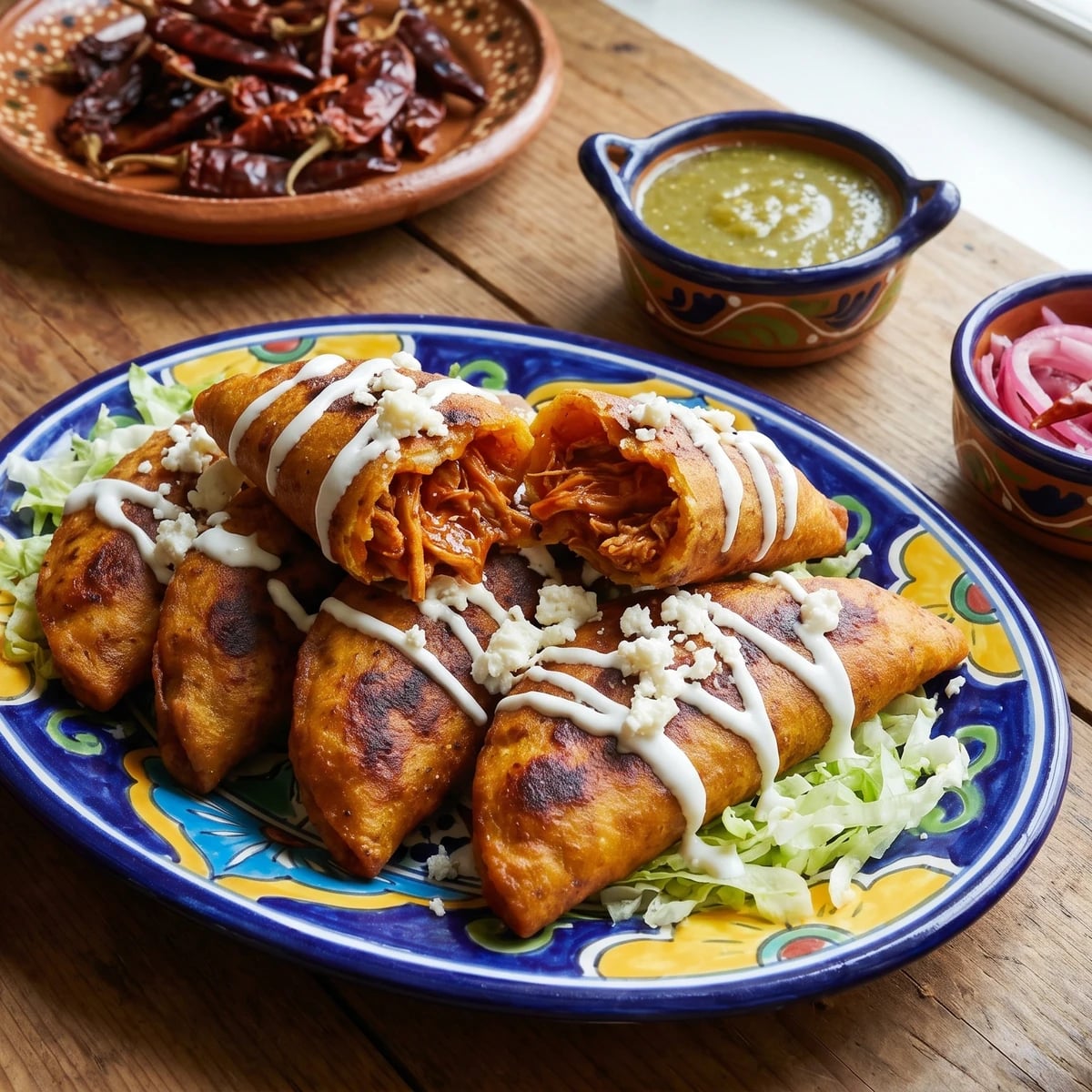
Puebla's torpedo-shaped masa croquettes stuffed with chipotle-braised chicken tinga, fried in lard until the shell cracks under the spoon, finished with crema and crumbled queso fresco.

Appetizers & Snacks
Mexican
Dinner Party
Game Day
45 min
Active Time
1 hr 15 min cook2 hr total
Yield6 servings (about 12 molotes)

Molotes are from Puebla. Specifically from the antojito stalls in the portales around the Zocalo of the capital, and from the home kitchens of the surrounding towns where women have been shaping masa into these little torpedoes for as long as anyone remembers. They are antojitos, the family of masa-and-lard street food that Puebla and Oaxaca both claim, and there is no use in trying to settle that argument here.

The shape matters. A molote is a torpedo: pointed at both ends, fat in the middle, sealed shut around its filling so the masa goes into the lard like a closed envelope. If you flatten it, you have made a sope. If you round it, you have made a tlacoyo. The torpedo is Puebla's signature and the reason the masa holds a generous spoonful of tinga without bursting in the oil.

The tinga inside is its own dish. Chicken poached with onion and bay, shredded by hand, simmered into a sauce of roasted tomato and chipotles en adobo until the fat separates and the meat turns mahogany. This is the tinga of Puebla, smoky, glossy, just spicy enough that you notice but not so spicy it punishes you. Tinga in a taco, tinga on a tostada, tinga over rice, all good. Tinga sealed inside a fried masa torpedo and finished with crema and queso fresco? That is the antojito the poblanas built.

My mother did not make molotes. She was from Jalisco and Jalisco does not have this antojito. I learned them from a senora named Dona Bertha at a stall in the Mercado El Carmen in the city of Puebla, who showed me how to pinch the ends with two fingers and a thumb until the points stayed sealed. She said the test of a molote cook is whether the shell cracks under the spoon and steams from inside without spilling its tinga onto the plate. La cocina no es decoracion, es trabajo.

The word molote comes from the Nahuatl 'molotic,' meaning something soft or yielding, and the dish belongs to the broad family of pre-Columbian masa antojitos that survived the conquest by being too useful and too cheap to displace. Puebla and Oaxaca both claim the molote, with the Puebla version distinguished by its torpedo shape and savory fillings (tinga, papa con chorizo, picadillo), while the Oaxacan molote is often longer, thinner, and sometimes sweet. Tinga itself is a 19th-century poblana invention, born from the convergence of indigenous shredded-meat traditions with the Spanish-introduced chipotle (smoked, dried jalapeno) preserved in adobo, a Mexican preservation technique that turned a glut of summer chiles into a year-round pantry staple.

The technique, the tradition, and the story behind every dish.

Discover Culinary Explorer

Ingredients

bone-in, skin-on chicken thighs

Quantity

1 1/2 pounds

white onion (for poaching)

Quantity

1/2 medium

white onion (for the tinga)

Quantity

1 medium

sliced thin

garlic cloves (for poaching)

Quantity

3

garlic cloves (for the tinga)

Quantity

2

finely chopped

bay leaves

Quantity

2

kosher salt

Quantity

1 teaspoon, plus more to taste

ripe Roma tomatoes

Quantity

1 1/2 pounds

chiles chipotles en adobo

Quantity

3 to 4, plus 2 tablespoons of the adobo sauce

dried Mexican oregano

Quantity

1 teaspoon

ground cumin

Quantity

1/4 teaspoon

manteca de cerdo (pork lard)

Quantity

3 tablespoons, plus more for frying

masa harina for tortillas

Quantity

2 cups

Maseca, or freshly ground nixtamal masa if you can get it

warm water

Quantity

1 1/4 cups, plus more as needed

fine sea salt

Quantity

1/2 teaspoon

manteca de cerdo or neutral oil

Quantity

about 4 cups

for frying

crema mexicana (optional)

Quantity

for serving

crumbled queso fresco or queso ranchero (optional)

Quantity

for serving

shredded crisp lettuce (optional)

Quantity

for serving

salsa verde cruda or salsa roja de molcajete (optional)

Quantity

for serving

pickled red onion with chile de arbol (optional)

Quantity

for serving

Equipment Needed

  • Cast iron comal or heavy skillet for roasting the tomatoes
  • Wide skillet or cazuela for the tinga
  • High-powered blender
  • Tortilla press lined with cut plastic, or two squares of heavy plastic for flattening the masa
  • Heavy deep skillet or cazo for frying
  • Slotted spoon or spider strainer
  • Wire rack set over a sheet pan for draining
  • Instant-read thermometer (optional but useful)

Instructions

  1. 1

    Poach the chicken

    Place the chicken thighs in a saucepan with the half onion, the three whole garlic cloves, the bay leaves, the kosher salt, and enough cold water to cover by an inch. Bring to a gentle simmer over medium heat. Skim the gray foam that rises in the first ten minutes. Cook at a low, lazy simmer for 25 minutes, until the meat pulls cleanly off the bone. Lift the chicken out, reserve one cup of the broth, and let the meat cool until you can handle it. Discard the skin and bones. Shred the meat by hand into rough threads, not cubes. Tinga is shredded, not chopped. Así se hace y punto.

  2. 2

    Roast the tomatoes on the comal

    Heat a dry comal or heavy skillet over medium-high. Lay the Roma tomatoes on it whole. Turn them every couple of minutes until the skins are blistered and blackened in patches on all sides, about 8 to 10 minutes. The skins should split. The flesh should soften. This is where the tinga gets its smoky backbone. Boiled tomatoes give you a flat sauce. Roasted tomatoes give you tinga.

    Do not peel the tomatoes after roasting. The blackened skin is flavor. It goes into the blender with everything else.
  3. 3

    Blend the chipotle-tomato sauce

    Transfer the roasted tomatoes, with all their juice, to a blender. Add the chiles chipotles en adobo, the adobo sauce, the oregano, and the cumin. Blend until smooth. Three chipotles gives you the Puebla balance: smoke first, heat second. Four if your guests are accustomed to it. No me vengas con atajos, do not skip the adobo, that syrup is half the flavor.

  4. 4

    Build the tinga

    Melt the three tablespoons of lard in a wide skillet over medium heat. Add the sliced onion and cook, stirring, until soft and the edges turn golden, about 8 minutes. Add the chopped garlic and cook one minute more. Pour in the chipotle-tomato puree. It will sputter. Cook for 8 to 10 minutes, stirring often, until the sauce darkens and the fat starts to separate at the edges. La manteca es el sabor and you can see it working here. Add the shredded chicken and a half cup of the reserved broth. Simmer 10 minutes more, until the tinga is glossy and barely saucy. The mixture should hold its shape on a spoon, not pool. Taste for salt. Cool completely before filling the molotes. Wet filling tears the masa.

  5. 5

    Mix the masa

    In a wide bowl, combine the masa harina and the half teaspoon of sea salt. Pour in the warm water and work it in with your hand until a soft, pliable dough forms. Knead for two minutes. The masa should feel like fresh play-doh: soft, smooth, not sticky, not dry. Press a piece between your palms. If the edges crack, the masa is dry and needs a teaspoon more water. If it sticks to your palm, it needs a tablespoon more masa harina. Cover the bowl with a damp cloth and let it rest 10 minutes.

  6. 6

    Form the molotes

    Divide the masa into 12 equal balls, about the size of a small lime. Working one at a time, flatten a ball between two squares of plastic into an oval roughly 4 inches long and 1/8 inch thick. Peel back the top plastic. Place a heaping tablespoon of cooled tinga down the center, leaving a half-inch border at each end. Using the bottom plastic to help you, lift one long edge over the filling and seal it against the other edge, then pinch the two ends shut into points. You are building a small torpedo, fat in the middle, pointed at the ends. That shape is the molote. A molote that is round is a tlacoyo. A molote that is flat is a sope. Cada estado, su propia cocina, and Puebla wants the torpedo.

    Keep a small bowl of water nearby. If the seam refuses to close, wet your fingertip and run it along the edge before pinching. The water acts like glue.
    Work with damp hands. Dry hands crack the masa. A molote that cracks in your palm will burst in the oil.
  7. 7

    Fry the molotes

    Pour enough lard or oil into a deep, heavy skillet to come up two inches. Heat over medium-high until a small piece of masa dropped in sizzles steadily and rises to the surface within five seconds. That is about 350F if you are using a thermometer. Lower the molotes into the fat seam-side down, three or four at a time, do not crowd the pan. Fry for 4 to 5 minutes per side, turning once, until deep golden and crisp. The outside should crack lightly when you press a spoon against it. The inside should be hot through. Lift them out with a slotted spoon and drain on a wire rack. Salt them while they are still glossy with fat.

  8. 8

    Dress and serve

    Arrange the hot molotes on a warm platter. Drizzle crema mexicana over the tops in a back-and-forth motion. Scatter crumbled queso fresco generously over everything. Tuck a small handful of shredded lettuce around them. Set the salsa verde or salsa roja and the pickled onions on the side. Eat them with your hands while the masa is still crisp. A molote that has waited fifteen minutes is no longer a molote, it is a lesson about why this dish must be served the moment it leaves the oil.

Chef Tips

  • If you can find a tortilleria that sells fresh masa, use it. Nixtamal masa fries up with a more tender crumb and a deeper corn flavor than masa harina. Maseca works, it is what most of Mexico uses on a weekday, but fresh masa is the upgrade if you have access. Pregunta en la tortilleria.
  • Cool the tinga completely before filling the molotes. A warm filling steams the masa from inside and the seam will not seal. If you are in a hurry, spread the tinga thin on a sheet pan and put it in the refrigerator for fifteen minutes.
  • Lard for frying is traditional and the flavor is better, but a neutral oil works if you cannot get good lard. What does not work is olive oil, butter, or anything else with a low smoke point. The fat must hit 350F and hold steady.
  • Make the tinga a day ahead. It is better on day two when the chipotle and tomato have married. The masa, on the other hand, is mixed the day of frying. Refrigerated masa turns gray and gummy.

Advance Preparation

  • The tinga can be made up to three days ahead and refrigerated. It improves overnight as the chipotle and tomato deepen.
  • The molotes can be formed (filled and sealed) up to four hours ahead and held in the refrigerator on a parchment-lined sheet pan, covered with a damp cloth. Bring them to room temperature for 15 minutes before frying.
  • Do not fry the molotes ahead. A reheated molote loses the crackling shell that is the whole point of the dish. Fry them the moment your guests are at the table.

Frequently Asked Questions

Nutrition Information

1 serving (about 320g)

Calories
585 calories
Total Fat
36 g
Saturated Fat
14 g
Trans Fat
0 g
Unsaturated Fat
20 g
Cholesterol
80 mg
Sodium
910 mg
Total Carbohydrates
39 g
Dietary Fiber
5 g
Sugars
3 g
Protein
27 g

Note: Chef personas and recipes are created with AI assistance. Cook with care: follow safe food-handling practices, check doneness with a thermometer when needed, and adapt for allergies and your kitchen.

Where cooking meets culture.

Culinary guides, cultural storytelling, and the editorial depth that makes cooking meaningful.

Discover Culinary Explorer

More from Central Mexican Appetizers & Snacks

Browse the full collection