
Chef Lesia
Banosh (банош, Carpathian cornmeal porridge)
Cornmeal and sour cream go over the flame pale and separate, then suddenly turn glossy, yellow, and almost stubborn. Stir one way only, the shepherds say, and listen.
A cooking platform built around craft, culture, and the stories behind what we eat.
Created by
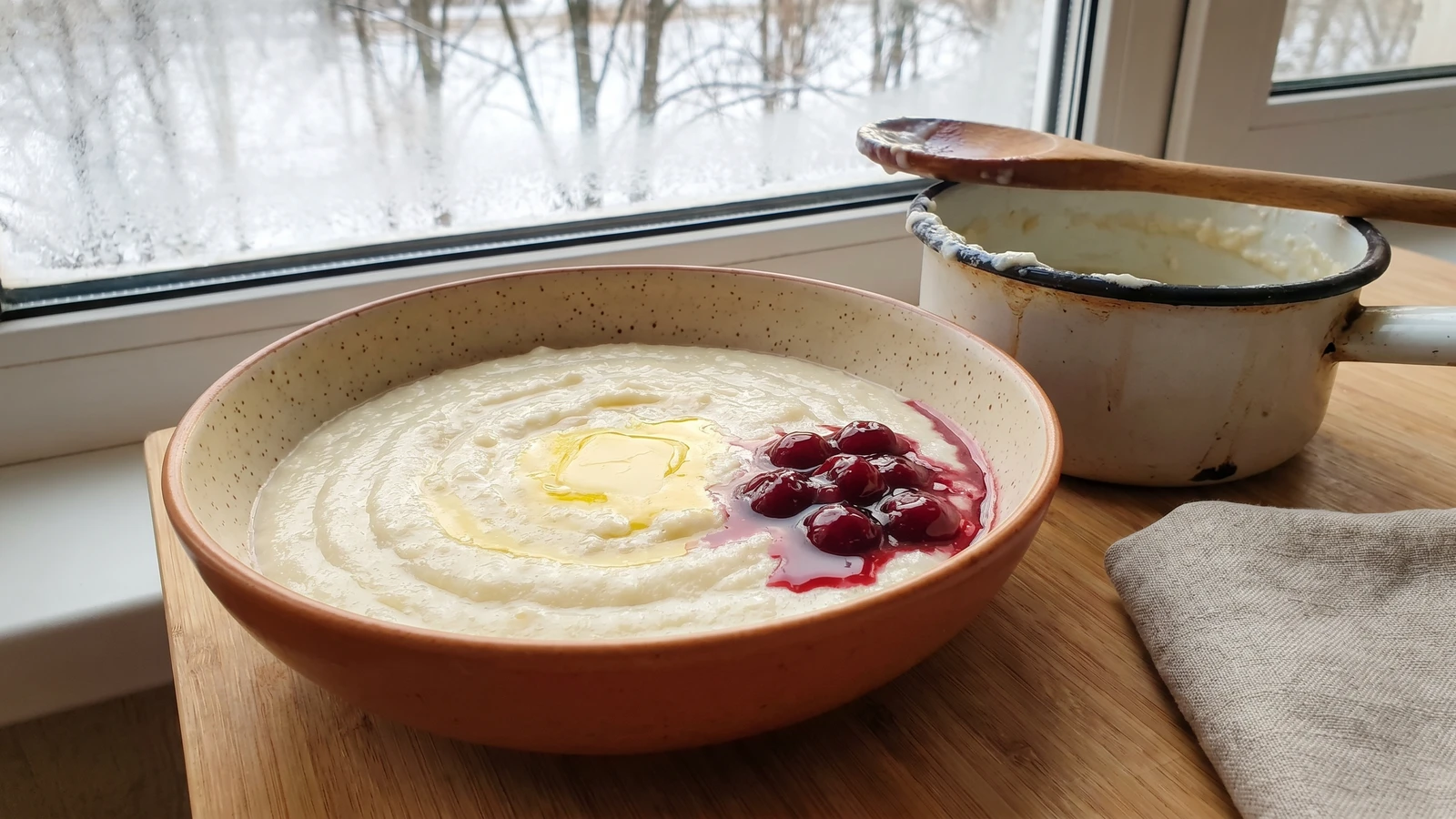
A spoonful should fall in a soft ribbon, not sit like cement. Semolina milk porridge is childhood breakfast, quick comfort, and proof that cheap food still deserves attention.
The difference between silk and wallpaper paste is one slow hand. Semolina wants to be rained into hot milk, not dumped, while the other hand whisks like it has somewhere to be. Do that and the grains bloom separately, the milk thickens softly, and the whole pot turns pale cream with a smell that shifts from raw flour to sweet cooked wheat.
This is breakfast from every Ukrainian childhood, but don't mistake simple for careless. Molochna kasha, milk porridge, can be millet, rice, buckwheat, or wheat groats; this quick semolina one is manka, the school-morning bowl, the sick-day bowl, the thing a grandmother makes when a child says they aren't hungry and then eats it anyway. Aunt Nadia wrote only "milk, manka, until it sounds right," which was funny until I stood over the pot and heard the whisk go from scratchy to soft.
The one thing that decides it is movement. Whisk as the grain goes in, then stir from the bottom so nothing catches and scorches. Butter melts on top at the end, a golden little lake. Cinnamon is a bit more modern, jam is allowed, but the butter is not decoration. It is the promise.
Molochna kasha is an old Ukrainian household category rather than one fixed recipe: milk porridges were made from millet, buckwheat, rice, wheat groats, and whatever the local pantry could spare. The semolina version, known across Ukraine as manka, became especially common in the twentieth century because finely milled wheat cooked quickly, stretched a little grain into many bowls, and suited kindergartens, canteens, sanatoria, and ordinary flat kitchens. Its speed is modern, but its logic is older: grain, milk, salt, butter, and someone standing at the stove so the child at the table is fed.
Quantity
1 litre
Quantity
80g
Quantity
1 tablespoon
plus more to taste
Quantity
1/4 teaspoon
Quantity
40g
plus extra for serving
Quantity
1 teaspoon or a few drops
Quantity
to serve
| Ingredient | Quantity |
|---|---|
| whole milk | 1 litre |
| fine semolina | 80g |
| sugarplus more to taste | 1 tablespoon |
| fine sea salt | 1/4 teaspoon |
| unsalted butterplus extra for serving | 40g |
| vanilla sugar or vanilla extract (optional) | 1 teaspoon or a few drops |
| sour cherry jam, honey, or cinnamon (optional) | to serve |
Pour the milk into a heavy saucepan, add the salt and sugar, and warm it over a medium flame until tiny bubbles gather around the edge and the surface looks alive but not angry. Stir now and then, scraping the bottom, because milk loves to pretend it is behaving right before it catches.
Hold the semolina high and let it fall into the milk in a thin steady rain while your other hand whisks constantly. This is the whole trick. If you dump it in, the outside of each clump cooks before the inside can open, and then you are fighting lumps for breakfast.
Lower the heat and switch to a wooden spoon or silicone spatula, stirring in slow circles and scraping the base. The sound changes first, from thin splashing to a soft padded pull. Then the smell changes, the raw grain disappearing into sweet cooked wheat. Stop when the porridge falls from the spoon in a ribbon and closes back into itself.
Take the pan off the heat and stir in the butter until the kasha turns glossy. Add vanilla sugar if you're using it. Let it stand for a minute so it relaxes; semolina thickens as it sits, like a child putting on a sulk.
Spoon into warm bowls and put a small knob of butter on each one so it melts into a yellow lake. Add sour cherry jam, honey, or cinnamon if you like. Serve at once, while it is still soft enough to ripple when the spoon goes through.
1 serving (about 285g)
Culinary guides, cultural storytelling, and the editorial depth that makes cooking meaningful.
Discover Culinary ExplorerChef Lesia
Cornmeal and sour cream go over the flame pale and separate, then suddenly turn glossy, yellow, and almost stubborn. Stir one way only, the shepherds say, and listen.

Chef Lesia
A benderyk is a crepe taught to hold its corners: soft pancake, peppery meat, egg-dipped edges fried crisp, and the same triangular confidence my hands learned at the varenyky table.

Chef Lesia
Raw potato turns sly the moment you grate it: wet, starchy, already darkening. Deruny reward speed, hot oil, and the courage to leave the edges alone until they crisp.

Chef Lesia
Pumpkin goes into the pot pale and stubborn, then gives itself up slowly to milk and millet until the whole breakfast turns deep orange, sweet, and spoon-thick.