
Chef Lupita
Aceite de Chiltepin Bajacaliforniano
Baja California's wild chiltepin steeped in olive oil with garlic, orejon, and lime peel, until the oil turns ruby-amber and carries the slow, sneaky burn of the desert coast.
A cooking platform built around craft, culture, and the stories behind what we eat.
Created by
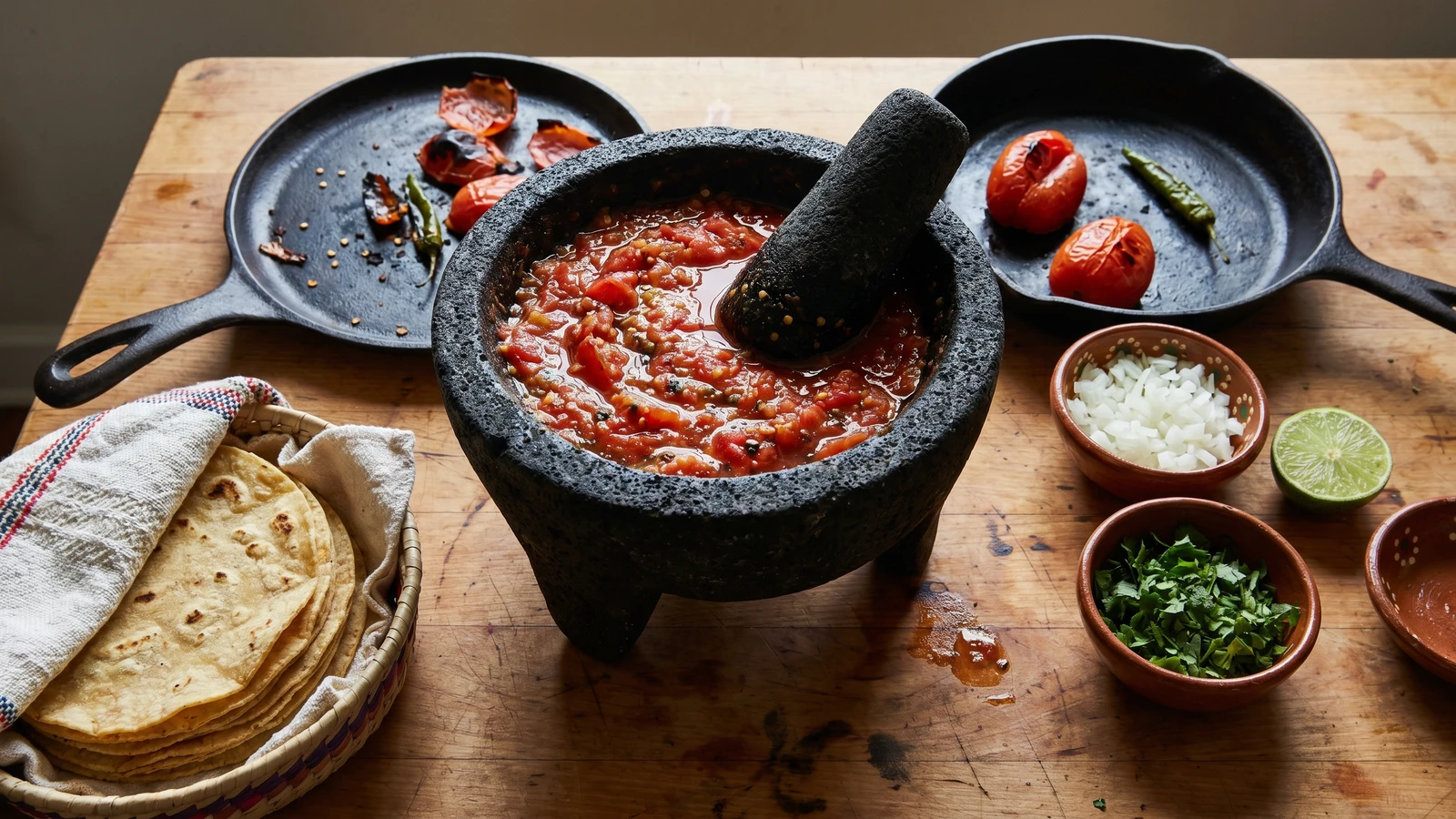
Jalisco's table salsa, built from Roma tomatoes and chile serrano charred on a dark comal, then crushed by hand in the molcajete until smoky, coarse, and alive.
Jalisco, Guadalajara specifically, keeps this salsa on the table the way other houses keep salt. It belongs beside carne asada, frijoles de la olla, tacos dorados, birria, and a stack of warm corn tortillas wrapped in a servilleta. This is not a blender salsa pretending to be old. This is salsa de molcajete, and the stone matters.
The chile is serrano. Fresh, green, sharp. The tomatoes are jitomates Roma, cooked hard on the comal until the skins blacken and the flesh collapses. Garlic goes on the same comal, still in its peel, because raw garlic shouts and roasted garlic knows how to behave. You grind the salt first, then the garlic, then the chiles, then the tomatoes. That order is not decoration. It builds texture.
My mother was from Jalisco, and in her notebook this salsa was not even written as a recipe. It was a habit. Three jitomates, two serranos, one garlic, sal. She assumed I would know the rest because she had shown me since I was small: press, drag, turn the tejolote, listen for the scrape of stone against chile skin. Women in Guadalajara kitchens perfected this because dinner needed flavor and there was no money to waste. Saber cocinar es saber vivir.
Do not make this smooth. If you want smooth, use a blender and call it something else. Guadalajara-style molcajete salsa should have torn tomato flesh, crushed chile seeds, and little black flecks from the comal. Coarse, smoky, direct. Asi se hace y punto.
The word molcajete comes from the Nahuatl molcaxitl, from molli meaning sauce and caxitl meaning bowl, and the volcanic stone mortar has been used in central and western Mexico for centuries to grind chiles, tomatoes, herbs, and seeds. Tomato and chile are both Mesoamerican ingredients, but the household table salsa of Guadalajara reflects Jalisco's practical market cooking: fresh produce, a hot comal, and hand grinding rather than long sauce building. In the 20th century, electric blenders changed everyday salsa making across Mexico, but in Jalisco homes the molcajete version remained distinct because its coarse texture cannot be copied by a blade.
Quantity
4 medium
ripe but firm
Quantity
2 to 3
stems removed
Quantity
1
unpeeled
Quantity
1/2 teaspoon, plus more to taste
Quantity
2 tablespoons
finely chopped
Quantity
1 tablespoon
chopped
Quantity
1/2
optional, only if the tomatoes taste flat
| Ingredient | Quantity |
|---|---|
| Roma tomatoes (jitomates guaje)ripe but firm | 4 medium |
| fresh chile serranostems removed | 2 to 3 |
| large garlic cloveunpeeled | 1 |
| coarse sea salt | 1/2 teaspoon, plus more to taste |
| white onion (optional)finely chopped | 2 tablespoons |
| fresh cilantro (optional)chopped | 1 tablespoon |
| lime (optional)optional, only if the tomatoes taste flat | 1/2 |
Set a dry cast iron comal or heavy skillet over medium-high heat for 3 to 4 minutes. Do not oil it. Salsa de molcajete gets its depth from dry heat against tomato skin and chile skin, not from frying. The surface should be hot enough that a tomato sizzles lightly when it touches.
Place the Roma tomatoes, serrano chiles, and unpeeled garlic clove on the hot comal. Turn them with tongs as the skins blister and blacken in patches. The serranos will be ready first, usually 4 to 5 minutes. The garlic takes about 6 minutes. The tomatoes need 10 to 12 minutes, until the skins split and the flesh softens but the tomatoes still hold some shape.
Move the charred vegetables to a plate. Let the tomatoes rest for 3 minutes so their juices settle. Peel the garlic. Leave the tomato skins mostly on. Those blackened pieces are part of the flavor and the look. If a flap of skin is truly hard and papery, pull it off. Use judgment. Preguntale a las senoras del mercado.
Put the coarse salt in the molcajete and grind it with the tejolote for a few seconds. Add the peeled roasted garlic and crush it into a paste. The salt gives the garlic traction against the stone. This is why the paste forms cleanly instead of sliding around like it has no manners.
Add the charred serrano chiles one at a time. Crush and drag them against the stone until the skins tear and the seeds spread through the garlic paste. For a milder salsa, start with two serranos and taste before adding the third. Not all Mexican food has to punish you. It has to taste like the chile it uses.
Add the tomatoes one at a time, crushing each into the chile paste before adding the next. Do not pound like you are angry at dinner. Press, drag, turn. You want a coarse salsa with pieces of tomato, little bursts of seed, and charred skin flecks. If juice splashes up, slow down. The molcajete teaches patience.
Taste for salt. Stir in the chopped white onion and cilantro if using. Add a squeeze of lime only if the tomatoes are dull or out of season. Good ripe tomatoes do not need help. Let the salsa sit in the molcajete for 5 minutes before serving so the salt can pull the flavors together.
Serve the salsa directly from the molcajete, set on the table with warm corn tortillas, grilled meat, beans, or quesadillas made with real queso. Do not transfer it to a little glass bowl unless you enjoy making extra dishes and losing the whole point of the recipe.
1 serving (about 50g)
Culinary guides, cultural storytelling, and the editorial depth that makes cooking meaningful.
Discover Culinary ExplorerChef Lupita
Baja California's wild chiltepin steeped in olive oil with garlic, orejon, and lime peel, until the oil turns ruby-amber and carries the slow, sneaky burn of the desert coast.

Chef Lupita
Puebla's Lenten convent adobo, a brick-red vinegar chile paste of ancho, guajillo, garlic, oregano, and comino made to dress fish for the meatless calendar.
Chef Lupita
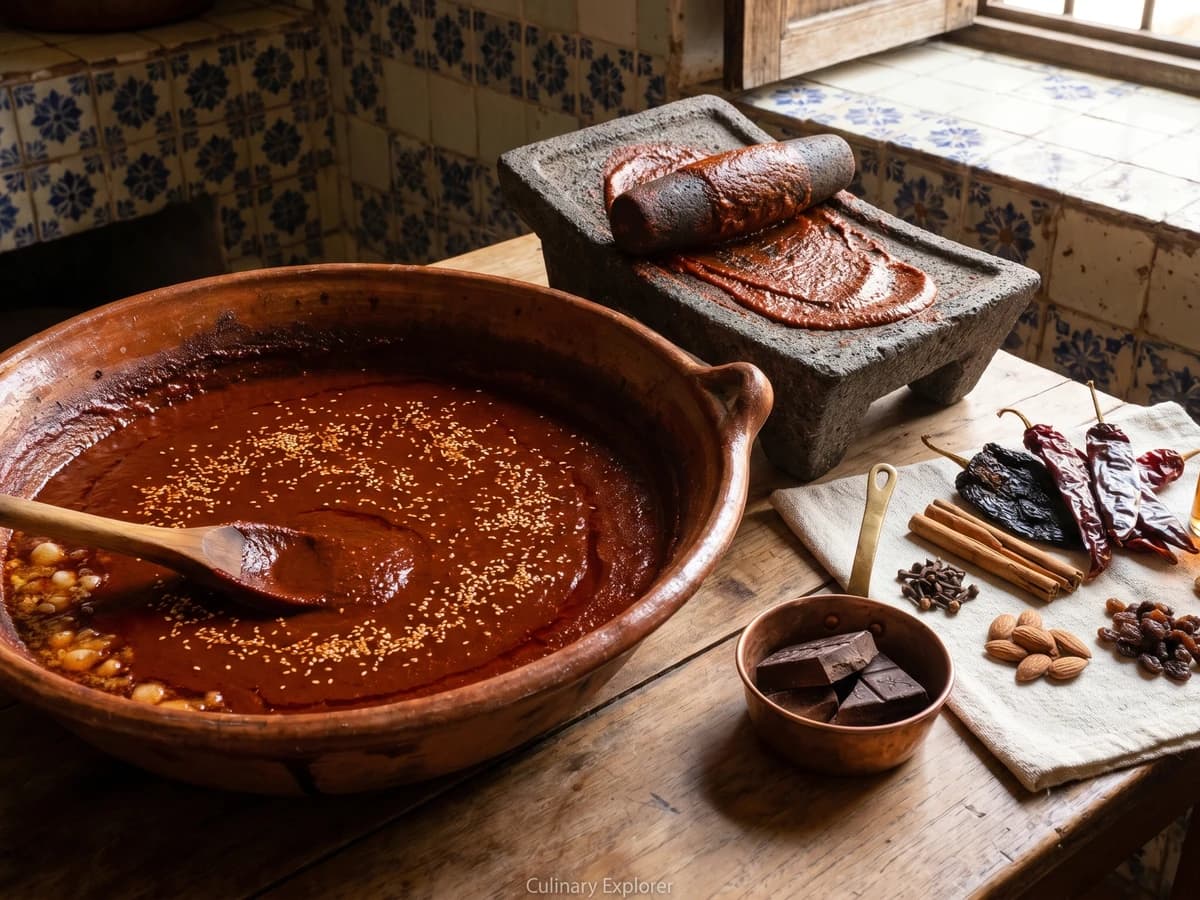
Zacatecas' wedding-table adobo, built from toasted guajillo and ancho, piloncillo, sour orange, chocolate, canela, clavo, almonds, sesame, and lard.

Chef Lupita
Puebla's convent kitchens built this adobo with ancho, guajillo, jerez, almonds, raisins, clove, and lard, a baroque marinade that stains pork loin and finishes as the sauce.