
Chef Lupita
Aceite de Chiltepin Bajacaliforniano
Baja California's wild chiltepin steeped in olive oil with garlic, orejon, and lime peel, until the oil turns ruby-amber and carries the slow, sneaky burn of the desert coast.
A cooking platform built around craft, culture, and the stories behind what we eat.
Created by
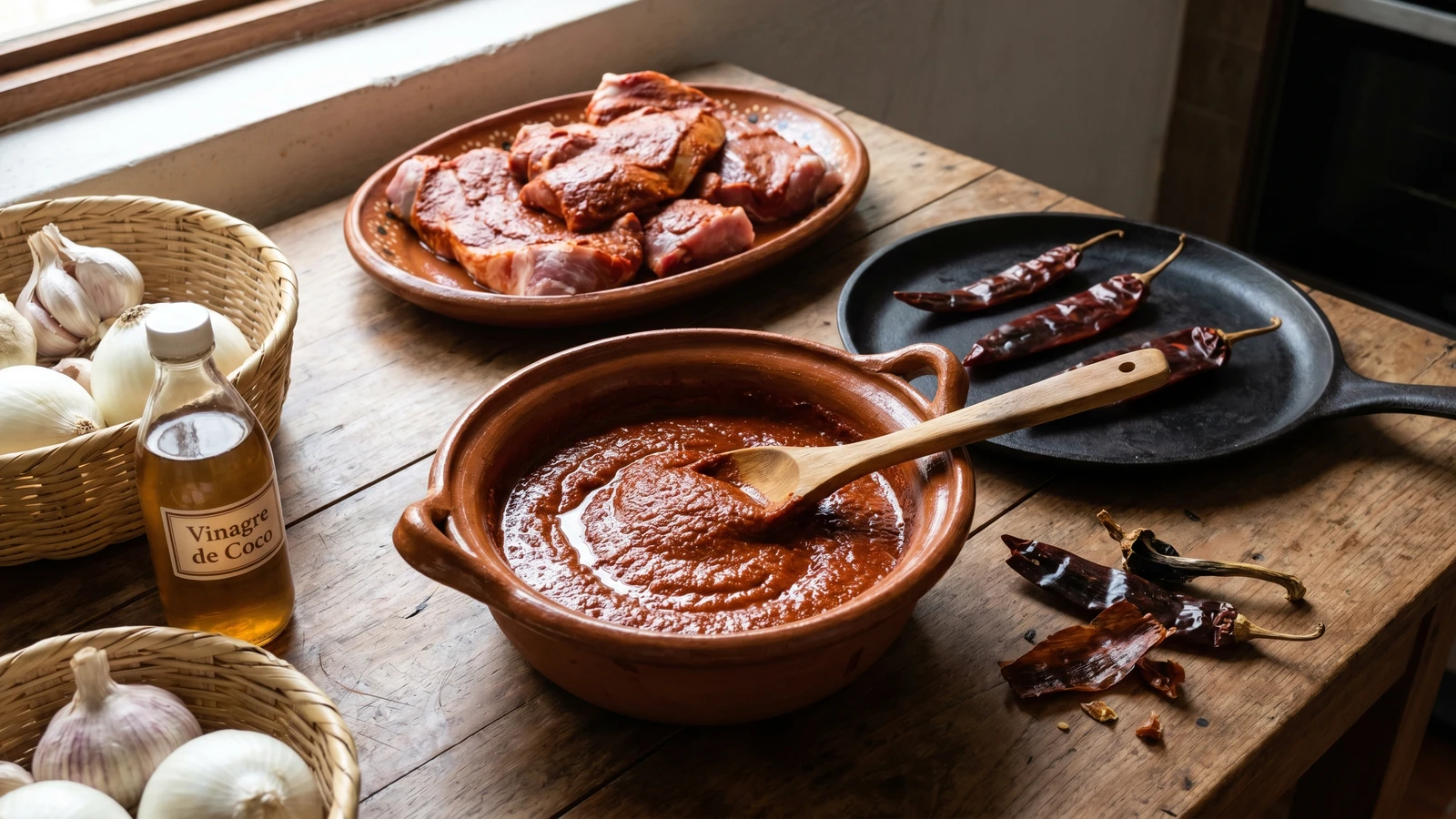
Colima's pork tatemado begins with this sharp red adobo: guajillo chiles, a little ancho for depth, garlic, oregano, and vinagre de coco from the coast.
Colima is small on the map, but don't confuse small with minor. This adobo lives between the Pacific coast, the coconut groves around Tecoman, and the inland kitchens where pork is left to drink chile, garlic, oregano, and vinagre de coco before it meets the fire.
The chile here is mostly guajillo. Bright red, clean, not too hot. A little chile ancho gives body and sweetness, but guajillo carries the dish. The vinegar matters just as much. Coconut vinegar, made from fermented palm sap or coconut water along the coast, gives tatemado its sharp edge. If you use white vinegar, the pork will still marinate. It won't taste like Colima. A substitution is a compromise, not an upgrade.
I learned this version from a señora near Comala who kept the adobo in a clay jar, not because it looked pretty, but because the kitchen was hot and she knew how to plan. She rubbed it into pork the night before a family meal and told me, 'El adobo trabaja mientras una duerme.' The adobo works while you sleep. That is good cooking. Saber cocinar es saber vivir.
Tatemado comes from the Nahuatl root connected to 'tatemar,' meaning to roast or scorch over fire, a word still used across Mexico for charring chiles, tomatoes, onions, and meat. Colima's version developed as a coastal-inland dish, joining pork introduced after the Spanish conquest with local chile adobos and vinegars tied to coconut and palm cultivation on the Pacific coast. The use of vinagre de coco separates Colima's tatemado from neighboring Jalisco adobos, which more often lean on fruit vinegar or plain cane vinegar.
Quantity
10
wiped clean, stemmed and seeded
Quantity
2
wiped clean, stemmed and seeded
Quantity
1/2 cup
Quantity
1/2 cup, plus more as needed
Quantity
6
peeled
Quantity
1/2 small
roughly chopped
Quantity
1 teaspoon
Quantity
1/2 teaspoon
Quantity
2
Quantity
1
crumbled
Quantity
1 1/2 teaspoons
Quantity
1 teaspoon
Quantity
2 tablespoons
Quantity
4 pounds
for marinating
| Ingredient | Quantity |
|---|---|
| dried chile guajillowiped clean, stemmed and seeded | 10 |
| dried chile anchowiped clean, stemmed and seeded | 2 |
| vinagre de coco (coconut vinegar) | 1/2 cup |
| hot water or pork broth | 1/2 cup, plus more as needed |
| garlic clovespeeled | 6 |
| white onionroughly chopped | 1/2 small |
| dried Mexican oregano | 1 teaspoon |
| cumin seeds | 1/2 teaspoon |
| whole cloves | 2 |
| bay leafcrumbled | 1 |
| kosher salt | 1 1/2 teaspoons |
| piloncillo or dark brown sugar | 1 teaspoon |
| manteca de cerdo | 2 tablespoons |
| pork shoulder, country-style ribs, or pork legfor marinating | 4 pounds |
Heat a dry comal over medium. Toast the chile guajillo in batches for about 20 seconds per side, just until the skins darken slightly and smell fruity. Toast the chile ancho separately. It is thicker and sweeter, but it still burns if you get careless. Do not blacken the chiles. Burned chile turns the adobo bitter, and pork will carry that bitterness all the way to the table.
Put the toasted chiles in a bowl and cover them with hot water. Hot, not boiling. Let them soak for 20 minutes, until the flesh bends easily between your fingers. Drain them and save 1/2 cup of the soaking liquid only if it tastes clean. If it tastes harsh, use hot water or pork broth instead.
On the same comal, toast the cumin seeds and cloves for 30 to 45 seconds, moving them constantly. They should smell warm and direct, not burnt. Rub the Mexican oregano between your palms over the blender jar. That is how you open dried oregano. Pregúntale a las señoras del mercado.
Add the softened chiles, coconut vinegar, hot water or broth, garlic, onion, oregano, cumin, cloves, bay leaf, salt, and piloncillo to a blender. Blend until the adobo is completely smooth, at least 90 seconds. It should be thick enough to coat a spoon but loose enough to rub into meat. If the blender struggles, add one tablespoon of liquid at a time. Don't drown it.
Melt the manteca de cerdo in a small cazuela or heavy skillet over medium heat. Pour in the adobo. It will sputter. Stir constantly for 5 to 7 minutes, until the color deepens from bright red to brick red and the fat begins to shine at the edges. La manteca es el sabor. This frying step takes the raw bite off the garlic and ties the chile to the vinegar.
Scrape the adobo into a bowl and let it cool completely. Taste it only after it cools. It should be sharp, salty, and deep, because it is seasoning several pounds of pork. If it tastes polite now, it will disappear after cooking.
Rub the cooled adobo into 4 pounds of pork shoulder, country-style ribs, or pork leg. Work it into every cut and fold. Cover and refrigerate at least 8 hours, preferably overnight. This is the cure for tatemado. The vinegar tightens and seasons the pork while the chile stains it red. No me vengas con atajos.
1 serving (about 185g)
Culinary guides, cultural storytelling, and the editorial depth that makes cooking meaningful.
Discover Culinary ExplorerChef Lupita
Baja California's wild chiltepin steeped in olive oil with garlic, orejon, and lime peel, until the oil turns ruby-amber and carries the slow, sneaky burn of the desert coast.

Chef Lupita
Puebla's Lenten convent adobo, a brick-red vinegar chile paste of ancho, guajillo, garlic, oregano, and comino made to dress fish for the meatless calendar.
Chef Lupita
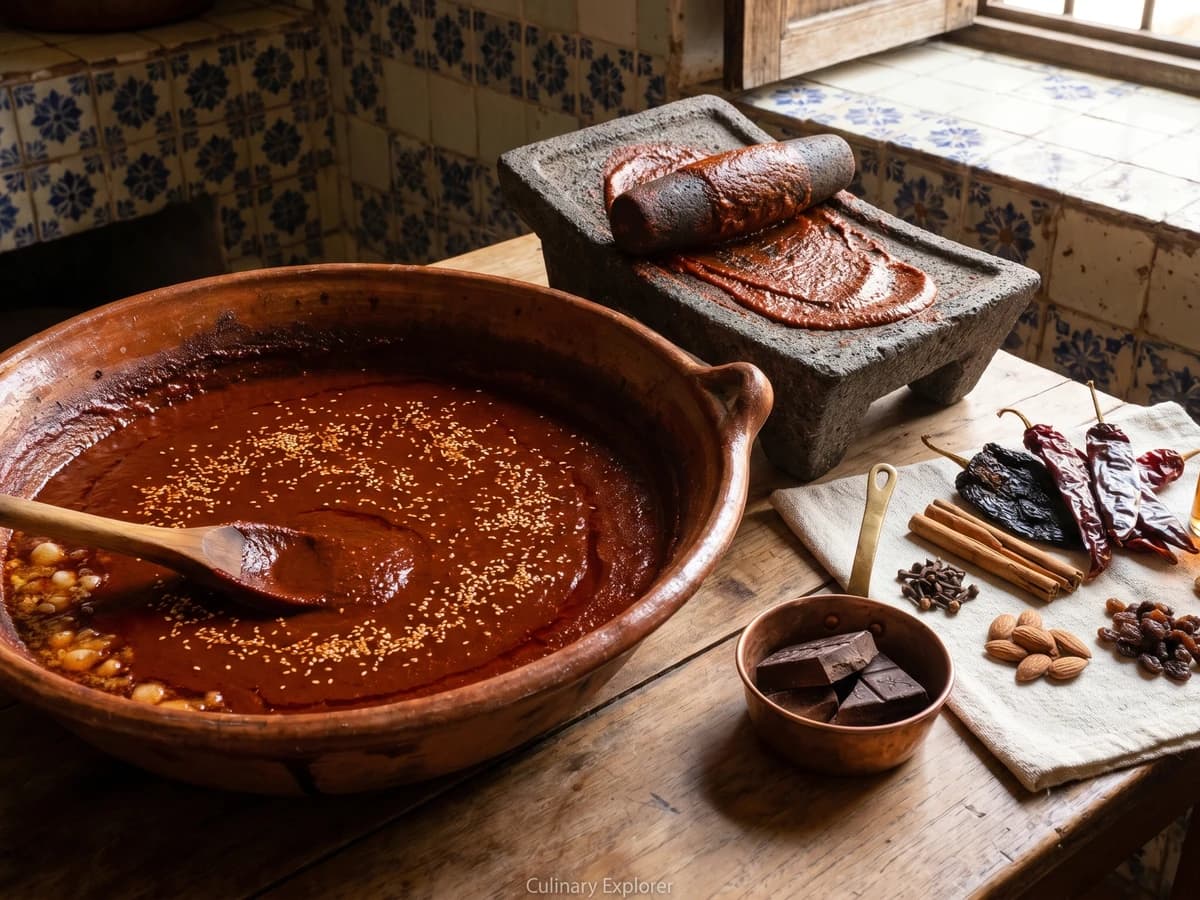
Zacatecas' wedding-table adobo, built from toasted guajillo and ancho, piloncillo, sour orange, chocolate, canela, clavo, almonds, sesame, and lard.

Chef Lupita
Puebla's convent kitchens built this adobo with ancho, guajillo, jerez, almonds, raisins, clove, and lard, a baroque marinade that stains pork loin and finishes as the sauce.