
Chef Lupita
Aceite de Chiltepin Bajacaliforniano
Baja California's wild chiltepin steeped in olive oil with garlic, orejon, and lime peel, until the oil turns ruby-amber and carries the slow, sneaky burn of the desert coast.
A cooking platform built around craft, culture, and the stories behind what we eat.
Created by
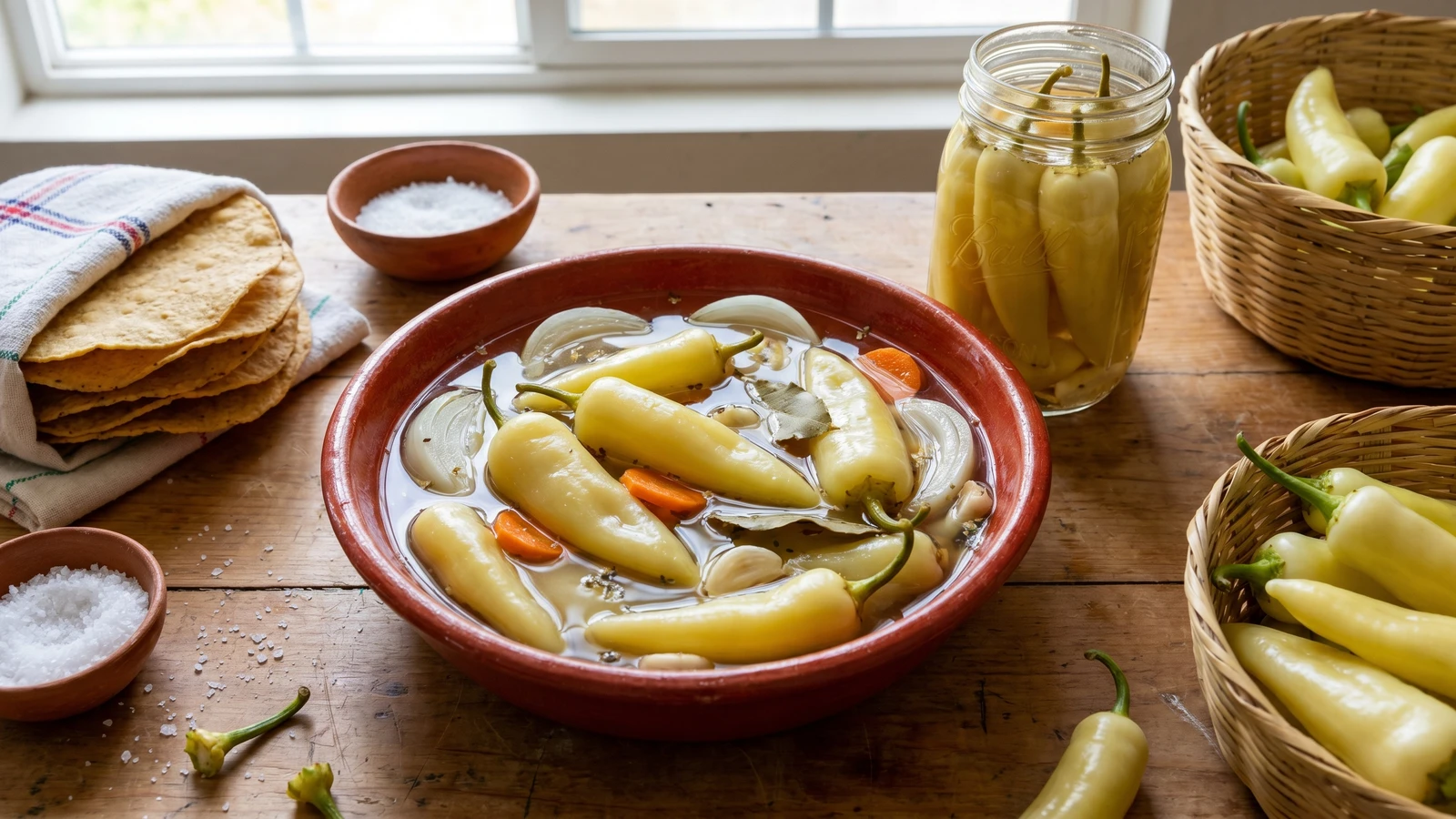
Colima's pale yellow chiles gueros, blistered lightly and held in sharp vinegar with garlic, onion, bay leaf, and Mexican oregano, the coastal pickle that belongs beside ceviche.
Colima's coast, from Manzanillo down toward Tecoman, knows what to do with a chile guero. You put it beside ceviche, pescado zarandeado, tostadas de mariscos, and any plate that needs vinegar, salt, and a clean bite of heat. This is not a garnish for decoration. La cocina no es decoracion, es trabajo.
The chile matters. Use fresh chile guero, pale yellow, smooth-skinned, firm, and whole. Some markets call them chile cristal or chile caribe, depending on where you are buying. Ask the chile vendor, pregúntale a las señoras del mercado. Do not grab banana peppers from a supermarket jar and pretend they are the same thing. A substitution is a compromise, not an upgrade.
The technique belongs to home kitchens and fondas that feed coastal workers: prick the chiles so they drink the vinegar, soften onion and garlic in a little oil, then simmer the brine with bay leaf, tomillo, mejorana, and oregano mexicano. No lard here. Pickles need clean acidity, not pork fat. Cada estado, su propia cocina.
My mother did not write this one in her Jalisco notebook. I learned it from a woman in the Mercado Obregon in Colima city who sold ceviche tostadas with a clay bowl of these chiles on the counter. She told me, 'If the chile is dead, the escabeche is dead.' She was right. Saber cocinar es saber vivir.
Escabeche came to Mexico through Spanish preservation techniques that combined vinegar, oil, aromatics, and spices, then adapted quickly to local chiles and regional seafood tables. On Mexico's Pacific coast, especially in Colima, Jalisco, and Nayarit, whole pickled chiles gueros became a practical condiment for ceviches and tostadas because vinegar, salt, and chile cut through rich fish and shellfish. Colima's salt flats at Cuyutlan have supplied sea salt since pre-Hispanic times, making salt-preserved and vinegar-preserved foods a natural part of the state's coastal cooking.
Quantity
1 pound
firm and pale yellow, stems intact
Quantity
1 large
sliced into thick half-moons
Quantity
2 medium
peeled and sliced on the diagonal
Quantity
8
lightly crushed
Quantity
2 tablespoons
Quantity
2 cups
Quantity
1 cup
Quantity
1 tablespoon
preferably from Cuyutlan if you can find it
Quantity
1 tablespoon
Quantity
2
Quantity
1 teaspoon
Quantity
1/2 teaspoon
Quantity
1/2 teaspoon
Quantity
8
| Ingredient | Quantity |
|---|---|
| fresh chile guerofirm and pale yellow, stems intact | 1 pound |
| white onionsliced into thick half-moons | 1 large |
| carrotspeeled and sliced on the diagonal | 2 medium |
| garlic cloveslightly crushed | 8 |
| vegetable oil | 2 tablespoons |
| white vinegar or cane vinegar | 2 cups |
| water | 1 cup |
| sea saltpreferably from Cuyutlan if you can find it | 1 tablespoon |
| granulated sugar | 1 tablespoon |
| bay leaves | 2 |
| dried Mexican oregano | 1 teaspoon |
| dried thyme (tomillo) | 1/2 teaspoon |
| dried marjoram (mejorana) | 1/2 teaspoon |
| whole black peppercorns | 8 |
Wash two quart jars and their lids with hot soapy water, rinse well, and dry them. This is a refrigerator pickle, not shelf-stable canning. Keep it cold after the jars cool. No me vengas con atajos when vinegar and storage are involved.
Rinse the chiles gueros and dry them well. Use the tip of a small knife to make one short slit near the shoulder of each chile, just below the stem. Do not cut them open. The slit lets the brine enter without making the chile collapse into a rag.
Heat the oil in a wide cazuela or heavy skillet over medium heat. Add the onion, carrots, and garlic. Cook for 3 to 4 minutes, stirring, until the onion loses its raw edge and the garlic smells sweet. You are not browning them. This is escabeche, not a fried salsa.
Add the chiles gueros to the pan and turn them gently for 2 minutes, just until the skins look glossy and a few pale blisters appear. Keep the stems on. A whole chile with its stem looks right in the clay bowl, and it gives the diner something to hold.
Pour in the vinegar and water. Add the sea salt, sugar, bay leaves, Mexican oregano, tomillo, mejorana, and black peppercorns. Bring the liquid to a gentle simmer. Taste the brine carefully from a spoon. It should be sharp, salty, and aromatic. If it tastes flat now, it will taste flat in the jar.
Simmer for 5 minutes, turning the chiles once so they are coated. Stop while they still hold their shape. Overcook them and the skins wrinkle too much, the flesh goes soft, and you lose the clean snap that belongs beside seafood.
Use clean tongs to divide the chiles, carrots, onion, garlic, bay leaves, and peppercorns between the jars. Pour the hot brine over everything, leaving about 1/2 inch of space at the top. Tap the jars gently to release trapped air. The chiles should be covered completely.
Let the jars cool uncovered for 30 minutes, then seal and refrigerate. Wait at least 24 hours before eating. Forty-eight hours is better. The vinegar needs time to move through the chile. Recetas probadas y garantizadas.
1 serving (about 60g)
Culinary guides, cultural storytelling, and the editorial depth that makes cooking meaningful.
Discover Culinary ExplorerChef Lupita
Baja California's wild chiltepin steeped in olive oil with garlic, orejon, and lime peel, until the oil turns ruby-amber and carries the slow, sneaky burn of the desert coast.

Chef Lupita
Puebla's Lenten convent adobo, a brick-red vinegar chile paste of ancho, guajillo, garlic, oregano, and comino made to dress fish for the meatless calendar.
Chef Lupita
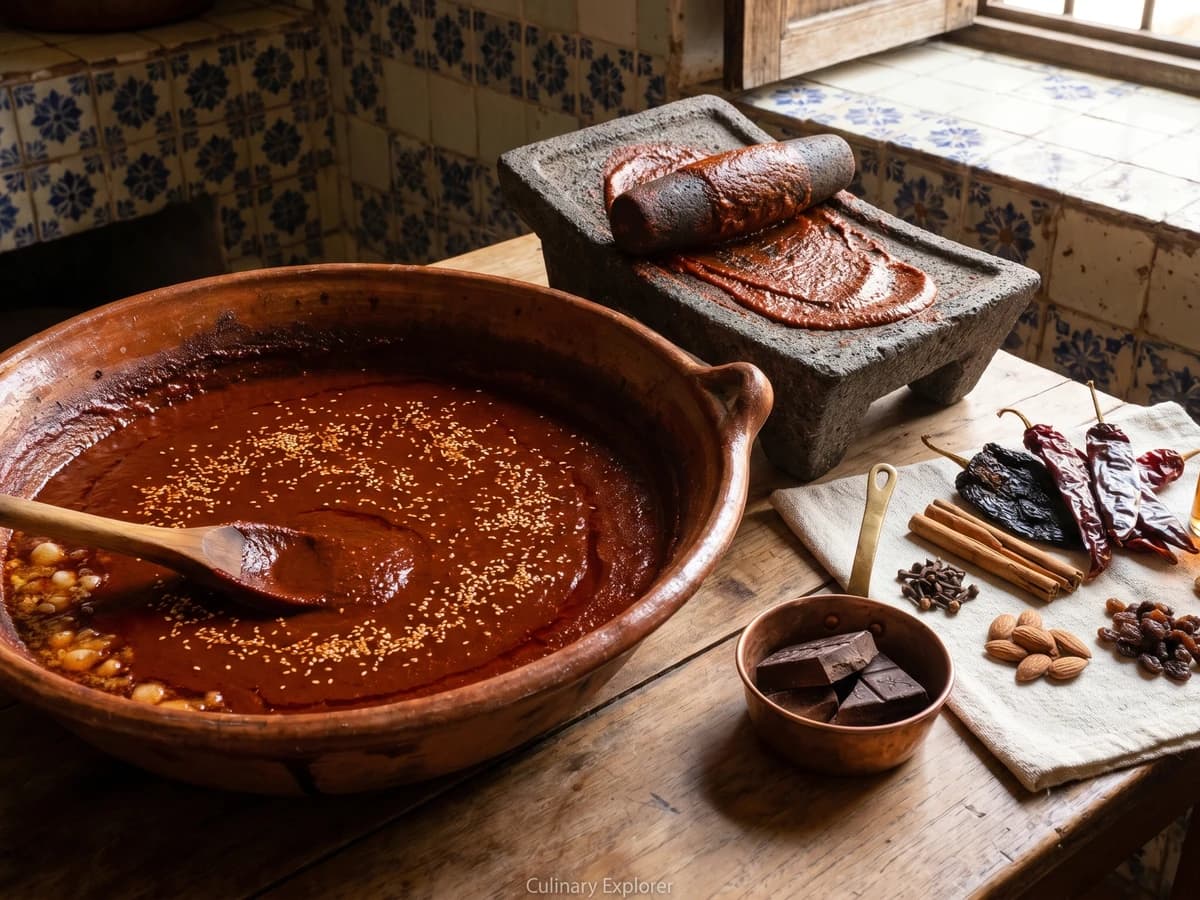
Zacatecas' wedding-table adobo, built from toasted guajillo and ancho, piloncillo, sour orange, chocolate, canela, clavo, almonds, sesame, and lard.

Chef Lupita
Puebla's convent kitchens built this adobo with ancho, guajillo, jerez, almonds, raisins, clove, and lard, a baroque marinade that stains pork loin and finishes as the sauce.