
Chef Lupita
Aceite de Chiltepin Bajacaliforniano
Baja California's wild chiltepin steeped in olive oil with garlic, orejon, and lime peel, until the oil turns ruby-amber and carries the slow, sneaky burn of the desert coast.
A cooking platform built around craft, culture, and the stories behind what we eat.
Created by
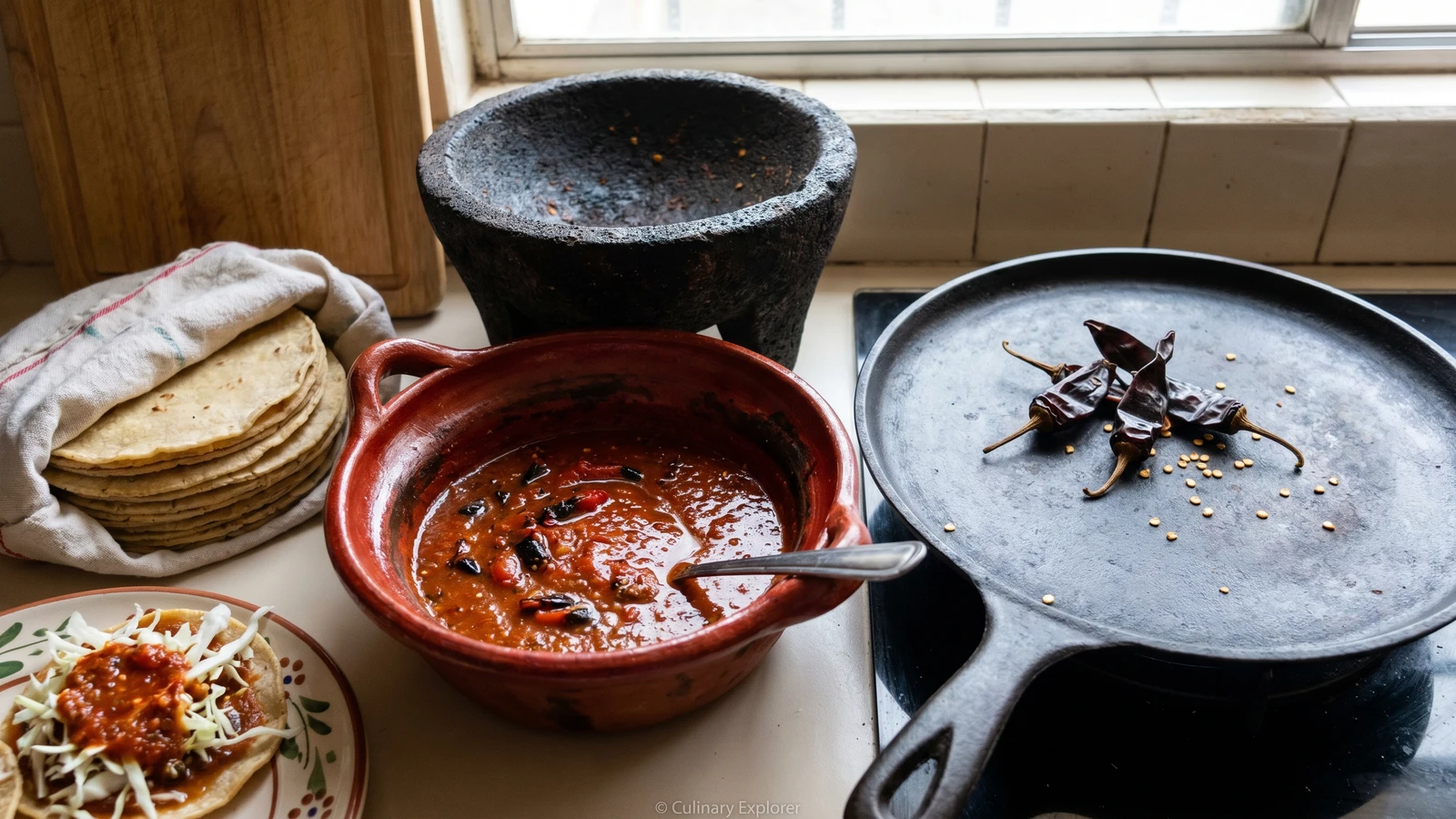
Colima's salsa de cascabel is built from rattling dried chiles, roasted jitomate, and garlic worked in the molcajete until it is rough, nutty, and ready for sopitos colimenses.
Colima, between the Volcan de Fuego and the Pacific, makes this salsa for the small fried masa antojitos called sopitos colimenses. Not tacos. Not a northern flour tortilla situation. Sopitos. Little corn rounds with meat, cabbage, and this red salsa spooned over the top like the cook means it.
The chile is cascabel, small, round, and dry, with seeds that rattle when you shake it. That sound tells you the chile is dry enough. Its flavor is toasted nuts, red earth, and a mild heat that does not need to shout. Not all Mexican food is hot. Some salsas know how to speak in a lower voice.
I learned this version from a woman near Comala who roasted the jitomates until the skins split black in spots, then toasted the cascabels quickly on the comal. Quickly. Cascabel burns if you treat it like chile ancho. She crushed everything in a molcajete and served it in a small red clay cazuelita, the kind that looks ordinary until you realize the whole table reaches for it first. Cada estado, su propia cocina.
Use good dried cascabels, flexible enough not to crumble into dust, fragrant when opened. If your chile smells like cardboard, your salsa will taste like cardboard. Preguntale a las senoras del mercado. They know which sacks are fresh.
Chile cascabel is an old Mexican dried chile recognized by its round shape and rattling seeds, and it has long been used in western and central states where cooks wanted nutty depth more than aggressive heat. Sopitos colimenses became one of Colima's defining antojitos in the 20th century, especially around Colima city, Villa de Alvarez, and Comala, where small fried masa bases are dressed with meat, cabbage, and red table salsas. The salsa's technique, dry toasting chiles and grinding them with roasted tomato and garlic, belongs to the pre-blender logic of the molcajete: release the chile oils first, then build texture by hand.
Quantity
10
stemmed
Quantity
3 medium
ripe
Quantity
2
unpeeled
Quantity
1/4 small
Quantity
1/2 teaspoon, plus more to taste
Quantity
1/3 cup, plus more as needed
| Ingredient | Quantity |
|---|---|
| dried chile cascabelstemmed | 10 |
| Roma tomatoesripe | 3 medium |
| garlic clovesunpeeled | 2 |
| white onion | 1/4 small |
| sea salt from Colima or kosher salt | 1/2 teaspoon, plus more to taste |
| hot water | 1/3 cup, plus more as needed |
Shake each chile cascabel. You should hear the seeds rattle inside. Break one open and smell it. It should smell nutty, dry, and deep, not dusty. Remove the stems. Leave most of the seeds if you want the traditional texture and heat. If your guests are delicate, shake out half the seeds. Do not rinse the chiles.
Heat a dry comal over medium heat. Roast the tomatoes, garlic, and onion, turning often, until the tomato skins blister and blacken in spots, the onion softens at the edges, and the garlic cloves feel tender under the skin. This takes 8 to 10 minutes. The black spots matter. That is where the salsa gets its cooked sweetness.
Lower the heat to medium-low. Toast the chile cascabels on the dry comal for 10 to 15 seconds per side, pressing lightly with tongs. They will darken slightly and smell like toasted nuts. Pull them off before they scorch. Burned cascabel turns bitter fast, and no tomato will save it. Asi se hace y punto.
Put the toasted chiles in a small bowl and cover with hot water. Hot, not boiling. Let them sit for 10 minutes, just until pliable. Boiling water roughens the skins and can pull bitterness forward. Drain, saving a little soaking water only if it tastes clean. If it tastes bitter, use fresh hot water for blending.
Peel the roasted garlic. In a molcajete, grind the salt and garlic into a paste. Add the onion and work it down. Add the softened cascabels a few at a time and grind until the skins break into a coarse red paste. This is not baby food. A salsa de molcajete should have body.
Add the roasted tomatoes one at a time, crushing them into the chile paste until the salsa loosens and turns brick red. Stir in 2 to 4 tablespoons of hot water until it spoons easily over sopitos. Taste for salt. The final salsa should be nutty first, then tomato-sweet, then warm from the chile. Recetas probadas y garantizadas.
1 serving (about 31g)
Culinary guides, cultural storytelling, and the editorial depth that makes cooking meaningful.
Discover Culinary ExplorerChef Lupita
Baja California's wild chiltepin steeped in olive oil with garlic, orejon, and lime peel, until the oil turns ruby-amber and carries the slow, sneaky burn of the desert coast.

Chef Lupita
Puebla's Lenten convent adobo, a brick-red vinegar chile paste of ancho, guajillo, garlic, oregano, and comino made to dress fish for the meatless calendar.
Chef Lupita
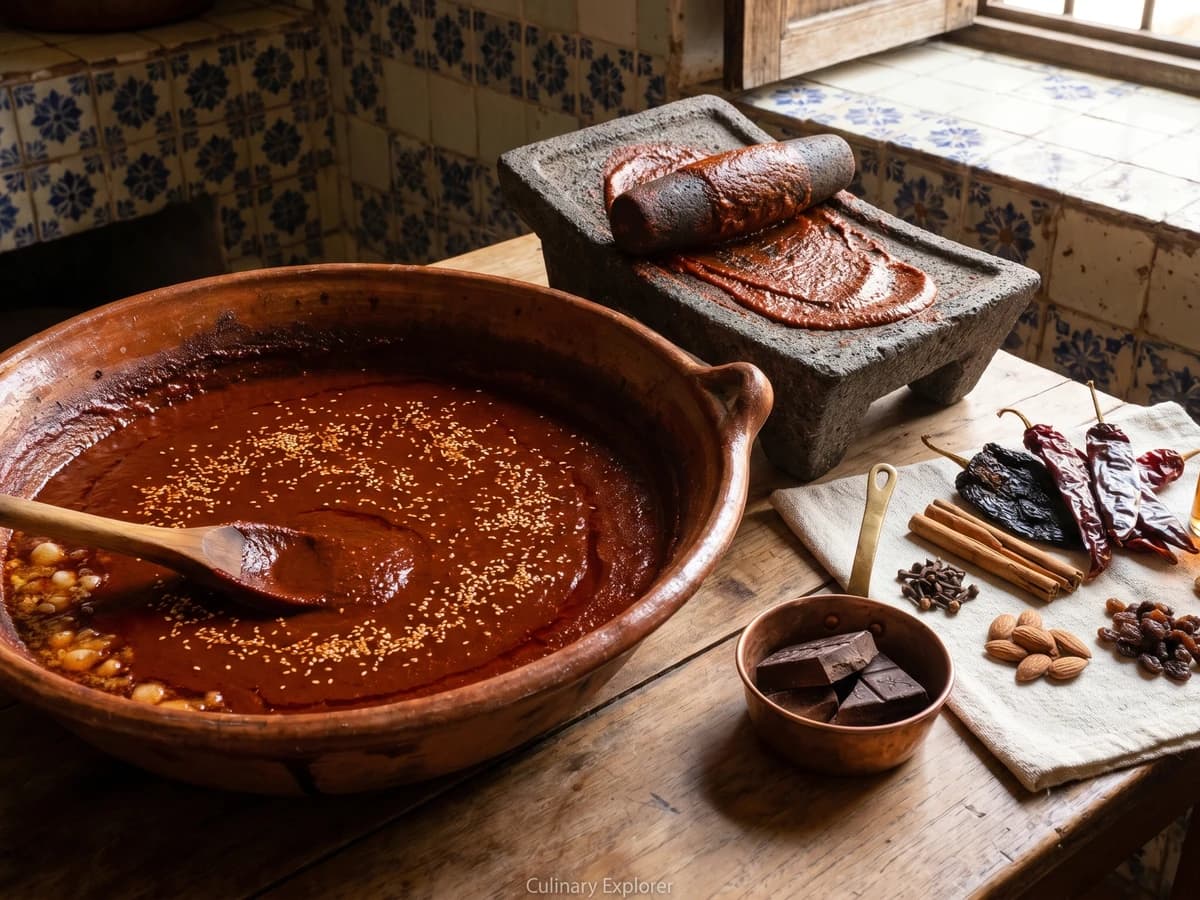
Zacatecas' wedding-table adobo, built from toasted guajillo and ancho, piloncillo, sour orange, chocolate, canela, clavo, almonds, sesame, and lard.

Chef Lupita
Puebla's convent kitchens built this adobo with ancho, guajillo, jerez, almonds, raisins, clove, and lard, a baroque marinade that stains pork loin and finishes as the sauce.