
Chef Lupita
Aceite de Chiltepin Bajacaliforniano
Baja California's wild chiltepin steeped in olive oil with garlic, orejon, and lime peel, until the oil turns ruby-amber and carries the slow, sneaky burn of the desert coast.
A cooking platform built around craft, culture, and the stories behind what we eat.
Created by
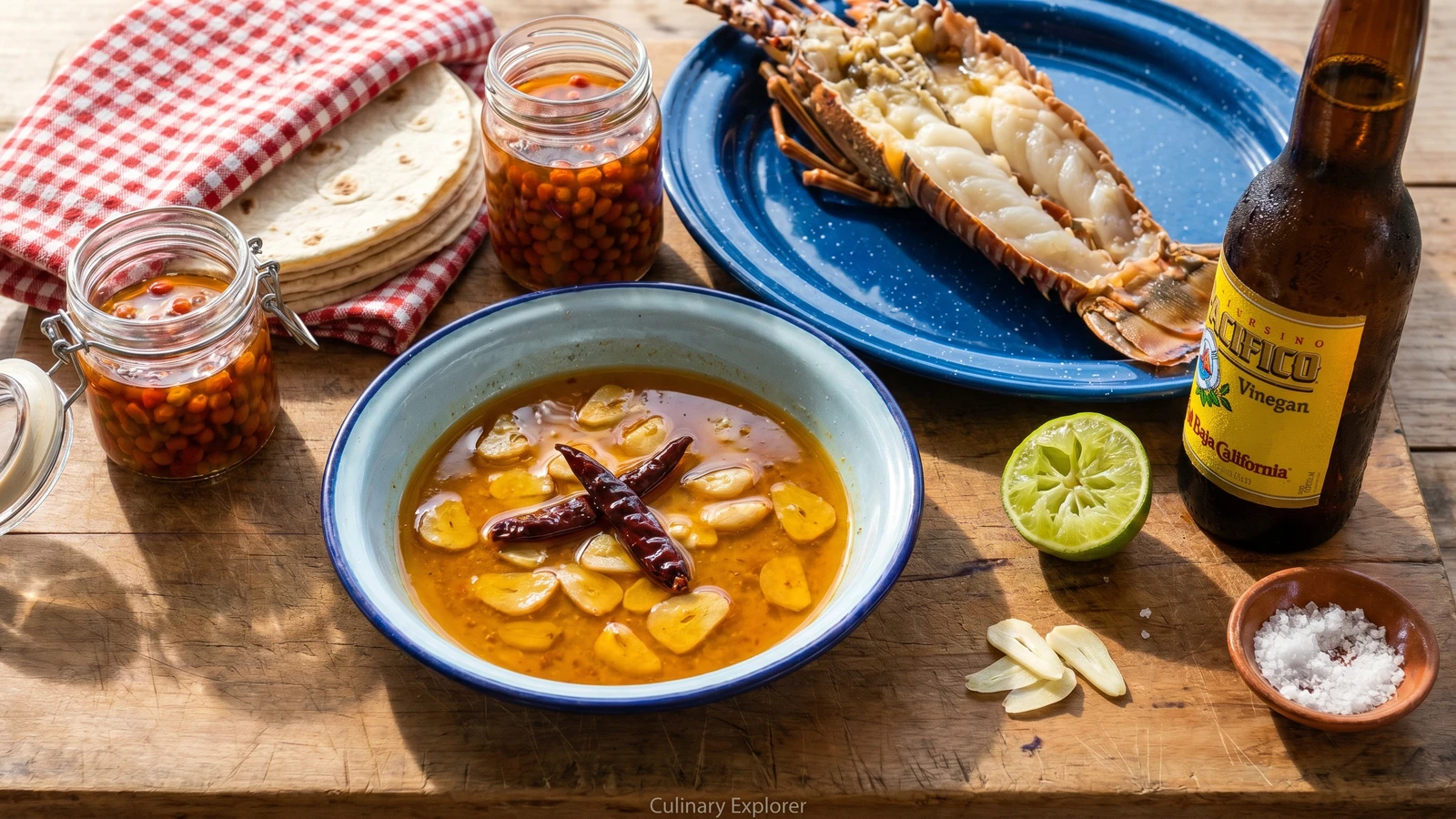
Baja California's garlic-butter pan sauce from the lobster village of Puerto Nuevo, built on slabs of mantequilla, manteca de cerdo, two heads of sliced garlic, dried chile cola de rata, and a final hit of lime.
This is from Puerto Nuevo, Baja California. A fishing village on the Pacific coast between Tijuana and Ensenada that built its entire reputation on one plate: langosta split down the middle, fried in lard on a plancha, drowned in this mojo de ajo, served with flour tortillas, frijoles puercos, and rice. No mariscadas. No tasting menus. One dish, done the same way since the 1950s, in tile-floored dining rooms where the women in the back have been making the sauce longer than most chefs in Mexico City have been alive.
The sauce is butter and lard and garlic and chile cola de rata, the thin dried red chile of the Noroeste. Two heads of garlic for a small pan. Not two cloves. Two heads. People who reduce the garlic to make the sauce 'balanced' have not eaten in Puerto Nuevo. The dish is named for the garlic. Mojo de ajo. You take the ajo out and you have nothing.
The technique is patience, not skill. You cook the garlic slowly in the warm fat until it turns the color of dark honey, never the color of coffee. Burned garlic ruins the sauce and there is no fixing it. The lime at the end is what makes this Baja and not something French. The acid cuts through and lets you keep eating.
North-Baja cooking gets dismissed as a border hybrid by people who have not eaten the food. The flour tortillas, the cattle, the dairy, those came up the peninsula with the missions and stayed. The chile cola de rata grows wild in the Noroeste. The langosta comes off the rocks at La Bocana. Cada estado, su propia cocina, and Baja's belongs to Baja.
Puerto Nuevo's langosta tradition dates to the 1950s, when local fishing families began serving spiny lobster (Panulirus interruptus) from their home kitchens to American tourists driving the old coastal highway south of Tijuana; by the 1970s the village had codified the standard plate of fried lobster, beans, rice, flour tortillas, and mojo de ajo so thoroughly that the format is now legally protected as a culinary regional identifier. The use of butter alongside pork lard reflects northern Mexico's dairy-and-cattle ranching heritage, distinct from the lard-only fats of central and southern Mexican cooking, and the flour tortilla as the bread of the meal places this firmly in the Noroeste rather than the corn-based traditions of the Mesa Central. The chile cola de rata, sometimes called chile bravo, is a thin-fleshed dried red chile grown in Baja California and Sonora that gives Northern Mexican sauces their signature bright, lean heat without the smoky depth of the chiles of the south.
Quantity
1 cup (2 sticks)
Quantity
1/2 cup
Quantity
2
cloves peeled and thinly sliced (about 1/2 cup sliced)
Quantity
4
stemmed and broken in half
Quantity
1 tablespoon, plus more to taste
Quantity
1/2 teaspoon, plus more to taste
Quantity
1 tablespoon
finely chopped
| Ingredient | Quantity |
|---|---|
| unsalted butter | 1 cup (2 sticks) |
| manteca de cerdo (pork lard) | 1/2 cup |
| whole heads of garliccloves peeled and thinly sliced (about 1/2 cup sliced) | 2 |
| chile cola de rata or chile de arbolstemmed and broken in half | 4 |
| fresh lime juice | 1 tablespoon, plus more to taste |
| kosher salt | 1/2 teaspoon, plus more to taste |
| fresh flat-leaf parsley (optional)finely chopped | 1 tablespoon |
Peel two whole heads of garlic. Yes, two heads. This is mojo de ajo and the garlic is the dish, not a seasoning. Slice the cloves thinly and evenly with a sharp knife. Uneven slices burn unevenly, and burned garlic is bitter garlic. Do not use a press and do not use pre-peeled garlic from a jar. The fresh cloves you cut yourself give off oils that the jarred ones lost months ago.
In a heavy small saucepan or a shallow cazuelita, melt the butter and the lard together over low heat. Low heat. Butter scorches the moment you look away, and once the milk solids burn black, the sauce is finished before it began. La manteca da el sabor, la mantequilla da el cuerpo. The lard carries the chile and the butter carries the garlic. Both need to be present.
Once the fats are melted and just barely shimmering, add the broken chile cola de rata. This is the Baja chile, dried thin and red, the rat's tail. If you cannot find it, chile de arbol works. The chile is not here to make the sauce hot. It is here to tint the fat and add a low background heat that wakes up the garlic. Let the chiles sit in the warm fat for two minutes until the oil takes on a faint orange color.
Add the sliced garlic to the warm fat. The garlic should sizzle quietly, not roar. If it is roaring, your heat is too high. Pull the pan off the burner for a moment and let things settle. Stir the garlic gently with a wooden spoon and let it cook for 10 to 12 minutes. You are confiting the garlic in fat, not frying it. The slices should turn the color of dark honey at the edges, never the color of a coffee bean. The kitchen will smell like every marisqueria along the Carretera Transpeninsular between Tijuana and Ensenada.
Off the heat, stir in the lime juice and salt. The lime is non-negotiable. The acid cuts the richness and is the reason this sauce can carry a whole tail of langosta without becoming oppressive. Taste it. It should be salty, buttery, lightly hot, and bright at the finish. Adjust salt and lime until it tastes like something you want to keep eating out of the pan with a spoon.
In Puerto Nuevo, they split the lobster down the middle, fry the tails briefly in lard on a flat plancha, then drown them in this sauce at the table. Spoon the mojo de ajo, garlic and all, over a butterflied lobster tail or a plate of grilled shrimp or a piece of grilled fish from the parrilla. Serve with warm flour tortillas, frijoles puercos, Mexican rice, and lime halves. Asi se come en Puerto Nuevo y punto.
1 serving (about 107g)
Culinary guides, cultural storytelling, and the editorial depth that makes cooking meaningful.
Discover Culinary ExplorerChef Lupita
Baja California's wild chiltepin steeped in olive oil with garlic, orejon, and lime peel, until the oil turns ruby-amber and carries the slow, sneaky burn of the desert coast.

Chef Lupita
Puebla's Lenten convent adobo, a brick-red vinegar chile paste of ancho, guajillo, garlic, oregano, and comino made to dress fish for the meatless calendar.
Chef Lupita
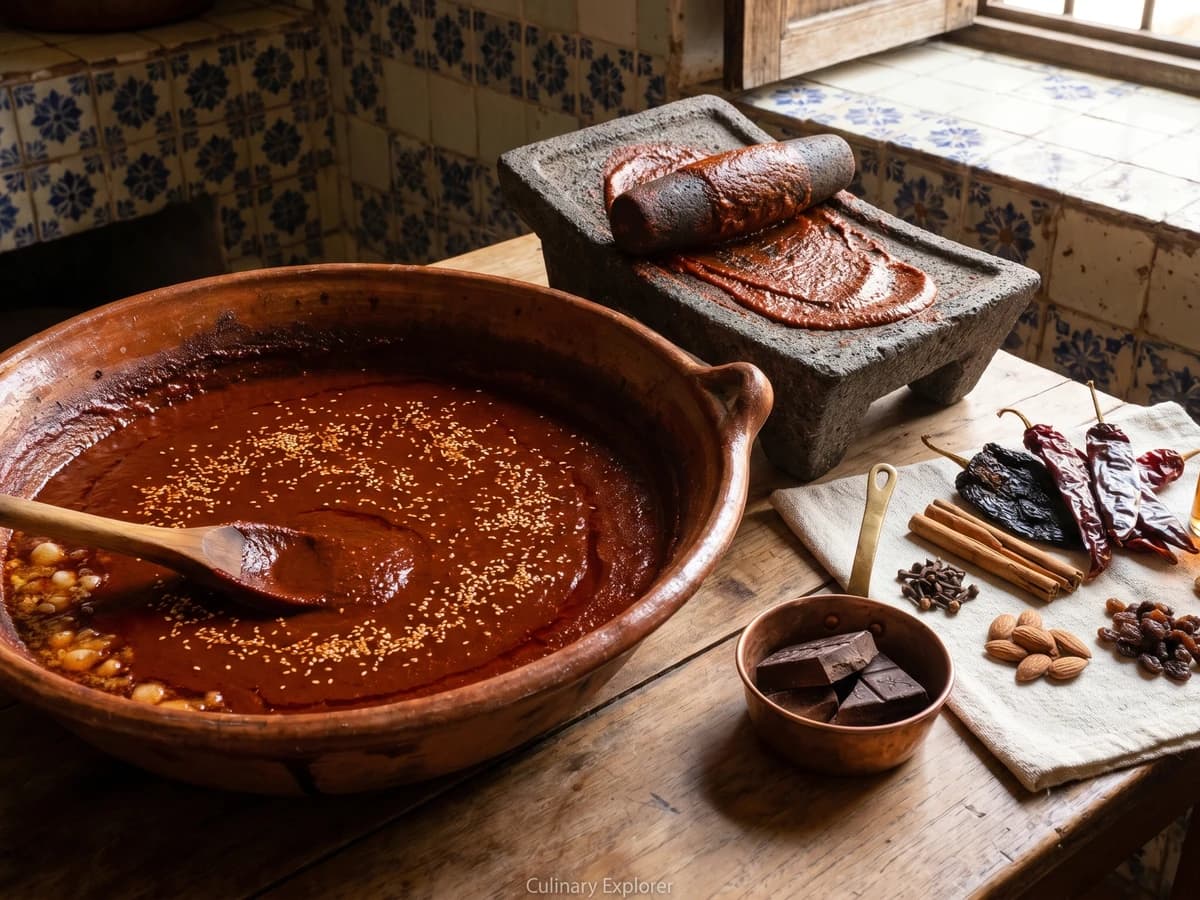
Zacatecas' wedding-table adobo, built from toasted guajillo and ancho, piloncillo, sour orange, chocolate, canela, clavo, almonds, sesame, and lard.

Chef Lupita
Puebla's convent kitchens built this adobo with ancho, guajillo, jerez, almonds, raisins, clove, and lard, a baroque marinade that stains pork loin and finishes as the sauce.