Culinary Explorer

A cooking platform built around craft, culture, and the stories behind what we eat.
Discover Culinary Explorer
Mlyntsi (млинці, thin pancakes)

Mlyntsi (млинці, thin pancakes)

Created by

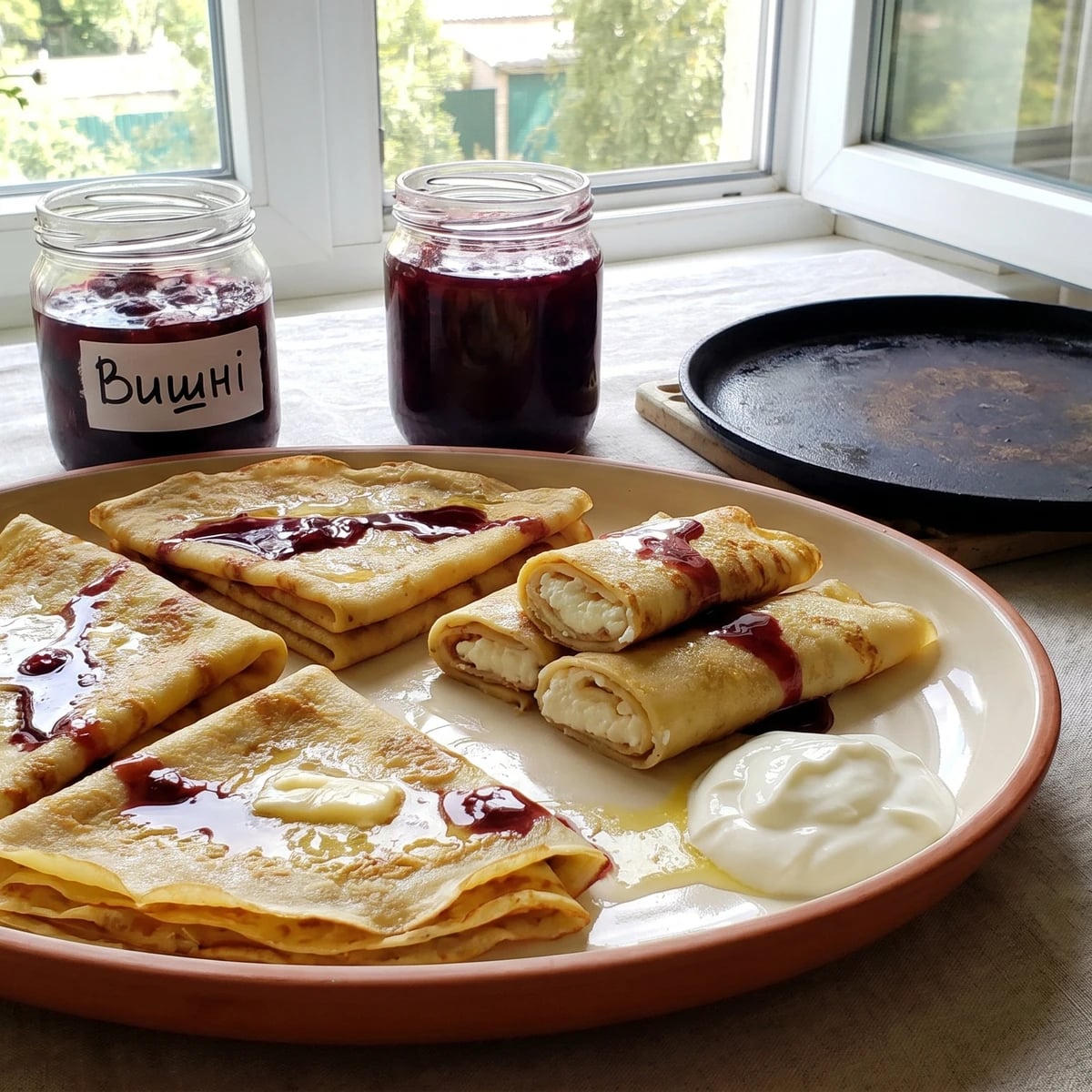
A good mlynets is thin enough to fold without complaint, freckled gold at the edges, and soft enough to wrap around salty curd cheese or July cherries.

Breakfast & Brunch
Ukrainian
Comfort Food
Make Ahead
Budget Friendly
25 min
Active Time
35 min cook1 hr 30 min total
Yield16 to 18 thin pancakes, 6 servings

The pan tells you before your eyes do: a good mlynets, one thin pancake, lands with a thin hiss, then goes quiet as the milk sugars take colour and the edges lift into lace. Too thick and it sulks like an omelette; too hot and it freckles black before the centre sets. You want loose batter, a patient wrist, and a pancake that folds around curd cheese without cracking.

The rest is not ceremony. Flour drinks slowly, and if you give the batter time, the grains swell and the gluten relaxes, so the mlynets spreads like cream and flips without tearing. Aunt Nadia wrote only "let it stand until it sounds right," which made me cross until I heard the difference: raw batter slaps the pan, rested batter whispers, then hisses at the edge.

At my table they go two ways. In July, sour cherries, the kind that fight back; in winter, the jar from the pantry is not a poor cousin, it is how summer keeps speaking. Salty-sweet tvoroh, curd cheese, makes them breakfast, lunch, or the plate you carry to someone who has had a hard week.

Make a high stack. There is no tradition of a small one.

Mlyntsi take their name from mlyn, the Ukrainian word for mill, and belong to a wide family of grain pancakes made with wheat, buckwheat, millet, or rye depending on region and purse. During Masnytsia, known in parts of Ukraine as Kolodiy, the dairy week before Lent, pancakes marked the last generous cooking with milk, butter, eggs, and curd. Once filled and rolled, many families call them nalysnyky; the name shifts, but the thin flexible pancake is the same working dough.

The technique, the tradition, and the story behind every dish.

Discover Culinary Explorer

Ingredients

plain flour (all-purpose flour)

Quantity

220g

eggs

Quantity

3 large

whole milk

Quantity

500ml

room temperature

water

Quantity

150ml, plus more as needed

still or sparkling

sugar

Quantity

1 tablespoon

fine sea salt

Quantity

1/2 teaspoon

melted butter or refined sunflower oil

Quantity

2 tablespoons, plus more for the pan

tvoroh, farmer's cheese, or well-drained full-fat cottage cheese (optional)

Quantity

500g

for curd filling

smetana or sour cream (optional)

Quantity

2 tablespoons

for curd filling

sugar or honey (optional)

Quantity

1 to 2 tablespoons

for curd filling

vanilla extract (optional)

Quantity

1/2 teaspoon

pitted sour cherries (optional)

Quantity

350g

fresh, frozen, or jarred and drained

sugar (optional)

Quantity

2 tablespoons

for the cherries

potato starch (optional)

Quantity

1 teaspoon

mixed with 1 tablespoon cold water

melted butter, smetana, or sour cherry syrup (optional)

Quantity

to serve

Equipment Needed

  • A 24 cm nonstick or well-seasoned skillet
  • A ladle or 1/4-cup measure
  • A thin flexible spatula
  • A clean tea towel for the stack

Instructions

  1. 1

    Make the base

    Crack the eggs into a wide bowl with the sugar and salt and whisk until the yolks loosen completely. Pour in about half the milk, then whisk in the flour to make a smooth thick batter. Thick first, thin later: flour has fewer places to hide, and you won't be chasing lumps around the bowl.

  2. 2

    Loosen and rest

    Whisk in the remaining milk, the water, and the melted butter or oil. The batter should pour like single cream and leave only a thin coat on the ladle. Cover and let it stand until it runs smoother and the surface foam settles; if it has thickened after resting, add a splash of water and trust your eyes.

    This rest is the step that decides the dish. The flour swells and the gluten relaxes, so the pancake spreads thin and folds instead of tearing.
  3. 3

    Mix the fillings

    For curd mlyntsi, stir the tvoroh with smetana, sugar or honey, vanilla if using, and a pinch of salt until soft but not wet. For cherry mlyntsi, warm the cherries with sugar until their juices run, then stir in the potato starch slurry if you want the syrup to cling. Cool the cherry filling before rolling; it should be spoonable, not soupy.

  4. 4

    Ready the pan

    Set a 24 cm skillet over medium heat and wipe it with the thinnest film of butter or oil. The pan is ready when a teaspoon of batter grips at the rim straight away and smells milky-sweet, not raw and floury. The first pancake belongs to the pan. Eat it at the stove and adjust the heat without drama.

    If the batter sits in a puddle, the pan is too cool. If it freckles dark before the top turns matte, lower the heat and give the pan a breath.
  5. 5

    Cook the mlyntsi

    Lift the pan, pour in a scant ladleful of batter, and swirl so it runs to the edges in a thin skin. Cook until the top turns matte, the edges lift into lace, and the underside is freckled gold. Flip with a thin spatula or your fingers if your hands are brave, then cook the second side just until it loses its raw look. Stack the mlyntsi under a clean towel so they stay supple.

    If they crack, the batter is too thick; loosen it with water. If they tear into wide holes, the pan is too hot or the swirl is too slow.
  6. 6

    Fill and roll

    For curd, place a spoonful near the lower edge, fold in the sides, and roll snugly. For cherries, drain off extra syrup and roll gently, or fold the mlyntsi into quarters and spoon the cherries over the top. Stop before the filling bulges. Overfilling is the only real trouble here.

  7. 7

    Warm and serve

    Brush the pan with butter and warm filled mlyntsi seam side down until the outside goes patchy gold and the butter smells nutty. Serve with cold smetana, cherry syrup, or a little more melted butter. The stack should look like people have already started reaching for it.

Chef Tips

  • A blender is allowed. Blitz the batter smooth, then still rest it; machines can mix, but they can't give flour time to drink.
  • Curd cheese varies wildly. If yours is wet, drain it in a sieve first; if it's dry, loosen it with smetana until it spreads without crumbling.
  • In July, use fresh sour cherries. In January, open the jar. That's not a substitute, that's the actual tradition doing its winter work.
  • Make them unsweetened if you want savoury fillings. Mushrooms, buckwheat, cabbage, or leftover roast meat all belong at the table too, a bit more modern in some kitchens and old as hunger in others.
  • The first pancake is information, not failure. It tells you if the pan is ready and if the batter needs loosening.

Advance Preparation

  • The batter can rest in the fridge for up to 24 hours. Stir it well and loosen with a splash of water before cooking.
  • Unfilled mlyntsi keep for 3 days in the fridge, stacked and wrapped. Warm them in a covered pan so they stay flexible.
  • Filled curd mlyntsi freeze well. Thaw overnight in the fridge, then brown them in butter straight from cold.

Frequently Asked Questions

Nutrition Information

1 serving (about 300g)

Calories
480 calories
Total Fat
20 g
Saturated Fat
11 g
Trans Fat
1 g
Unsaturated Fat
8 g
Cholesterol
145 mg
Sodium
330 mg
Total Carbohydrates
52 g
Dietary Fiber
2 g
Sugars
22 g
Protein
23 g

Note: Chef personas and recipes are created with AI assistance. Cook with care: follow safe food-handling practices, check doneness with a thermometer when needed, and adapt for allergies and your kitchen.

Where cooking meets culture.

Culinary guides, cultural storytelling, and the editorial depth that makes cooking meaningful.

Discover Culinary Explorer

More from The Ukrainian Breakfast Table

Browse the full collection