
Chef Takumi
Aji Fry (アジフライ, panko-fried horse mackerel)
Aji fry is weeknight fish with no mystery: fresh horse mackerel opened cleanly, breaded lightly, and fried until the panko crackles while the flesh stays sweet.
A cooking platform built around craft, culture, and the stories behind what we eat.

Created by
A pork cutlet, hot rice, and a dark hatcho-miso tare: Nagoya's comfort bowl is not subtle, but it is precise. The sauce must gloss the crust, not drown it.
This bowl is darker than people expect. The miso tare is almost mahogany, thick enough to cling to a spoon, and it looks as if it might be too much. It isn't, if you use the right miso and keep your hand steady. Miso katsudon is a strong dish, not a heavy one.
The whole personality comes from hatcho miso, the firm red bean miso of Aichi. It has a deep, almost bitter edge that plain sweetness would ruin if you let it. So we loosen it with dashi, round it with mirin and sugar, and stop when the sauce turns glossy and pourable. Boil it hard and it tastes blunt. Let it thicken quietly and the flavor stays deep but clean.
The cutlet asks for the same restraint. Pound the pork only enough to even its thickness, dredge it cleanly, and fry until the panko is crisp and pale gold. Then sauce it after slicing. If you soak the crust, you've made a very expensive way to eat wet breadcrumbs, and nobody needs scholarship for that.
Set it over hot short-grain rice with a little shredded cabbage. The cabbage is not decoration; it cuts the richness and gives the miso somewhere bright to land. This is honmono made reachable: a cutlet, a bowl of rice, one serious sauce, and nothing hidden.
Miso katsu is closely associated with Nagoya and the wider Aichi region, where hatcho miso from Okazaki has been made from soybeans, salt, and long fermentation since the Edo period. The modern dish grew in the twentieth century as tonkatsu became common in Japan and local cooks paired the fried cutlet with the region's dark red miso tare. Served over rice as miso katsudon, it turns a regional sauce into a full donburi meal.
Quantity
2 cutlets, 120 to 150g each
about 1.5cm thick
Quantity
1/2 teaspoon
Quantity
to taste
Quantity
3 tablespoons
Quantity
1
beaten
Quantity
1 cup
Quantity
for deep-frying
Quantity
1/3 cup
or another firm dark red miso
Quantity
1/3 cup
Quantity
2 tablespoons
Quantity
1 tablespoon
Quantity
1 tablespoon
Quantity
1 teaspoon
Quantity
2 bowls
Quantity
1 cup
finely shredded
Quantity
1 teaspoon
Quantity
a small dab
| Ingredient | Quantity |
|---|---|
| boneless pork loin cutletsabout 1.5cm thick | 2 cutlets, 120 to 150g each |
| sea salt | 1/2 teaspoon |
| white pepper | to taste |
| all-purpose flour | 3 tablespoons |
| large eggbeaten | 1 |
| fresh panko | 1 cup |
| neutral oil | for deep-frying |
| hatcho misoor another firm dark red miso | 1/3 cup |
| dashi | 1/3 cup |
| mirin | 2 tablespoons |
| sake | 1 tablespoon |
| sugar | 1 tablespoon |
| soy sauce | 1 teaspoon |
| hot cooked short-grain Japanese rice | 2 bowls |
| green cabbagefinely shredded | 1 cup |
| toasted white sesame seeds | 1 teaspoon |
| Japanese mustard (karashi) (optional) | a small dab |
Trim any thick silver skin from the pork and make three or four shallow cuts through the fat edge so the cutlets don't curl in the oil. Pound them lightly to an even thickness, then season both sides with salt and white pepper. Even thickness matters because the pork and crust should finish together, the meat just cooked as the panko turns crisp.
Put the hatcho miso, dashi, mirin, sake, sugar, and soy sauce in a small saucepan. Whisk over low heat until smooth, then simmer gently for 4 to 6 minutes, stirring often, until the sauce is glossy and thick enough to coat the back of a spoon. Keep the heat modest. Hatcho miso has depth, but hard boiling turns that depth harsh.
Set out three shallow trays: flour, beaten egg, and panko. Dust each cutlet lightly with flour and shake off the excess, dip it fully in egg, then press it into the panko so the crumbs cling in an even coat. Too much flour makes a paste under the crust; a thin dusting gives the egg something to hold.
Heat 4 to 5cm of neutral oil in a heavy pot to 170 C. If you don't have a thermometer, drop in a few panko crumbs; they should sink slightly, rise at once, and bubble steadily without browning immediately. This temperature gives the pork time to cook before the crumbs darken.
Lower the cutlets into the oil one at a time, laying them away from you. Fry for 3 to 4 minutes, turning once, until the crust is pale gold and crisp and the pork reaches 63 C in the center. Drain on a rack, not paper towels, because air under the crust keeps it crisp while the meat rests.
Rest the cutlets for 3 minutes, then slice each into 5 or 6 pieces with a sharp knife. Cut straight down rather than sawing. The crust stays neater, and the pork keeps its juices instead of smearing them into the crumbs.
Divide the hot rice between two donburi bowls and tuck a small bed of shredded cabbage to one side or across the rice. Lay the sliced katsu on top with a little height, keeping the bowl full but not crowded. Spoon the warm miso tare over the cutlet in a few deliberate lines, leaving some crisp edges uncovered.
Scatter toasted sesame seeds over the sauce and add a small dab of karashi if you like its clean heat. Serve at once, while the crust still speaks under the tare and the rice is hot enough to catch what drips down.
1 serving (about 450g)
Culinary guides, cultural storytelling, and the editorial depth that makes cooking meaningful.
Discover Culinary ExplorerChef Takumi
Aji fry is weeknight fish with no mystery: fresh horse mackerel opened cleanly, breaded lightly, and fried until the panko crackles while the flesh stays sweet.
Chef Takumi
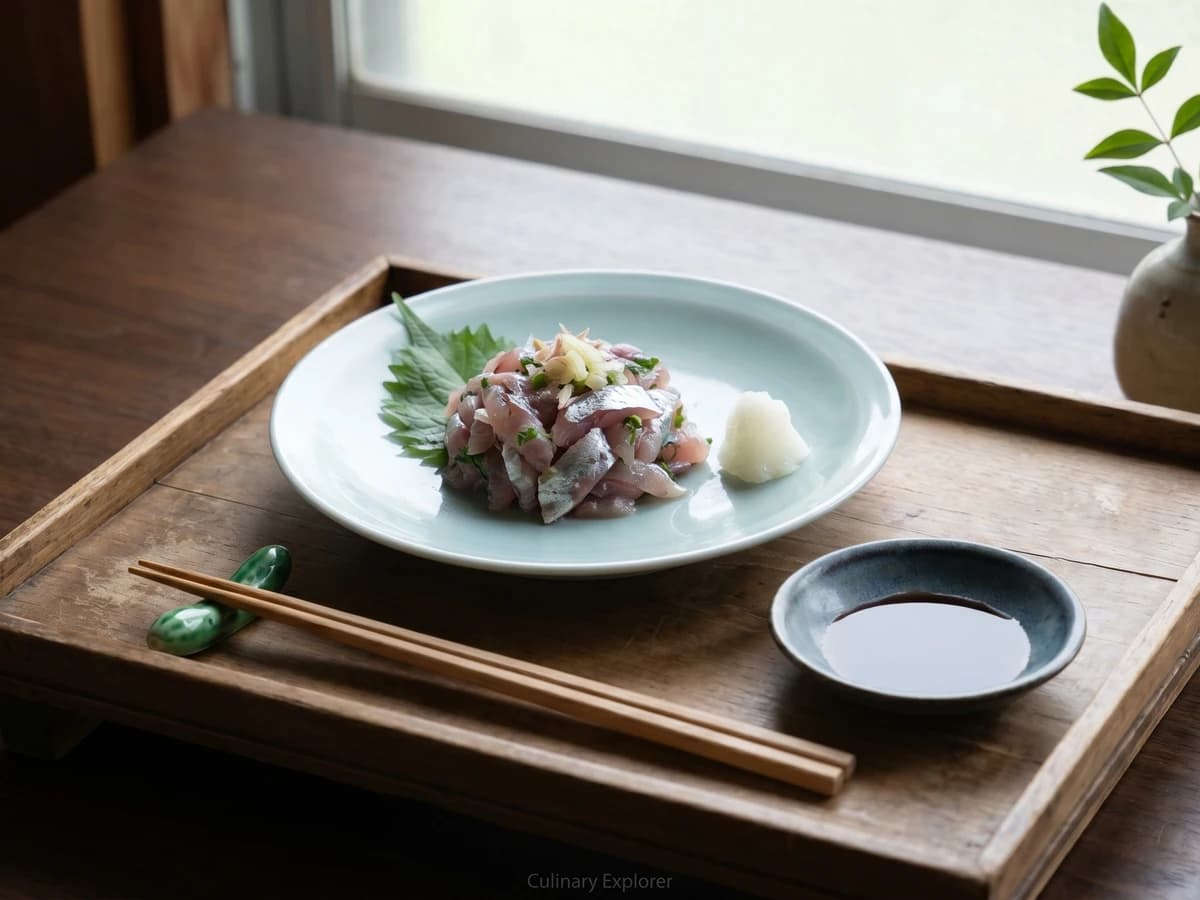
Summer horse mackerel, chopped just enough to catch ginger and scallion, becomes a cool, clean main dish with rice. The secret is fresh fish and a knife that does not bruise it.
Chef Takumi
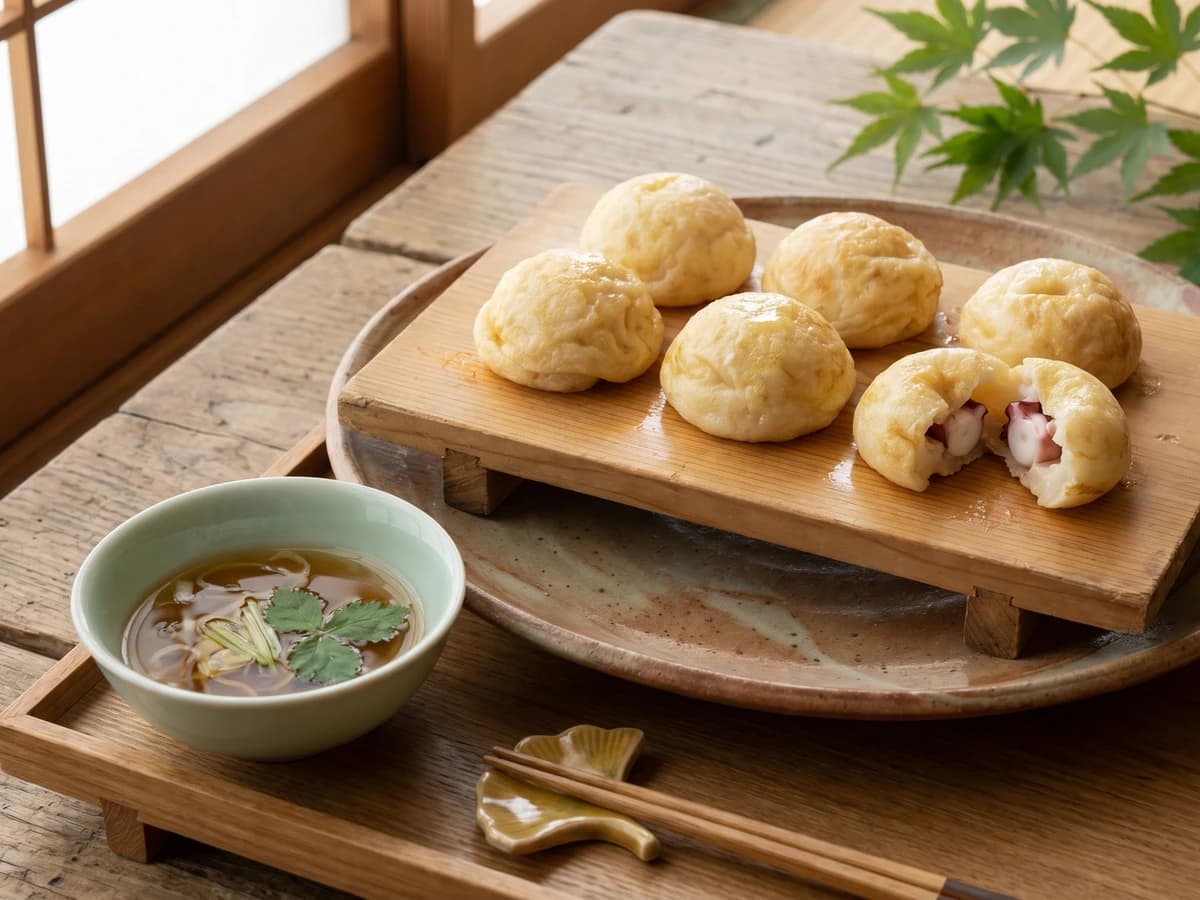
Akashi-yaki is not sauced takoyaki. It is egg-rich batter, tender octopus, and clear dashi, cooked pale and soft so each ball can be dipped like a small custard dumpling.

Chef Takumi
A whole anago looks like a test of nerve. It is mostly good sourcing, a dry skin, cold batter, and oil hot enough to leave the eel sweet under its lace.