Chef Juliette
Bouillabaisse à la Marseillaise
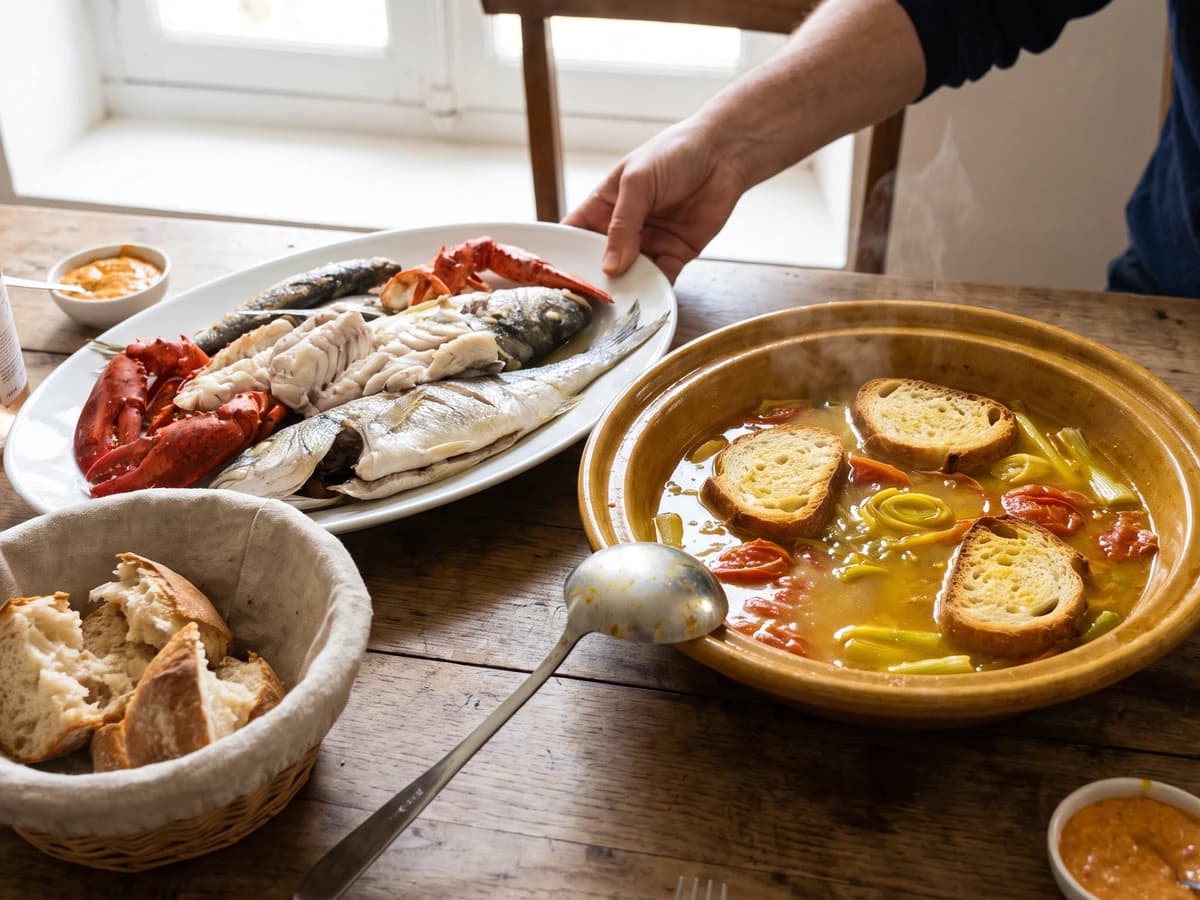
Marseille's great fish stew, saffron-gold and garlic-scented, proves that a hard boil can be the careful choice: it binds olive oil into broth before the whole pot meets bread.
A cooking platform built around craft, culture, and the stories behind what we eat.
Created by
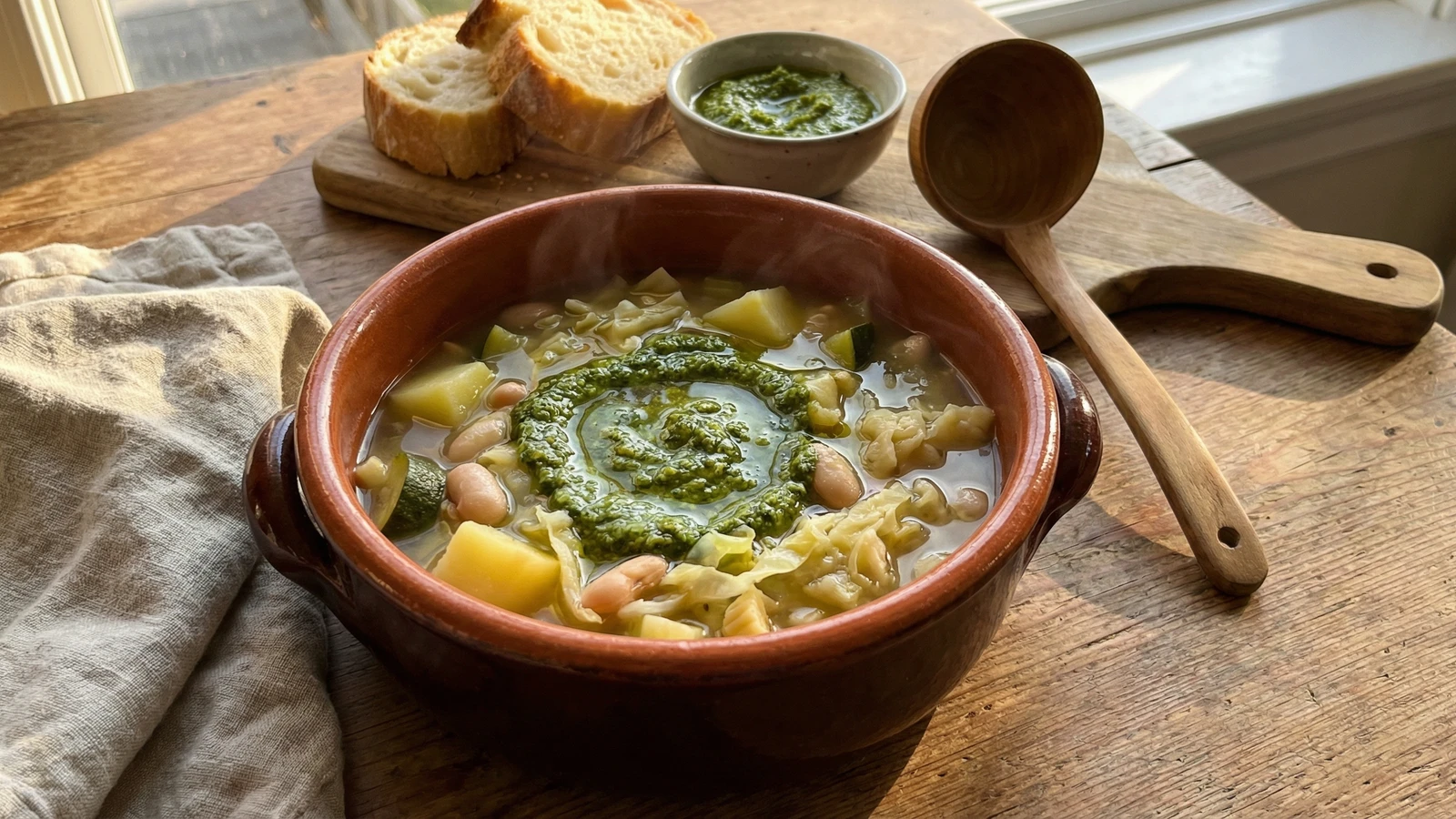
Genoa's answer to vegetable soup, where summer vegetables simmer until tender, then a spoonful of fragrant pesto stirred in at the end changes everything you thought you knew about minestrone.
Every region of Italy has its minestrone, and each insists its version is the true one. They are all correct and all wrong. Minestrone is not a recipe but a principle: vegetables, beans, liquid, time. What separates Genoa's minestrone from all the others is one ingredient added at the end.
The pesto arrives off the heat, stirred into the finished soup or spooned into each bowl. It must never boil. When the hot broth meets the cold basil paste, the perfume rises immediately. Pine nuts, garlic, Parmigiano, basil, the finest Ligurian olive oil: everything that makes pesto Genovese what it is now transforms this soup into something that could only come from one place on earth.
The vegetables should be summer vegetables if you are making this in summer: zucchini at their smallest, green beans so fresh they snap, tomatoes warm from the vine. In winter, use heartier greens and root vegetables. The Genovese understand that minestrone follows the seasons. What remains constant is the pesto at the end, the bright green swirl that announces where this soup was born.
Minestrone alla Genovese predates the arrival of tomatoes and potatoes from the New World, though both have since become essential. The addition of pesto distinguishes it from every other Italian minestrone and reflects Liguria's obsession with fresh basil, which grows prolifically in the maritime climate. Genovese sailors reportedly packed pesto on their ships, adding it to whatever soups they could make at sea.
Quantity
1/2 cup
Quantity
1 medium
diced
Quantity
2
diced
Quantity
2 medium (about 12 ounces)
peeled and cut into 1/2-inch cubes
Quantity
2 medium
halved lengthwise and sliced 1/2-inch thick
Quantity
6 ounces
trimmed and cut into 1-inch pieces
Quantity
1 cup fresh shelled or 1 can (15 ounces)
drained and rinsed if canned
Quantity
2 medium
peeled, seeded, and chopped
Quantity
1 small head (about 8 ounces)
cored and shredded
Quantity
8 cups
Quantity
1 cup
ditali, tubettini, or broken spaghetti
Quantity
to taste
Quantity
to taste
freshly ground
Quantity
1/2 cup
at room temperature
Quantity
for serving
freshly grated
| Ingredient | Quantity |
|---|---|
| extra virgin olive oil | 1/2 cup |
| yellow oniondiced | 1 medium |
| celery stalksdiced | 2 |
| waxy potatoespeeled and cut into 1/2-inch cubes | 2 medium (about 12 ounces) |
| zucchinihalved lengthwise and sliced 1/2-inch thick | 2 medium |
| green beanstrimmed and cut into 1-inch pieces | 6 ounces |
| borlotti beansdrained and rinsed if canned | 1 cup fresh shelled or 1 can (15 ounces) |
| ripe tomatoespeeled, seeded, and chopped | 2 medium |
| Savoy cabbagecored and shredded | 1 small head (about 8 ounces) |
| vegetable or light chicken broth | 8 cups |
| small pastaditali, tubettini, or broken spaghetti | 1 cup |
| kosher salt | to taste |
| black pepperfreshly ground | to taste |
| pesto Genoveseat room temperature | 1/2 cup |
| Parmigiano-Reggianofreshly grated | for serving |
In a heavy soup pot, warm the olive oil over medium heat. Add the onion and celery. Cook slowly, stirring occasionally, until the onion becomes translucent and begins to turn pale gold at the edges, about 12 minutes. Do not rush this. The foundation of every Italian soup is patience with the soffritto. What happens in these first minutes determines everything that follows.
Add the cubed potatoes to the pot. Stir them into the soffritto and cook for 5 minutes, letting them absorb some of the flavored oil. The potatoes will eventually break down slightly and help thicken the soup. This is correct and desirable.
Add the zucchini, green beans, and borlotti beans to the pot. Stir everything together. Add the tomatoes and the shredded cabbage. The pot will seem very full. The vegetables will cook down considerably.
Pour in the broth. Bring to a gentle boil, then reduce heat to maintain a lazy simmer. Cook uncovered for 45 minutes to one hour, stirring occasionally. The vegetables should become very tender, some beginning to fall apart. The broth will reduce and concentrate. Season with salt and pepper, remembering that the pesto will add salinity.
Add the pasta directly to the simmering soup. Stir well to prevent sticking. Cook until the pasta is tender but still has pleasant resistance, usually 2 to 3 minutes less than the package suggests. The pasta will continue to absorb liquid as the soup rests. If the soup becomes too thick, add a splash of hot water.
Remove the pot from heat. Let it rest for 5 minutes. The pesto must never boil. Stir the room-temperature pesto into the soup, or place a generous spoonful in each bowl and ladle the soup over it. The heat of the soup will release the basil's perfume. This is the moment that transforms vegetable soup into something distinctly Genovese.
Ladle into warm bowls. Pass Parmigiano-Reggiano at the table. The cheese is not optional, though Ligurians often use Pecorino Sardo or a blend of both. Serve with good bread. This soup is a meal, not a course.
1 serving (about 515g)
Culinary guides, cultural storytelling, and the editorial depth that makes cooking meaningful.
Discover Culinary ExplorerChef Juliette
Marseille's great fish stew, saffron-gold and garlic-scented, proves that a hard boil can be the careful choice: it binds olive oil into broth before the whole pot meets bread.
Chef Juliette
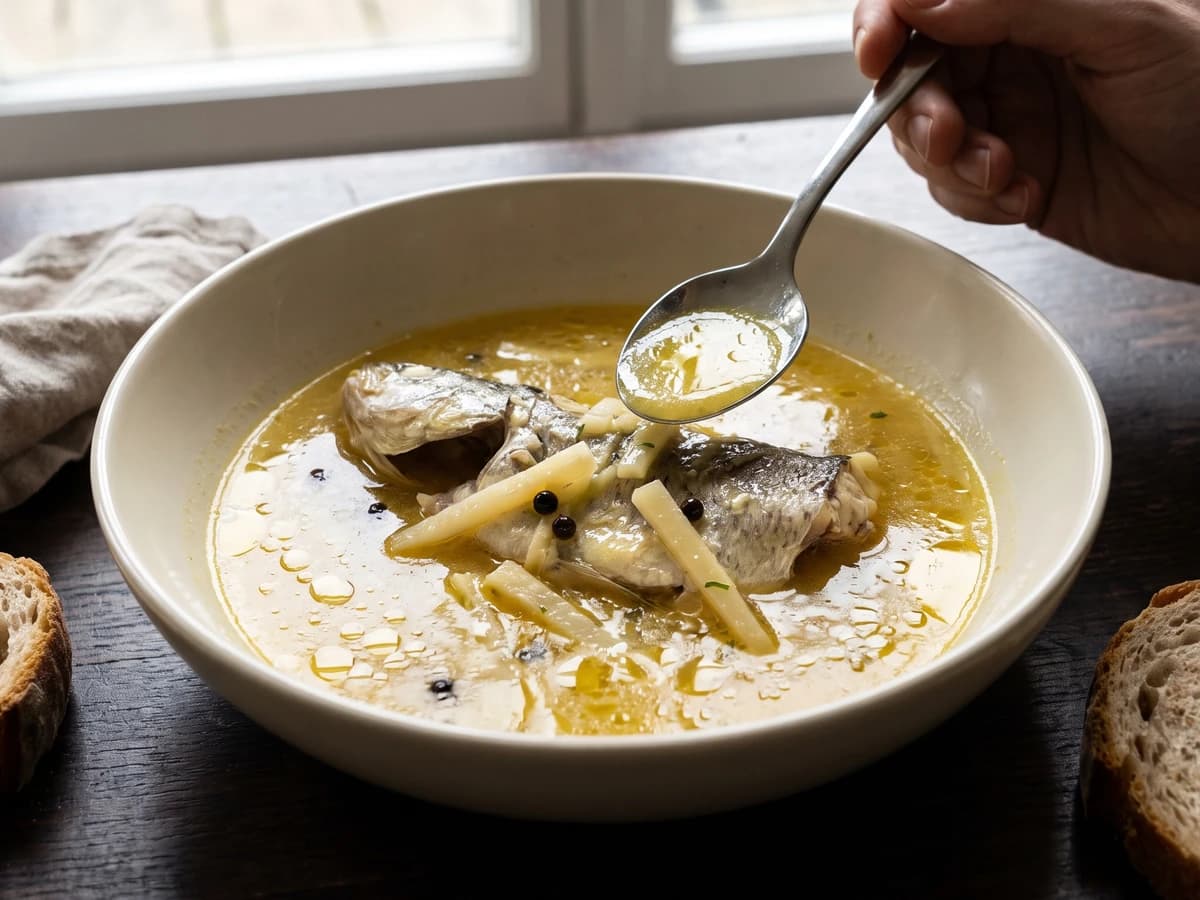
Waterzoi asks fresh, bone-in river fish to thicken its own buttery broth, with parsley root and pepper for company. No flour, no stockpot, just a brisk simmer watched closely.
Chef Juliette
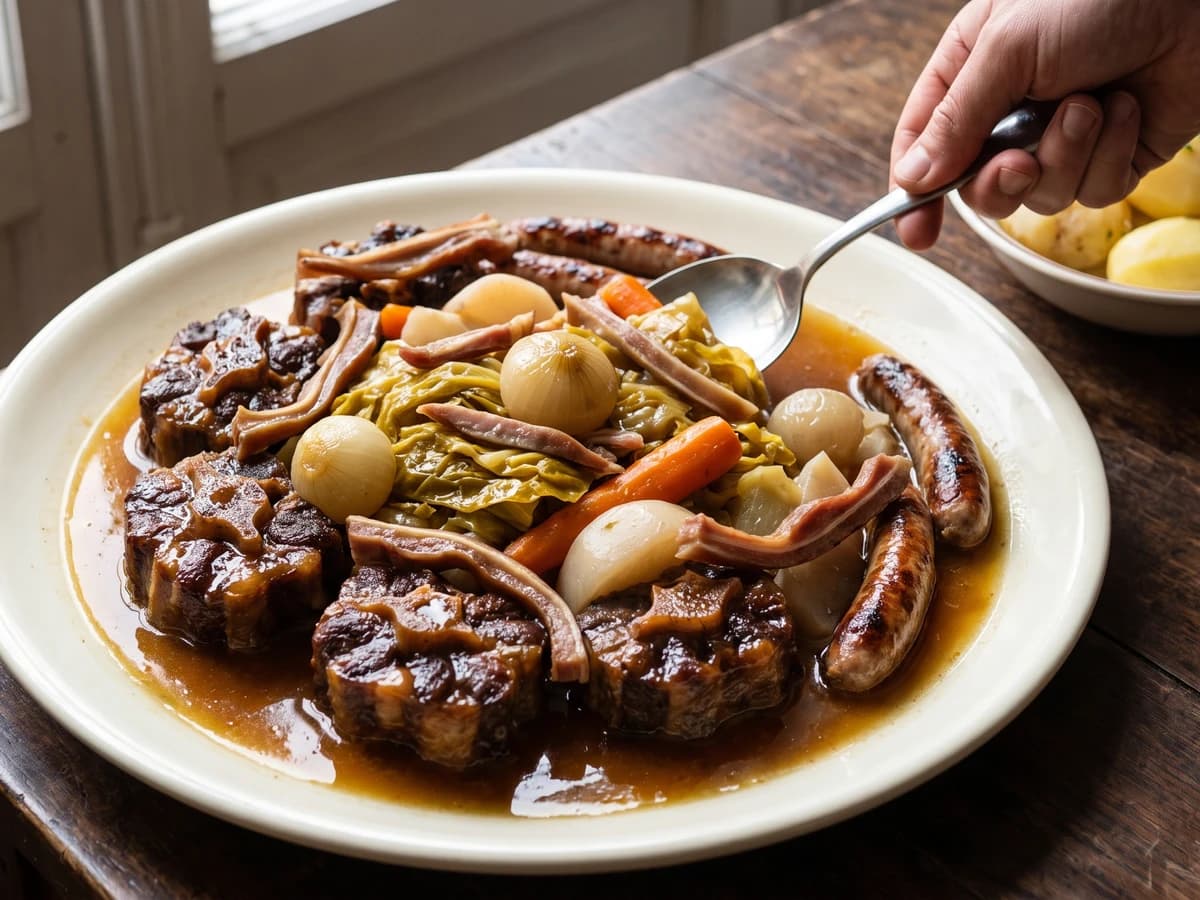
Queue de Bœuf en Hochepot gathers oxtail, pig's trotter and ear, cabbage, roots, and grilled chipolatas around a clear, gelatin-rich broth whose quiet simmer keeps every piece tender and distinct.
Chef Juliette
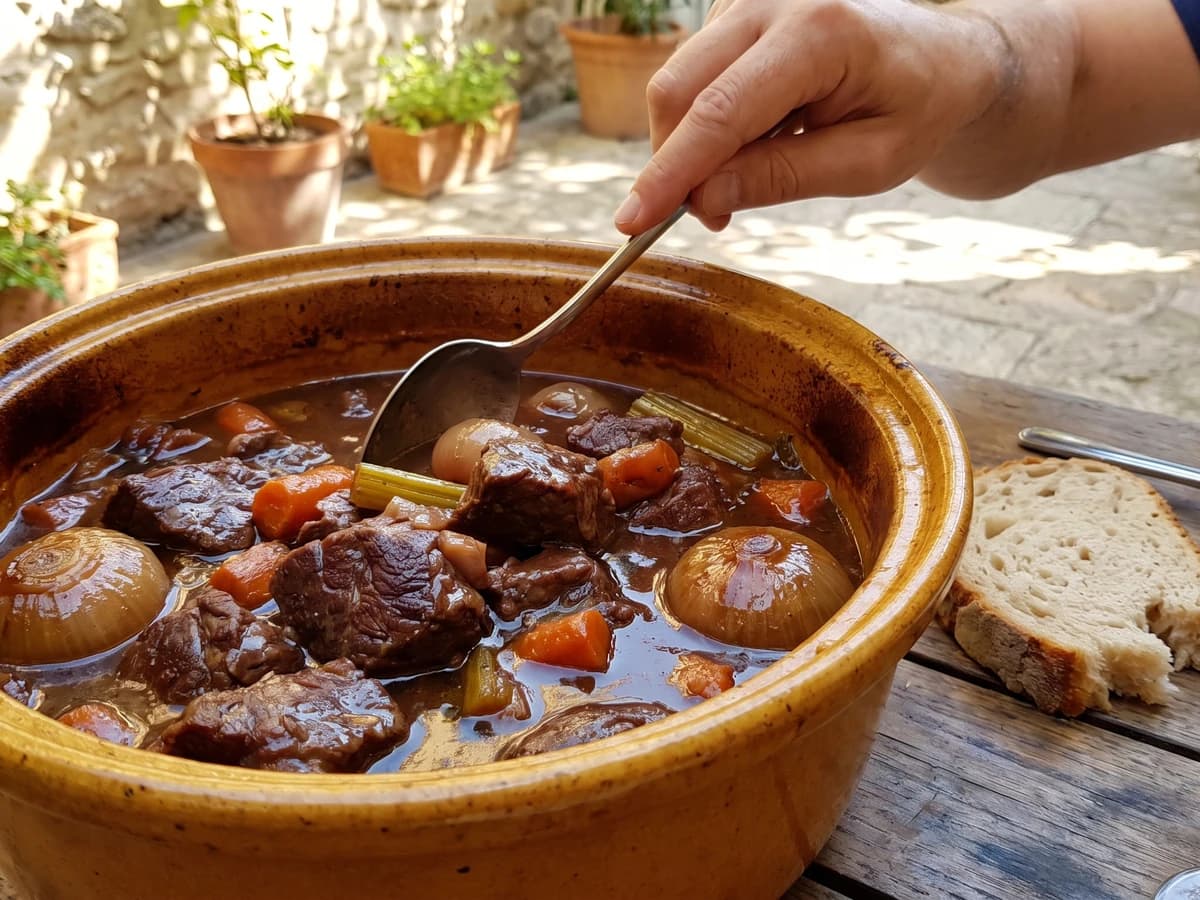
Beef shoulder larded with bacon, sharpened by red wine and vinegar, then sealed with garlic, vegetables, and dry lemon peel until the low oven turns it yielding and the gravy darkly glossy.