Culinary Explorer

A cooking platform built around craft, culture, and the stories behind what we eat.
Discover Culinary Explorer
Minestra Maritata

Minestra Maritata

Created by

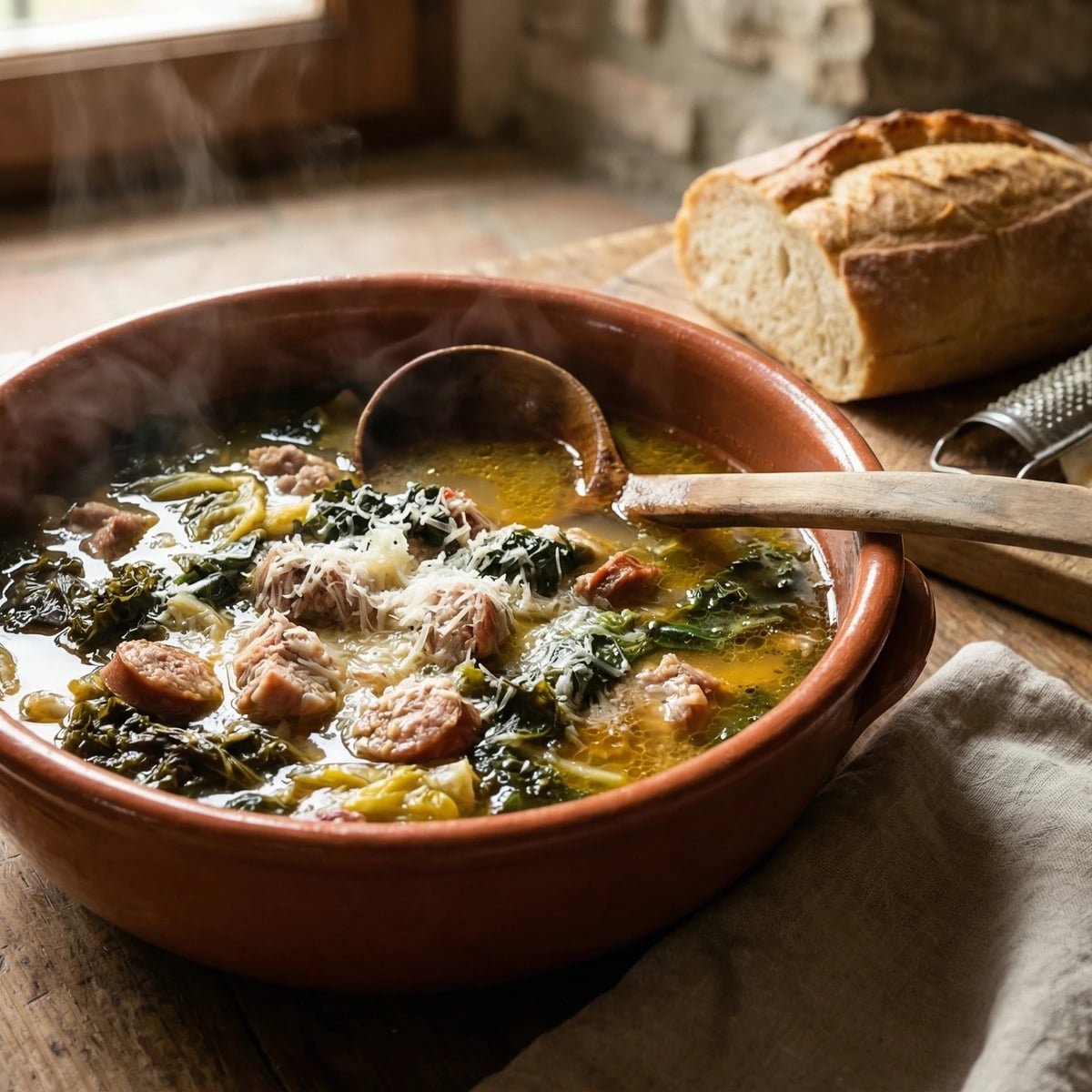
The great married soup of Naples, where bitter winter greens find their match in a broth built from prosciutto bones, pork, and time. This is Christmas dinner in Campania.

Soups & Stews
Italian, Neapolitan
Holiday
Christmas
Comfort Food
1 hr
Active Time
4 hr cook5 hr total
Yield10 servings

The name means married soup, and it refers not to newlyweds but to the union of two essential things: bitter winter greens and rich pork broth. Neapolitan cooks have understood this marriage for centuries. The greens need the fat. The meat needs the vegetable bitterness to cut its richness. Together they become something neither could be alone.

This is not a quick weeknight supper. It is a holiday project, the kind of cooking that fills the house with aroma for an entire day. Neapolitan families serve it on Christmas Eve or Christmas Day, and again at Easter. The pot simmers on the back of the stove while children run through the house and old aunts argue about whether you should have added more escarole.

You need multiple cuts of pork, and you need the prosciutto bone. Americans throw these away. Italians know better. The bone is where the flavor lives. Find a good Italian deli and ask them to save one for you. They will respect you for knowing to ask.

Minestra maritata predates the tomato's arrival in Italy, with roots in medieval Neapolitan cooking when bitter greens and preserved pork sustained families through winter. The Spanish called a similar dish "olla podrida," and the influence traveled to Naples during three centuries of Spanish rule. By the 18th century, the soup had become the defining dish of the Campanian Christmas table.

The technique, the tradition, and the story behind every dish.

Discover Culinary Explorer

Ingredients

prosciutto bone

Quantity

1 (about 1 pound)

with some meat attached

pork spareribs

Quantity

1 pound

cut into individual ribs

pork skin

Quantity

8 ounces

cleaned and cut into 2-inch pieces

Italian sausage

Quantity

8 ounces

sweet or mild

beef chuck

Quantity

8 ounces

in one piece

yellow onion

Quantity

1 large

halved

carrots

Quantity

2

peeled and halved lengthwise

celery stalks

Quantity

2

with leaves

bay leaf

Quantity

1

black peppercorns

Quantity

6 whole

kosher salt

Quantity

to taste

escarole

Quantity

1 large head (about 1 pound)

tough outer leaves removed

Savoy cabbage

Quantity

1/2 head (about 12 ounces)

cored

chicory or curly endive

Quantity

1 bunch (about 8 ounces)

broccoli rabe

Quantity

1 bunch (about 12 ounces)

tough stems removed

pancetta

Quantity

4 ounces

diced

garlic cloves

Quantity

3

lightly crushed

red pepper flakes

Quantity

1/4 teaspoon

Pecorino Romano

Quantity

for serving

freshly grated

crusty Italian bread

Quantity

for serving

Equipment Needed

  • Large 10-quart stockpot for the broth
  • Heavy 8-quart Dutch oven for finishing
  • Fine-mesh strainer
  • Large bowl with ice water for blanching

Instructions

  1. 1

    Build the broth

    Place the prosciutto bone, spareribs, pork skin, sausage, and beef chuck in a large stockpot. Cover with cold water by four inches, about five quarts. Bring slowly to a simmer over medium heat. This should take 30 to 40 minutes. Do not rush it. As the water heats, gray foam will rise to the surface. Skim this away patiently with a ladle. Keep skimming until the broth runs clear.

    The prosciutto bone is essential. Ask your Italian deli or butcher to save one for you. They often discard them or sell them cheaply. The bone gives the broth its soul.
  2. 2

    Add aromatics and simmer

    When the broth runs clear, add the onion halves, carrots, celery, bay leaf, peppercorns, and one tablespoon of salt. Reduce heat to maintain a lazy simmer, with only an occasional bubble breaking the surface. Cook uncovered for two and a half to three hours, until the meats are completely tender and falling from the bone. The broth should reduce by about one third and develop a rich, golden color.

  3. 3

    Remove and prepare the meats

    Using a slotted spoon, transfer all the meats to a cutting board. Discard the onion, carrots, celery, bay leaf, and peppercorns. Strain the broth through a fine-mesh strainer into a clean pot. Let the broth settle for 10 minutes, then skim any fat from the surface. When the meats are cool enough to handle, cut or shred them into bite-sized pieces. Discard any bones and cartilage. Slice the sausage into rounds. Set the meats aside.

  4. 4

    Prepare the greens

    Bring a large pot of well-salted water to a boil. While waiting, tear the escarole, cabbage, chicory, and broccoli rabe into large pieces. You should have roughly equal volumes of each. Working in batches if necessary, blanch each type of green separately until just wilted but still bright in color, about two minutes for the tender greens, three to four minutes for the broccoli rabe. Transfer immediately to a bowl of ice water to stop the cooking. Drain thoroughly and squeeze gently to remove excess water.

    The mixture of bitter and mild greens creates complexity. In Naples, cooks use whatever is available in the winter garden: scarola, verza, cicoria, friarielli. Four varieties is traditional, but three will serve.
  5. 5

    Build the flavor base

    In a large Dutch oven or heavy soup pot, cook the pancetta over medium heat until the fat renders and the edges crisp, about eight minutes. Add the crushed garlic and red pepper flakes. Cook one minute more, until the garlic is fragrant but not colored. Remove and discard the garlic cloves. They have given what they have to give.

  6. 6

    Marry the greens and meat

    Add the blanched greens to the pot with the pancetta. Toss to coat with the rendered fat. Add the strained broth and bring to a simmer. Add all the reserved meats. Cook together at a gentle simmer for 30 to 40 minutes, stirring occasionally, until the flavors have married completely. The greens should be tender but not mushy, the broth rich and deeply flavored. Taste and adjust the salt. The prosciutto bone adds salt, so be cautious.

  7. 7

    Serve properly

    Ladle the soup into deep warmed bowls, ensuring each portion has a generous mix of greens and meats. Pass grated Pecorino Romano at the table. Serve with thick slices of crusty bread for soaking up the broth. This is not optional. The bread and the broth are inseparable.

    Minestra maritata improves overnight. The marriage deepens. Make it the day before Christmas and reheat gently for the feast.

Chef Tips

  • The prosciutto bone is not negotiable. It provides the deep, aged pork flavor that makes this soup what it is. Pancetta or regular pork bones cannot replace it.
  • Blanch each type of green separately. They cook at different rates, and you want to preserve their individual characters even as they marry in the final pot.
  • The soup should be more greens than broth. This is not a thin consommé with a few leaves floating in it. The bowl should be crowded with good things.
  • In Naples, some families add a piece of salted pork jowl or cotechino sausage. If you can find these, use them. The more varieties of pork, the more complex the broth.

Advance Preparation

  • The broth can be made two days ahead and refrigerated. The fat will solidify on top and can be easily removed.
  • The blanched greens can be prepared a day ahead, squeezed dry, and refrigerated in a sealed container.
  • The completed soup improves for up to three days in the refrigerator. Reheat gently. Add a splash of water if it has thickened too much.
  • This soup freezes well for two months, though the texture of the pork skin changes somewhat. Include plenty of broth when packaging.

Frequently Asked Questions

Nutrition Information

1 serving (about 380g)

Calories
385 calories
Total Fat
26 g
Saturated Fat
9 g
Trans Fat
0 g
Unsaturated Fat
14 g
Cholesterol
90 mg
Sodium
920 mg
Total Carbohydrates
9 g
Dietary Fiber
5 g
Sugars
3 g
Protein
26 g

Note: Chef personas and recipes are created with AI assistance. Cook with care: follow safe food-handling practices, check doneness with a thermometer when needed, and adapt for allergies and your kitchen.

Where cooking meets culture.

Culinary guides, cultural storytelling, and the editorial depth that makes cooking meaningful.

Discover Culinary Explorer

More from Chef Graziella's Soups and Stews

Browse the full collection