Culinary Explorer

A cooking platform built around craft, culture, and the stories behind what we eat.
Discover Culinary Explorer
Milk-Braised Pork Loin

Milk-Braised Pork Loin

Created by

A quiet miracle of Italian home cooking where whole milk slowly transforms into sweet golden curds while rendering pork impossibly tender, proving that the most surprising dishes often ask the least of you.

Main Dishes
Italian
Dinner Party
Special Occasion
20 min
Active Time
2 hr 30 min cook2 hr 50 min total
Yield6 servings

Start with the pork. Find a farmer who raises heritage breeds on pasture, pigs that have rooted and foraged and lived as pigs should. The loin should be pink, firm, and smell clean. Industrial pork, pumped with solutions and raised in confinement, will not give you what this dish demands.

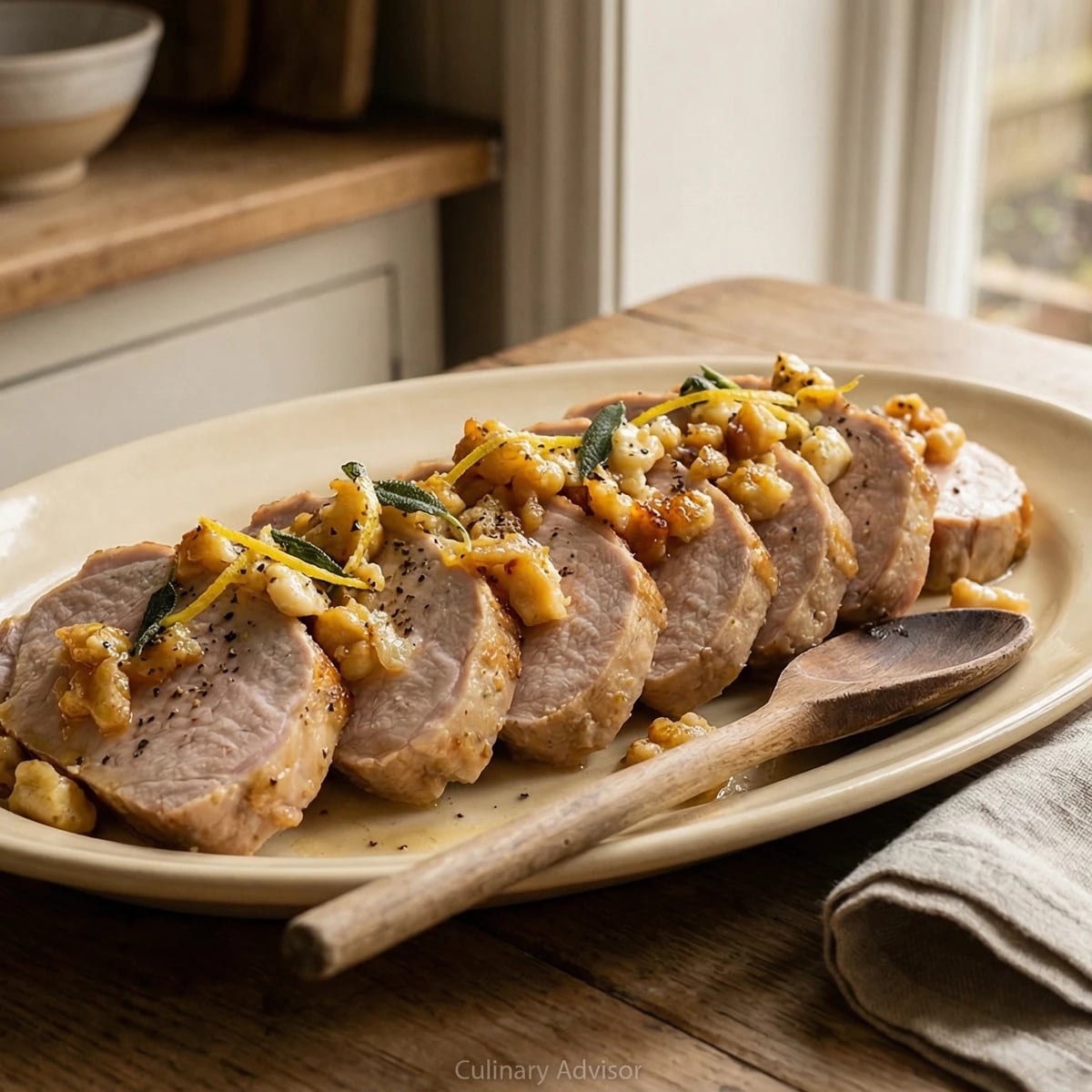
This is one of those recipes that seems almost too simple to work. You brown the meat. You add milk. You wait. And somewhere in those two hours, something extraordinary happens. The milk proteins break down and caramelize into sweet, nutty curds that cling to the pork like the most luxurious sauce imaginable. No cream. No roux. Just milk, heat, and patience.

I first encountered this dish in a farmhouse kitchen in Emilia-Romagna, where an eighty-year-old woman made it without measuring a thing. She had been cooking it for sixty years. The technique came from her mother, and her mother's mother before that. When I asked her the secret, she shrugged and said: good pork, fresh milk, and do not rush.

That is the whole philosophy. Your choices shape the food system. The farmer who raises pigs well deserves your dollars. The milk from cows on pasture tastes different from industrial dairy. These things matter, and they matter most in dishes this simple, where there is nowhere for poor ingredients to hide.

The technique, the tradition, and the story behind every dish.

Discover Culinary Explorer

Ingredients

boneless pork loin

Quantity

2 1/2 to 3 pounds

tied

unsalted butter

Quantity

2 tablespoons

extra-virgin olive oil

Quantity

2 tablespoons

whole milk

Quantity

4 cups

at room temperature

garlic cloves

Quantity

6

lightly smashed

fresh sage leaves

Quantity

12

bay leaves

Quantity

2

lemon zest

Quantity

from 1 lemon

removed in wide strips

kosher salt

Quantity

1 tablespoon

black pepper

Quantity

1 teaspoon

freshly ground

Equipment Needed

  • Heavy Dutch oven or braising pan with lid (5-quart minimum)
  • Instant-read thermometer
  • Kitchen twine (if tying the roast yourself)

Instructions

  1. 1

    Season the pork

    Remove the pork from the refrigerator one hour before cooking. Pat it completely dry with paper towels. Season generously on all sides with the salt and pepper, pressing the seasoning into the meat. The surface must be dry for proper browning.

  2. 2

    Brown on all sides

    Heat the butter and olive oil in a heavy Dutch oven or braising pan over medium-high heat. When the butter foam subsides, add the pork and brown thoroughly on all sides, about three minutes per side. You are building flavor here. Take your time. The fond on the bottom of the pot will sweeten the milk later.

    If your pot is not wide enough, brown the loin in a skillet first, then transfer to the braising vessel. The browning matters more than convenience.
  3. 3

    Add aromatics

    Lower the heat to medium. Scatter the smashed garlic, sage leaves, bay leaves, and lemon zest strips around the pork. Let them sizzle for thirty seconds until fragrant. The sage will crisp slightly at the edges.

  4. 4

    Pour in the milk

    Pour the room-temperature milk slowly down the side of the pot, not directly over the pork. The liquid should come about halfway up the loin. It will bubble and hiss when it hits the hot surface. This is good. The fond is releasing.

    Cold milk hitting a hot pot can cause curdling too quickly. Room temperature gives you control.
  5. 5

    Braise slowly

    Bring the milk to a gentle simmer. You want lazy bubbles, not a rolling boil. Partially cover the pot, leaving a gap for steam to escape. Cook for two to two and a half hours, turning the pork every thirty minutes. The milk will gradually reduce and begin to separate into golden curds. Do not be alarmed. This is exactly what should happen.

  6. 6

    Watch for the transformation

    The pork is ready when an instant-read thermometer inserted into the center reads 145°F and the milk has reduced to a thick, curdled sauce coating the bottom of the pot. The curds should be golden brown in spots, sweet and nutty smelling. If the milk reduces too quickly before the pork is done, add a splash more and continue cooking.

  7. 7

    Rest before slicing

    Transfer the pork to a cutting board and tent loosely with foil. Let it rest for fifteen minutes. This is not optional. The juices need time to redistribute. While the pork rests, scrape up any curds clinging to the pot and keep them warm.

  8. 8

    Slice and serve

    Remove the twine from the pork and slice into half-inch rounds. Arrange on a warm platter and spoon the golden curds over and around the meat. The curds are the sauce. Do not discard a single one.

    If the curds have cooled and tightened, add a tablespoon of warm water and stir gently to loosen them before spooning over the pork.

Chef Tips

  • Ask your butcher to tie the loin for you. The twine helps the roast hold its shape during the long braise and ensures even cooking.
  • Heritage pork breeds like Berkshire, Duroc, or Red Wattle have more intramuscular fat and deeper flavor. They are worth seeking out for a dish this simple.
  • Save any leftover curds. Tossed with hot pasta and a handful of grated Parmigiano, they make an extraordinary quick supper the next day.
  • This dish pairs beautifully with a simple salad of bitter greens dressed in lemon and olive oil. The brightness cuts through the richness of the milk curds.
  • A bottle of crisp white wine from the same region as the dish: Verdicchio, Soave, or a young Arneis would be lovely alongside.

Advance Preparation

  • The pork can be braised up to two days ahead and refrigerated in its cooking liquid. Reheat gently over low heat, slicing only after the meat has warmed through.
  • The curds will solidify when cold but loosen again beautifully with gentle reheating and a splash of warm water.

Frequently Asked Questions

Nutrition Information

1 serving (about 190g)

Calories
475 calories
Total Fat
26 g
Saturated Fat
10 g
Trans Fat
0 g
Unsaturated Fat
16 g
Cholesterol
160 mg
Sodium
1090 mg
Total Carbohydrates
9 g
Dietary Fiber
0 g
Sugars
8 g
Protein
49 g

Note: Chef personas and recipes are created with AI assistance. Cook with care: follow safe food-handling practices, check doneness with a thermometer when needed, and adapt for allergies and your kitchen.

Where cooking meets culture.

Culinary guides, cultural storytelling, and the editorial depth that makes cooking meaningful.

Discover Culinary Explorer

More from Marvelous Main Dishes

Browse the full collection