
Chef Lupita
Acambaritas de Acámbaro
Guanajuato's daily bread from Acámbaro, a small glazed roll built on pata, enriched with manteca de cerdo, and baked until the top shines lightly for merienda.
A cooking platform built around craft, culture, and the stories behind what we eat.
Created by
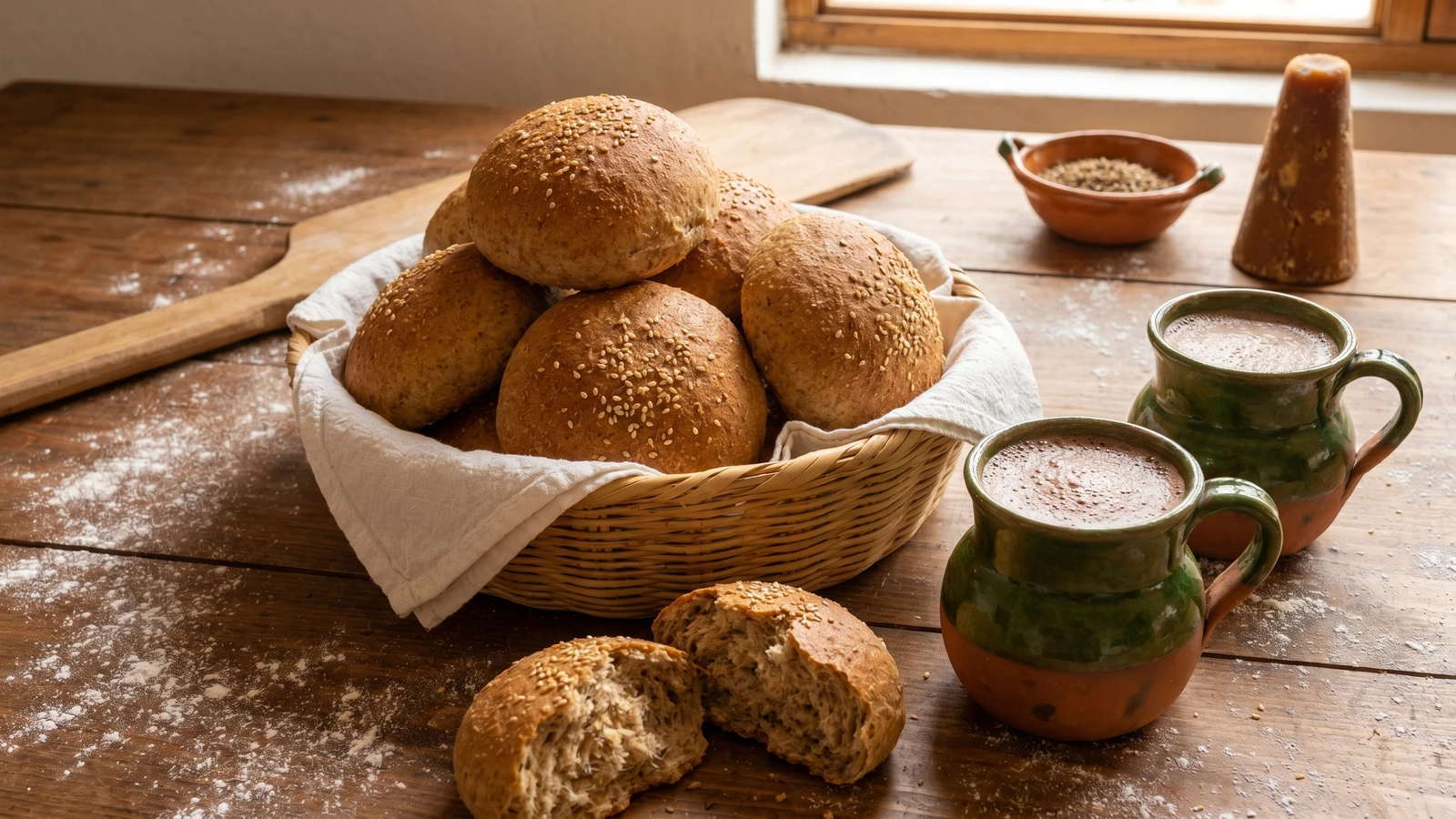
Michoacan's semas de trigo are firm whole-wheat buns sweetened with piloncillo, scented with anise, and built to soften when dipped into hot chocolate de metate.
Michoacan, especially the Meseta Purepecha and the lake towns around Patzcuaro, knows this bread. Semas de trigo are not soft dinner rolls pretending to be pan dulce. They are whole-wheat buns with weight, bran, anise, piloncillo, and the plain discipline of a panaderia that starts work before sunrise.
The flour matters. Harina integral de trigo gives the sema its rough crumb and brown color. A little harina de trigo panadera keeps it from becoming a brick. The piloncillo is melted into a dark syrup with anise seed, then worked into the dough with manteca de cerdo. La manteca es el sabor. Use oil and the bread loses its character.
In Morelia, Uruapan, and the smaller Purepecha towns, these breads sit in woven baskets under cloth, sold for breakfast or carried home for the afternoon chocolate. I learned a version from a panadera near Patzcuaro who kept her masa madre, her pata, in a clay bowl wrapped in a towel. She told me the dough needed the night to learn what it was. She was right. No me vengas con atajos.
These semas are supposed to be firm. Break one open and you should see bran flecks, a tight crumb, and the small dark freckles of anise. Dip it into chocolate caliente and it softens immediately. That is the point. Cada estado, su propia cocina.
Wheat arrived in Mexico with the Spanish in the 16th century, but Michoacan's bread traditions developed through convent baking, market bakeries, and Purepecha towns that adapted wheat to local rhythms of atole, chocolate, and wood-fired ovens. Semas and semitas across western Mexico often use piloncillo, anise, and firm doughs meant to keep well for several days, which made them practical breads for rural households and market travel. The use of a sour old dough or masa madre, called pata in parts of western bakery practice, connects these buns to the same regional bread logic as Jalisco's birote, which is a sourdough bread, not a bolillo.
Quantity
1 cup
100 percent hydration, bubbly and fed 6 to 8 hours earlier
Quantity
2 cups
plus more for dusting
Quantity
2 cups
Quantity
1/2 cup
Quantity
1 cup
Quantity
6 ounces
chopped
Quantity
1 tablespoon
Quantity
1 teaspoon
Quantity
1/2 teaspoon
optional if your masa madre is weak
Quantity
1/3 cup
softened
Quantity
1
lightly beaten, for brushing
Quantity
2 tablespoons
for topping
| Ingredient | Quantity |
|---|---|
| active masa madre de trigo, also called pata100 percent hydration, bubbly and fed 6 to 8 hours earlier | 1 cup |
| harina integral de trigoplus more for dusting | 2 cups |
| harina de trigo panadera | 2 cups |
| wheat bran | 1/2 cup |
| water | 1 cup |
| piloncillochopped | 6 ounces |
| anise seed | 1 tablespoon |
| kosher salt | 1 teaspoon |
| instant yeast (optional)optional if your masa madre is weak | 1/2 teaspoon |
| manteca de cerdosoftened | 1/3 cup |
| large egglightly beaten, for brushing | 1 |
| sesame seedsfor topping | 2 tablespoons |
Put the water, chopped piloncillo, and anise seed in a small saucepan. Warm over medium heat, stirring until the piloncillo dissolves completely and the syrup smells dark, grassy, and sweet. Let it cool until warm to the touch, not hot. Hot syrup can damage the masa madre. Strain if you want a smoother crumb, or leave the anise seeds in if you want the old panaderia texture.
In a large bowl, combine the harina integral de trigo, harina de trigo panadera, wheat bran, salt, and instant yeast if using. Stir with your hand so the bran is evenly distributed. This bread needs whole wheat, but whole wheat alone can make the buns heavy. The panadera flour gives structure. That is not cheating. That is understanding flour.
Add the masa madre de trigo and the warm piloncillo-anise syrup to the flour mixture. Mix until no dry pockets remain. The dough will feel rough and slightly sticky. Cover and let it rest for 20 minutes so the bran can drink. If you knead immediately, the dough fights you and tears.
Add the softened manteca de cerdo in three additions, kneading each one in before adding the next. Work the dough for 8 to 10 minutes by hand, or 5 to 6 minutes in a stand mixer on low. It should become smoother but still feel firm, not fluffy. La manteca es el sabor, and here it also keeps the crumb from drying into sawdust.
Place the dough in a lightly greased bowl, cover tightly, and let it rise at cool room temperature for 8 to 10 hours. It will not triple like white bread. Look for a dough that has expanded by about half and feels alive when pressed. The masa madre gives the semas their faint sour backbone. A fast bun is not this bun.
Turn the dough onto a lightly floured table and divide it into 12 equal pieces. Shape each piece into a tight round, then press it gently with your palm until it is a squat bun about 3 inches wide. These are hand-shaped breads. Do not make them machine-perfect. Set them on parchment-lined baking sheets, leaving room between them.
Cover the buns with a cloth and let them proof for 1 1/2 to 2 hours, until they look slightly swollen and a fingertip pressed into the side leaves a slow dent. Brush lightly with beaten egg, sprinkle with sesame seeds, and score a shallow cross or two slashes across the top. In Michoacan bakeries, the mark tells you the bread was touched by a hand, not stamped out by a factory.
Heat the oven to 375F. Bake the semas for 22 to 25 minutes, rotating the pans halfway through, until the tops are deep golden brown and the bottoms sound hollow when tapped. In a horno de leña they pick up a darker crust and a faint smoke from the oven walls. At home, use a preheated baking stone if you have one. The crust should be firm. That is correct.
Move the buns to a rack and let them cool at least 30 minutes before eating. Tear one open. The crumb should be tight, brown, and flecked with bran and anise. Serve with chocolate caliente, cafe de olla, or atole. They keep well because they were built to keep well. Saber cocinar es saber vivir.
1 serving (about 95g)
Culinary guides, cultural storytelling, and the editorial depth that makes cooking meaningful.
Discover Culinary ExplorerChef Lupita
Guanajuato's daily bread from Acámbaro, a small glazed roll built on pata, enriched with manteca de cerdo, and baked until the top shines lightly for merienda.

Chef Lupita
Michoacan's Tinguindin aguacatas are flat, leaf-scored sweet breads made with harina de trigo, piloncillo, anise, and manteca de cerdo, shaped by hand for the wood oven.

Chef Lupita
From Ajijic on Lake Chapala, Pan Tachihual is a lightly sweet wedding loaf built with harina de trigo, harina de maiz, piloncillo, manteca, anise, and the old Guadalajara pata.

Chef Lupita
Comitán's pan de yema shaped into little pigs, birds, and rabbits, a Chiapas bakery bread rich with egg yolks, manteca de cerdo, and anís, baked golden on hoja de plátano.