
Chef Lupita
Agua de Alfalfa
Ciudad de México's highland market agua fresca, fresh alfalfa blended with pineapple and lime until bright green, strained clean, and poured cold from the vitrolero.
A cooking platform built around craft, culture, and the stories behind what we eat.
Created by
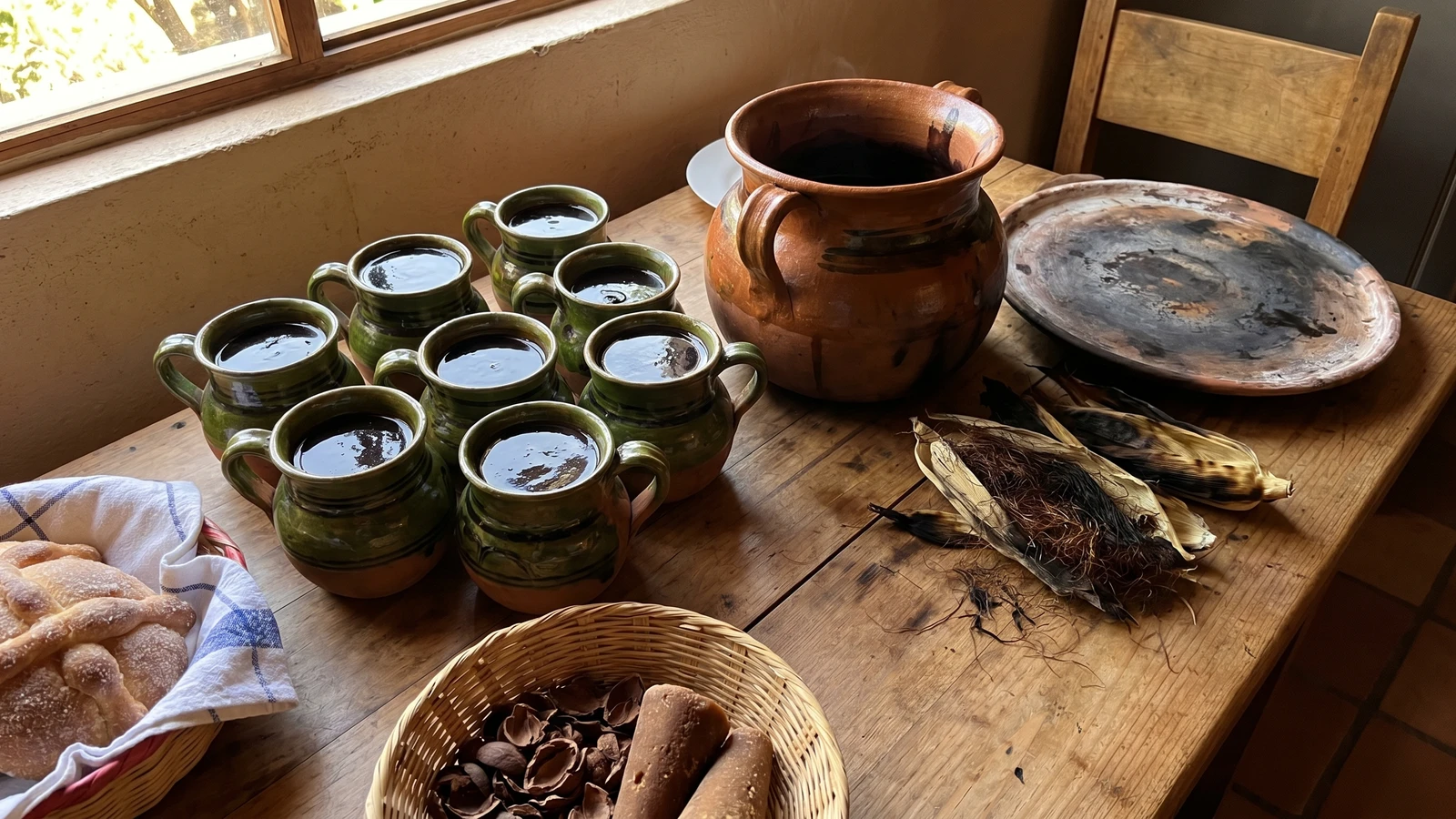
Uruapan's black atole, darkened with charred corn silk and toasted cacao husk, thickened with masa, sweetened with piloncillo, and served in clay jarritos for Noche de Muertos.
This comes from Michoacan, from the Meseta Purepecha and the Uruapan kitchens that prepare it when the air turns cool around Noche de Muertos. Atole de chaqueta is not chocolate milk with masa. No me vengas con atajos. It is black atole, deep and smoky, made with corn, cacao husk, piloncillo, and cinnamon, the kind of drink that belongs beside pan de muerto, candles, marigolds, and the work of remembering the dead.
The color matters. It comes from dried corn silk charred on a comal until it turns black, then ground and strained so it stains the drink without leaving grit. The cacao husk brings bitterness and aroma, not sweetness. If you use cocoa powder and call it the same thing, the señora from Uruapan who taught it to me would look at you until you put the spoon down.
This is a corn drink first. Fresh masa from nixtamal gives it body, the kind that coats the spoon and settles the stomach. The blender is acceptable here because the masa must dissolve cleanly. The comal is not negotiable. You toast the cacao husk. You char the corn silk. You strain twice if you need to. La cocina no es decoración, es trabajo.
Serve it in small clay jarritos, preferably green-glazed barro michoacano, because that is how it feels right in the hand. Cada estado, su propia cocina. Michoacan knows corn, cacao, and ceremony, and this atole carries all three.
Atole predates the Spanish conquest and comes from the Nahuatl word 'atolli,' a corn-based drink prepared throughout Mesoamerica in both everyday and ceremonial contexts. In Michoacan, Purepecha communities kept distinct corn drinks tied to cold mornings, wakes, patron saint days, and Noche de Muertos, with Uruapan and the surrounding highland towns preserving black atole as a seasonal specialty. The use of cacao husk reflects an older household economy: the bean was precious, but the toasted shell still carried aroma, bitterness, and value, so nothing useful was wasted.
Quantity
8 cups
divided
Quantity
8 ounces
Quantity
1 1/2 ounces
clean, dry, and unsprayed
Quantity
1 cup
Quantity
8 ounces
chopped
Quantity
1 stick, about 3 inches
Quantity
1/4 teaspoon
| Ingredient | Quantity |
|---|---|
| waterdivided | 8 cups |
| fresh nixtamal masa for tortillas | 8 ounces |
| dried corn silk (pelo de elote)clean, dry, and unsprayed | 1 1/2 ounces |
| toasted cacao husk (cascarilla de cacao) | 1 cup |
| piloncillochopped | 8 ounces |
| Mexican cinnamon stick (canela) | 1 stick, about 3 inches |
| fine sea salt | 1/4 teaspoon |
Heat a dry comal over medium. Spread the cacao husk in a thin layer and toast for 2 to 3 minutes, stirring constantly, until it smells nutty and bitter, like the corner of a market stall where cacao has just been cracked. Do not burn it. Burned cacao tastes harsh, and the atole will carry that mistake all the way to the cup.
Place the dried corn silk on the same dry comal. Turn it with tongs until it blackens evenly and becomes brittle, 3 to 5 minutes. You want blackened threads, not a pile of gray ash. This is what gives atole de chaqueta its ink-dark color. The corn is speaking twice here: once through the masa, once through the char.
Let the charred corn silk and toasted cacao husk cool for a few minutes. Grind them in a spice grinder or molcajete until fine. If using a molcajete, work patiently and scrape the sides often. The finer this mixture is, the cleaner the drink will be. Ask the women at the market: texture tells on the cook.
In a heavy pot, combine 6 cups of water, the piloncillo, cinnamon stick, salt, and the ground cacao-corn silk mixture. Bring to a gentle simmer over medium heat, stirring until the piloncillo dissolves. Simmer for 10 minutes so the cinnamon opens and the cacao husk gives up its bitterness. The liquid should turn dark brown-black and smell smoky, sweet, and slightly earthy.
Blend the fresh masa with the remaining 2 cups water until completely smooth. Fresh masa should smell like clean corn and cal, not sour. If the blender struggles, stop and scrape it down. Do not add more water yet. Atole needs body, not thinness.
Pour the dark infusion through a fine-mesh strainer into a clean pot, pressing on the solids. Discard the spent cacao husk, corn silk, and cinnamon. Whisk in the blended masa in a thin stream. Keep whisking as it enters the pot or you will make lumps, and lumps in atole are a sign you walked away when the pot needed you.
Set the pot over medium-low heat and cook for 15 to 20 minutes, stirring often with a wooden spoon. Scrape the bottom and corners of the pot. The atole is ready when it thickens enough to coat the spoon and the raw masa flavor disappears. Taste for sweetness. Add a little more piloncillo only if the cacao bitterness is too sharp.
Ladle the atole into small clay jarritos or thick mugs. Serve it hot with pan de muerto, corundas, or uchepos if you are staying in Michoacan. Do not garnish it. The black surface is the point. Recetas probadas y garantizadas.
1 serving (about 275g)
Culinary guides, cultural storytelling, and the editorial depth that makes cooking meaningful.
Discover Culinary ExplorerChef Lupita
Ciudad de México's highland market agua fresca, fresh alfalfa blended with pineapple and lime until bright green, strained clean, and poured cold from the vitrolero.

Chef Lupita
Aguascalientes' Lenten agua fresca, jewel-red from cooked beet and full of apple, banana, orange, lettuce, and ground peanuts, served cold when Holy Week meets the Feria de San Marcos.

Chef Lupita
Sonora and Sinaloa's creamy malted barley water, built on toasted cebada perla, Mexican canela, vanilla from Papantla, and evaporated milk. Pink-beige, rich, and served cold over heavy ice in a heavy glass tumbler. Liquid cookie comfort the northwest way.

Chef Lupita
Yucatán's everyday tonic of boiled chaya leaves blended with lima agria, sugar, and ice. The bright green jarra that sits on every Peninsula table from Mérida to Valladolid.