
Chef Lupita
Aceite de Chiltepin Bajacaliforniano
Baja California's wild chiltepin steeped in olive oil with garlic, orejon, and lime peel, until the oil turns ruby-amber and carries the slow, sneaky burn of the desert coast.
A cooking platform built around craft, culture, and the stories behind what we eat.
Created by
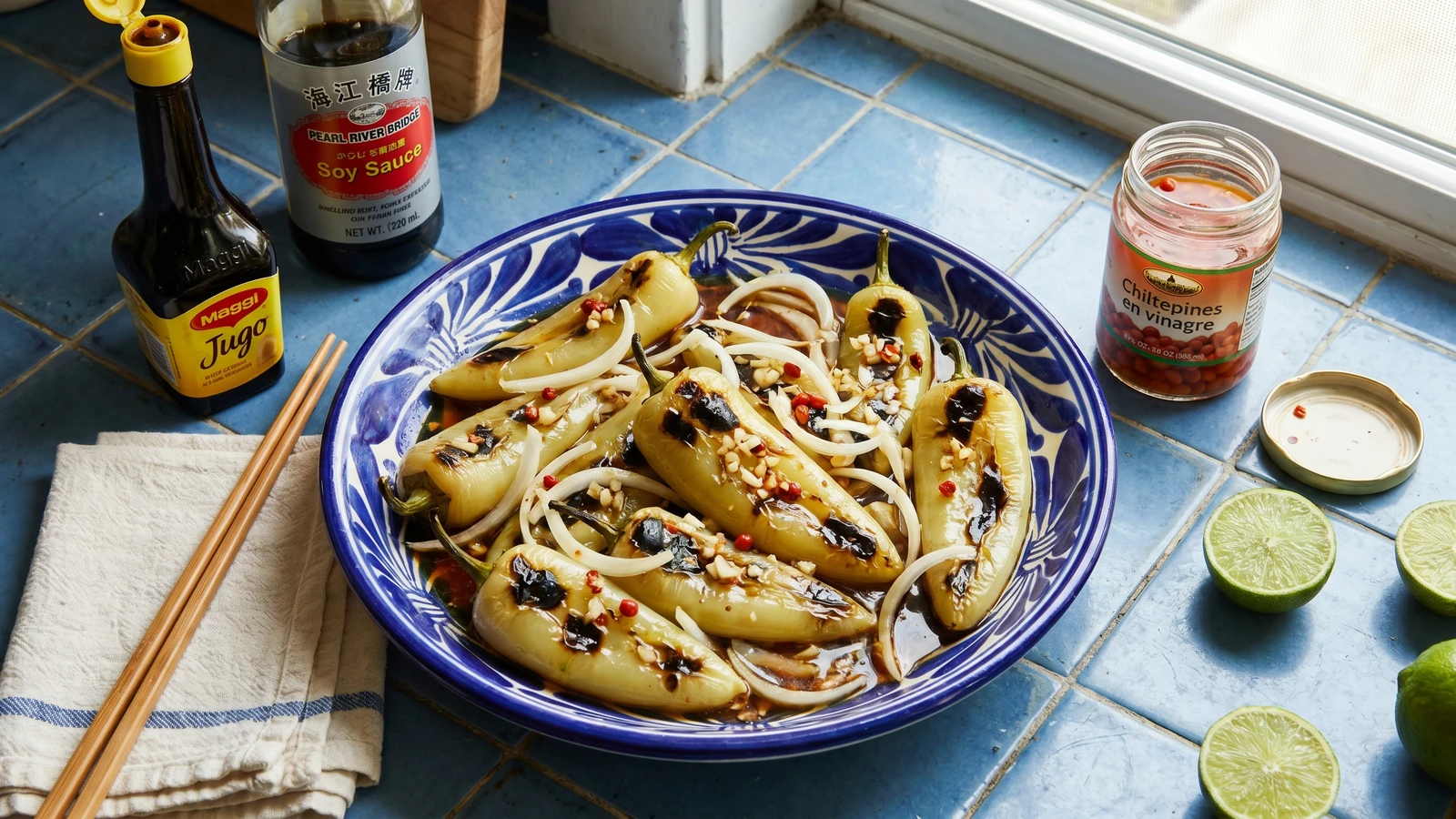
Mexicali's Chinese-Mexican condimento: chiles güeros bruised and blistered on the comal, dressed in soy, lime, and Maggi. The table sauce that runs both sides of the border and proves Baja California is its own country of flavor.
This is from Mexicali, Baja California. Not from Tijuana, not from Ensenada, not from somewhere generically norteño. Mexicali. The capital of Baja California sits on the U.S. border in the Valle de Mexicali, and since the early 1900s it has been home to the largest Chinese community in Mexico. There are more Chinese restaurants per capita in Mexicali than in any other Mexican city. Soy sauce on the table is not exotic. It is local.
Chiles toreados, blistered green chiles dressed in citrus and salt, exist all over the noroeste. Sonora makes them with chile güero and lime. Sinaloa adds Worcestershire. But the Mexicali version uses salsa de soya, the Chinese-Mexican fingerprint that no other state's toreados carry. The verb torear means to bruise the chile by rolling it firmly on the cutting board before it hits the comal. That bruising is the technique. Skip it and you have charred chiles. Do it right and the chile drinks the soy and lime like a sponge.
My notebook from Mexicali has the dressing recipe written three different ways from three different cooks: one with more Maggi, one with rice vinegar instead of part of the lime, one that swore by adding a splash of jugo de naranja agria. They all worked. The constants are chile güero, soy, lime, onion, and the bruising. Everything else is the cook's hand. Cada estado, su propia cocina, and Mexicali's cocina happens to speak Cantonese as well as Spanish. No me vengas con atajos: bruise the chiles, blister them properly, and use real soy sauce. The kind in the brown bottle from the Chinese grocery, not the salty caramel coloring labeled "lite."
Mexicali's Chinese-Mexican culinary tradition dates to the late 19th and early 20th centuries, when thousands of Chinese laborers, mostly Cantonese, were recruited to dig the irrigation canals of the Colorado River Land Company and to work the cotton fields of the Valle de Mexicali. By 1920, Chinese residents outnumbered Mexicans in the city, and the neighborhood known as La Chinesca became the heart of an enduring fusion cuisine that incorporated soy sauce, ginger, and stir-fry technique into the Sonoran-Baja pantry of beef, wheat flour, and chile. The chile toreado as a category appears across northwest Mexico, but the soy-and-Maggi dressing is specifically a Mexicali signature, recognized by the Baja California state cultural authority as part of the region's gastronomic patrimony alongside Caesar salad (Tijuana, 1924) and the fish taco (Ensenada).
Quantity
12
whole, with stems on
Quantity
1 tablespoon
for the comal
Quantity
1/3 cup (about 4 to 5 Mexican limes)
Quantity
1/4 cup
light Chinese-style, not dark
Quantity
2 teaspoons
Quantity
1 small
sliced into very thin half-moons
Quantity
2
finely minced
Quantity
1 teaspoon, plus more to taste
Quantity
6 to 8
lightly crushed
| Ingredient | Quantity |
|---|---|
| fresh chiles güeros (chile caribe or chile largo)whole, with stems on | 12 |
| manteca de cerdo or neutral oilfor the comal | 1 tablespoon |
| fresh lime juice | 1/3 cup (about 4 to 5 Mexican limes) |
| soy saucelight Chinese-style, not dark | 1/4 cup |
| Maggi Jugo seasoning sauce | 2 teaspoons |
| white onionsliced into very thin half-moons | 1 small |
| garlic clovesfinely minced | 2 |
| kosher salt | 1 teaspoon, plus more to taste |
| chiltepines en vinagre (optional)lightly crushed | 6 to 8 |
Look for chiles güeros that are firm, glossy, and pale yellow-green, with the stems still attached. In Baja and Sonora they are also called chile caribe or chile largo. Do not substitute banana peppers from the supermarket. Banana peppers are sweet and watery. Chile güero is grassy and hot, and that heat is what the soy and lime are there to balance.
Roll each chile firmly on the cutting board with the palm of your hand, pressing down as you roll. You want to break the inner walls without splitting the skin. This is the torear. The bruising opens the cells inside so the chile releases more capsaicin and absorbs the soy and lime. Toreados without the torear are just blistered chiles. The verb is the technique.
Heat a cast iron comal or heavy skillet over medium-high until a drop of water dances. Brush with the manteca or oil. Lay the chiles in a single layer. Let them sit undisturbed for about 90 seconds, until the skin blackens in patches and blisters. Turn with tongs and char the other side. The skins should be mottled black and the flesh should give slightly when you press it. Eight minutes total, no more. Burned chile is bitter and there is no fixing it.
While the chiles cool slightly, combine the lime juice, soy sauce, Maggi, sliced onion, minced garlic, and salt in a wide ceramic bowl or shallow dish. Stir. Taste it. The balance you want is sour first, salty second, with the Maggi sitting underneath both like a hum. Adjust with more lime if it tastes flat or more soy if it tastes thin. This is the Mexicali pantry. Soy sauce has been on Mexicali tables since the Chinese laborers built the cotton fields and the railroad in the early 1900s. It is not fusion. It is regional.
Lay the warm blistered chiles directly into the soy-lime dressing while they are still hot. The heat opens them up and they drink the sauce. Add the crushed chiltepines en vinagre now if you want extra heat. Turn the chiles gently with tongs to coat. Let them sit for at least 10 minutes at room temperature before serving. They will weep a little of their own juice into the dressing and that is exactly what you want.
Bring the bowl to the table while the chiles are still warm or at room temperature. This is a condimento, not a side dish. Each person takes a chile with their fingers or with chopsticks (yes, chopsticks, this is Mexicali) and bites it between forkfuls of carne asada, mariscos, or arroz frito chino-mexicano. Spoon the onion-rich dressing over tacos, fish, rice, anything that needs lifting. Asi se hace y punto.
1 serving (about 65g)
Culinary guides, cultural storytelling, and the editorial depth that makes cooking meaningful.
Discover Culinary ExplorerChef Lupita
Baja California's wild chiltepin steeped in olive oil with garlic, orejon, and lime peel, until the oil turns ruby-amber and carries the slow, sneaky burn of the desert coast.

Chef Lupita
Puebla's Lenten convent adobo, a brick-red vinegar chile paste of ancho, guajillo, garlic, oregano, and comino made to dress fish for the meatless calendar.
Chef Lupita
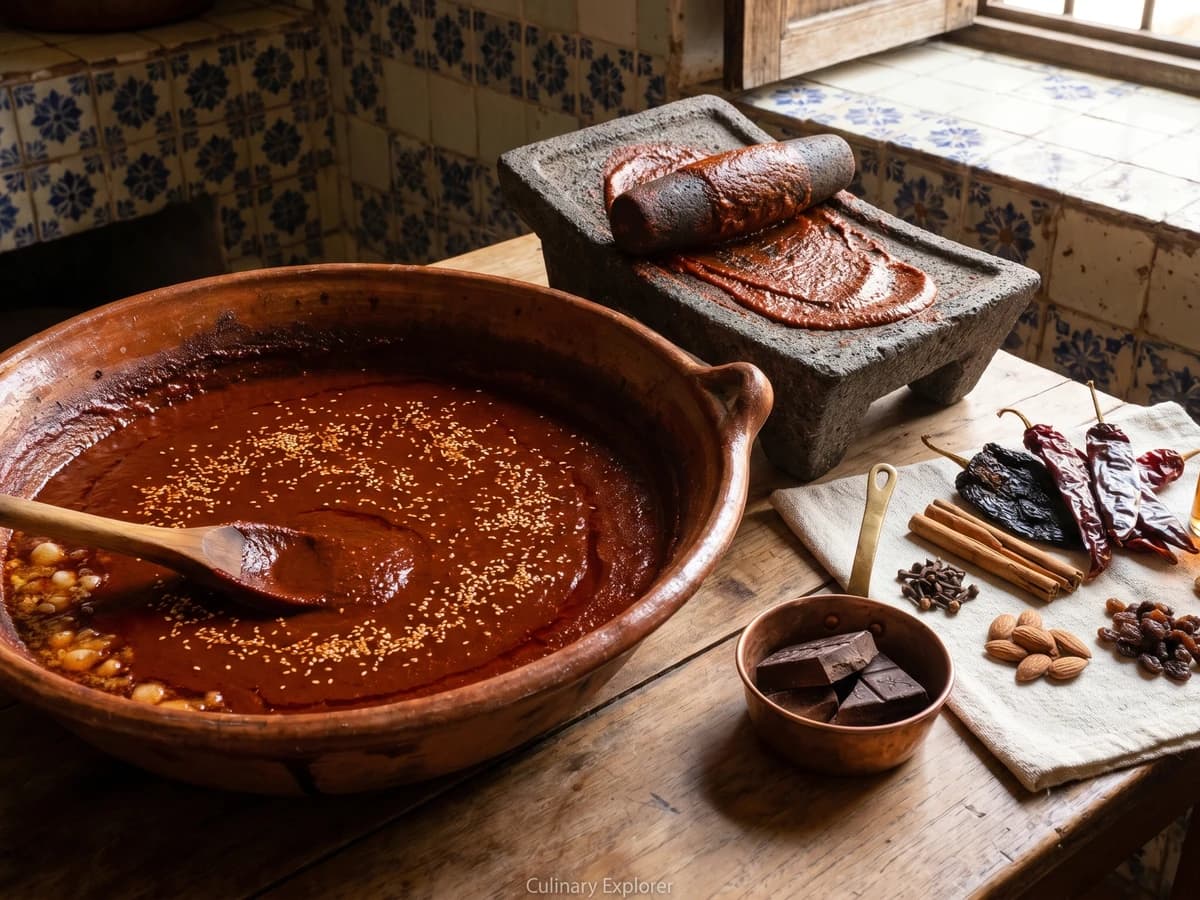
Zacatecas' wedding-table adobo, built from toasted guajillo and ancho, piloncillo, sour orange, chocolate, canela, clavo, almonds, sesame, and lard.

Chef Lupita
Puebla's convent kitchens built this adobo with ancho, guajillo, jerez, almonds, raisins, clove, and lard, a baroque marinade that stains pork loin and finishes as the sauce.