
Chef Takumi
Amerikan Doggu (アメリカンドッグ, corn dog)
A sausage on a stick, sweet batter, clean hot oil, and no cornmeal. Amerikan doggu is festival food made plain, with the batter thick enough to cling.
A cooking platform built around craft, culture, and the stories behind what we eat.

Created by
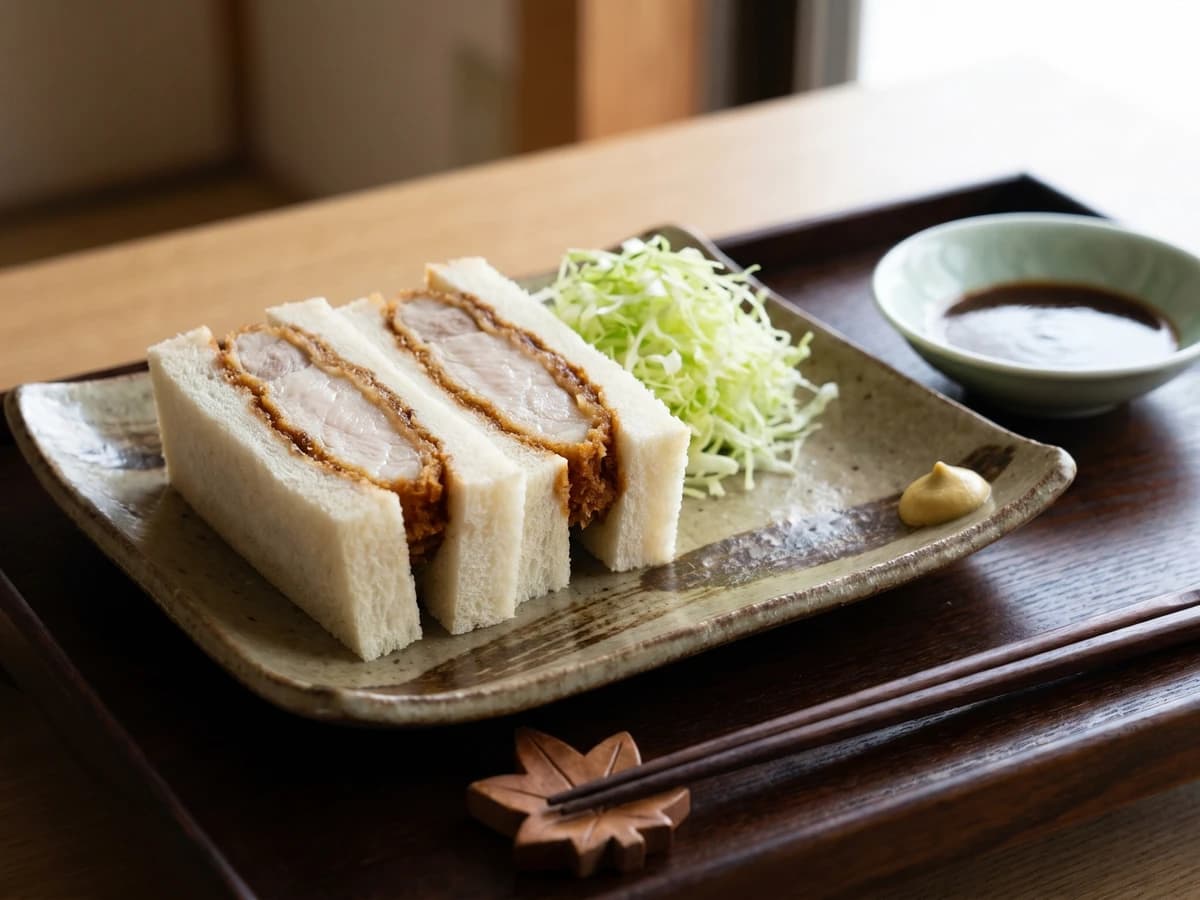
A menchi-katsu sando is butcher-shop comfort: pork kneaded until sticky, fried in panko, then tucked into shokupan with cabbage and sauce while still warm enough to season the bread.
Menchi-katsu sando is not a delicate sandwich. Good. It is a butcher-shop thing: minced pork, onion, panko, sauce, and soft shokupan that gives way under the knife. The part that looks crude is the part that needs care. Use pork with enough fat and knead it with salt until it turns sticky, because that stickiness holds the juice inside the patty instead of letting it run into the oil.
People make frying sound like a small courtroom drama. It isn't. Keep the patties cold, coat them in flour, egg, and panko, and fry at a steady 170 C until the crust is deep gold and the center is done. The oil can't be too cool, or the crumbs drink grease before they crisp. Too hot, and the outside browns before the pork is ready. A thermometer is not a confession of weakness. It is a sensible friend.
The sandwich is finished while the cutlet is warm, not scorching. Sauce the bread, add dry shredded cabbage, set the menchi-katsu in, and press lightly so the loaf and cutlet become one meal instead of two objects arguing. Cut it then. A little juice should wet the bread, not flood it. That's honmono here: nothing hidden, nothing fancy, just the method kept honest.
Menchi-katsu belongs to yōshoku, the Japan-made Western-style cooking that spread after the Meiji government's 1872 turn toward public meat eating. The name comes from English 'mince' and katsuretsu, meaning cutlet, and by the early twentieth century these minced-meat cutlets had moved from restaurant menus into butcher shops and department-store food basements as ready-fried daily food. Tokyo and much of eastern Japan commonly say menchi-katsu, while Kansai often says minchi-katsu, a small regional difference folded into the same crisp patty.
Quantity
450g
preferably about 20% fat
Quantity
1 small (about 140g)
finely minced
Quantity
1 teaspoon
for cooking the onion
Quantity
1/2 cup
for the filling
Quantity
3 tablespoons
Quantity
1 large
for the filling
Quantity
3/4 teaspoon
Quantity
1/4 teaspoon
Quantity
1 pinch
Quantity
1/2 cup
Quantity
2 large
beaten with 1 tablespoon water
Quantity
2 cups
for breading
Quantity
enough for 5cm depth
Quantity
8 slices
1.5 to 2cm thick
Quantity
2 cups
very finely shredded
Quantity
1/2 cup
Quantity
2 teaspoons
Quantity
2 tablespoons
| Ingredient | Quantity |
|---|---|
| ground porkpreferably about 20% fat | 450g |
| onionfinely minced | 1 small (about 140g) |
| neutral oilfor cooking the onion | 1 teaspoon |
| fresh pankofor the filling | 1/2 cup |
| milk | 3 tablespoons |
| eggfor the filling | 1 large |
| fine sea salt | 3/4 teaspoon |
| white pepper | 1/4 teaspoon |
| ground nutmeg (optional) | 1 pinch |
| all-purpose flour | 1/2 cup |
| eggsbeaten with 1 tablespoon water | 2 large |
| fresh pankofor breading | 2 cups |
| neutral frying oil | enough for 5cm depth |
| shokupan1.5 to 2cm thick | 8 slices |
| cabbagevery finely shredded | 2 cups |
| tonkatsu sauce or chūnō sauce | 1/2 cup |
| karashi (optional) | 2 teaspoons |
| softened unsalted butter (optional) | 2 tablespoons |
Shred the cabbage as finely as you can, then rinse it in cold water and drain it well. Spin it dry, or wrap it in a clean towel and press gently. The cabbage should be crisp and dry, because water turns sauce into a puddle and makes the bread tired before the first bite.
Warm the teaspoon of oil in a small pan and cook the minced onion over medium-low heat until translucent and sweet-smelling, about 5 minutes. Let it cool completely. Raw onion can weep inside the patty and make the crust split; cooked onion gives sweetness without that little sabotage.
Stir the 1/2 cup panko with the milk and let it soften while the onion cools. Put the pork and salt in a cold bowl and knead with your hand until the meat turns tacky and slightly stringy, 1 to 2 minutes. Salt makes the pork proteins bind, and that binding traps juice. Add the cooled onion, soaked panko, egg, white pepper, and nutmeg if using, then mix just until even.
Divide the mixture into 4 portions and form thick ovals, each just a little larger than the bread slices. Pass each patty gently from hand to hand a few times to push out trapped air, then chill for 10 minutes. Air pockets expand in the oil and split the crust; cold patties hold their shape better.
Set out the flour, beaten eggs, and 2 cups panko in three shallow dishes. Coat each patty lightly in flour, shake off the excess, dip in egg, then cover with panko and press gently so the crumbs cling. Flour dries the surface, egg glues the crumbs, and panko gives the open, crisp crust. Bare patches leak juice.
Heat 5cm of oil in a heavy pot to 170 C, or 340 F. Fry 2 patties at a time, turning once, until deep gold and cooked through, about 6 to 8 minutes total. Keep the oil between 165 and 175 C, and check that the center reaches 71 C, or 160 F. Rest the cutlets on a rack for 3 minutes so the crust stays crisp and the juices settle.
Trim the shokupan crusts if you want the neat shop look. Spread a very thin layer of butter on the inner faces if using, then spread tonkatsu sauce or chūnō sauce over the bread. Add a little karashi if you like its sharpness. The butter is not decoration; used lightly, it keeps the sauce from flooding the crumb while still letting the warm cutlet season the bread.
Set cabbage on 4 bread slices, place one warm menchi-katsu on each, spoon a little more sauce over the cutlet, and close the sandwiches. Lay a board on top and press lightly for 1 to 2 minutes. Cut each sandwich in half or thirds with a clean serrated knife, wiping between cuts. Cut warm and the bread drinks a little juice; cut too soon and the juice runs out, wait too long and the crust loses its edge.
1 serving (about 370g)
Culinary guides, cultural storytelling, and the editorial depth that makes cooking meaningful.
Discover Culinary ExplorerChef Takumi
A sausage on a stick, sweet batter, clean hot oil, and no cornmeal. Amerikan doggu is festival food made plain, with the batter thick enough to cling.

Chef Takumi
Atsuyaki tamago sando looks like a trick of the kissaten counter, but it is only soft bread, clear dashi, patient eggs, and one brave warm cut.
Chef Takumi
A good chicken katsu sando is decided before assembly: pound the cutlet thin, fry it crisp, then sandwich it while the crumb still has its bite.

Chef Takumi
A Sapporo bakery roll with a plain secret: good chikuwa, tuna mayo that isn't wet, and soft bread wrapped loosely enough to rise around it.