Culinary Explorer

A cooking platform built around craft, culture, and the stories behind what we eat.
Discover Culinary Explorer
Manjū (Hawaiʻi Local Baked Japanese Pastry)

Manjū (Hawaiʻi Local Baked Japanese Pastry)

Created by

A tender baked Japanese pastry from Hawaiʻi's old okashi-shop counter, wrapped around sweet azuki or lima bean paste and carried home in a paper box for holidays, visits, and comfort.

Pastries & Cookies
Polynesian, Hawaiian
Holiday
Comfort Food
Make Ahead
45 min
Active Time
25 min cook1 hr 10 min total
Yield24 small manjū

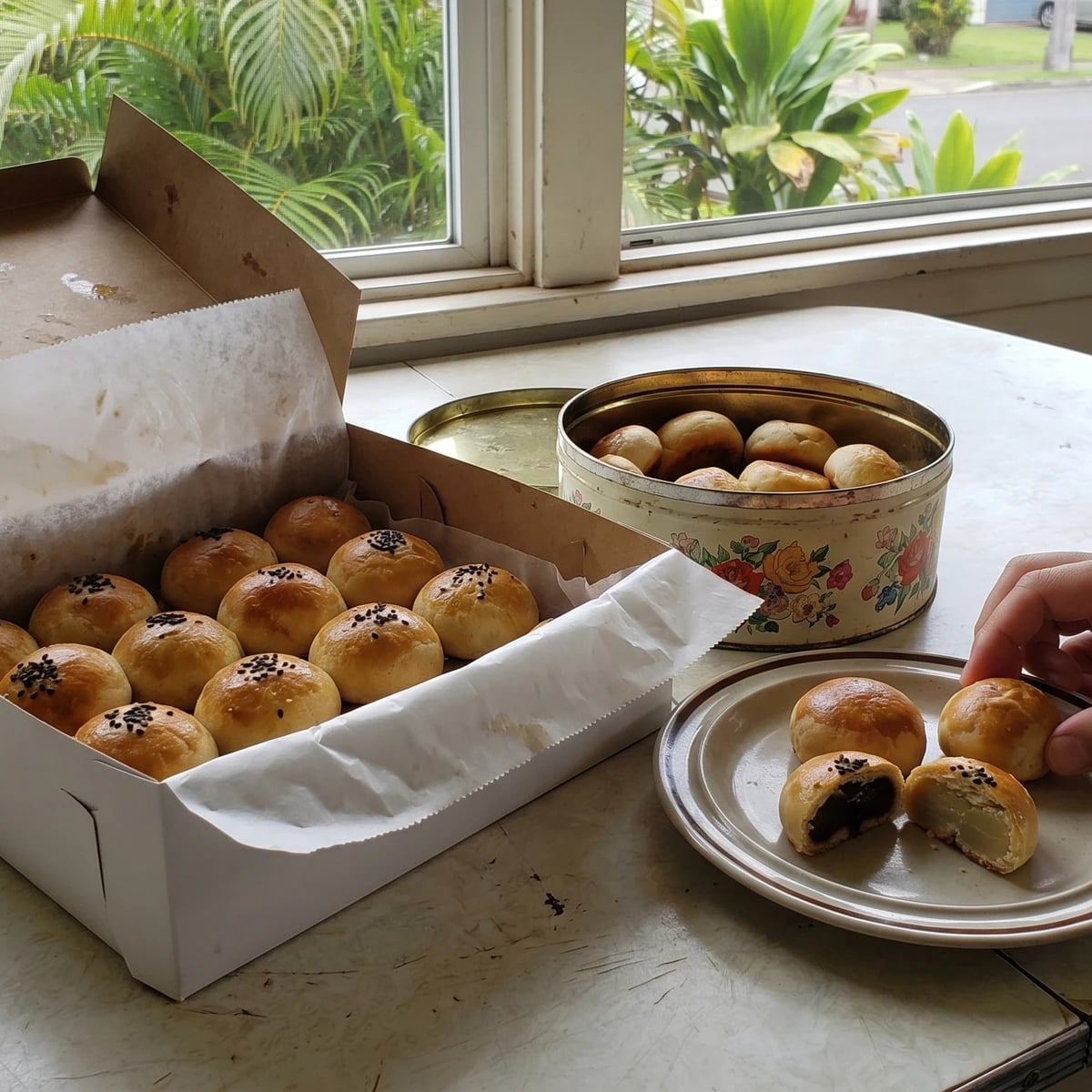
The cookie tin on the Formica table is kin too, just a different kind. This is Hawaiʻi Local food, born from Japanese hands in the islands, not the deep food of the loʻi, the taro patch, and I like keeping that line clear. Hāloa is our elder brother. Manjū is the neighbor auntie's gift, the one wrapped in wax paper, brought over because somebody had a birthday, a funeral, a New Year's visit, or just because the oven was already warm.

In Hawaiʻi, the Japanese okashi shops took manjū, the old Japanese sweet, and made it part of island life. Azuki bean paste, red and earthy-sweet, is the old road. Lima bean paste, pale and smooth, is pure Hawaiʻi bakery memory for plenty families. Same table where you'll see Portuguese malasadas, Okinawan andagi, Chinese gau, Filipino hopia, and then rice, poke, plate lunch, Spam musubi, whatever the house is feeding that day. Keeper, not gatekeeper.

So don't make this precious. Make the dough soft but not sticky. Wrap the filling with clean hands. Brush it with egg until it shines, then bake until the bottoms are lightly golden and the tops look set and warm. This is the other half of the island table: not one ocean, one canoe, one root, but the harbor, the plantation town, the corner bakery, and all the people who stayed.

Manjū came to Hawaiʻi with Japanese immigrants who arrived in large numbers beginning in 1885 to work the sugar plantations, bringing okashi, Japanese sweets, into plantation towns and later neighborhood bakeries. In Japan, manjū is often steamed, but Hawaiʻi's Local baked version became common in home kitchens and okashi shops, with azuki paste beside island-style lima bean filling. This is post-contact Local food, not Kanaka Maoli deep food, and that honesty matters because Hawaiʻi's table holds both the canoe crops and the immigrant sweets without needing to blur them.

The technique, the tradition, and the story behind every dish.

Discover Culinary Explorer

Ingredients

all-purpose flour

Quantity

3 cups

plus more for dusting

granulated sugar

Quantity

1/2 cup

baking powder

Quantity

1 teaspoon

fine sea salt

Quantity

1/2 teaspoon

cold unsalted butter

Quantity

1 cup

cut into small cubes

large egg

Quantity

1

evaporated milk

Quantity

1/3 cup

plus 1 to 2 tablespoons more if the dough needs it

vanilla extract

Quantity

1 teaspoon

sweet azuki bean paste (anko), or sweet lima bean paste

Quantity

2 cups

rolled into 24 small balls

egg yolk

Quantity

1

evaporated milk

Quantity

1 tablespoon

for egg wash

sesame seeds (optional)

Quantity

1 tablespoon

Equipment Needed

  • Rimmed baking sheet
  • Parchment paper
  • Pastry cutter or sturdy fork
  • Pastry brush

Instructions

  1. 1

    Portion the filling

    Roll the azuki or lima bean paste into 24 balls, about 1 tablespoon each, and set them on a plate. If the paste is sticky, chill it for 15 minutes. The filling should hold its shape, soft enough to bite clean, firm enough that it doesn't run away from you.

  2. 2

    Cut the butter

    Whisk the flour, sugar, baking powder, and salt in a wide bowl. Cut in the cold butter with your fingertips or a pastry cutter until the mixture looks like coarse sand with a few pea-size pieces left. Those little pieces make the crust tender, so no need rub it all to dust.

  3. 3

    Bring dough together

    Beat the egg, evaporated milk, and vanilla together, then stir them into the flour mixture just until a soft dough gathers. If dry flour is still sitting at the bottom, add evaporated milk 1 teaspoon at a time. Stop when the dough holds together. Overwork it and the crust gets tough, and no blame the dough for what our hands did.

  4. 4

    Chill and divide

    Pat the dough into a disk, wrap it, and chill for 20 minutes. Divide into 24 pieces. Keep the pieces covered while you work so they don't crust over in the kitchen air.

  5. 5

    Wrap the manjū

    Flatten one dough piece into a 3-inch round, thicker in the center and thinner at the edges. Set a filling ball in the middle, gather the dough up around it, and pinch the seam closed. Roll gently between your palms, then set seam-side down on a parchment-lined baking sheet. If a little filling shows, patch it. No drama.

  6. 6

    Brush and mark

    Beat the egg yolk with 1 tablespoon evaporated milk. Brush each manjū lightly so the tops bake glossy and golden, then sprinkle with sesame seeds if you like. That shine is the bakery-case look, simple and honest.

  7. 7

    Bake until set

    Bake at 350F for 22 to 25 minutes, until the tops are set, the egg wash has a soft golden sheen, and the bottoms are lightly browned. Cool on the sheet for 10 minutes, then move to a rack. The filling stays hot inside longer than you think, so let it settle before biting.

  8. 8

    Pack and share

    Serve warm or room temperature, the way it comes from a home kitchen or old okashi-shop box. Pack leftovers in a cookie tin once fully cool. These are better when they're shared, and better still the next morning with coffee.

Chef Tips

  • Store-bought anko is fine. Eat what you have. If you make the filling from scratch, cook it down until it mounds on a spoon, because wet paste will split the pastry.
  • Hawaiʻi-style lima bean filling is smooth, pale, and gentle. Azuki is deeper and more earthy-sweet. Both belong on the Local table, just name which one you're using.
  • This dough wants cool hands and a light touch. If the butter starts smearing, put the bowl in the fridge for 10 minutes and come back.

Advance Preparation

  • Roll the filling balls up to 2 days ahead and refrigerate them covered.
  • The dough can be made 1 day ahead and chilled. Let it sit at room temperature for 10 minutes before dividing so it doesn't crack.
  • Baked manjū keep well in an airtight tin for 3 days at room temperature, or freeze up to 2 months and thaw gently.

Frequently Asked Questions

Nutrition Information

1 serving (about 55g)

Calories
210 calories
Total Fat
9 g
Saturated Fat
5 g
Trans Fat
0 g
Unsaturated Fat
3 g
Cholesterol
40 mg
Sodium
100 mg
Total Carbohydrates
30 g
Dietary Fiber
2 g
Sugars
15 g
Protein
4 g

Note: Chef personas and recipes are created with AI assistance. Cook with care: follow safe food-handling practices, check doneness with a thermometer when needed, and adapt for allergies and your kitchen.

Where cooking meets culture.

Culinary guides, cultural storytelling, and the editorial depth that makes cooking meaningful.

Discover Culinary Explorer

More from Hawaiʻi Local Sweets & Bakery

Browse the full collection