
Chef Dimitra
Aegean Island Chtapodi me Kritharaki (Χταπόδι με Κριθαράκι)
Aegean island octopus, tomato, red wine, and toasted kritharaki share one pot, so the pasta drinks the briny sauce and stays glossy instead of turning heavy.
A cooking platform built around craft, culture, and the stories behind what we eat.
Created by
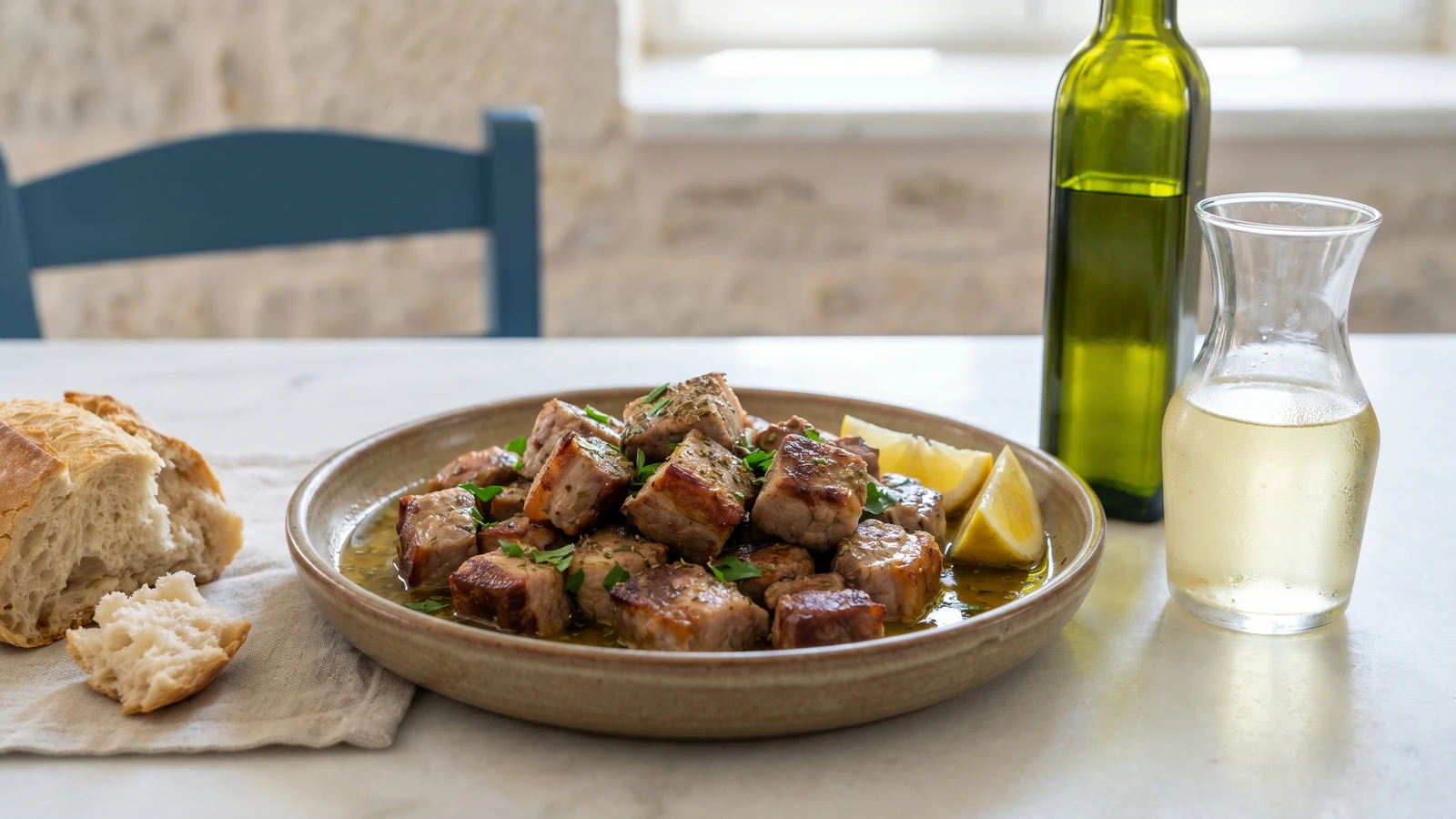
Mani's tigania is pork shoulder browned hard in its own fat, then finished with wine, lemon, and oregano. Fast food, yes, but not careless food.
Mani choirini tigania is pork from the frying pan, cut in rough cubes, browned hard, and finished with wine until the pan gives back a sharp, glossy sauce. This is not a stew. It is a quick, fierce dish from the southern Peloponnese, where pork, olive oil, oregano, and citrus do the work without decoration.
The whole dish depends on the first ten minutes. Dry the pork, heat the pan properly, and give the pieces space. If the meat crowds, it throws out liquid and turns grey before it browns. If it browns well, the wine loosens everything stuck to the pan and makes the sauce taste deeper than the short cooking time has any right to.
Serve it straight from the pan with fried potatoes, country bread, or a bitter green salad. I don't dress it up. The region is the dish's surname, and in Mani, tigania wants heat, wine, lemon, oregano, and good olive oil. Λίγα και καλά.
Tigania takes its name from the tigani, the frying pan, and belongs to the old Greek household habit of cooking small cuts of pork quickly after slaughter or curing season. In Mani and the wider southern Peloponnese, pork cookery was shaped by winter pig slaughter, olive oil, wild oregano, local wine, and citrus, which is why the Maniot version often carries lemon or orange at the finish. It is a pan dish, not a restaurant invention: its identity comes from browning and the wine finish, not from a long list of seasonings.
Quantity
900g
cut into 3cm cubes
Quantity
10g
Quantity
3g
Quantity
45ml
Quantity
2
lightly crushed
Quantity
150ml
Quantity
60ml
Quantity
1 teaspoon
Quantity
1 strip
Quantity
1 tablespoon
chopped
| Ingredient | Quantity |
|---|---|
| pork shouldercut into 3cm cubes | 900g |
| fine sea salt | 10g |
| freshly ground black pepper | 3g |
| extra virgin Koroneiki olive oil | 45ml |
| garlic cloveslightly crushed | 2 |
| dry white wine | 150ml |
| fresh lemon juice | 60ml |
| dried Greek oregano | 1 teaspoon |
| orange peel (optional) | 1 strip |
| flat-leaf parsley (optional)chopped | 1 tablespoon |
Pat the pork very dry and season it all over with the salt and pepper. If you have 30 minutes, leave it uncovered in the refrigerator while you set the table and open the wine. Dry meat browns. Wet meat boils in its own juices, and then the tigania loses the whole point.
Set a heavy frying pan over high heat for 3 to 4 minutes, then add the olive oil. The oil should shimmer and move quickly across the pan. Add only half the pork, with space between the pieces, and leave it alone until the underside is deep brown.
Turn the pork and brown the other sides, 6 to 8 minutes per batch. Move the first batch to a plate and repeat with the rest. Keep the heat high. This hard browning is the method that decides the dish, because the wine later lifts that dark crust into the sauce.
Return all the pork to the pan. Add the crushed garlic and the orange peel, if using, and toss for 30 seconds, just until the garlic smells sweet. Do not let it darken.
Pour in the wine and scrape the bottom of the pan with a wooden spoon. Lower the heat to medium and cook until the wine reduces to a glossy spoonful around the meat, about 8 minutes. The pork should be cooked through but still juicy.
Take the pan off the heat. Stir in the lemon juice and oregano, then rest the pork for 3 minutes so the sharpness settles into the fat. Taste before adding more salt. Serve at once, with bread for the pan juices.
1 serving (about 190g)
Culinary guides, cultural storytelling, and the editorial depth that makes cooking meaningful.
Discover Culinary ExplorerChef Dimitra
Aegean island octopus, tomato, red wine, and toasted kritharaki share one pot, so the pasta drinks the briny sauce and stays glossy instead of turning heavy.

Chef Dimitra
Aegean coast psari plaki is the quiet whole-fish bake: onions and tomato softened first, fish laid on top, and olive oil doing its slow work until the bones release cleanly.

Chef Dimitra
Astakomakaronada is the Aegean islands' celebration pasta: spiny lobster, tomato, olive oil, and long noodles cooked in the shell broth, never drowned in cream or cheese.

Chef Dimitra
Aegean Easter goat on the spit, lean and full-flavored, turned slowly over charcoal and basted with lemon, oregano, garlic, and good olive oil.