
Chef Jeong-sun
Agwi-jjim (Braised Monkfish with Bean Sprouts)
Firm monkfish buried under crisp soybean sprouts, minari, and a red gochugaru sauce thickened at the end; Masan's market dish asks for heat, timing, and a steady hand.
A cooking platform built around craft, culture, and the stories behind what we eat.
Created by
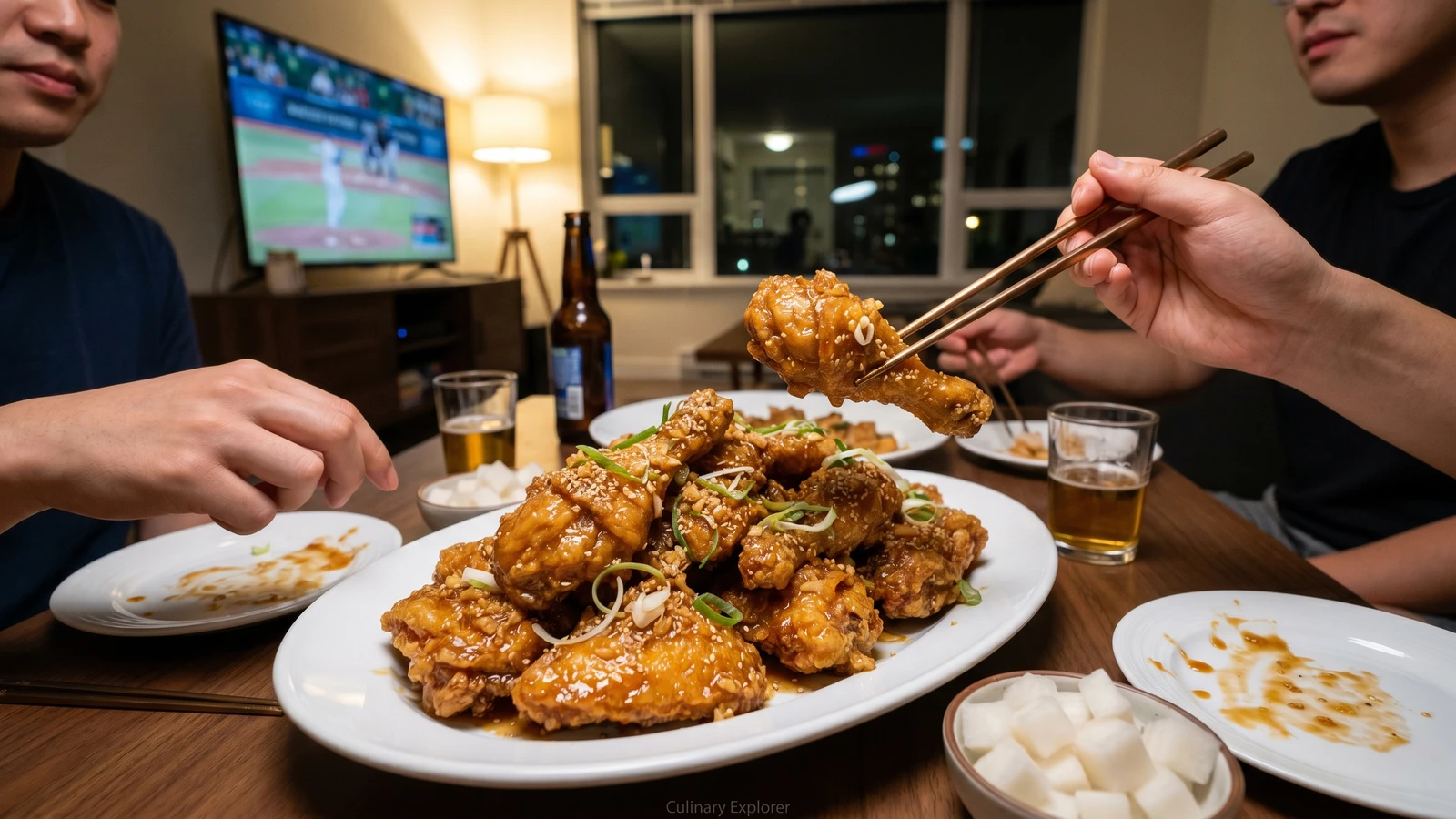
A mountain of softened garlic over crisp Korean fried chicken, double-fried until light, then glazed with butter, soy, and honey so the sauce clings instead of soaking the crust.
Garlic chicken lives or dies by restraint, which sounds foolish when the dish is called maneul-chikin (garlic fried chicken). People hear garlic and throw it in raw by the fistful. Then the chicken tastes sharp and angry. Soften the garlic first in butter, slowly, until it becomes round and sweet, and only then let soy and honey make the glaze.
This is not old palace food, and it shouldn't pretend to be. It belongs to delivery boxes, beer glasses, game nights, and a table where someone says they will eat only two pieces and then reaches for a third. A street-root dish still deserves exact work. The chicken needs a dry surface, a thin starch coating, and two fries: the first cooks it through, the second makes the crust crisp enough to survive the glaze.
I wrote this one in Notebook 41 after watching students drown good fried chicken under sweet sauce. The measure matters: 10 cloves of garlic for 1 kilogram of chicken, 2 tablespoons soy sauce, 1 tablespoon honey. More is not more careful. Let the chicken taste like chicken, with garlic standing beside it, not on its neck.
Modern Korean chikin took shape in the late twentieth century, after broiler chickens, commercial cooking oil, and delivery shops became common; Lims Chicken, often cited as Korea's first fried chicken franchise, opened in Seoul in 1977. Seasoned and glazed styles spread through the 1980s and 1990s with hof (beer hall) and delivery culture, making fried chicken a shared night food rather than a home-farm roast. Maneul-chikin is part of that modern family, using Korea's old love of garlic in a newer butter-soy glaze.
Quantity
1 kg
cut into 5 to 7 cm pieces
Quantity
1 teaspoon
Quantity
1/2 teaspoon
freshly ground
Quantity
2 tablespoons
Quantity
1 tablespoon
grated
Quantity
2 cloves
grated
Quantity
1 teaspoon
grated
Quantity
1 large
Quantity
3/4 cup
Quantity
1/4 cup
Quantity
1 teaspoon
Quantity
1.5 liters
canola or grapeseed
Quantity
10 cloves
minced finely
Quantity
3 tablespoons
Quantity
2 tablespoons
Quantity
1 tablespoon
Quantity
1 tablespoon
Quantity
1 tablespoon
Quantity
1 teaspoon
Quantity
1/2 teaspoon
Quantity
1 tablespoon
Quantity
2
thinly sliced
Quantity
to serve
| Ingredient | Quantity |
|---|---|
| chicken wings, drumettes, and small thighscut into 5 to 7 cm pieces | 1 kg |
| fine sea salt | 1 teaspoon |
| black pepperfreshly ground | 1/2 teaspoon |
| rice wine or soju | 2 tablespoons |
| oniongrated | 1 tablespoon |
| garlic for the chickengrated | 2 cloves |
| gingergrated | 1 teaspoon |
| egg white | 1 large |
| potato starch | 3/4 cup |
| all-purpose flour | 1/4 cup |
| baking powder | 1 teaspoon |
| neutral frying oilcanola or grapeseed | 1.5 liters |
| garlic for the glazeminced finely | 10 cloves |
| unsalted butter | 3 tablespoons |
| soy sauce | 2 tablespoons |
| honey | 1 tablespoon |
| rice syrup or corn syrup | 1 tablespoon |
| water | 1 tablespoon |
| rice vinegar | 1 teaspoon |
| toasted sesame oil | 1/2 teaspoon |
| toasted sesame seeds | 1 tablespoon |
| scallionsthinly sliced | 2 |
| pickled chicken radish (chikin-mu) (optional) | to serve |
Pat the chicken very dry, then toss it with the salt, pepper, rice wine, grated onion, grated garlic, and ginger. Let it sit 20 minutes while you set up the oil. The rice wine quiets the chicken smell, the onion and ginger season the meat underneath the crust, and the salt has time to move inward instead of sitting on the skin.
Stir the egg white into the chicken until every piece feels lightly slick. Mix the potato starch, flour, and baking powder in a wide bowl, then dredge each piece and shake off the extra. The coating should look dusty and uneven, not thick like a blanket. Korean fried chicken wants a thin shell that fries crisp and stays light.
Heat the oil in a heavy pot to 160 C. Fry the chicken in batches, 6 to 8 minutes for wings and drumettes, 8 to 10 minutes for thigh pieces, until pale golden and cooked through. Do not crowd the pot, or the oil temperature falls and the crust drinks oil. Move the pieces to a rack, not paper towels, so the underside stays dry.
Let the chicken rest on the rack for 10 minutes. This pause is not laziness. The heat finishes moving through the meat, and the surface moisture comes out where the second fry can drive it away. 정성이 첫째예요. Sincerity comes first, even when the table is impatient.
Raise the oil to 190 C and fry the chicken again in batches for 2 to 3 minutes, until the crust is deeper golden and firm when tapped with chopsticks. Drain again on the rack. If you glaze soft chicken, you get wet chicken. The second fry is what lets the sauce cling without ruining the bite.
In a wide skillet, melt the butter over medium-low heat. Add the 10 cloves of minced garlic and cook 3 to 4 minutes, stirring often, until the garlic is pale gold and softened but not browned. This is the step people rush. Browned garlic turns bitter under soy; raw garlic shouts over everything.
Add the soy sauce, honey, rice syrup, water, and rice vinegar to the garlic butter. Simmer 1 to 2 minutes, just until glossy and slightly thickened. Turn off the heat and stir in the sesame oil. The glaze should coat the back of a spoon in a thin layer, not pour like soup and not set like candy.
Add the fried chicken to the skillet and toss quickly until every piece is lightly coated. Scatter with toasted sesame seeds and sliced scallions. Serve at once with chikin-mu, the cubed pickled radish, because fried chicken needs that clean sharp bite beside it.
1 serving (about 290g)
Culinary guides, cultural storytelling, and the editorial depth that makes cooking meaningful.
Discover Culinary ExplorerChef Jeong-sun
Firm monkfish buried under crisp soybean sprouts, minari, and a red gochugaru sauce thickened at the end; Masan's market dish asks for heat, timing, and a steady hand.

Chef Jeong-sun
A quick Korean rice bowl built on contrast: warm rice, cold popping flying-fish roe, chopped vegetables, gim, sesame oil, and the crisp rice bottom a hot stone bowl gives you.
Chef Jeong-sun
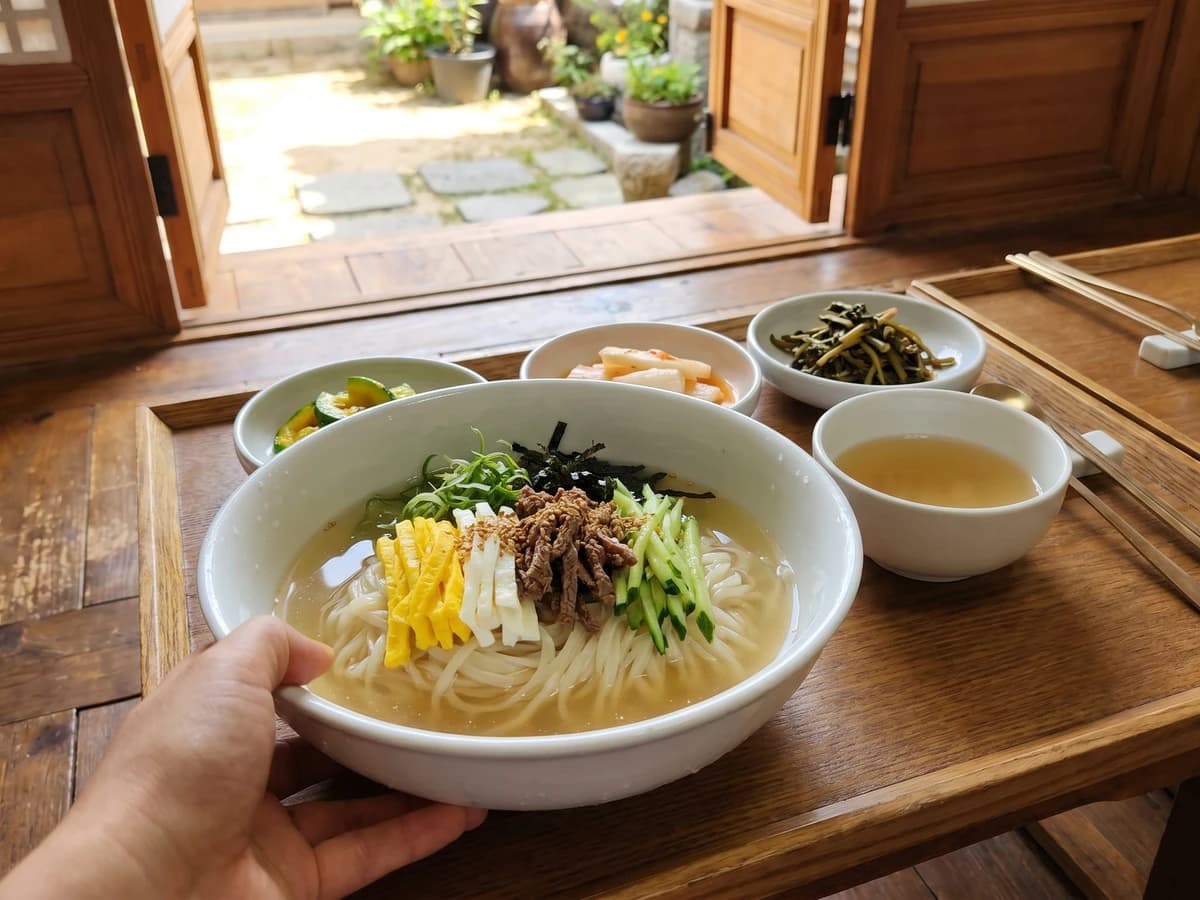
Andong's guest noodles, wheat and roasted soybean flour rolled thin, boiled and rinsed cold, then set in a clear chilled anchovy broth with careful strips of beef, egg, and cucumber.

Chef Jeong-sun
Andong's ritual-table rice served on an ordinary day: separate soy-sesame namul, warm rice, and clear radish soup, mixed without gochujang so every vegetable keeps its own voice.