
Chef Juliana
Arroz-Doce de Festa Junina
You can make the pot your tia guards at every arraiá. Rice, milk, sugar, cloves, cinnamon, and patience turn into a creamy spoonful of June.
A cooking platform built around craft, culture, and the stories behind what we eat.
Created by
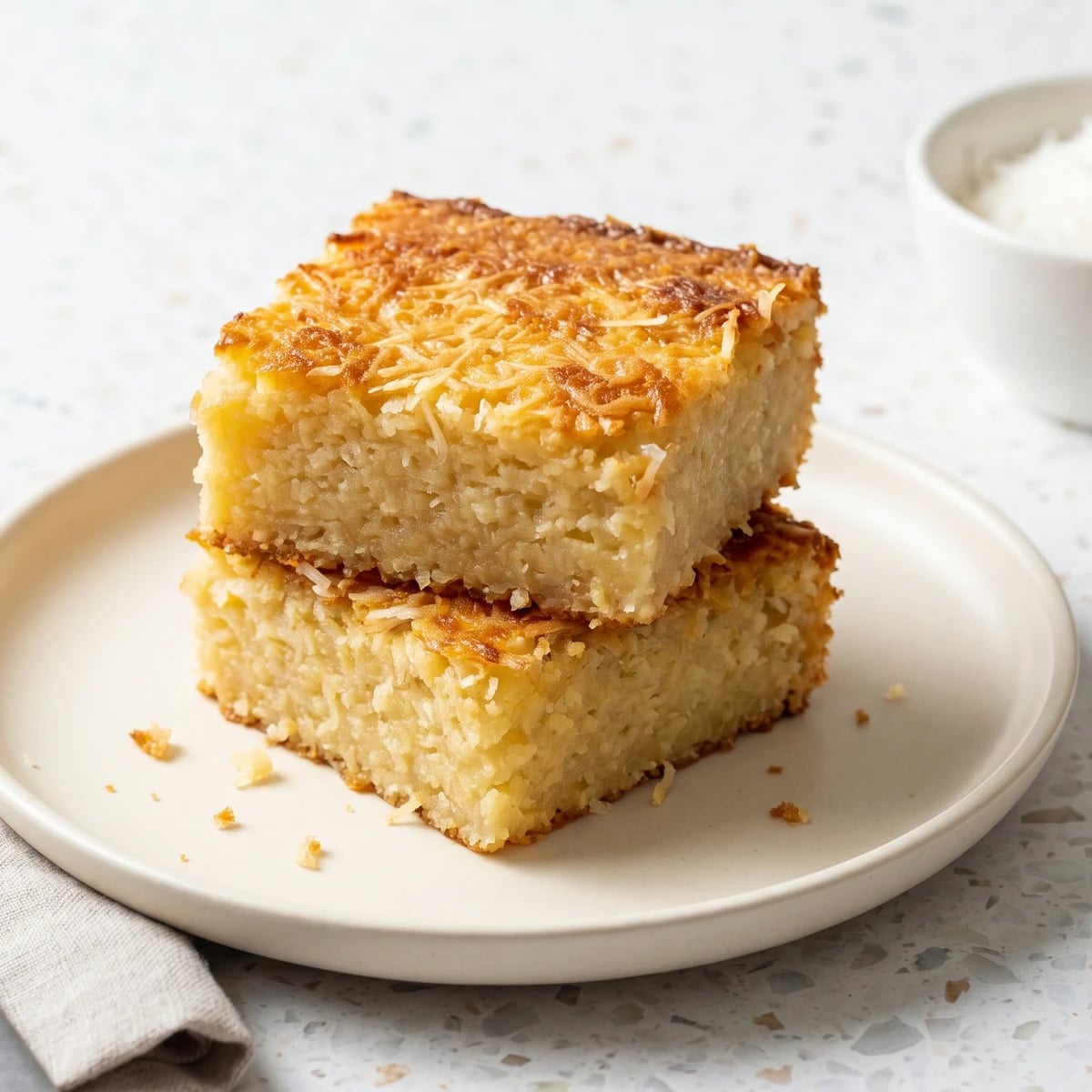
If raw cassava scares you, good. Respect the root, grate it properly, mix it with coconut and cheese, and Goiás gives you a cake that tastes like arraiá.
You look at a raw cassava root and think, isso não é pra mim. I know. It looks like a piece of firewood that wandered into the kitchen. But cooking isn't a gift, it's something you learn, and this one is mostly grating, mixing, and waiting for the top to go gold.
Mané Pelado belongs to that table after the pê-efe, after the rice, beans, meat or egg, and something green have done their quiet daily work. Brazil doesn't stay itself only through lunch. It stays itself through the cake cut into squares, the cousin reaching for the corner piece, the coconut stuck to your fingers, the kind of celebration that doesn't need a speech.
The method is plain. Use sweet cassava, mandioca mansa, never bitter cassava. Grate it raw so the cake keeps texture, squeeze it just enough so it doesn't bake watery, then mix with coconut, eggs, butter, cheese, and condensed milk. The cheese isn't there to be clever. It gives salt and backbone, because a sweet cake without balance gets boring fast.
By the end you get a golden top, soft middle, and chewy little bits of cassava and coconut. Comida de verdade. No packet, no powder pretending to be a festa.
Mané Pelado is strongly associated with Goiás and the cerrado table, where cassava, coconut, cheese, eggs, and sugar became celebration food for arraiás and family gatherings. Its name is debated more than its method: some stories tie it to a rural nickname, others to old festa humor, but the cake itself is the clearer record, a raw-cassava batter baked dense, sweet, and golden. Regional versions may include cured cheese, fennel seed, or fresh coconut, and Goiás cooks are the people to listen to when the arguments begin.
Quantity
2 pounds
peeled
Quantity
1 cup
fresh or frozen thawed if possible
Quantity
1 cup
Quantity
1 can (14 ounces)
Quantity
3 large
Quantity
1/2 cup
melted and cooled slightly
Quantity
1 cup
grated, such as queijo meia cura or mild parmesan
Quantity
1/2 cup
Quantity
1 tablespoon
Quantity
1/2 teaspoon
Quantity
1 teaspoon
Quantity
as needed
| Ingredient | Quantity |
|---|---|
| raw sweet cassava (mandioca mansa, aipim, or macaxeira)peeled | 2 pounds |
| unsweetened shredded coconutfresh or frozen thawed if possible | 1 cup |
| whole milk | 1 cup |
| sweetened condensed milk | 1 can (14 ounces) |
| eggs | 3 large |
| unsalted buttermelted and cooled slightly | 1/2 cup |
| cured cheesegrated, such as queijo meia cura or mild parmesan | 1 cup |
| sugar | 1/2 cup |
| baking powder | 1 tablespoon |
| salt | 1/2 teaspoon |
| fennel seeds (optional) | 1 teaspoon |
| butter and flour or sugar for the pan | as needed |
Heat the oven to 350°F (180°C). Butter a 9 by 13 inch baking pan and dust it with flour or sugar. The butter keeps the edges from sticking, and the dusting helps the cake release instead of tearing when you cut it. This cake is tender, not a brick.
Split the peeled cassava lengthwise and pull out the tough woody cord from the center if you see one. Grate the cassava on the fine holes of a box grater or in a food processor until it looks wet and shaggy. Fine grating matters because the cassava has to cook into the batter, not sit there in hard little splinters.
Put the grated cassava in a clean kitchen towel and squeeze once or twice over the sink. Stop when it is damp but not dripping. Too much liquid makes the cake heavy and wet in the wrong way; too much squeezing makes it dry. A gente quer moist, not soggy.
In a large bowl, whisk the eggs until smooth, then whisk in the condensed milk, whole milk, melted butter, sugar, and salt. Mix until the butter disappears into the liquid. This even base is what keeps you from biting into one corner that's too sweet and another that tastes like scrambled egg.
Stir in the grated cassava, coconut, and cheese. Fold with a sturdy spoon until everything is evenly spread through the bowl. The batter should be thick, loose, and textured, almost like a very wet spoon cake. If the cassava clumps, break it up now, because the oven won't fix a lazy mix.
Stir in the baking powder and fennel seeds, if using, just until you can't see dry spots. Add the baking powder last because it starts working once it gets wet. Mix forever and you waste its lift, then wonder why the cake sits there looking offended.
Pour the batter into the prepared pan and smooth the top. Bake for 50 to 60 minutes, until the top is deeply golden, the edges pull slightly from the pan, and the center is set with a gentle wobble, not a slosh. A knife inserted near the center should come out moist with a few crumbs, not wet batter. That's the ponto.
Let the cake cool in the pan for at least 30 minutes before cutting. Warm cassava cake is soft and dramatic, and it will crumble if you rush it. Give it time to settle, then cut into squares and serve plain, because plain is not the same thing as poor.
1 serving (about 160g)
Culinary guides, cultural storytelling, and the editorial depth that makes cooking meaningful.
Discover Culinary Explorer
Chef Juliana
You can make the pot your tia guards at every arraiá. Rice, milk, sugar, cloves, cinnamon, and patience turn into a creamy spoonful of June.

Chef Juliana
You think a creamy cake needs a mixer and courage. It doesn't. A thin blender batter, real erva-doce, and patience in the oven give you cake on top, cream underneath.

Chef Juliana
You think a creamy corn cake is for someone else's kitchen. It's not. Cut the kernels, blend the batter, bake until the edges go gold and the center still gives a little.

Chef Juliana
You don't need a whole festa junina to make canjica. Soak the corn, cook it tender, then simmer it in spiced milk until the pot turns creamy.