
Chef Lupita
Arroz a la Oaxaqueña
Oaxaca's red rice, stained with tomato and fried in lard, steamed with carrots, ejotes, black beans, and epazote. The side that anchors a Oaxacan family meal and earns its place beside the main.
A cooking platform built around craft, culture, and the stories behind what we eat.
Created by
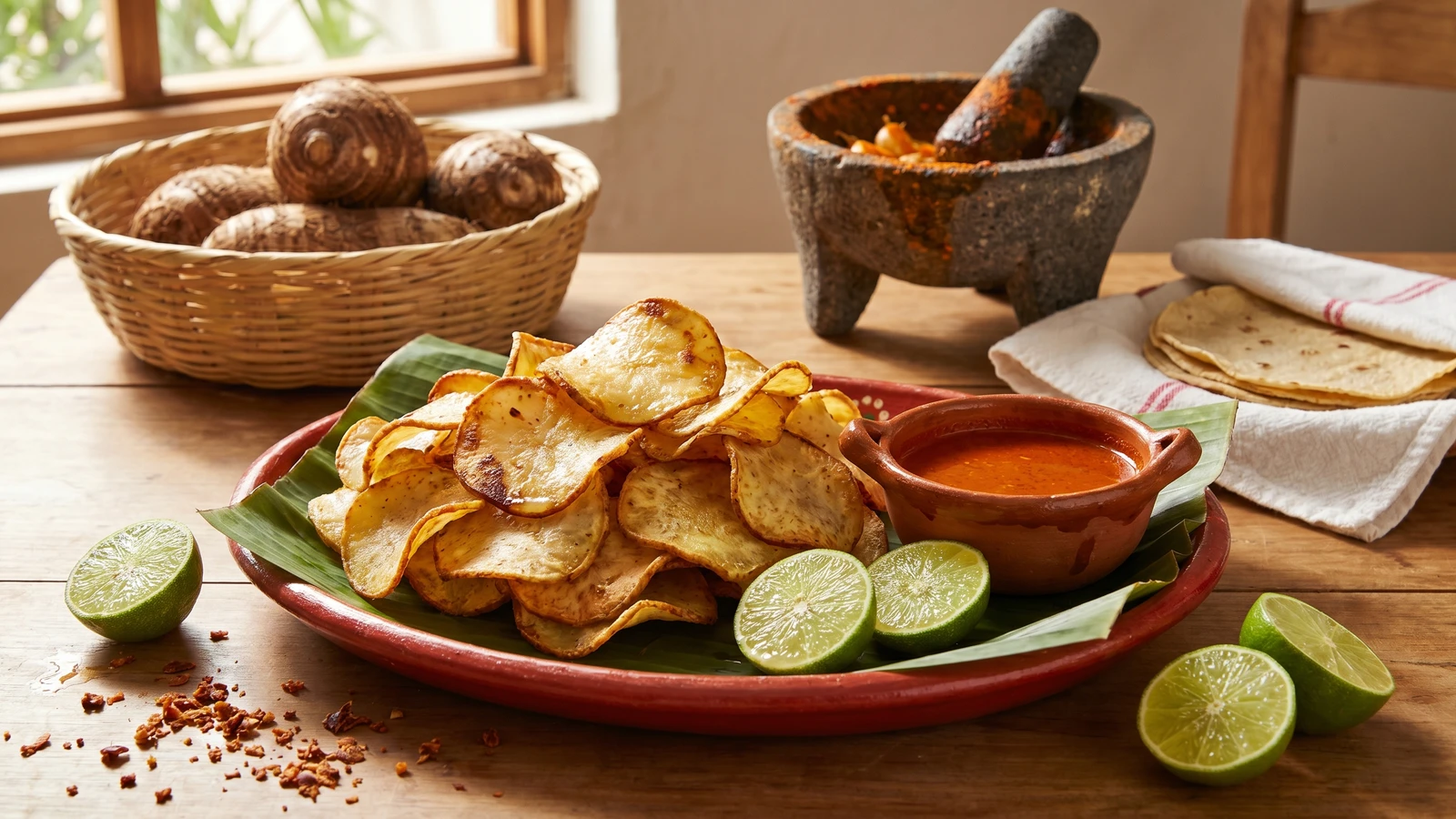
Veracruz's jarocho coast fries malanga thin and crisp in manteca or coconut oil, then wakes it with achiote, garlic, and vinegar mojo from the Afro-Mexican kitchens of Coyolillo.
Veracruz, on the jarocho coast around Coyolillo in Actopan, is where this malanga frita belongs. Not in the highland kitchens of the Bajio. Not in a basket of every coastal cuisine mixed together. This is Gulf humidity, Afro-Mexican memory, and a root that grows where the soil stays damp and generous.
In Coyolillo I watched women peel malanga with a towel over one hand because the raw root can itch. They sliced it thin, rinsed the starch, dried it hard, and fried it in manteca de cerdo or coconut oil until the edges curled. The seasoning was not random. Salt, ajo, achiote, cane vinegar, sometimes chile comapeño. Veracruz speaks through garlic and acid.
Malanga is the third diasporic starch people forget after platano macho and yuca. It is nuttier than yuca, less sweet than plantain, and rare far inland because it belongs to tropical markets. At La Merced you can find it if you ask hard enough, but in Veracruz the señoras know by touch: firm, heavy, no soft wet spots.
Slice evenly, dry thoroughly, fry in small batches. That is the whole lesson. If you respect the heat, you get chips that snap under your teeth and a mojo that tells you exactly where you are. Cada estado, su propia cocina.
Malanga in Veracruz belongs to a broader Atlantic food pattern in which tropical roots, plantains, garlic, vinegar, and achiote moved through port kitchens from the 16th century onward, carried by Indigenous, African, Spanish, and Caribbean hands. Afro-Mexican communities such as Coyolillo in Actopan preserved everyday cooking built around filling starches including platano macho, yuca, and malanga because those crops grow well in humid coastal lowlands. The garlic-vinegar mojo with achiote is jarocho Veracruz cooking: connected to Afro-Caribbean port food, but adapted to Mexican chiles, local vinegar, and the Gulf pantry.
Quantity
2 pounds
peeled and sliced 1/8 inch thick
Quantity
6 cups
Quantity
1 tablespoon
divided
Quantity
2 tablespoons
for soaking
Quantity
3 cups, or enough for 1 1/2 inches in the pot
Quantity
6
peeled
Quantity
1 teaspoon
Quantity
1/4 cup
or white vinegar if that is all you can find
Quantity
2 tablespoons
or 1 tablespoon orange juice mixed with 1 tablespoon lime juice
Quantity
1
toasted and crumbled
Quantity
1
cut into wedges for serving
Quantity
1 small piece
passed over a flame until glossy, for lining the platter
| Ingredient | Quantity |
|---|---|
| firm malanga rootpeeled and sliced 1/8 inch thick | 2 pounds |
| cold water | 6 cups |
| sea saltdivided | 1 tablespoon |
| fresh lime juice or cane vinegarfor soaking | 2 tablespoons |
| pork lard (manteca de cerdo) or unrefined coconut oil | 3 cups, or enough for 1 1/2 inches in the pot |
| garlic clovespeeled | 6 |
| achiote paste | 1 teaspoon |
| cane vinegaror white vinegar if that is all you can find | 1/4 cup |
| sour orange juiceor 1 tablespoon orange juice mixed with 1 tablespoon lime juice | 2 tablespoons |
| dried chile comapeño or chile de arboltoasted and crumbled | 1 |
| limecut into wedges for serving | 1 |
| banana leaf (optional)passed over a flame until glossy, for lining the platter | 1 small piece |
Scrub the malanga well, then peel it with a sharp knife, taking off the brown hairy skin and the thin layer underneath. Raw malanga can make some hands itch, so use gloves or hold it with a towel if your skin is sensitive. Keep the peeled pieces in cold water while you work so they do not darken.
Slice the malanga into even 1/8 inch rounds with a mandoline or a very sharp knife. Stir the cold water, lime juice or cane vinegar, and 2 teaspoons of the salt in a bowl. Add the slices and soak for 15 minutes. This pulls away surface starch so the malanga fries crisp instead of turning gummy.
Pound the garlic with 1/2 teaspoon salt in a molcajete until it becomes a rough paste. Warm 2 tablespoons of the lard or coconut oil in a small clay cazuelita over low heat, stir in the achiote paste, and cook until the fat turns deep orange. Pull the cazuelita off the heat for a moment, add the garlic paste, cane vinegar, sour orange juice, and crumbled chile comapeño, then return to low heat for 2 minutes. It should taste sharp, garlicky, and lightly stained with achiote. This is Veracruz, not a creamy dip from somewhere else.
Drain the malanga and spread the slices in a single layer over clean cotton towels. Pat them dry until the surface feels almost chalky. Do not rush this. Wet malanga spits in hot fat and softens the fry. La cocina no es decoración, es trabajo.
Set a heavy pot over medium-high heat and add enough manteca de cerdo or coconut oil to come 1 1/2 inches up the side. Heat to 350F. If you do not have a thermometer, drop in one thin sliver of malanga. It should bubble immediately and rise slowly. If it browns in ten seconds, the fat is too hot.
Fry the malanga in small batches, no more than one loose layer at a time. Stir gently so the slices do not stick together. They are ready when the edges curl, the color turns pale gold with deeper golden rims, and the bubbling quiets, about 2 to 3 minutes per batch. Lift them out with a spider or slotted spoon and drain on a wire rack. If you crowd the pot, the malanga drinks the fat. No me vengas con atajos.
Salt the malanga while it is still glossy from the fat. Line a red barro platter with the warmed banana leaf if using, pile the malanga generously, and serve with the achiote garlic-vinegar mojo and lime wedges. Do not cover it. Covered fried malanga goes limp, and you did not do all that work for limp food. Así se hace y punto.
1 serving (about 90g)
Culinary guides, cultural storytelling, and the editorial depth that makes cooking meaningful.
Discover Culinary ExplorerChef Lupita
Oaxaca's red rice, stained with tomato and fried in lard, steamed with carrots, ejotes, black beans, and epazote. The side that anchors a Oaxacan family meal and earns its place beside the main.
Chef Lupita
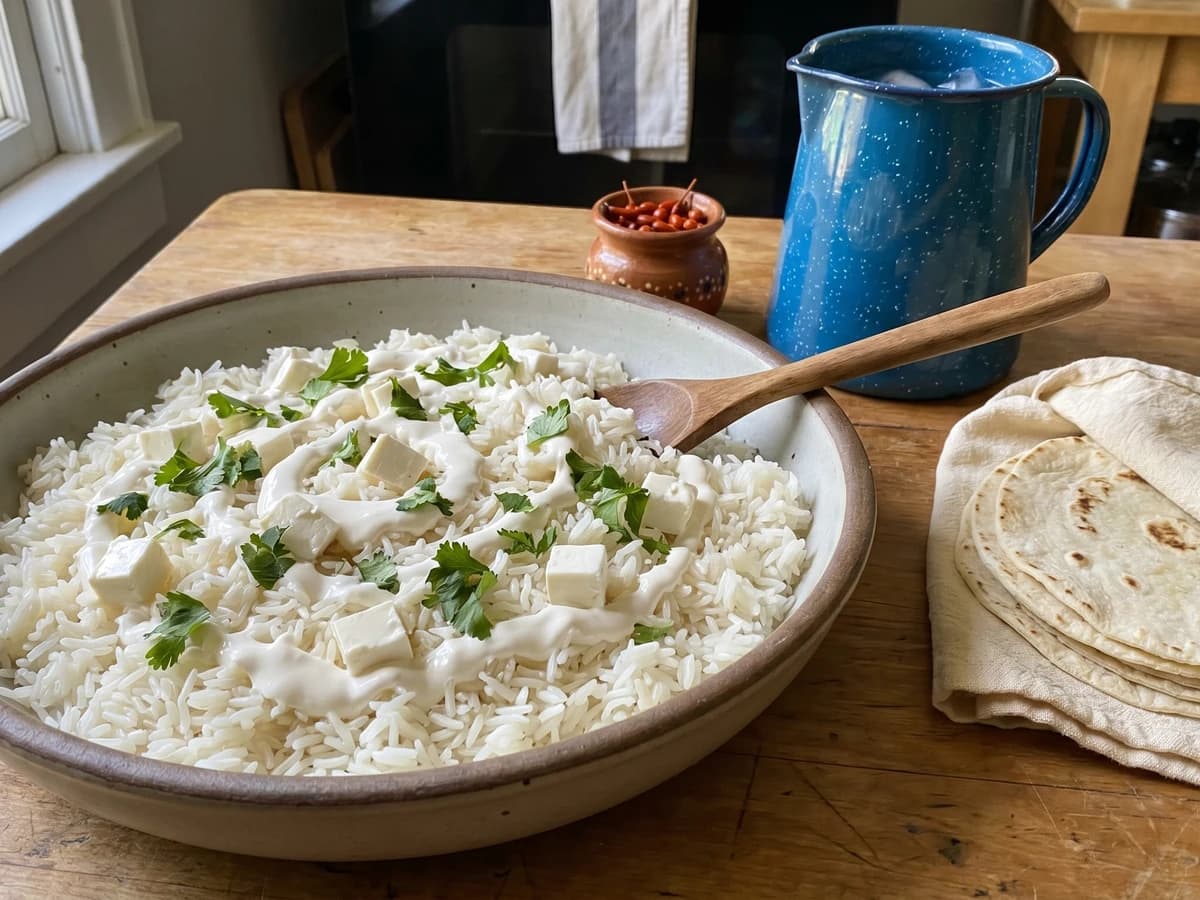
Sinaloa's home-cook white rice topped with cold cubes of cream cheese that soften into the warm grain, finished with crema and a sprinkle of chiltepin at the table. The trick that makes a side dish feel like a small luxury.
Chef Lupita
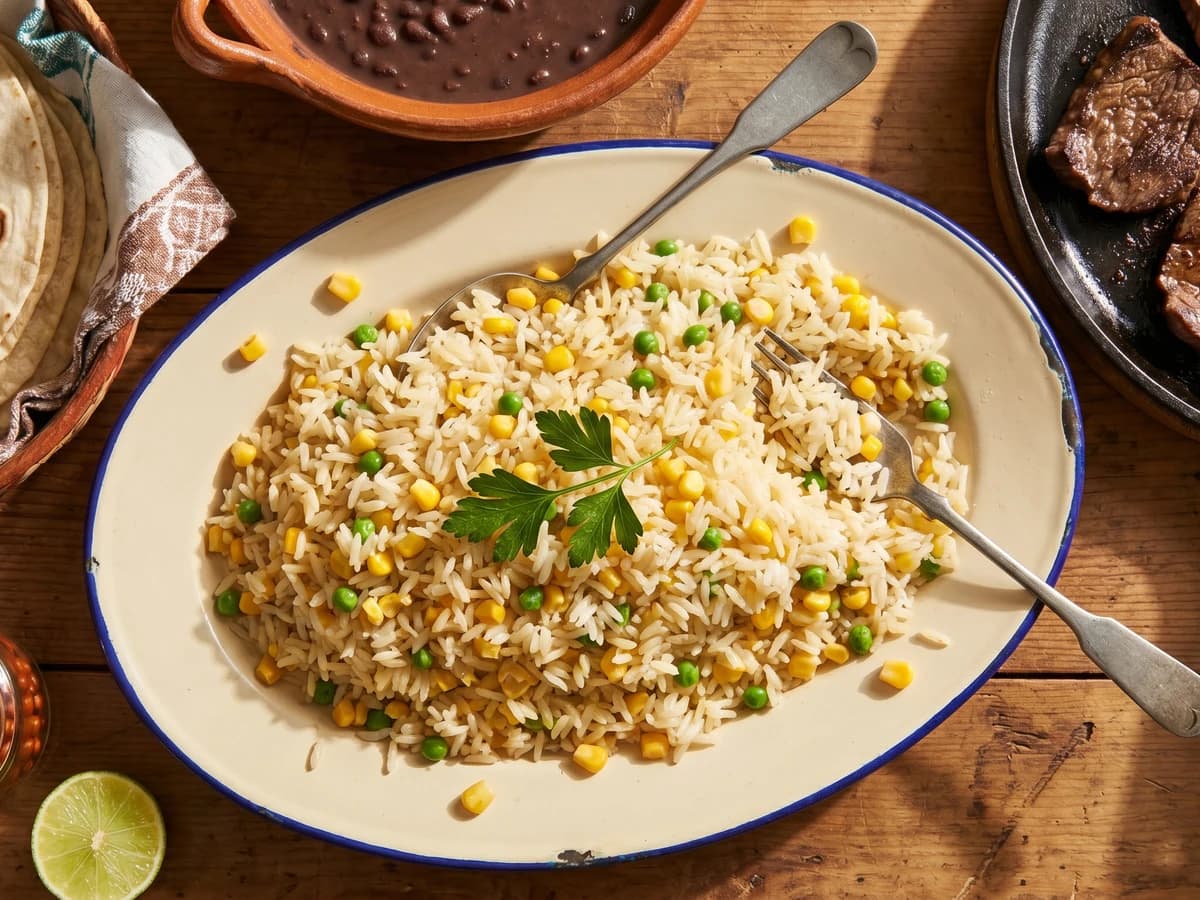
Sonora's white rice, toasted in butter and steamed with sweet corn and tender peas. The clean, quiet partner to a plate of carne asada, not the red rice of central Mexico.

Chef Lupita
Yucatán's white rice with sweet corn kernels, toasted in lard with garlic and onion. The quiet base that holds up against the peninsula's bold achiote-stained stews.