Culinary Explorer

A cooking platform built around craft, culture, and the stories behind what we eat.
Discover Culinary Explorer
Macedonian Tahinopsomo (Ταχινόψωμο)

Macedonian Tahinopsomo (Ταχινόψωμο)

Created by

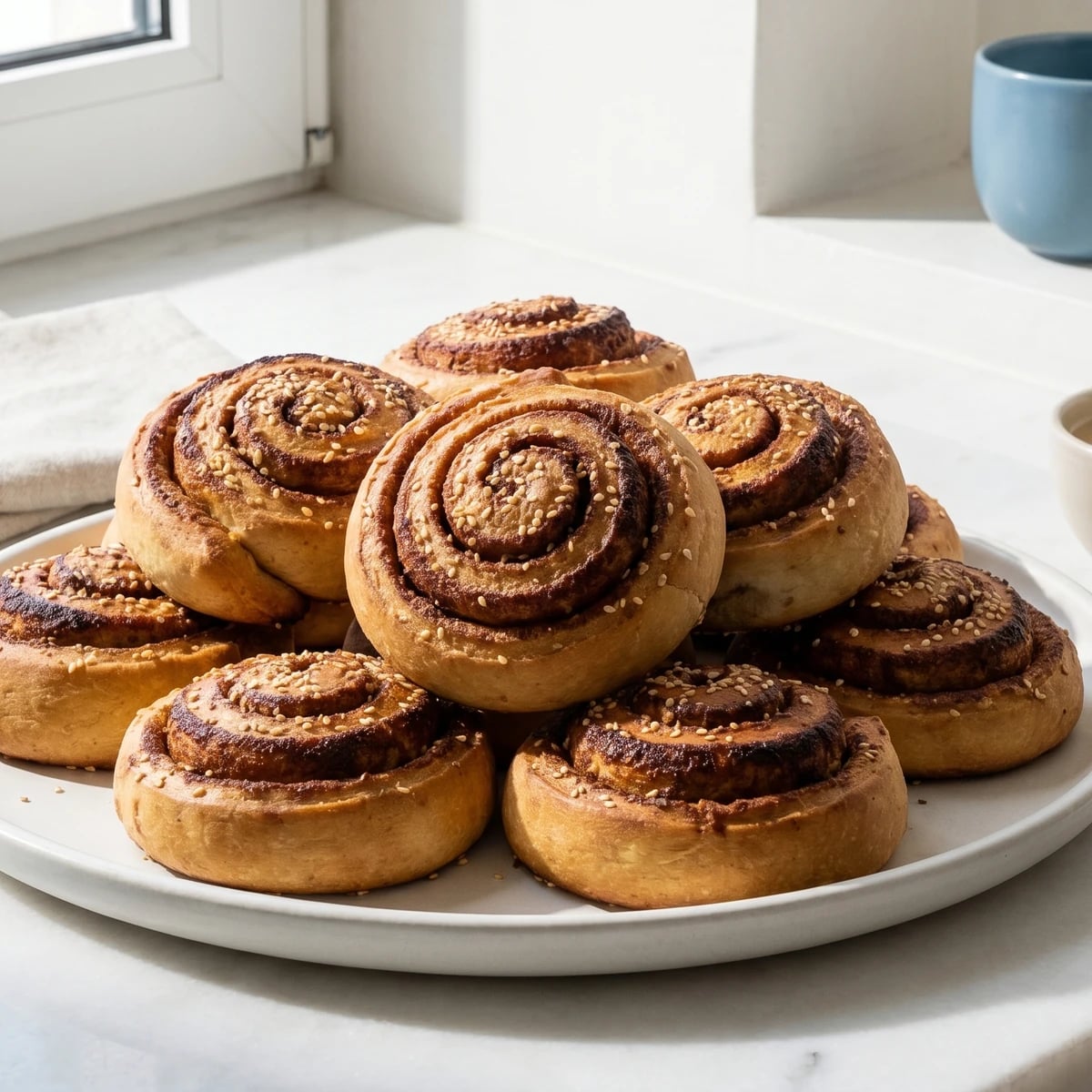
Macedonian tahinopsomo is a soft Lenten bread rolled with tahini, sugar, and cinnamon, scented with orange, and baked until the coils pull apart tender and fragrant.

Breads
Greek
Holiday
Comfort Food
Budget Friendly
35 min
Active Time
28 min cook2 hr 35 min total
Yield10 rolls

Macedonian tahinopsomo is fasting bread with sesame at its heart: a soft yeasted dough rolled around tahini, sugar, and cinnamon, then coiled or folded so every bite has a sweet, nutty seam. It belongs to Lent and to the bakery windows of northern Greece, where dairy and eggs step aside and sesame does the work.

Tahinopsomo belongs to the Orthodox fasting table of northern Greece, especially Macedonia and Thrace, where sesame paste replaced butter and milk during Lent. Its close relatives appear in Constantinopolitan and Cypriot baking, but the Macedonian bakery form is usually yeasted, orange-scented, and rolled so the tahini runs through the bread in layers.

The technique, the tradition, and the story behind every dish.

Discover Culinary Explorer

Ingredients

strong white bread flour

Quantity

500g

plus extra for dusting

instant dried yeast

Quantity

7g

caster sugar

Quantity

70g

fine sea salt

Quantity

8g

fresh orange juice

Quantity

220ml

lukewarm

water

Quantity

80ml

lukewarm

tahini for the dough

Quantity

60ml

orange zest

Quantity

1 teaspoon

finely grated

tahini for the filling

Quantity

220g

caster sugar for the filling

Quantity

120g

ground cinnamon

Quantity

2 teaspoons

sesame seeds

Quantity

30g

Equipment Needed

  • large mixing bowl
  • rolling pin
  • baking tray, 35 by 25cm or larger
  • parchment paper

Instructions

  1. 1

    Make the dough

    Mix the flour, yeast, sugar, and salt in a large bowl. Add the lukewarm orange juice, water, tahini, and orange zest, then mix until a rough dough forms. Knead for 8 to 10 minutes, until smooth and springy. The dough should feel soft but not sticky.

  2. 2

    Let it rise

    Cover the bowl and let the dough rise in a warm place for 1 hour, or until doubled. This is not a rich dough, so it rises cleanly if the yeast is alive and the room isn't cold.

  3. 3

    Mix the filling

    Stir the tahini well before measuring, because the oil settles on top and the paste thickens below. Mix the tahini, sugar, and cinnamon into a spreadable paste. This is the step that decides the bread: the tahini must be loosened and even, or it tears the dough instead of making tender layers.

  4. 4

    Roll and fill

    Turn the dough onto a lightly floured surface and roll it into a rectangle about 45 by 35cm. Spread the tahini filling all the way to the edges in a thin layer. Roll it up from the long side into a log, then cut into 10 pieces.

  5. 5

    Shape the rolls

    Flatten each piece gently with your palm, then twist once and coil it loosely, tucking the end underneath. Don't make them too tight. The bread needs room to rise around the tahini.

  6. 6

    Proof and seed

    Set the rolls on a lined baking tray, leaving space between them. Cover and rest for 35 to 40 minutes, until puffy. Brush very lightly with water and scatter with sesame seeds.

  7. 7

    Bake until gold

    Bake at 180C for 25 to 28 minutes, until the rolls are deep golden at the edges and smell of sesame, orange, and cinnamon. Cool for at least 20 minutes before eating, so the tahini settles into the crumb instead of running out.

Chef Tips

  • Use good tahini, not the dry gray paste that has been sitting too long. It should smell clean and nutty, and stir back together without a fight. Liga kai kala.
  • Orange juice belongs here. It perfumes the dough and keeps the crumb tender without milk or eggs, which is exactly what the fasting calendar asks for.
  • Tahinopsomo is best the day it is baked. The next day, warm a roll briefly and the tahini softens again. No one in a Greek kitchen throws that away.

Advance Preparation

  • The dough can be mixed and refrigerated after the first rise for up to 12 hours. Bring it back toward room temperature before rolling.
  • The filling can be stirred together 1 day ahead and kept covered at room temperature. Stir again before spreading.

Frequently Asked Questions

Nutrition Information

1 serving (about 115g)

Calories
450 calories
Total Fat
18 g
Saturated Fat
3 g
Trans Fat
0 g
Unsaturated Fat
15 g
Cholesterol
0 mg
Sodium
350 mg
Total Carbohydrates
65 g
Dietary Fiber
5 g
Sugars
21 g
Protein
12 g

Note: Chef personas and recipes are created with AI assistance. Cook with care: follow safe food-handling practices, check doneness with a thermometer when needed, and adapt for allergies and your kitchen.

Where cooking meets culture.

Culinary guides, cultural storytelling, and the editorial depth that makes cooking meaningful.

Discover Culinary Explorer

More from Greek Breads & Festive Loaves

Browse the full collection