Chef Dimitra
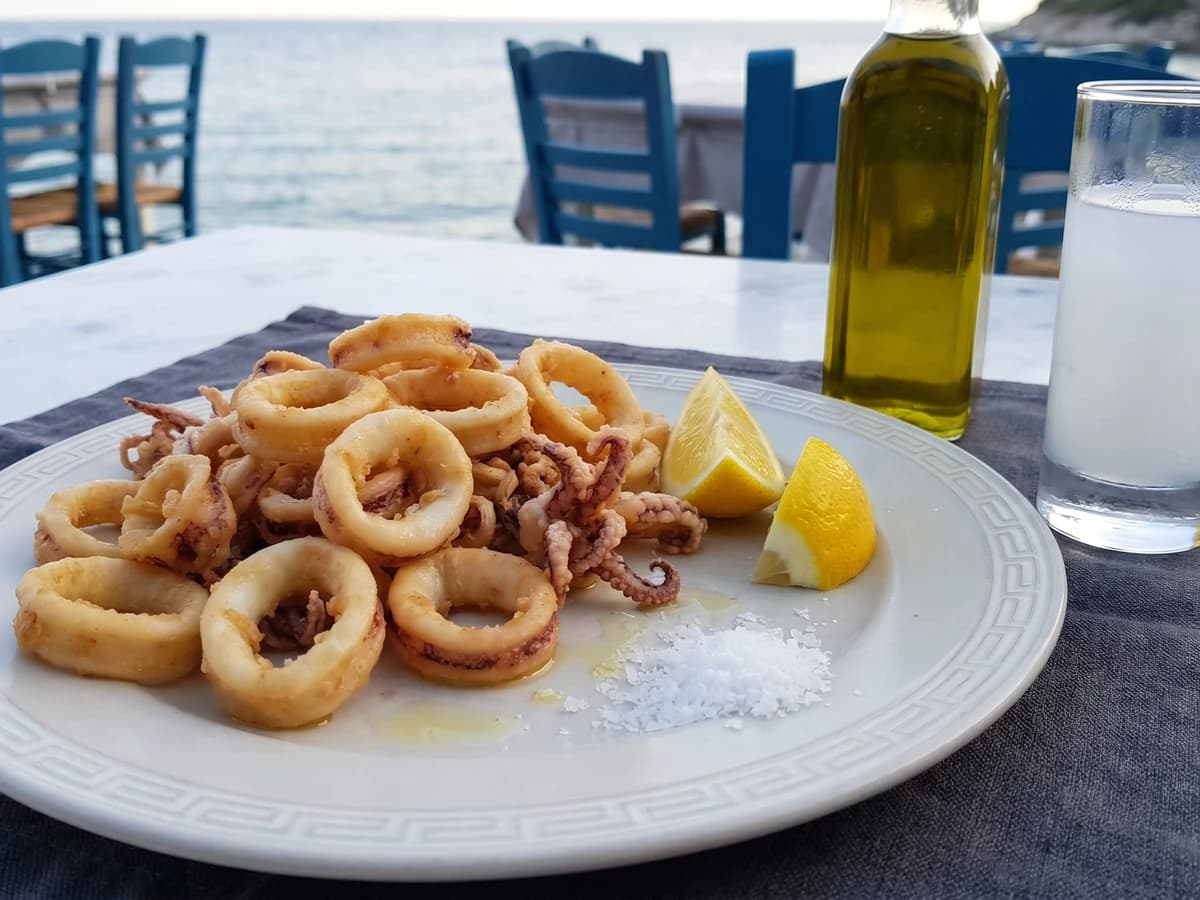
Aegean Island Kalamarakia Tiganita (Καλαμαράκια Τηγανητά)
Aegean island fried squid is flour, hot oil, lemon, and nerve. Fry it for a minute or two, no longer, and it stays tender under its crisp coat.
A cooking platform built around craft, culture, and the stories behind what we eat.
Created by
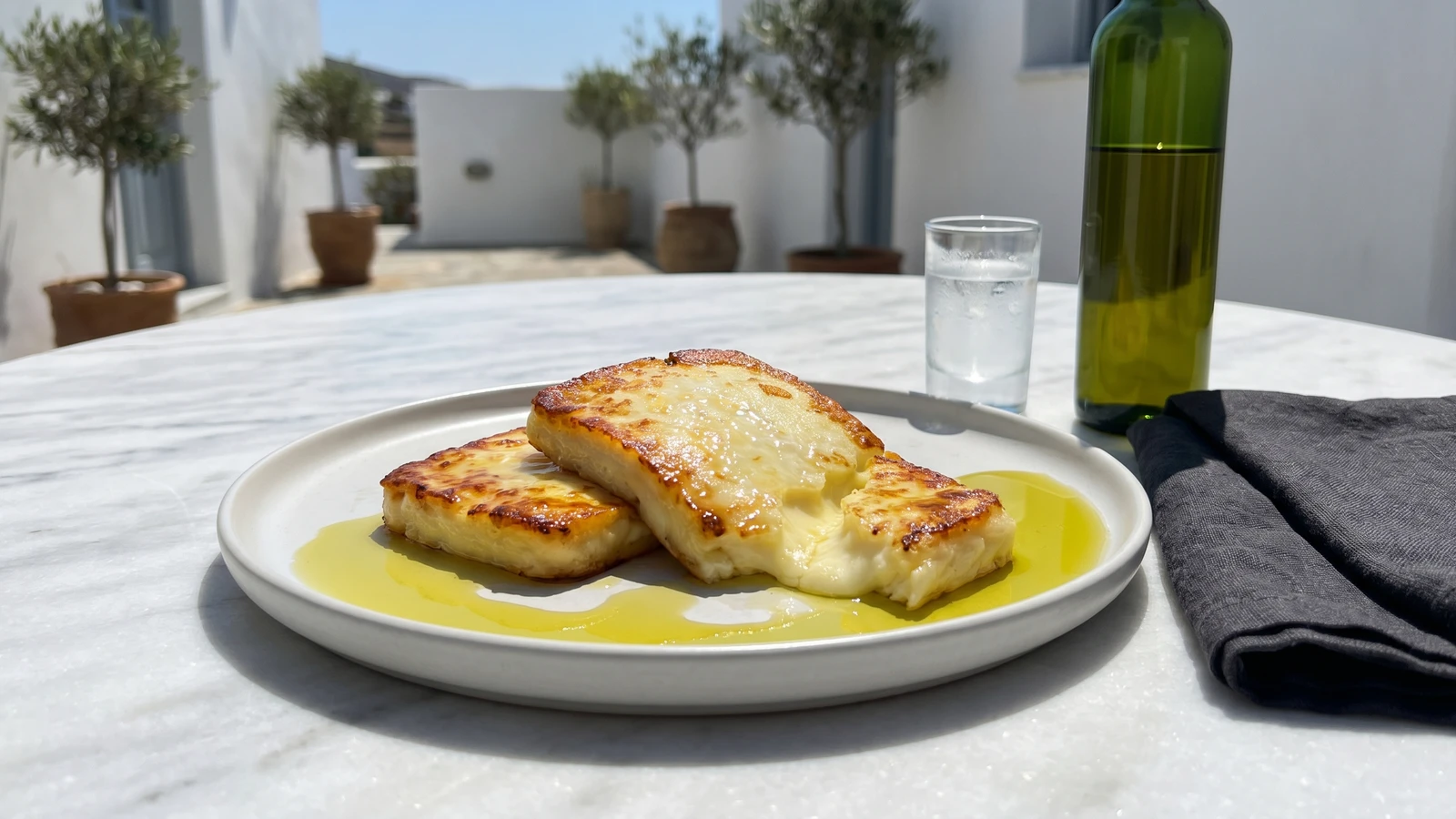
Macedonian saganaki is kefalograviera floured lightly, fried hard in olive oil, and hit with lemon while the crust is still gold and crisp.
Macedonian cheese saganaki is the little pan's loudest meze: a slab of kefalograviera fried until gold outside and molten within, then finished with lemon. It comes to the table fast, salty, sharp, and plain. That is its dignity.
The method is almost nothing, which means the few things matter. Wet the cheese, flour it lightly, shake it well, then fry it hard in hot olive oil. The thin flour coat browns before the cheese escapes, so you get a crisp skin and a soft center instead of a puddle in the pan.
Use kefalograviera with backbone, not a mild cheese that gives up at the first heat. Λίγα και καλά: a few things, and good ones. In Thessaloniki, this is the plate that lands between glasses before the main food comes, and everyone reaches too soon because patience is easier in theory.
Saganaki takes its name from the sagani, a small two-handled frying pan, so the word first named the vessel before it named the cheese. Fried cheese saganaki became a standard meze in northern Greek taverns and urban mezedopolia, with kefalograviera, kefalotyri, graviera, kasseri, or local cheeses chosen by region. The flaming version was made famous in Chicago's Greektown in the late 1960s; in Greece, the real dish is browned in oil and served with lemon.
Quantity
300g
cut into 4 thick slabs, about 1.5cm each
Quantity
60g
Quantity
80ml
for frying
Quantity
1
cut into wedges
Quantity
as needed
for wetting the cheese
| Ingredient | Quantity |
|---|---|
| kefalogravieracut into 4 thick slabs, about 1.5cm each | 300g |
| plain flour | 60g |
| extra virgin olive oilfor frying | 80ml |
| lemoncut into wedges | 1 |
| cold waterfor wetting the cheese | as needed |
Cut the kefalograviera into four firm slabs, each about 1.5cm thick. Too thin and it melts before the crust forms. Too thick and the middle stays stubborn instead of turning soft.
Dip each slab quickly in cold water, then press it into the flour on all sides. Shake off the excess. The water is the trick here: it makes a thin flour coat cling to the cheese, and that coat browns fast enough to hold the molten middle inside.
Set a small heavy frying pan over medium-high heat and add the olive oil. When the oil looks fluid and glossy, lay in one or two cheese slabs. They should sizzle at once, not sit quietly.
Fry for 60 to 90 seconds on the first side, until deep gold at the edges, then turn carefully and fry the second side for another 45 to 60 seconds. Work quickly. Saganaki is not a slow fry.
Move the saganaki to a warm plate and squeeze lemon over it immediately. Serve it while the crust is crisp and the inside pulls soft under the fork. No flames. That belongs to the tourist room, not the Greek kitchen.
1 serving (about 100g)
Culinary guides, cultural storytelling, and the editorial depth that makes cooking meaningful.
Discover Culinary ExplorerChef Dimitra
Aegean island fried squid is flour, hot oil, lemon, and nerve. Fry it for a minute or two, no longer, and it stays tender under its crisp coat.

Chef Dimitra
Pale Aegean taramosalata is cured roe, soaked bread, lemon, and olive oil worked slowly until it turns thick and clean, made for lagana on Clean Monday.

Chef Dimitra
Athenian March 25 salt cod, crisp in a puffed beer batter and served with garlic skordalia, the Lenten fish dish Greece keeps for Annunciation day.

Chef Dimitra
Crete names this dish by the pan motion: snails set mouth-down in salted flour, fried in good olive oil, then hit with rosemary and vinegar.