Culinary Explorer

A cooking platform built around craft, culture, and the stories behind what we eat.
Discover Culinary Explorer
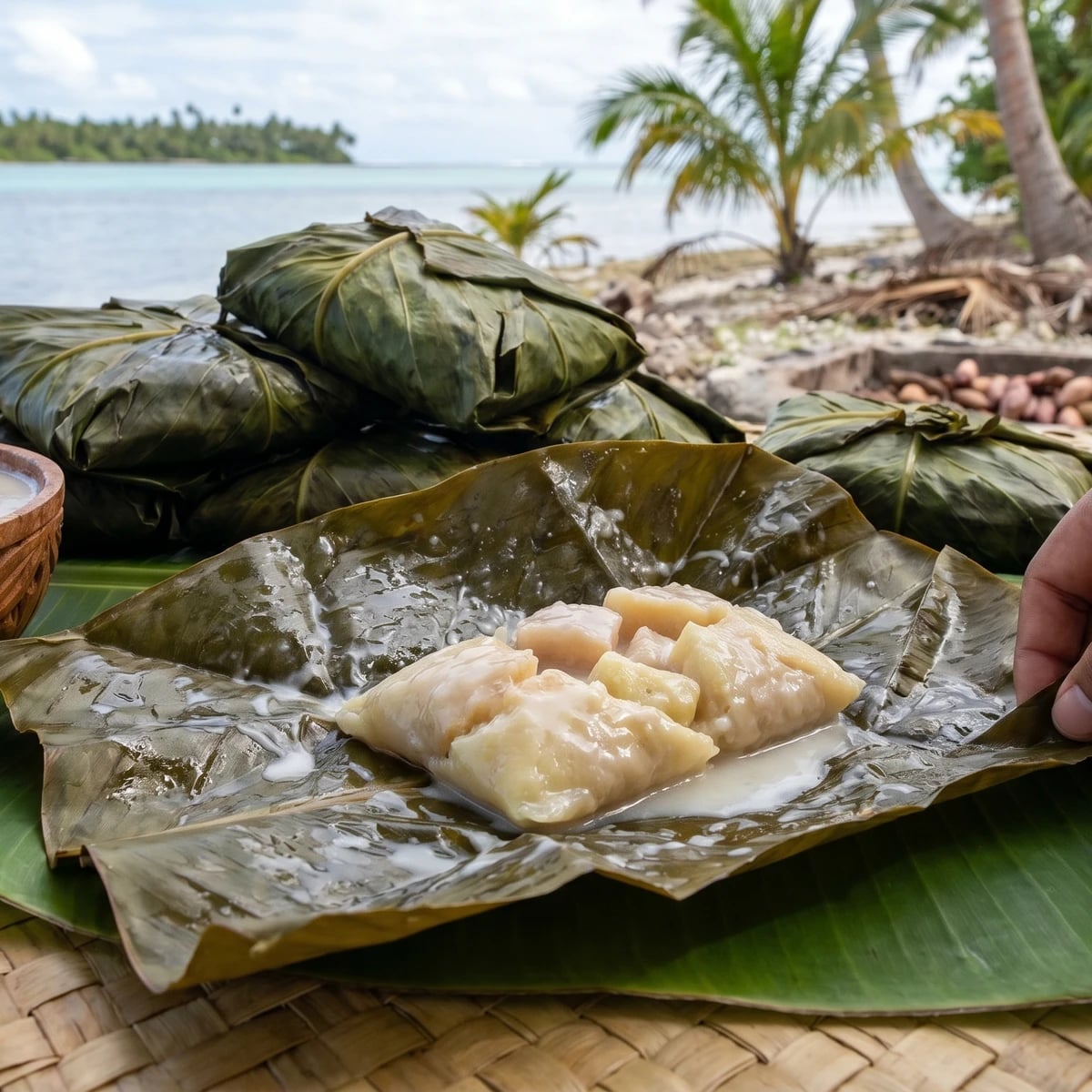
Lukau (Tokelauan Taro-Leaf Parcel in Coconut Cream)

Lukau (Tokelauan Taro-Leaf Parcel in Coconut Cream)

Created by

Tokelau's taro-leaf parcel, young leaves folded around coconut cream and cooked until dark and silky, cousin to Sāmoan palusami, Tongan lū, Cook Islands rukau, and Hawaiian laulau.

Main Dishes
Polynesian, Tokelauan
Comfort Food
Special Occasion
30 min
Active Time
1 hr 15 min cook1 hr 45 min total
Yield6 servings

On Tokelau, the elder brother grows in a hard place. Pulaka, the giant swamp taro, is hauled from pits dug down through coral until they reach the freshwater lens, and every pit is a kind of promise: this family will keep feeding itself from its own ground. I come to this dish as a Hawaiian cousin, not as the one who owns the story, so I say it plain. Lukau belongs to Tokelau, to those low atolls sitting just above the lagoon, where coconut, taro leaf, reef fish, toddy from the tree, and what comes off the barge all tell the truth together.

This is the leaf-and-coconut-cream parcel in Tokelau's hand. Sāmoa has palusami, Tonga has lū, the Cook Islands have rukau, Tahiti has fāfā, and back home in Hawaiʻi we have lūʻau and laulau. Same gesture, many islands. The leaf cups the cream, the cream softens the leaf, and the long cook takes away the bite until everything turns dark, glossy, and kind.

If you have fresh coconut, squeeze the cream. That's the soul of this food. If all you have is a can, eat what you have, no shame. Food on a barge is the wound for islands like Tokelau and Tuvalu, but feeding the island from its own pits and palms is the repair, and both truths can sit in the same kitchen.

Build the parcels tight and cook them all the way through. Raw taro leaf bites the throat, and no blame the taro if you rushed it. Let it go slow until the leaf gives up and the cream shines through the split. Then open it for the table, not as one precious little thing, but enough for the kāiga, the family, and one more.

Tokelau's food world is shaped by coral soil, reef, coconut, and pulaka pits dug below the surface to reach the freshwater lens, a system shared in related but distinct ways with Tuvalu, where pulaka is also an identity food. As sea level rise and saltwater intrusion threaten those pits, the old atoll knowledge sits beside the modern truth of corned beef, rice, and food brought by ship. Lukau belongs to Tokelau's leaf-and-coconut-cream family of dishes, cousin to Sāmoa's palusami, Tonga's lū, Cook Islands rukau, Tahitian fāfā, and Hawaiian laulau, one ocean, one canoe, one root, spoken in each island's own tongue.

The technique, the tradition, and the story behind every dish.

Discover Culinary Explorer

Ingredients

young taro leaves

Quantity

36

thick stems and tough ribs removed

fresh coconut cream

Quantity

2 cups

squeezed from grated mature coconut, or 1 can thick coconut cream

cooked pulaka or taro (optional)

Quantity

1 cup

cut into small chunks

onion

Quantity

1 small

finely diced

sea salt

Quantity

1 teaspoon

plus more to taste

banana leaves, breadfruit leaves, or parchment and foil

Quantity

as needed

for wrapping

Equipment Needed

  • Large covered baking dish or heavy 6-quart Dutch oven
  • Foil and parchment, or banana leaves if available
  • Fine grater or coconut scraper for fresh coconut cream

Instructions

  1. 1

    Ready the leaves

    Rinse the taro leaves well and cut away the thick stems and tough center ribs so the leaves fold without tearing. Keep them whole where you can. The leaf is not garnish here. It is the bowl, the food, and the memory all at once.

    Taro leaves must be cooked fully soft. If they are underdone, the calcium oxalate can bite and scratch the throat. Give them time.
  2. 2

    Season the cream

    Stir the coconut cream with the onion and sea salt. Taste it now, because once it is inside the parcel, the leaf and the time take over. It should taste gently salty and rich, not sharp.

  3. 3

    Build the parcels

    Lay a banana leaf or parchment-lined foil square on the counter. Stack six taro leaves in the center, crossing them so there are no thin places. Spoon in some cooked pulaka or taro if you're using it, then pour in a generous scoop of coconut cream. Fold the taro leaves over the filling first, then wrap the outside tight so the cream stays held.

    The pulaka is optional for a home kitchen outside Tokelau. If you can't find it, use taro, breadfruit, or leave the parcel as leaf and cream only. Eat what you have.
  4. 4

    Bake until silky

    Set the parcels seam-side down in a baking dish, cover tightly, and bake at 350F for 1 hour to 1 hour 15 minutes, until the leaves are deep green-black, glossy, and fully tender. Don't keep opening the oven. Trust the leaf and the time.

  5. 5

    Rest and open

    Let the parcels rest 10 minutes so the cream settles back into the leaves. Open one at the table. The leaf should split soft and silky, with coconut cream shining in the folds and a rich green smell underneath. If the leaf still feels tough, wrap it back up and cook it longer. No blame the taro.

  6. 6

    Serve family-style

    Serve the lukau warm with rice, cooked taro, breadfruit, or whatever starch is on your table. In Tokelau, the old foods and the barge foods live side by side now, and the honest table makes room for both.

Chef Tips

  • Fresh coconut cream is best here. Grate mature coconut, squeeze it once with very little warm water, and use that thick first pressing for the parcels.
  • Frozen taro leaves work. Thaw, drain, and still cook them fully, because soft is the safety and the texture both.
  • Tokelau and Tuvalu both know the coral-soil life, but don't smear them together. This lukau is Tokelauan; Tuvalu has its own hands, names, and elders.
  • Coconut crab is part of atoll truth, but it is taken few and rarely where it is still taken at all. This vegetarian parcel doesn't need it. The coconut and leaf already carry the dish.

Advance Preparation

  • Squeeze the coconut cream the morning of cooking and keep it chilled. Fresh cream separates and can sour if it sits too long.
  • The parcels can be assembled up to 4 hours ahead, covered, and refrigerated. Bake them straight from the fridge, adding 10 to 15 minutes if needed.
  • Cooked pulaka or taro can be prepared a day ahead and chilled, then tucked into the parcels before baking.

Frequently Asked Questions

Nutrition Information

1 serving (about 200g)

Calories
375 calories
Total Fat
29 g
Saturated Fat
25 g
Trans Fat
0 g
Unsaturated Fat
4 g
Cholesterol
0 mg
Sodium
400 mg
Total Carbohydrates
21 g
Dietary Fiber
7 g
Sugars
6 g
Protein
9 g

Note: Chef personas and recipes are created with AI assistance. Cook with care: follow safe food-handling practices, check doneness with a thermometer when needed, and adapt for allergies and your kitchen.

Where cooking meets culture.

Culinary guides, cultural storytelling, and the editorial depth that makes cooking meaningful.

Discover Culinary Explorer

More from The Atoll Table: Tuvalu & Tokelau

Browse the full collection