
Chef Lupita
Arroz a la Oaxaqueña
Oaxaca's red rice, stained with tomato and fried in lard, steamed with carrots, ejotes, black beans, and epazote. The side that anchors a Oaxacan family meal and earns its place beside the main.
A cooking platform built around craft, culture, and the stories behind what we eat.
Created by
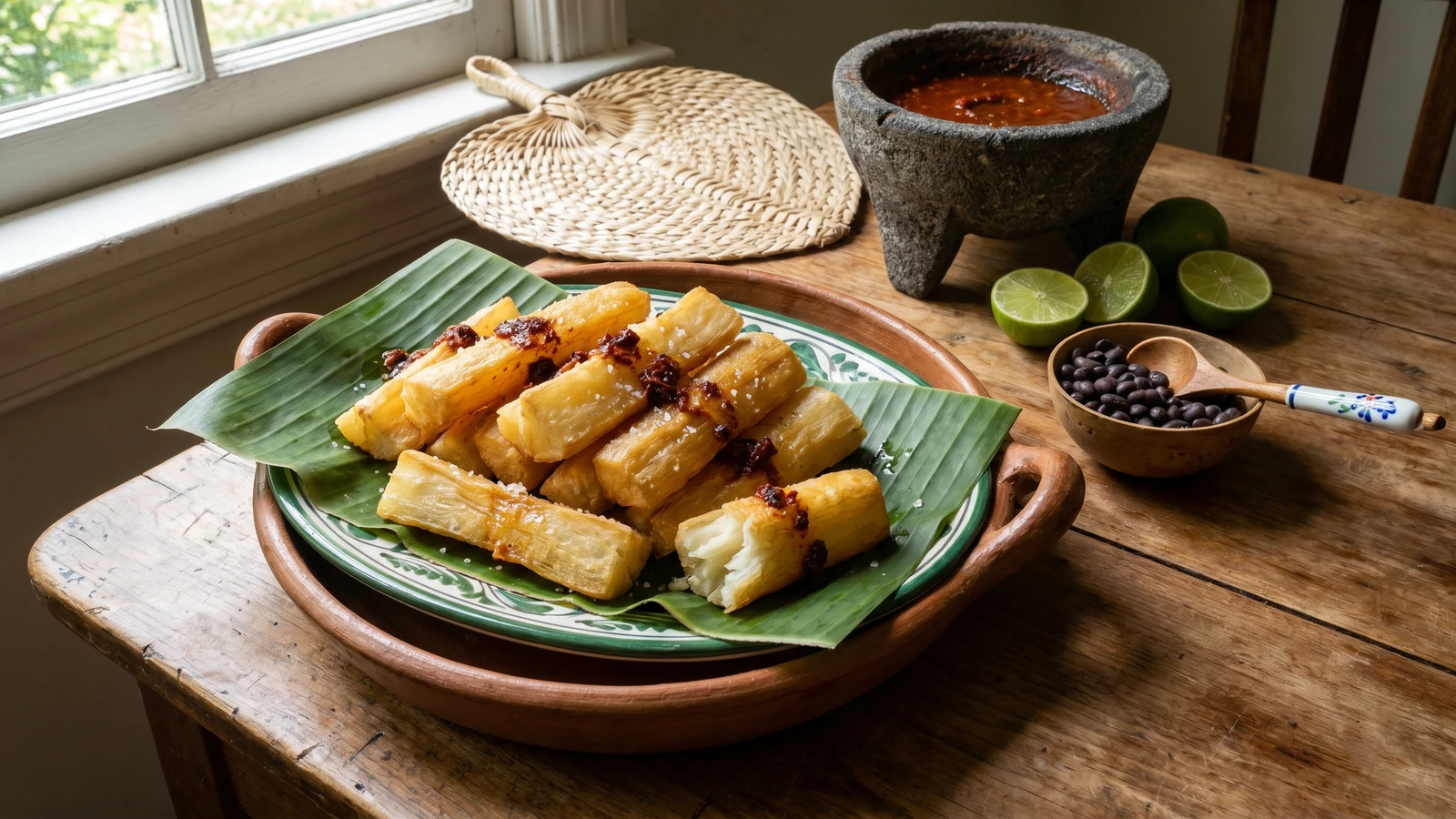
Veracruz's Los Tuxtlas yuca is boiled until the centers turn fluffy, then fried in manteca de cerdo until gold and served with salsa de chile seco beside Gulf fish and black beans.
Veracruz, Los Tuxtlas in the southern Sotavento, is where this yuca frita lives. Put your finger on the Gulf coast, then move south to San Andres Tuxtla, Santiago Tuxtla, and Catemaco, where the air is wet, the soil is volcanic, and the kitchen knows yuca, malanga, camote, plantain, and black beans before it thinks about potatoes. This is a lowland side, the kind that sits beside fried Gulf fish or frijoles negros de olla, not a garnish for a national idea of Mexico.
The ingredient that defines it is yuca, but the technique matters just as much: boil it first until the fibers open and the center turns creamy, dry it well, then fry it in manteca de cerdo. No me vengas con atajos. Raw yuca fried hard is tough at the center and unsafe if it hasn't been cooked through. Boil first, fry second. La manteca es el sabor.
In San Andres Tuxtla market, I watched a woman line a green Jalapa plate with banana leaf, pile the yuca in uneven golden pieces, and set a molcajete of chile de arbol and morita with naranja agria beside it. She didn't explain the dish as Afromestiza. She didn't need to. The plantain, the yuca, the black beans, the Gulf fish, the lard, they already told you where you were. Saber cocinar es saber vivir.
Yuca, Manihot esculenta, was domesticated in South America and reached tropical Mesoamerica before the Spanish conquest, with cassava cultivation documented in the Maya lowlands by the first millennium CE. In colonial Veracruz, especially the port, cattle country, sugar zones, and Sotavento towns, African-descended, Indigenous, and Spanish kitchens kept tropical starches like yuca, malanga, and plantain in daily use. That history is why fried yuca with black beans and Gulf fish speaks the southern lowlands of Veracruz, not the potato-heavy cooking of the highlands.
Quantity
2 1/2 pounds
peeled, cut into 3-inch lengths, and split lengthwise
Quantity
2 quarts
Quantity
1 tablespoon, plus more for finishing
Quantity
1/2 small
Quantity
4
lightly crushed
Quantity
2 cups
or enough to come 1 inch up the skillet
Quantity
8
stemmed
Quantity
2
stemmed
Quantity
2
unpeeled
Quantity
1/2 teaspoon
Quantity
1/3 cup
Quantity
for serving
Quantity
1
wiped clean, for lining the platter
Quantity
for serving
Quantity
for serving
| Ingredient | Quantity |
|---|---|
| fresh yuca (cassava)peeled, cut into 3-inch lengths, and split lengthwise | 2 1/2 pounds |
| cold water | 2 quarts |
| kosher salt | 1 tablespoon, plus more for finishing |
| white onion | 1/2 small |
| garlic cloveslightly crushed | 4 |
| pork lard (manteca de cerdo)or enough to come 1 inch up the skillet | 2 cups |
| dried chile de arbolstemmed | 8 |
| dried chile moritastemmed | 2 |
| garlic cloves for salsaunpeeled | 2 |
| sea salt | 1/2 teaspoon |
| fresh naranja agria juice | 1/3 cup |
| lime halves (optional) | for serving |
| banana leaf square (optional)wiped clean, for lining the platter | 1 |
| frijoles negros de olla (optional) | for serving |
| fried Gulf fish (optional) | for serving |
Trim the ends from the yuca. Score the brown skin lengthwise through the pink layer underneath, then work a knife under the peel and pull it away in strips. Cut the yuca into 3-inch lengths and split each piece lengthwise. If you see gray streaks, black lines, or a sour smell, throw that piece out. Fresh yuca should be firm and clean white. Remove the woody center now if it comes away easily; if it holds tight, remove it after boiling.
Put the yuca in a heavy pot with the cold water, kosher salt, white onion, and crushed garlic. Bring to a steady simmer and cook 20 to 30 minutes, until the pieces split at the edges and a knife slides through without resistance. Do not fry raw yuca. Cassava must be peeled and cooked through first. That is safety and technique in the same pot.
Drain the yuca and discard the onion, garlic, and cooking water. Pull out any woody cores that remain. Spread the pieces on a clean towel or wire rack for 15 minutes. The surface should look dry and a little chalky at the edges. Wet yuca spits in the lard and browns poorly. Patience here gives you a crisp outside and a creamy center.
While the yuca dries, heat a dry comal over medium. Toast the chile de arbol for about 10 seconds per side and the chile morita for 20 to 30 seconds per side, just until fragrant and darkened in spots. Toast the unpeeled garlic until the skins are spotted and the cloves soften, then peel them. Grind the sea salt and garlic in a molcajete, add the toasted chiles, and work them into a rough paste. Stir in the naranja agria juice a little at a time. The salsa should be sharp, smoky, and salty enough to wake up the yuca.
Melt the manteca de cerdo in a wide heavy skillet or cured clay cazuela over medium-high heat until it reaches 350F, or until a small piece of yuca sizzles immediately when it touches the fat. You need about 1 inch of lard, not a decorative spoonful. La manteca es el sabor. Neutral oil fries the starch, but it does not give you the Veracruz table.
Lower the dried yuca pieces into the lard in batches, leaving space between them. Fry 4 to 6 minutes per batch, turning once or twice, until the outside is deep golden with crisp ridges and the inside stays soft. If the pieces brown too fast, lower the heat. Lift them out with a slotted spoon and drain on a wire rack. Salt them while they are still glossy from the lard.
Line a green Jalapa plate or shallow Naolinco barro cazuela with the banana leaf. Pile the yuca generously, with the salsa de chile seco in a molcajete beside it and lime halves on the table. Serve with frijoles negros de olla and fried Gulf fish. Black beans, not pinto. This is Veracruz. Cada estado, su propia cocina.
1 serving (about 190g)
Culinary guides, cultural storytelling, and the editorial depth that makes cooking meaningful.
Discover Culinary ExplorerChef Lupita
Oaxaca's red rice, stained with tomato and fried in lard, steamed with carrots, ejotes, black beans, and epazote. The side that anchors a Oaxacan family meal and earns its place beside the main.
Chef Lupita
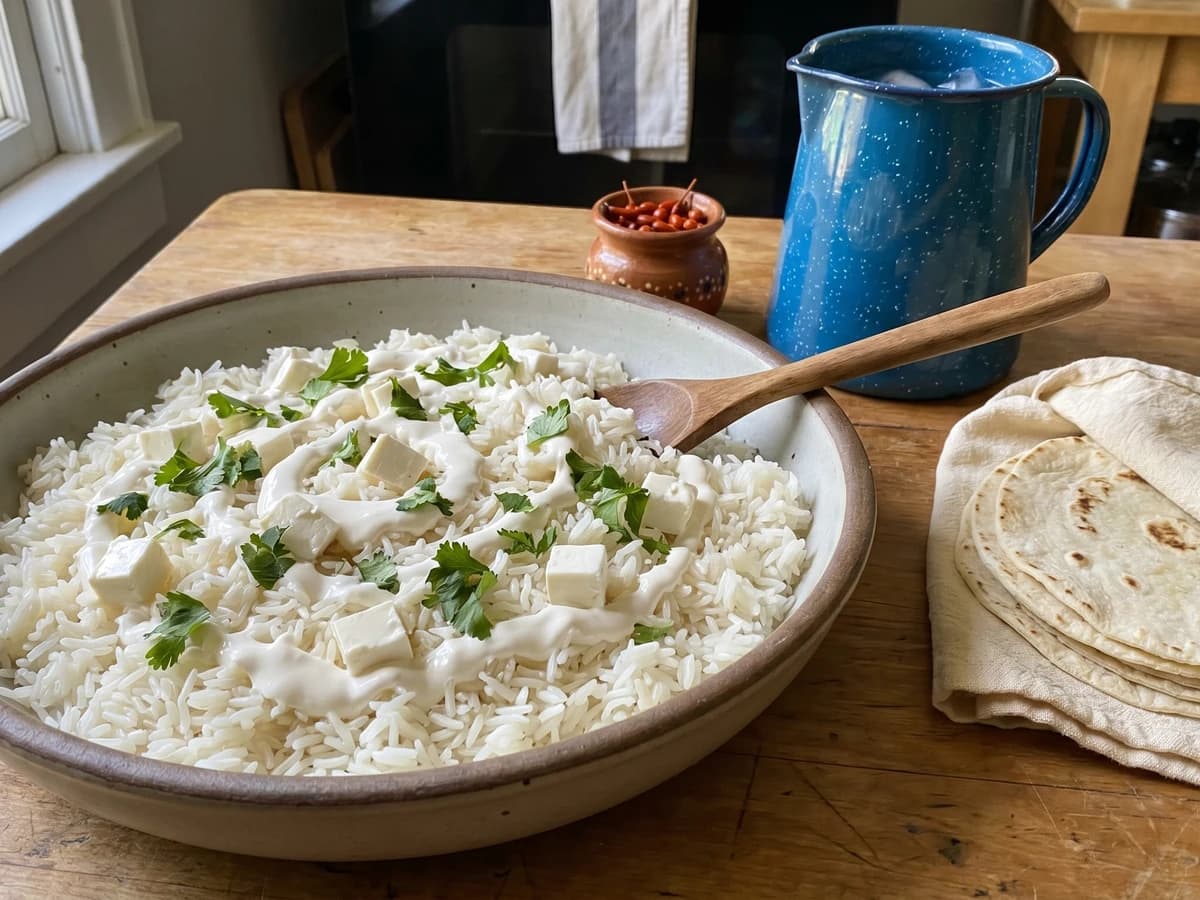
Sinaloa's home-cook white rice topped with cold cubes of cream cheese that soften into the warm grain, finished with crema and a sprinkle of chiltepin at the table. The trick that makes a side dish feel like a small luxury.
Chef Lupita
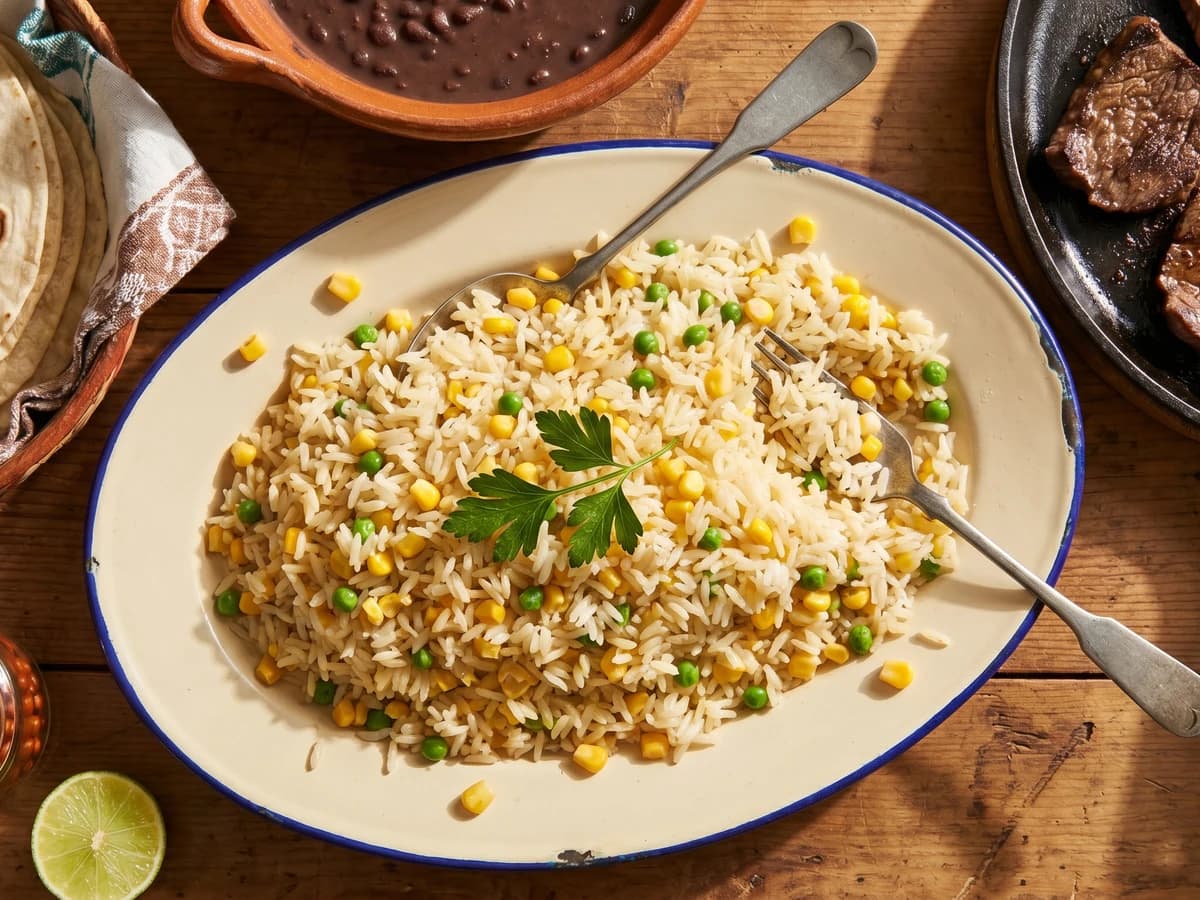
Sonora's white rice, toasted in butter and steamed with sweet corn and tender peas. The clean, quiet partner to a plate of carne asada, not the red rice of central Mexico.

Chef Lupita
Yucatán's white rice with sweet corn kernels, toasted in lard with garlic and onion. The quiet base that holds up against the peninsula's bold achiote-stained stews.